
Steel Siding & Hand Hewn Log Siding in Illinois
Steel Siding in Illinois
Steel siding in Illinois answers four conditions that the state's climate delivers at high intensity. Chicago and the northern tier experience the most extreme wind-chill events in the continental United States. Polar vortex winters drive temperatures to negative 20 degrees Fahrenheit and below, pushing vinyl siding past its brittleness threshold and exposing every fastener, seam, and joint to stress that accumulates year after year. Illinois ranks consistently in the top five states nationally for hail frequency, averaging 80 to 100 significant events per year. Moderate to Heavy termite pressure applies across the state. High summer humidity runs statewide from June through August. The cold argument in Chicago is sharper than anywhere else in the country.
Vinyl siding's cold-weather failure is well understood by contractors who have worked Chicago winters. Below 20 degrees vinyl goes brittle, and at negative 20 it can fracture from thermal stress alone before anything hits it. Every polar vortex event puts Chicago-area vinyl installations through conditions they weren't rated to handle. The cracks and gaps homeowners find after a polar vortex winter come from a material that was already at its limit. Steel doesn't go brittle in cold. It handles Chicago's polar vortex winters without cracking, fracturing, or accumulating damage at the seams.
The Chicago suburbs, the I-55 corridor toward St. Louis, and the Illinois River Valley are the most active hail zones, but significant storm activity tracks across the entire state from May through August. Class 4 is the highest impact resistance rating for exterior siding, and it's the category Illinois insurance carriers recognize for premium discounts on hail-exposed properties. Wood grain siding in the 22 patterns SteeLuxe manufactures covers the full Illinois residential aesthetic, from Chicago's bungalow belt to the craftsman suburbs of DuPage and Lake counties to the farmhouse vernacular of rural downstate.
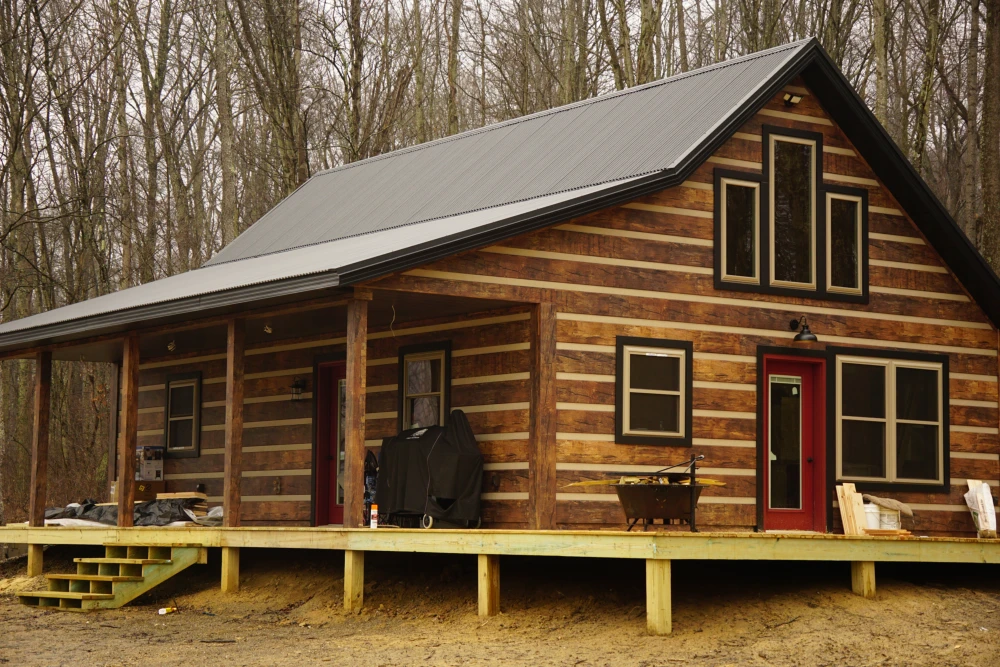
Chicago's residential stock is one of the largest re-siding markets in the country. The bungalow belt that rings the city, the two-flat greystone tradition, and the craftsman neighborhoods of the inner suburbs all carry homes built from 1900 through 1960 that cycle through exterior replacement on a regular schedule. These homes were built for Chicago winters, and the owners know exactly what those winters do to exterior materials. Steel siding in a wood grain profile reads as painted wood lap siding, holds that finish without repainting, and handles every temperature Illinois produces.
Central and southern Illinois carry different intensities of the same four conditions. Springfield and the central corridor are active hail territory. Southern Illinois approaches the upper South climate, with the state's highest termite pressure and most sustained summer heat and humidity. The Mississippi and Illinois River valleys hold moisture through the growing season and produce the most persistent summer humidity in the state.
Four Illinois markets each tell a different part of the story. Chicago and the northern suburbs, the central Springfield corridor, southern Illinois, and the rural agricultural interior each get their own breakdown below.
The Most Advanced Steel Siding On The Market
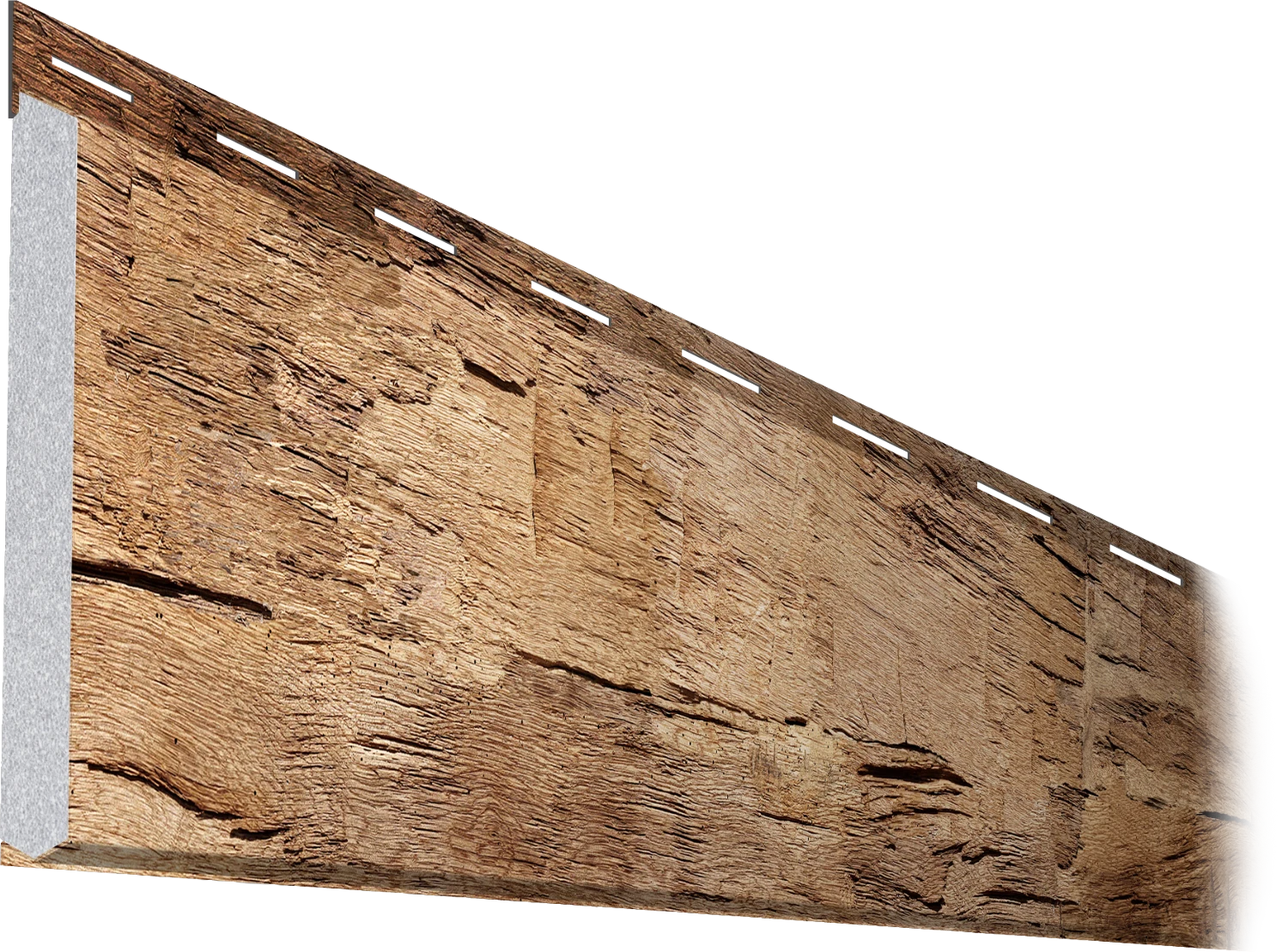
- 20 Year Fading & Chalking Warranty
- 50 Year Flaking & Peeling Warranty
- Lasts 40-60+ Years
- One Person Installation

Climate & Conditions Across Illinois
All four Illinois conditions run statewide, but they shift in intensity from the Chicago polar vortex corridor in the north to the near-Southern climate of the southern counties.
Chicago and the Northern Suburbs
Chicago sits at the intersection of Great Lakes cold and Great Plains weather systems, which produces the most extreme wind-chill environment in the continental United States. Polar vortex events are a documented and recurring feature of Chicago winters, regularly driving temperatures to negative 20 degrees Fahrenheit and below. Every vinyl installation in the Chicago metro gets pushed through those extremes at least once every few years, and each event accumulates brittleness damage at fasteners and seams that doesn't repair itself when the temperature rises. Hail is also active across the suburbs from spring through summer, and the dense housing stock from the bungalow belt through the DuPage and Lake County suburbs represents the largest re-siding market in the state. Termite pressure is Moderate throughout the metro, running toward the higher end of that classification.
The I-55 Corridor and Springfield
Springfield and the central Illinois corridor sit at the balance point of the state's conditions. Winter cold is significant but less extreme than Chicago. Hail is highly active along the I-55 corridor, which funnels severe thunderstorm activity south from the metro toward St. Louis through some of the most hail-dense territory in the Midwest. Summer humidity is high through the Illinois River Valley communities. Termite pressure runs Moderate to Heavy across central Illinois, and the older housing stock in Springfield's established neighborhoods cycles through exterior replacement on a consistent schedule.
Southern Illinois
Southern Illinois, from the Metro East communities near St. Louis down to the Ohio River border, approaches the climate of Missouri and Kentucky. Winters are milder than the north but still cold enough for freeze-thaw cycling. Summer heat and humidity are more sustained than the central corridor. Termite pressure in the southernmost counties reaches the heavier end of the Moderate range, approaching the conditions of the neighboring states to the south. Hail is still active through the severe thunderstorm season that tracks through the mid-South corridor.
Rural and Agricultural Illinois
Rural Illinois carries the state's four conditions without the concentrated re-siding market of the metro. Illinois farmhouse vernacular is a natural fit for the wood grain profiles in the SteeLuxe line, and the steel-on-farm-buildings tradition shared with Iowa extends into Illinois's agricultural communities. Flat terrain gives hail storms nothing to slow them down, and the wide-open Illinois prairie corridors produce some of the most intense severe weather events in the state when conditions align.
Need help finding an installer?
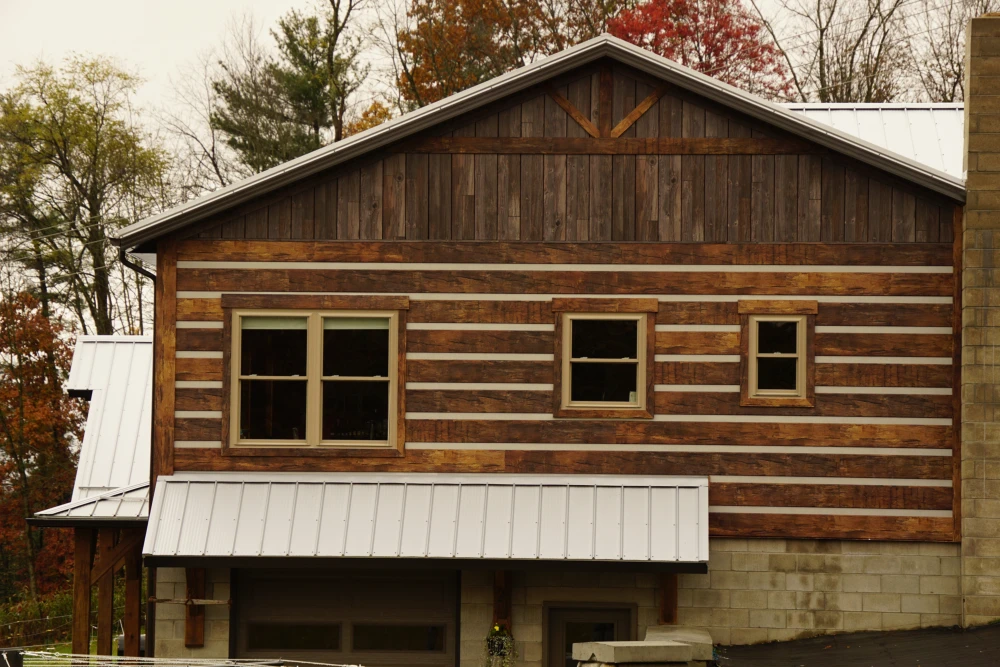
Why Steel Siding Is Right for Illinois
Each of Illinois's four conditions has a specific failure pattern in the materials most homes in the state currently wear, and each one has a direct answer in 26-gauge steel.
Cold is the sharpest argument in the Chicago market and it applies nowhere else in the country with the same intensity. Polar vortex events push temperatures to negative 20 degrees Fahrenheit and below, and vinyl siding at those temperatures is past the threshold where it maintains its structural integrity under any kind of load. Steel doesn't go brittle in cold. Its response to impact and stress doesn't change with the thermometer, and it handles Chicago's polar vortex winters the same way it handles every other temperature in the range: without cracking, fracturing, or accumulating damage at the seams.
Hail at top-five national frequency means the Class 4 argument runs statewide without qualification. Class 4 is the ceiling of the IBHS impact classification system. A panel at that rating takes a two-inch steel ball dropped from 20 feet without cracking, splitting, or chipping. Illinois insurance carriers recognize Class 4 for premium discounts on hail-exposed properties across the state. For Chicago suburban homeowners who have already filed one hail claim on vinyl and are looking at re-siding, the upgrade to Class 4 at the next replacement is the decision that ends the hail replacement cycle.
Termite pressure at Moderate to Heavy statewide means the zero-organic argument applies across Illinois without geographic qualification. Subterranean colonies are active in the soil through the warm months at every Illinois address. Steel gives them nothing to eat because there's no wood content in the panel, no organic food source, and no moisture pathway a colony can exploit at the wall level. That protection holds for the full 40 to 60-year life of the installation.
Summer humidity rounds out the four conditions. Illinois's humid season runs hard from June through August, with the river valleys and the Chicago lakefront adding moisture to the air through different mechanisms. Steel doesn't absorb moisture, so the paint bubbling and joint opening that wood accumulates through a humid Illinois summer is a non-issue. The factory finish holds without repainting, and the panel holds its shape and size across Illinois's full seasonal swing from polar vortex lows to humid summer highs.
Product Specifications
| Spec | Value |
|---|---|
| Gauge | 26-gauge steel (~25% thicker than 29-gauge) |
| Core | EPS foam, R-3.57 continuous insulation value |
| Fire Rating | Class A (highest available) |
| Impact Rating | Class 4 (highest available) |
| Colors | 50 solid colors (Sherwin Williams WeatherXL) |
| Wood Grain | 22 patterns (Kynar 500 resin) |
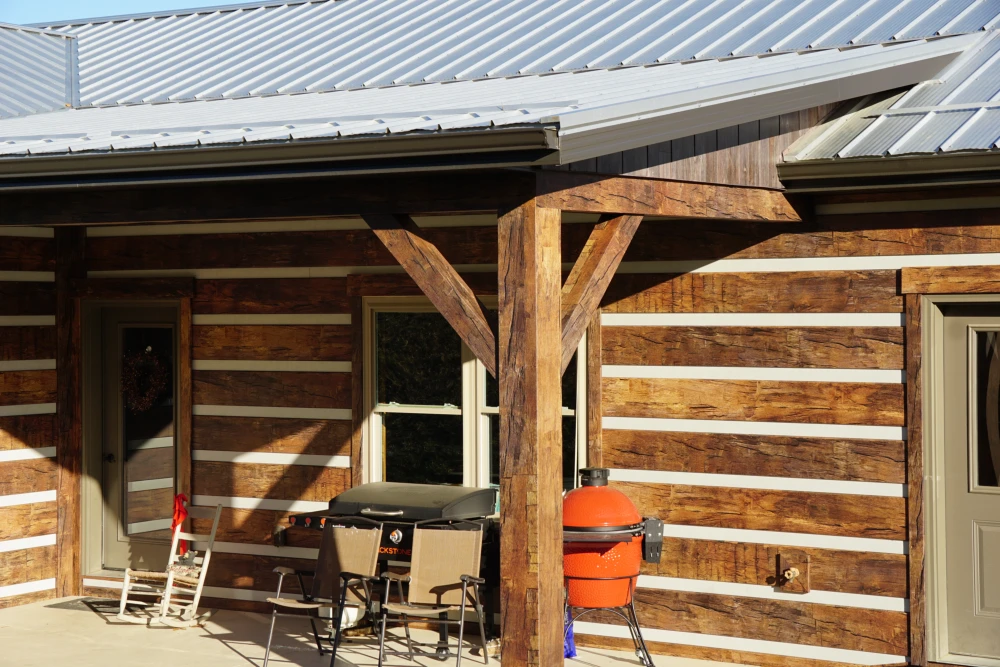
| Log Profile | Hand hewn log siding with chinking — 4 chinking colors |
| Warranty | 50-year peeling/flaking | 20-year fade/chalk |
| Panel | 10-inch planks, Slide-Lock system, one-person install |
| Base Coat | AZ55 Galvalume (zinc-aluminum alloy corrosion barrier) |
| Origin | New Philadelphia, Ohio — direct ship to all 49 states |
Hand Hewn Log Siding with Chinking in Illinois
Illinois isn't a primary log siding market the way the Mountain West states are, but the state's rural and recreational interior carries a genuine market for the timber profile. Properties along the Illinois and Mississippi River bluffs, hunting retreats in the Shawnee National Forest region of southern Illinois, and rural acreages throughout the agricultural interior all have a vernacular where the hand hewn log profile fits the landscape and the use.
Real wood log siding in Illinois faces the full four-condition stack. Chicago-area polar vortex winters push temperatures past the point where wood's expansion and contraction cycle becomes damaging at joints and grain. Active hail through the spring and summer season chips and splits exposed wood surfaces. Moderate to Heavy termite pressure means colonies in the soil are a persistent threat at every Illinois address through the warm months. High summer humidity keeps wood at elevated moisture content and accelerates the paint failure cycle.
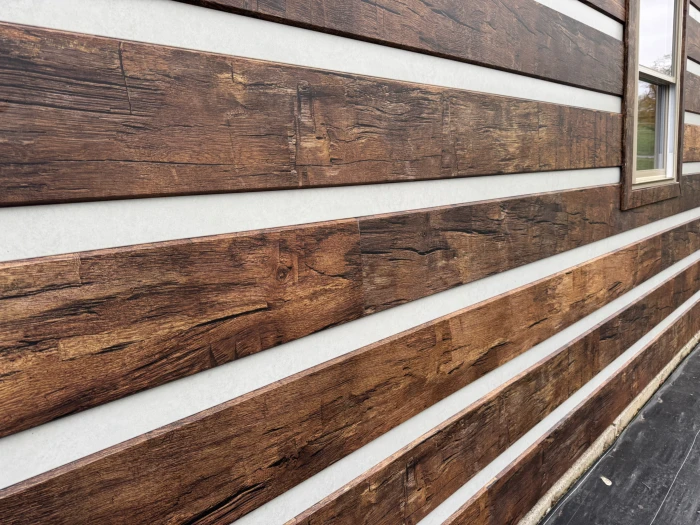
Hand hewn log siding with chinking in 26-gauge steel handles all four. Steel doesn't go brittle in polar vortex cold. Class 4 impact resistance handles Illinois hail at any size or temperature. Steel gives termites nothing to eat at the wall level. The factory finish holds through Illinois humidity without the staining and sealing cycle real wood requires. SteeLuxe is the only manufacturer making this product in steel.
Hand hewn log siding with chinking ships direct from New Philadelphia, Ohio to Illinois projects. It's available in four chinking colors: Ash Gray, Charcoal, Clay, and Sandstone Tan, across all 22 wood grain patterns in the SteeLuxe line.
Ready to Transform Your Home With Hand-Hewn Log Cabin Siding?
Get the authentic hand-hewn cabin look with the chinking detail you love, and never think about maintenance again. SteeLuxe steel siding is insulated, fire-rated, hail-resistant, and built to last a lifetime. See it and feel it for yourself.
Steel Siding vs the Alternatives in Illinois
Vinyl is the most common replacement siding on Illinois homes from the last 40 years, and Chicago gives it the hardest test of any market in the country. Polar vortex winters push temperatures past negative 20 degrees Fahrenheit, which is well past the threshold where vinyl maintains the flexibility it needs to absorb stress from wind load and thermal contraction. At those temperatures, vinyl panels can fracture from thermal stress alone. Each extreme cold event accumulates damage at fasteners and seams that doesn't reverse when temperatures rise. Add top-five national hail frequency through spring and summer and vinyl siding in Illinois is cycling through impact damage, cold stress, and eventual replacement faster than in most other states.
Fiber cement performs better than vinyl in cold conditions and holds its shape without going brittle, but it carries two Illinois-specific liabilities. Moisture absorption at cut edges is the first. Illinois's humid summer season keeps moisture elevated through the warm months, and fiber cement absorbs that moisture at cut edges and penetrations, causing cracking and surface separation over time. Factory paint on fiber cement requires repainting on a 10 to 15-year cycle, and in Chicago's freeze-thaw environment that cycle can shorten as moisture works into surface cracks. Hail at Class 4 intensity also chips and fractures fiber cement at panel edges and faces, and those chips require panel replacement rather than repair.
Wood siding carries the historical character of Chicago's bungalow belt and the craftsman neighborhoods that ring the city, and in some historic districts it may be required. In Illinois's climate, wood maintenance runs on a 5 to 8-year repainting cycle even in moderate conditions. Polar vortex winters work moisture into wood grain and joints during the freeze-thaw windows that bookend the deep cold events. Active hail leaves inspection and repair requirements after every significant storm. Termite pressure in the warm months adds a persistent threat at the soil level. Chicago's weather is hard on wood siding in ways that accumulate across a 30-year ownership period.
Steel at 26-gauge carries the Class 4 impact rating vinyl can't match, handles polar vortex cold without going brittle, resists moisture absorption at cut edges that cracks fiber cement, and gives termites nothing to eat at the wall level. For Illinois homeowners making a 40 to 60-year siding decision, the combination of cold performance, hail resistance, and zero-maintenance finish covers every condition the state produces.
Frequently Asked Questions
Q:What warranty does SteeLuxe steel siding carry?
Q:Can one person install SteeLuxe steel siding?
Q:What colors does SteeLuxe steel siding come in?
Q:Where is SteeLuxe manufactured and how does shipping work?
Q:Does Class 4 impact resistance reduce home insurance premiums in Illinois?
Q:How does steel siding hold up in Chicago's polar vortex winters?
Q:Does steel siding work on Chicago bungalows and historic greystone neighborhoods?
Q:What Illinois cities does SteeLuxe serve?
Q:Is steel siding a good choice after hail damage on a Chicago suburban home?
Illinois Cities & Regions We Serve
SteeLuxe ships from New Philadelphia, Ohio to residential and contractor projects across Illinois. Lead times to Chicago and the northern suburbs are consistent, and downstate and rural projects ship direct without a distribution step.
Chicago and the northern Illinois suburbs make up the state's largest residential siding market by a significant margin. The bungalow belt neighborhoods inside the city, and the older craftsman and colonial suburbs across Cook, DuPage, Lake, Kane, and Will counties, all carry a large stock of aging wood and failing vinyl that cycles through re-siding on a regular schedule driven by hail claims and polar vortex damage.
Rockford and the northwest Illinois corridor carry the full northern-tier cold conditions with active hail through the spring and summer season. The Chicago, IL and Chicago, IL markets along the Illinois River carry both hail activity and the river valley humidity that makes summer moisture a persistent issue.
Springfield and the central corridor sit in the state's most active hail zone along the I-55 track. Southern Illinois, including the Metro East communities near St. Louis and the Shawnee region, carries the state's highest termite pressure and the most sustained summer heat. Full city pages with local installer contacts and current pricing are available for Chicago, IL.
More Illinois cities are listed below:
Get a Quote for Steel Siding in Illinois
SteeLuxe is manufactured in New Philadelphia, Ohio and ships direct. Whether you are planning a full re-siding project or exploring options, we can get you pricing, color samples, and a list of installers in your area.