
Steel Siding & Hand Hewn Log Siding in Pennsylvania
Steel Siding in Pennsylvania
Steel siding in Pennsylvania answers for three conditions that intensify across its geography. Philadelphia sits in the direct path of nor'easters and Atlantic storm remnants and carries the heaviest eastern subterranean termite pressure in the northeast. Pittsburgh averages a January low near 24 degrees with a freeze-thaw season running from October through April. Erie receives more than 100 inches of snow per year from Lake Erie's lake-effect corridor. Termites are active across the Philadelphia metro, the Lehigh Valley, and central Pennsylvania from April through October. Wood grain siding in the 22 patterns SteeLuxe manufactures covers the full Pennsylvania range, from the colonial and Victorian profiles of Philadelphia's suburbs to the mountain and lodge profiles of the Poconos and the Pennsylvania Wilds.
Cold is Pennsylvania's most consistent exterior material stress, arriving statewide with intensities that range from Philadelphia's January low near 27 degrees to Erie's lake-effect corridor where freeze-thaw cycling runs alongside more than 100 inches of annual snowfall. Pittsburgh averages a January low near 24 degrees with freeze-thaw cycling from October through April. Allentown and Scranton average January lows between 20 and 21 degrees, both carrying a freeze-thaw season that runs from October through April.
Nor'easters and Atlantic storm remnants make southeastern Pennsylvania and the Philadelphia metro the most storm-exposed inland market in the northeast. Sandy's 2012 remnants brought significant wind and flooding to Bucks County, the Philadelphia suburbs, and the Lehigh Valley. The nor'easters that drive winter weather across the region deliver 60-mile-per-hour wind gusts, driving rain, and sustained lateral wind load against exterior wall surfaces multiple times each winter and through the spring storm season.
Termites are active across Pennsylvania from April through October, with the heaviest pressure concentrated in the southeastern counties of Philadelphia, Bucks, Montgomery, Chester, and Delaware. Eastern subterranean termites are present across the state, and the Philadelphia metro carries the highest termite pressure of any major city in the northeast. The Lehigh Valley communities of Allentown and Bethlehem, the York and Lancaster corridor, and the Pittsburgh metro all carry active termite pressure through the full growing season.
The Pocono Mountains represent Pennsylvania's most active second-home and mountain resort market, and the region's combination of genuine winter cold and a large stock of vacation cabins and ski chalets makes exterior material performance across an unattended winter season the defining specification. Monroe, Carbon, Pike, and Wayne counties carry January lows between 14 and 20 degrees, freeze-thaw cycling from October through April, and the snow load and moisture cycling that the northeastern Pennsylvania mountain climate delivers through a winter that runs into late spring.
Pennsylvania's three conditions overlap most completely in the southeastern corridor, where Philadelphia and its suburbs carry nor'easter exposure, termite pressure, and real winter cold together. Pittsburgh carries the state's most sustained freeze-thaw cycling outside of Erie. The Pocono Mountains carry cold as the dominant condition alongside a large second-home and resort market. Erie stands apart with lake-effect snow as its defining exterior material stress.
The Most Advanced Steel Siding On The Market
- 20 Year Fading & Chalking Warranty
- 50 Year Flaking & Peeling Warranty
- Lasts 40-60+ Years
- One Person Installation
Climate & Conditions Across Pennsylvania
Pennsylvania's conditions shift from one end of the state to the other across 300 miles, and the siding specifications for a Philadelphia rowhouse and a Pocono Mountain cabin are driven by entirely different stresses.
Philadelphia and the southeastern Pennsylvania communities of Bucks County, Montgomery County, Chester County, Delaware County, and the Main Line corridor represent the state's largest residential siding market and its most active overlap of cold, nor'easter exposure, and termite pressure. The city averages a January low near 27 degrees with freeze-thaw cycling from November through March. Sandy's 2012 remnants caused significant flooding and wind damage across Bucks County and the Philadelphia suburbs, and the nor'easters that define the region's winter storm pattern deliver sustained wind load and driving moisture against exterior surfaces multiple times each season. Termites are active across the metro through the full growing season, and the city carries the highest eastern subterranean termite pressure of any major city in the northeast.
Pittsburgh and the western Pennsylvania communities of Butler, Beaver, Washington, and Westmoreland counties represent Pennsylvania's second-largest metro market and its most sustained freeze-thaw corridor outside of Erie. The city averages a January low near 24 degrees with freeze-thaw cycling running from October through April, longer than Philadelphia's window by a full month on each end. Pittsburgh's large inventory of pre-war brick and wood-framed homes in neighborhoods like Squirrel Hill, Shadyside, and the South Hills drives consistent re-siding demand, and active termite pressure through the growing season adds a second active condition.
Allentown, Bethlehem, Scranton, Wilkes-Barre, and the communities of the Lehigh Valley and northeastern Pennsylvania represent a significant residential re-siding market where nor'easter exposure, freeze-thaw cycling, and active termite pressure overlap. January lows average between 20 and 21 degrees in Allentown and Scranton, with freeze-thaw seasons extending from October through April. The Lehigh Valley's large stock of older colonial and cape cod homes drives consistent re-siding demand, and proximity to the Atlantic storm track means nor'easters arrive with wind and moisture from November through April.
Erie and the Pocono Mountain communities represent Pennsylvania's two most specialized siding markets. Sitting at the southeast corner of Lake Erie, Erie receives more than 100 inches of snow per year from the lake's moisture-laden air, with freeze-thaw cycling that compounds snow load with sustained cold from October through April. The Pocono communities of Stroudsburg, Mount Pocono, and the surrounding Monroe and Carbon county areas carry January lows between 14 and 20 degrees, a dense concentration of vacation cabins and ski chalets, and a second-home market where winter performance across months of unoccupied time is the primary specification.
Need help finding an installer?
Why Steel Siding Is Right for Pennsylvania
Three conditions are active across Pennsylvania, and the Philadelphia metro carries all three at the same address through the full storm and growing season. Each has a direct failure pattern in the materials most Pennsylvania homes currently carry, and each has an answer in 26-gauge steel.
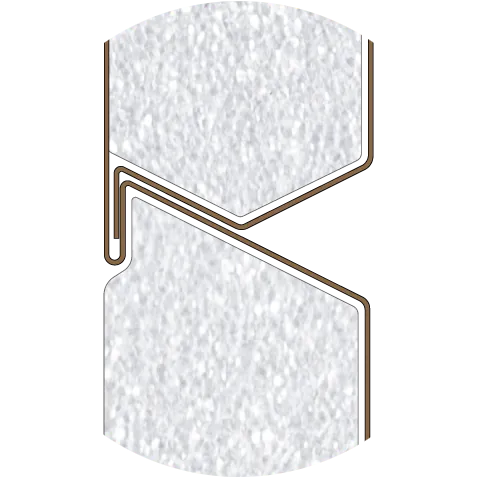
Freeze-thaw cycling in Pennsylvania runs from October through April in Pittsburgh, Allentown, and Scranton, and November through March in Philadelphia, with Erie carrying that stress alongside more than 100 inches of annual snowfall. Vinyl loses its flexibility in sustained cold, cracking at fastener points and panel edges through the months it can no longer flex. Steel holds its shape and size no matter what the Pennsylvania winter delivers, and the Slide-Lock panel system maintains its joint connection through months of freeze-thaw cycling without loosening fasteners or opening gaps.
Nor'easters in southeastern Pennsylvania deliver sustained wind load and driving moisture multiple times each winter. Sandy's remnants demonstrated what Atlantic storm exposure does to standard siding in Bucks County and the Philadelphia suburbs, and the nor'easters that follow compound that loading with each successive storm season. Class 4 impact resistance means a panel capable of taking wind-driven debris at storm speeds without cracking or puncturing, and a connection that doesn't peel from the wall under sustained nor'easter lateral load.
Termites across the Philadelphia metro, the Lehigh Valley, and the Pittsburgh corridor find steel siding nothing to exploit. Eastern subterranean colonies active from April through October need wood to eat, and the large inventory of older wood-framed homes in Philadelphia's established neighborhoods and the surrounding suburban counties gives colonies a ready supply and established entry pathways. Steel gives them nothing at the panel surface, eliminating the exterior wall as a termite entry point regardless of what colonies are doing in the soil below.
Erie's lake-effect snow corridor and the Pocono Mountains add a snow load and sustained moisture stress that goes beyond freeze-thaw cycling alone. In Erie, more than 100 inches of annual snowfall means exterior materials carry sustained moisture and weight through months of accumulated snow load before the spring thaw arrives. Pocono properties carry snow load alongside hard freeze cycles that test every joint and fastener in a siding system that may go unattended through an entire winter season. Steel's Slide-Lock panel system holds its joint under both stresses without separating or admitting water.
Product Specifications
| Spec | Value |
|---|---|
| Gauge | 26-gauge steel (~25% thicker than 29-gauge) |
| Core | EPS foam, R-3.57 continuous insulation value |
| Fire Rating | Class A (highest available) |
| Impact Rating | Class 4 (highest available) |
| Colors | 50 solid colors (Sherwin Williams WeatherXL) |
| Wood Grain | 22 patterns (Kynar 500 resin) |
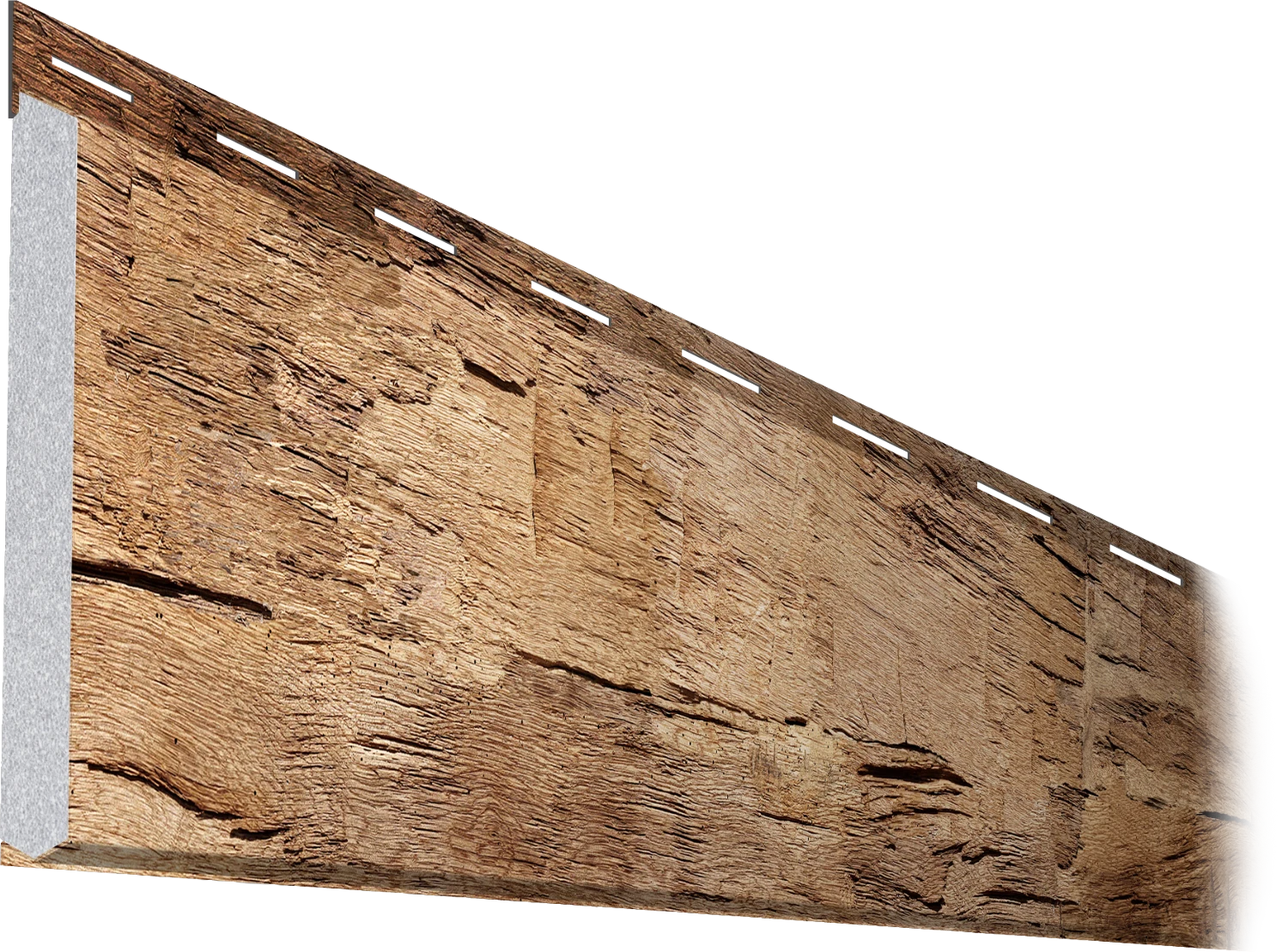
| Log Profile | Hand hewn log siding with chinking — 4 chinking colors |
| Warranty | 50-year peeling/flaking | 20-year fade/chalk |
| Panel | 10-inch planks, Slide-Lock system, one-person install |
| Base Coat | AZ55 Galvalume (zinc-aluminum alloy corrosion barrier) |
| Origin | New Philadelphia, Ohio — direct ship to all 49 states |
Hand Hewn Log Siding with Chinking
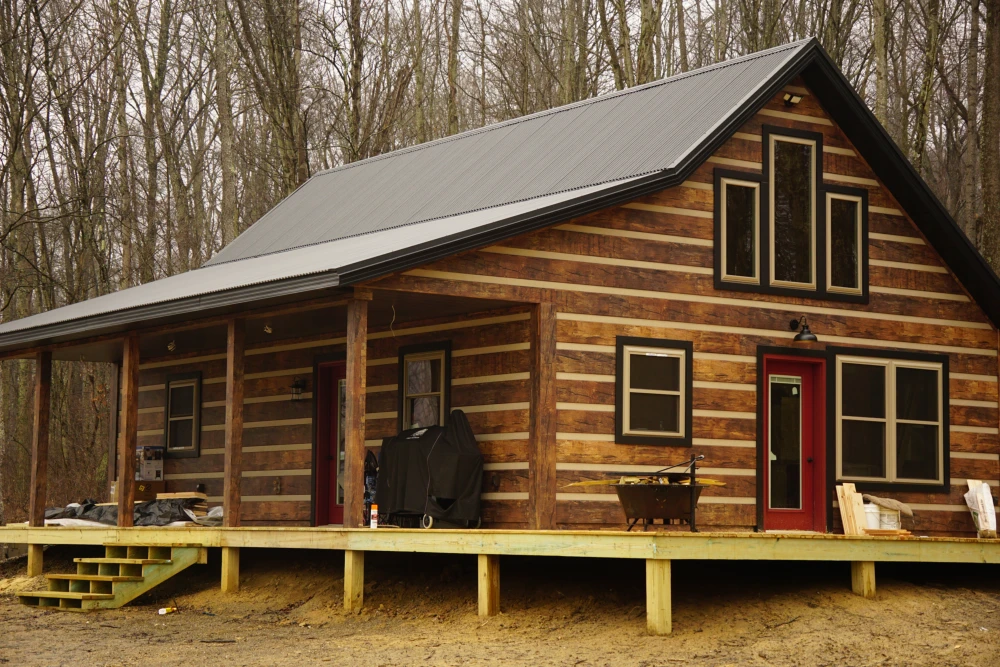
The Pocono Mountains carry Pennsylvania's most active market for the mountain cabin and ski chalet exterior profile. Monroe, Carbon, Pike, and Wayne counties hold a large concentration of vacation cabins, ski properties, and second homes where the log and rustic aesthetic defines the exterior character. Performance demands through a long Pocono winter, where freeze-thaw cycling runs from October through April and properties may sit unoccupied for weeks at a stretch, make cold resistance the primary specification at every Pocono address.
Real wood log siding at a Pocono Mountain cabin or a Pennsylvania Wilds hunting property faces its worst failure from the region's cold. Freeze-thaw cycling from October through April works moisture into log joints and cracks them open with every hard freeze. At Pocono elevations where January lows regularly fall below 15 degrees, the stress on wood log joints accumulates across a multi-month freeze season with nothing to slow it.
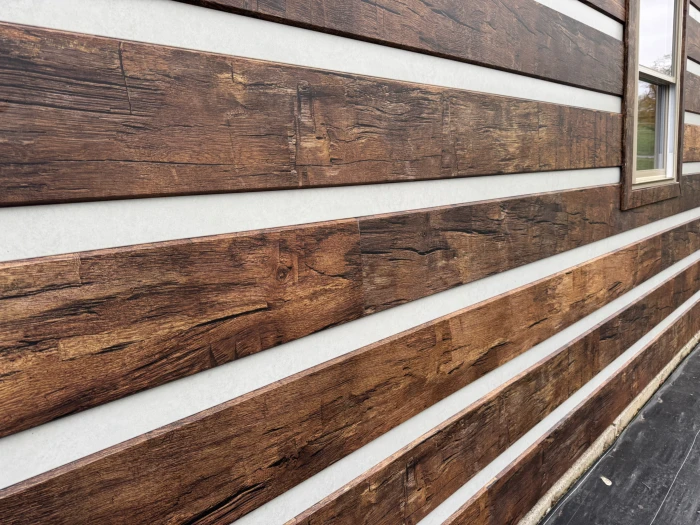
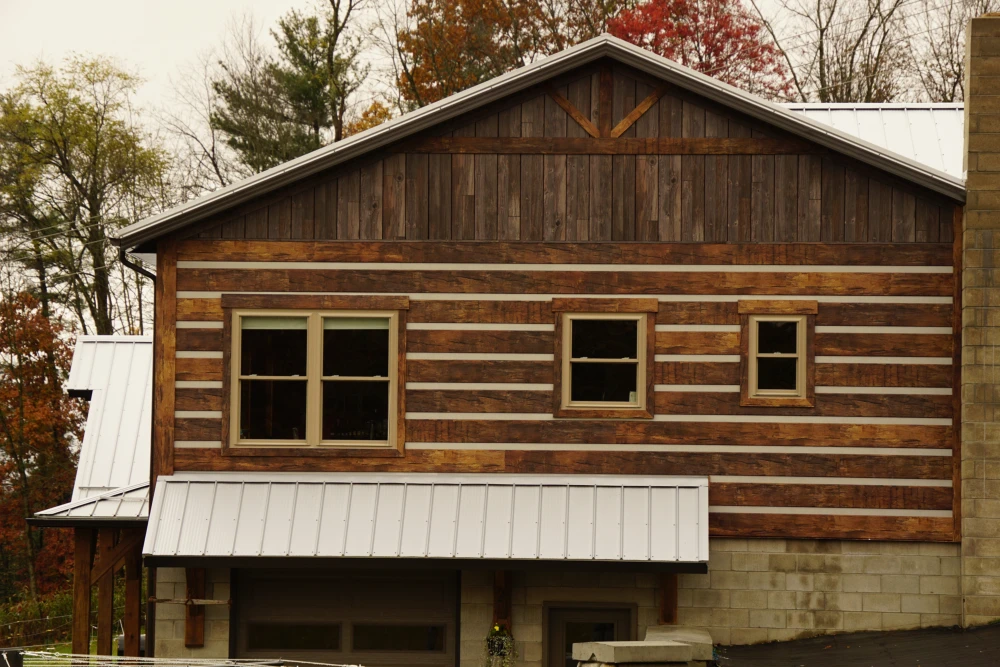
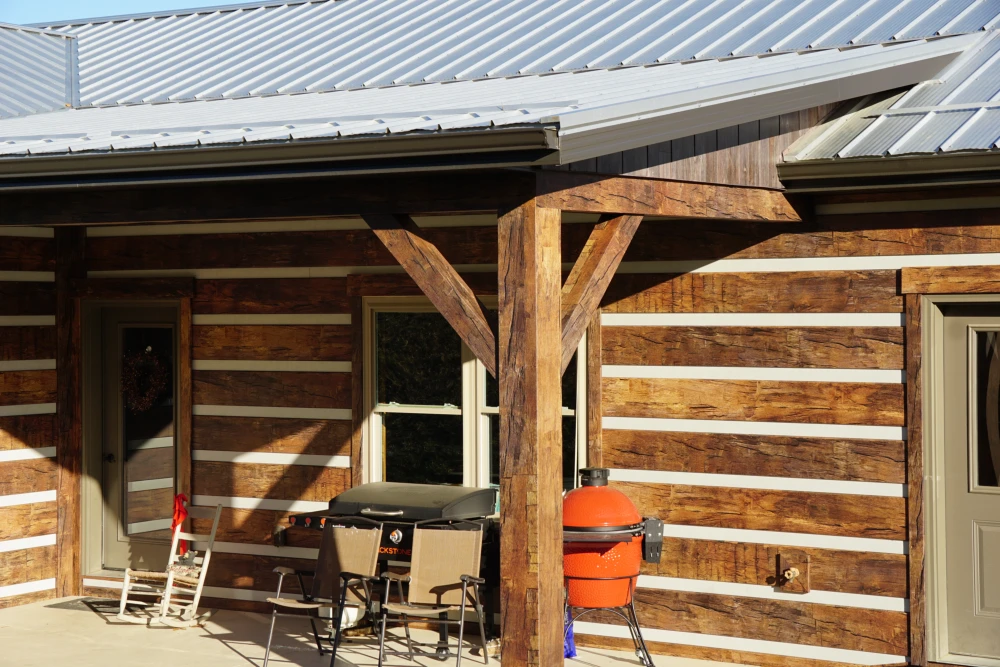
Hand hewn log siding with chinking in 26-gauge steel delivers the Pocono Mountain cabin and Pennsylvania Wilds lodge aesthetic without those failure modes. Steel doesn't absorb moisture, so freeze-thaw cycling has nothing to act on at the log joints. Chinking fills the joints in four colors: Ash Gray, Charcoal, Clay, and Sandstone Tan. From the road or the water, it reads as traditional log construction. The 50-year warranty applies through the full Pocono winter season.
SteeLuxe is the only manufacturer making hand hewn log siding with chinking in steel. It ships direct from New Philadelphia, Ohio to mountain cabins, ski properties, and year-round homes throughout Pennsylvania's Pocono corridor and the Pennsylvania Wilds, and is available in all 22 wood grain patterns in the SteeLuxe line.
Ready to Transform Your Home With Hand-Hewn Log Cabin Siding?
Get the authentic hand-hewn cabin look with the chinking detail you love, and never think about maintenance again. SteeLuxe steel siding is insulated, fire-rated, hail-resistant, and built to last a lifetime. See it and feel it for yourself.
Steel Siding vs the Alternatives
Pennsylvania's cold, nor'easter, and termite conditions test the three most common siding alternatives against a specification that requires freeze-thaw durability, impact resistance under wind load, and pest resistance across the state's full residential climate. Steel answers all three. Each alternative fails on at least two fronts.
Vinyl is the most common siding on Pennsylvania homes, and the state's cold conditions expose its central failure mode clearly. Cold is the first liability: the sustained temperatures that Pittsburgh, Allentown, Scranton, and the Pocono corridor deliver from October through April strip vinyl of its flexibility, cracking it at fastener points and panel edges before the spring storm season begins. Nor'easter wind load compounds the problem: panels that have gone brittle in cold are more likely to crack or separate from the wall during the lateral load of a February nor'easter. Termites enter wall assemblies through the gaps that open at penetrations and trim joints regardless of the panel material at the surface.
Fiber cement handles Pennsylvania's cold better than vinyl and gives termites nothing to eat at the panel surface. Its Pennsylvania liabilities are moisture absorption at cut edges, no Class 4 impact resistance rating in standard product lines, and a paint cycle that the state's wet nor'easter and shoulder seasons shorten faster than manufacturer estimates. Cut edges at windowsills, trim joints, and penetrations absorb moisture through Pennsylvania's prolonged wet seasons, and the freeze-thaw cycle works that moisture through dozens of hard freezes per season in Pittsburgh, Scranton, and Erie. The absence of a Class 4 rating leaves southeastern Pennsylvania installations without rated storm protection through every nor'easter season.
Wood siding in Pennsylvania faces failure from all three conditions. Paint on wood fails in 5 to 8 years under the state's freeze-thaw cycling and wet shoulder seasons, and the repainting interval on a home in Bucks County or the Lehigh Valley arrives sooner under nor'easter and storm moisture every season. Eastern subterranean termites treat wood siding as both a food source and an entry pathway into wall framing. Sandy-remnant and nor'easter wind events load wood panels with lateral stress and moisture that accumulate with each successive storm season. Steel ends the paint cycle, gives termites nothing to eat, and carries Class 4 impact resistance through every nor'easter season.
Frequently Asked Questions
Q:What makes SteeLuxe steel siding different from other steel siding products?
Q:How does the Slide-Lock installation system work?
Q:What wood grain patterns are available?
Q:Does steel siding rust?
Q:How does Pennsylvania's freeze-thaw climate affect siding in Pittsburgh, Erie, and the Pocono region?
Q:Is steel siding a good choice for Philadelphia and southeastern Pennsylvania homes exposed to nor'easters?
Q:How does termite pressure affect Pennsylvania homeowners, and does steel siding help?
Q:Does SteeLuxe install in my city?
Q:What should I know about siding for a Pennsylvania Pocono Mountain cabin or second home?
Pennsylvania Cities & Regions We Serve
SteeLuxe ships from New Philadelphia, Ohio to residential, historic, and contractor projects across all 67 Pennsylvania counties, with lead times that work for the year-round Philadelphia and Pittsburgh markets and the seasonal construction windows of the Pocono and Pennsylvania Wilds communities.
Philadelphia, Bucks County, Montgomery County, Chester County, and Delaware County represent Pennsylvania's largest residential siding market. Cold, nor'easter exposure, and active termite pressure drive consistent re-siding demand across the Philadelphia metro, and the large stock of colonial, Victorian, and cape cod homes in established suburban neighborhoods makes southeast Pennsylvania the state's highest-volume siding market year-round.
Pittsburgh, Butler, Beaver, and Washington counties represent western Pennsylvania's largest siding market, where a long freeze-thaw season and active termite pressure combine with the large stock of pre-war wood-framed homes in established Pittsburgh neighborhoods. Re-siding demand in the Pittsburgh metro is consistent through the construction season, driven by the age of the residential housing stock in communities like Squirrel Hill, Mount Lebanon, and the North Hills.
Allentown, Bethlehem, Scranton, and Wilkes-Barre represent the Lehigh Valley and northeastern Pennsylvania market, where nor'easter exposure and freeze-thaw cycling drive consistent re-siding demand through the full construction season. The Lehigh Valley's large stock of older colonial and cape cod homes and Scranton's dense urban residential stock provide consistent re-siding volume through spring and fall.
Erie and the Pocono Mountain communities of Stroudsburg, Mount Pocono, and East Stroudsburg represent Pennsylvania's two most specialized siding markets. Erie's lake-effect corridor demands the strongest cold performance specification in the state, and the Pocono second-home market drives seasonal re-siding demand concentrated in the spring and early fall construction windows.
Full city pages with local installer contacts and current pricing are available for Philadelphia, PA. More Pennsylvania cities are listed below:
Don't see your city listed here. Contact SteeLuxe directly and someone familiar with Pennsylvania's regional conditions will point you to the nearest installer and current pricing for your area.
Get a Quote for Steel Siding in Pennsylvania
SteeLuxe is manufactured in New Philadelphia, Ohio and ships direct. Whether you are planning a full re-siding project or exploring options, we can get you pricing, color samples, and a list of installers in your area.