
Steel Siding & Hand Hewn Log Siding in Oregon
Steel Siding in Oregon
Steel siding in Oregon answers for three conditions that divide along the Cascade Range. Freeze-thaw cycling is mild but persistent in the Willamette Valley and genuinely severe on the eastern high desert, where Bend averages a January low near 20 degrees and Baker City near 14. Wildfire risk runs along the eastern Cascade foothills and through the Rogue Valley, where Medford and Ashland sit at the edge of fire-active terrain. Wood grain siding in the 22 patterns SteeLuxe manufactures covers the full Oregon aesthetic, from the craftsman and cottage profiles of the Willamette Valley to the mountain and ranch profiles of the Bend corridor.
Freeze-thaw cycling in Oregon runs at two intensities. Western Oregon crosses the freezing mark repeatedly through the November through March shoulder season without staying deeply cold, making moisture management the primary challenge rather than raw cold. Eastern Oregon is genuinely cold: Bend averages a January low near 20 degrees, Baker City near 14 degrees, and Klamath Falls near 13 degrees, with freeze-thaw cycling that extends from November through March on the high desert.
Wildfire risk in Oregon is concentrated along the eastern Cascade foothills and through the Rogue Valley in southern Oregon. Bend, Redmond, and Prineville sit in designated wildfire-risk terrain on the eastern Cascade foothills, and the Klamath Basin communities carry active fire history across multiple recent seasons. Medford, Ashland, Grants Pass, and Jacksonville have seen fire events close enough to the urban edge that exterior material fire ratings carry practical relevance for many properties.
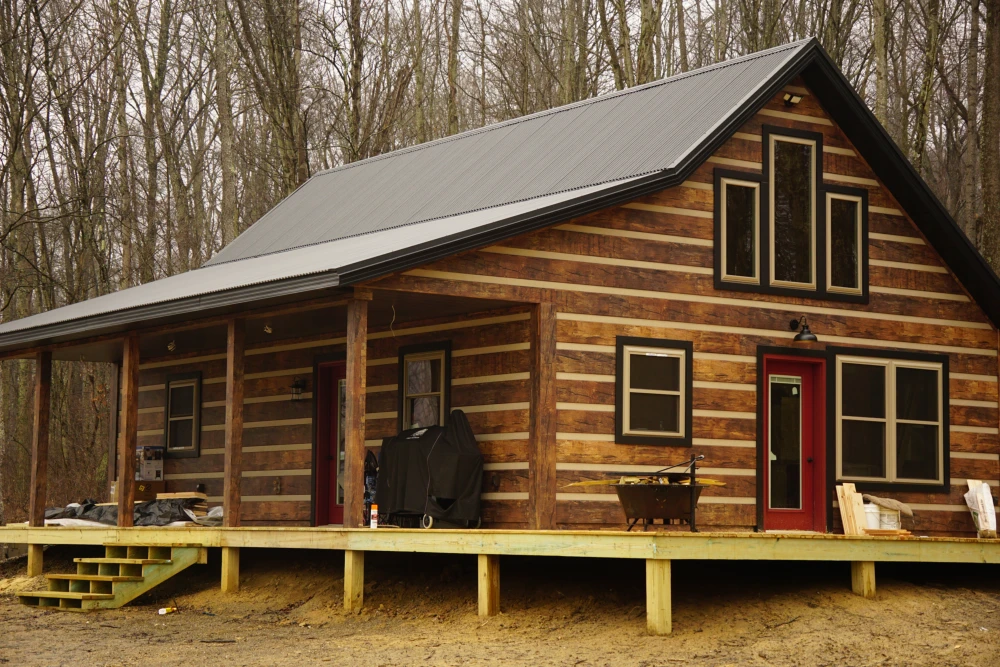
Oregon's Pacific coast carries sustained marine exposure driven by atmospheric rivers that deliver months of near-continuous rainfall from November through March. The Pacific storm track brings salt-laden moisture to Astoria, Lincoln City, Newport, Florence, and Coos Bay without the seasonal breaks that interrupt moisture exposure on most other U.S. coastlines. Corrosion-resistant materials are not optional at Oregon coastal addresses.
The Bend corridor represents Oregon's most active second-home and recreation property market. Sunriver and the communities around Mount Bachelor carry vacation and investment properties where the mountain cabin aesthetic defines the exterior profile. Southern Oregon's Rogue Valley also carries an active rural retreat and ranch property market. These properties combine cold and wildfire conditions that make exterior material choice a practical performance question.
Oregon's three main condition zones each carry a distinct profile. The coast carries the most sustained marine and corrosion exposure. Bend and the eastern Cascade foothills carry the most active wildfire risk and the state's most severe winter cold. Southern Oregon's Rogue Valley carries active wildfire history and a ranch and rural property market running through fire-risk terrain.
The Most Advanced Steel Siding On The Market
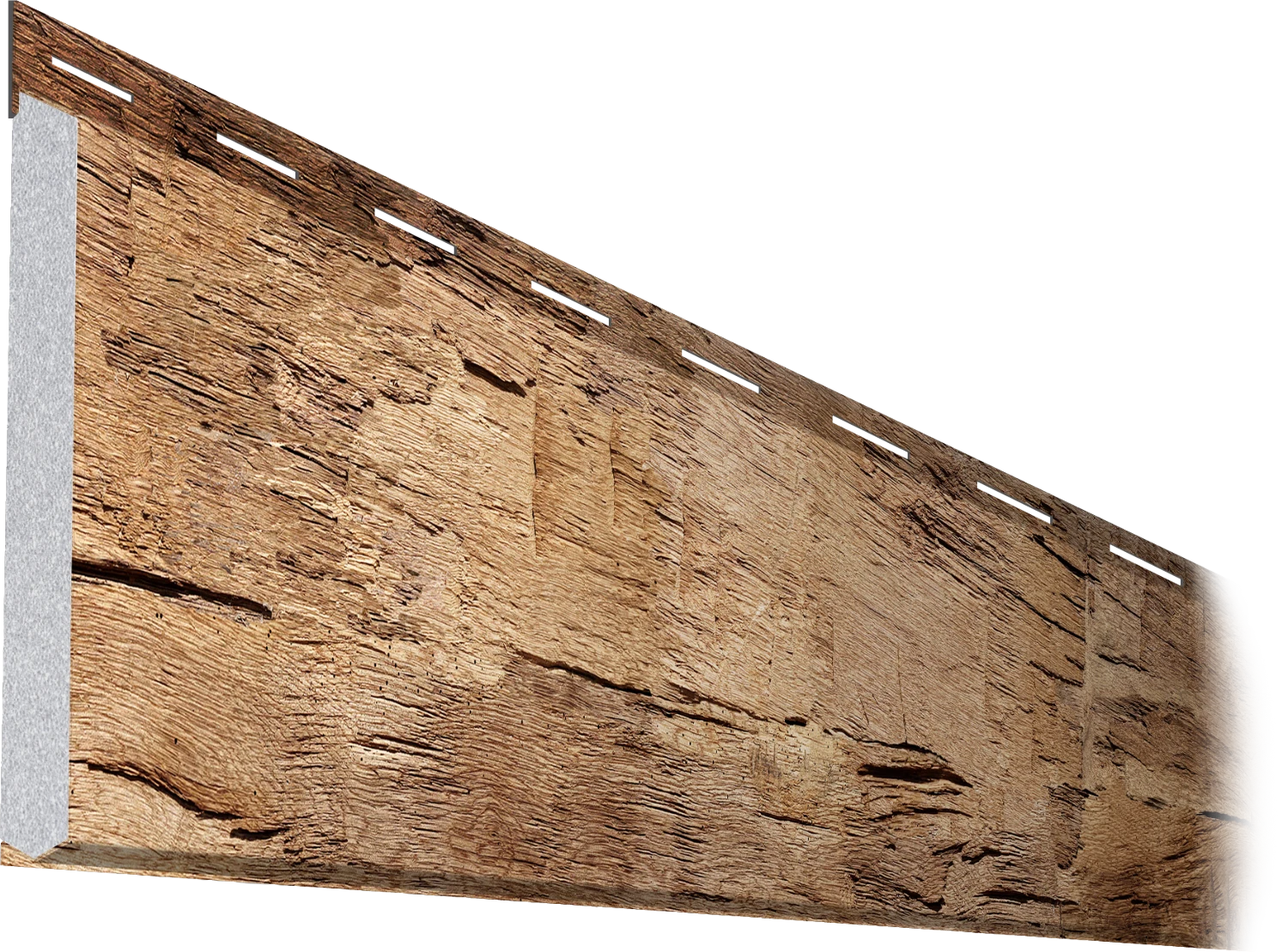
- 20 Year Fading & Chalking Warranty
- 50 Year Flaking & Peeling Warranty
- Lasts 40-60+ Years
- One Person Installation
Climate & Conditions Across Oregon
Oregon's Cascade Range divides the state into two climates that share a border but behave almost nothing alike, and each of the state's three active siding conditions distributes across that geography in ways that require region-specific answers.
Portland and the Willamette Valley communities of Salem, Eugene, Corvallis, and the surrounding Multnomah, Marion, Lane, and Benton county corridors represent the state's largest residential siding market and the mild, wet, west-side climate. The city averages a January low near 36 degrees and rarely sees sustained cold, but Portland crosses the freezing mark repeatedly across the November through February shoulder season, and the persistent moisture of the Pacific Northwest climate challenges surface coatings on every exterior material. Portland carries no meaningful wildfire risk and limited salt air exposure, but moisture management is the defining exterior performance challenge on west-side homes.
Bend and the central Oregon communities of Redmond, Prineville, Sisters, and the surrounding Deschutes and Crook county areas represent Oregon's fastest-growing siding market and the state's most active combination of cold and wildfire conditions. The city averages a January low near 20 degrees at the edge of the high desert, where severe winter cold and the wildfire risk of the Cascade foothills terrain overlap directly. Sunriver and the resort and vacation property communities around Mount Bachelor carry a dense concentration of second-home and investment properties where both conditions apply through every season.
Medford and the southern Oregon communities of Ashland, Grants Pass, Jacksonville, and the surrounding Jackson and Josephine county areas carry the state's most active wildfire history and a rural and ranch property market close to fire-active terrain. The city sits in the Rogue Valley with Oregon's warmest winter temperatures among inland cities, averaging a January low near 29 degrees, but the hills surrounding the valley have seen fire burn within miles of residential developments across multiple recent seasons. Ashland and Jacksonville, with their concentration of historic and high-value residential properties, represent a particularly active renovation and re-siding market in the southern Oregon corridor.
Astoria and the Oregon coast communities of Seaside, Cannon Beach, Lincoln City, Newport, Florence, Coos Bay, and Gold Beach carry the state's most sustained marine exposure and a residential and vacation property market that faces Pacific conditions on a near-continuous basis through the fall and winter wet season. The city, at the mouth of the Columbia River, sits at the intersection of river and ocean moisture that makes it the most corrosion-active exterior environment in the state. Newport and Coos Bay represent the central and southern coast's most active year-round residential siding markets, with a mix of permanent residents and vacation property owners.
Need help finding an installer?
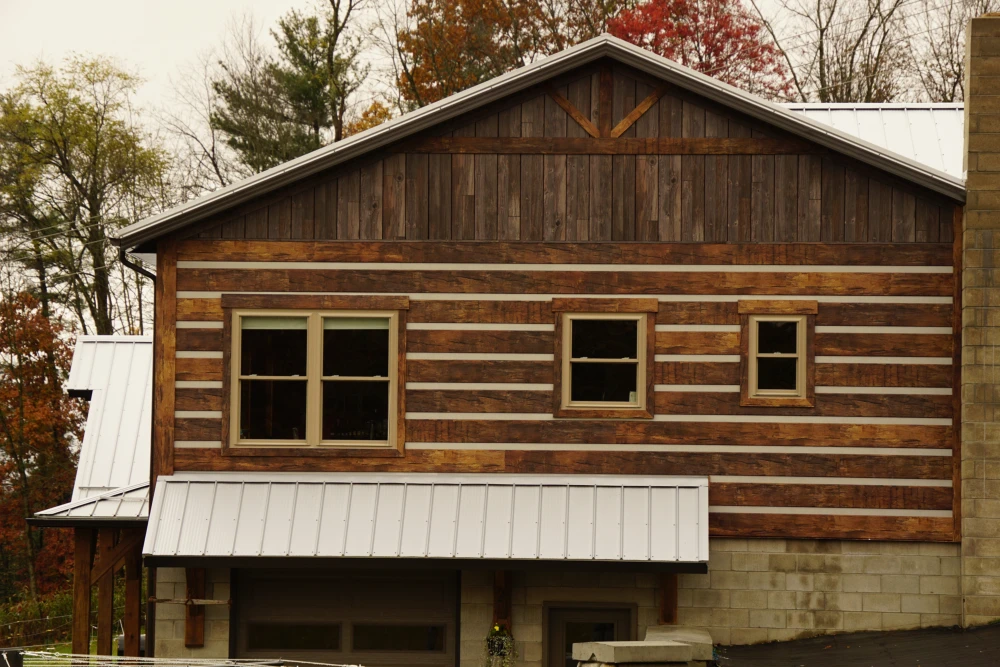
Why Steel Siding Is Right for Oregon
Three conditions are active across Oregon, and each one has a documented failure pattern in the materials most Oregon homes currently carry. Each has a direct answer in 26-gauge steel.
Freeze-thaw cycling across Oregon runs at two intensities, and steel answers both. In western Oregon, where Portland and the Willamette Valley cross the freezing mark repeatedly without staying deeply cold, sustained moisture exposure is the primary challenge. Steel doesn't absorb moisture, so the wet-season cycling that degrades surface coatings on wood and works moisture into fiber cement cut edges has nothing to act on at the panel level. In eastern Oregon, where temperatures in Bend and Baker City drop into the teens, vinyl goes brittle and fiber cement edges crack through dozens of hard freezes. Steel performs the same at both extremes.
Wildfire risk along the eastern Cascade foothills and through the Rogue Valley makes Class A fire rating a practical specification. A Class A-rated steel panel won't catch fire from wind-driven embers landing on or against the siding surface. At Bend, Sunriver, and the Cascade foothills communities where the surrounding terrain carries active fire risk, that rating matters every season. Standard vinyl carries no meaningful fire resistance and melts or ignites at relatively low temperatures. Fiber cement carries Class A fire rating but still accumulates moisture damage at cut edges, meaning it trades one liability for another in western Oregon's wet climate.
Oregon's coast requires corrosion resistance built into the material at the base level, not applied as a coating that degrades when salt air and moisture reach it continuously for months at a time. The AZ55 Galvalume base coat bonds a zinc-aluminum alloy to the steel core at the manufacturing stage. Atmospheric rivers deliver concentrated moisture to exposed building surfaces for weeks without interruption, and the corrosion protection that matters at Newport or Astoria is the kind that doesn't wash off.
Western Oregon's sustained moisture exposure is the exterior performance challenge that the Portland and Willamette Valley markets share with the coast, even without the salt air component. Paint on wood fails faster under sustained moisture exposure than under cold, and the Pacific Northwest wet season delivers that exposure every year from November through March. Steel holds its coating through the full Oregon wet season without the surface degradation that wood and fiber cement accumulate through repeated saturation and drying cycles.
Product Specifications
| Spec | Value |
|---|---|
| Gauge | 26-gauge steel (~25% thicker than 29-gauge) |
| Core | EPS foam, R-3.57 continuous insulation value |
| Fire Rating | Class A (highest available) |
| Impact Rating | Class 4 (highest available) |
| Colors | 50 solid colors (Sherwin Williams WeatherXL) |
| Wood Grain | 22 patterns (Kynar 500 resin) |
| Log Profile | Hand hewn log siding with chinking — 4 chinking colors |
| Warranty | 50-year peeling/flaking | 20-year fade/chalk |
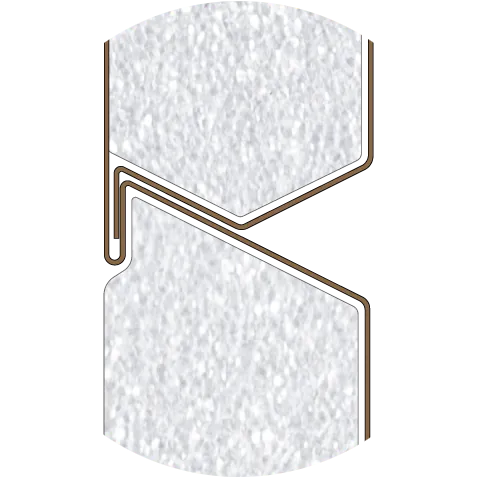
| Panel | 10-inch planks, Slide-Lock system, one-person install |
| Base Coat | AZ55 Galvalume (zinc-aluminum alloy corrosion barrier) |
| Origin | New Philadelphia, Ohio — direct ship to all 49 states |
Hand Hewn Log Siding with Chinking
Oregon's Bend corridor and Sunriver resort community, together with the rural retreat and ranch properties of southern Oregon, represent the state's most active market for the mountain cabin exterior profile. These properties combine cold and wildfire conditions with the aesthetic preferences of a recreation and second-home market, and the demands on exterior materials at unattended properties through an Oregon winter are real.
Real wood log siding at a Sunriver vacation cabin, a Cascade foothills property, or a Rogue Valley ranch faces the same failure cycle as wood anywhere in the region. Moisture works into log joints through the wet season, and freeze cycles on the high desert crack those joints and expose the wood beneath to repeated freeze-thaw damage. Wood in a wildfire-risk area also carries fire risk at the panel surface that steel eliminates.
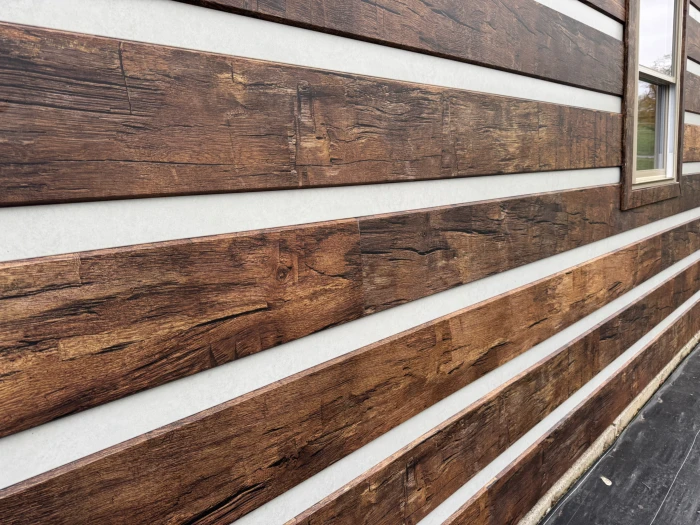
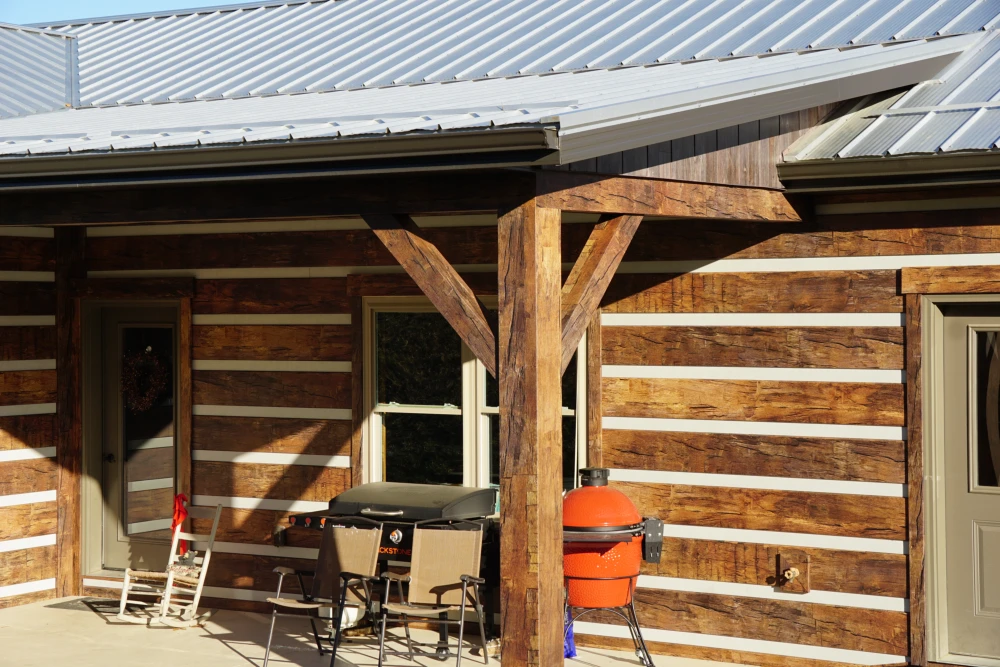
Hand hewn log siding with chinking in 26-gauge steel delivers the Oregon mountain and ranch aesthetic without those failure modes. Steel doesn't absorb moisture, so the freeze-thaw cycling that splits wood grain at log joints has nothing to act on. The Class A fire rating means the panel surface won't catch fire from wind-driven embers. Chinking fills the joints in four colors: Ash Gray, Charcoal, Clay, and Sandstone Tan. From the road, it reads as traditional log construction.
SteeLuxe is the only manufacturer making hand hewn log siding with chinking in steel. It ships direct from New Philadelphia, Ohio to vacation cabins, ranch properties, resort communities, and year-round homes throughout Oregon's Bend corridor, eastern Cascade foothills, and Rogue Valley, available across all 22 wood grain patterns in the SteeLuxe line.
Ready to Transform Your Home With Hand-Hewn Log Cabin Siding?
Get the authentic hand-hewn cabin look with the chinking detail you love, and never think about maintenance again. SteeLuxe steel siding is insulated, fire-rated, hail-resistant, and built to last a lifetime. See it and feel it for yourself.
Steel Siding vs the Alternatives
Oregon's cold, wildfire, and coastal conditions test the three most common siding alternatives against a specification that varies by region but demands real performance on at least one condition at every Oregon address and two or more at most. Steel answers all three. Each alternative falls short on at least one condition specific to Oregon.
Vinyl is the most common replacement siding on Oregon homes, and the state's conditions expose its failure modes across every region. In eastern Oregon, vinyl loses polymer flexibility below 20 degrees. Bend and Klamath Falls deliver that threshold through much of January and February, long enough for fastener points and panel edges to crack under thermal stress. On the Oregon coast, vinyl's paint surface degrades under sustained salt air and Pacific moisture exposure in a way that steel's Galvalume base coat does not. In wildfire-risk terrain, vinyl carries no fire resistance and melts or ignites at temperatures that a Class A-rated steel panel handles without surface damage.
Fiber cement carries a Class A fire rating and handles cold better than vinyl. Its main Oregon liabilities are moisture absorption at cut edges, vulnerability to the coastal corrosion environment, and a paint cycle that western Oregon's sustained moisture shortens. Moisture absorption at cut edges is a consistent weakness in western Oregon's wet-season climate, where surfaces face months of sustained rain exposure rather than discrete storm events. Edge cracking and surface separation shorten the effective life of fiber cement installations on west-side Oregon homes and coast-range-facing elevations. Factory paint on fiber cement also requires a repainting cycle that western Oregon's sustained moisture and the coast's salt air shorten relative to drier climates.
Wood siding in Oregon faces a maintenance burden that the climate makes both expensive and compounding. Sustained moisture exposure in western Oregon and the coast drives a paint failure cycle of 5 to 7 years, shorter than drier regions because the wood never fully dries between rain events from November through March. In eastern Oregon, freeze-thaw cycling accelerates paint failure and opens wood grain to moisture intrusion at joints. At Cascade foothills and Rogue Valley addresses, wood siding in wildfire-risk terrain is a fuel load, not just a maintenance liability.
Frequently Asked Questions
Q:What makes SteeLuxe steel siding different from other steel siding products?
Q:How does the Slide-Lock installation system work?
Q:What wood grain patterns are available?
Q:Does steel siding rust?
Q:How does Oregon's moisture and wet-season climate affect siding?
Q:Does Class A fire rating matter for Oregon homes in wildfire-risk areas?
Q:Is steel siding a good choice for the Oregon coast?
Q:Does SteeLuxe install in my city?
Q:What should I know about siding for an Oregon vacation cabin or ranch property?
Oregon Cities & Regions We Serve
SteeLuxe ships from New Philadelphia, Ohio to residential, cabin, and contractor projects across all 36 Oregon counties, with lead times that work for both the year-round Portland and Willamette Valley markets and the seasonal construction calendar of the eastern Oregon and coast communities.
Portland, Salem, Eugene, Corvallis, and the communities of Multnomah, Marion, Lane, and Benton counties represent Oregon's largest residential siding market. Moisture management is the primary exterior performance challenge in this corridor, and the large stock of older craftsman, bungalow, and ranch homes in the Portland and Salem metros drives ongoing re-siding activity across the west-side market.
Bend, Redmond, Prineville, and Sisters, along with the Sunriver and Mount Bachelor resort corridor, represent Oregon's fastest-growing siding market and the state's most active combination of cold and wildfire conditions. New construction in the Bend metro and renovation of the Sunriver and Black Butte Ranch vacation property stock drive year-round activity in Deschutes and Crook counties.
Medford, Ashland, Grants Pass, and Jacksonville represent the state's southern Oregon market, where wildfire history close to residential areas makes Class A fire rating a practical specification at many addresses. The Rogue Valley's concentration of historic and high-value residential properties drives a renovation and re-siding market active through both the residential and vacation property segments.
Astoria, Lincoln City, Newport, Florence, and Coos Bay represent Oregon's coastal market, where sustained Pacific exposure and salt air make corrosion-resistant materials essential at every address. The coast market carries both year-round residential properties and a significant vacation and investment property segment that drives active re-siding volume from Astoria to the California border.
Full city pages with local installer contacts and current pricing are available for Portland, OR. More Oregon cities are listed below:
Don't see your city listed here. Contact SteeLuxe directly and someone familiar with Oregon's regional conditions will point you to the nearest installer and current pricing for your area.
Get a Quote for Steel Siding in Oregon
SteeLuxe is manufactured in New Philadelphia, Ohio and ships direct. Whether you are planning a full re-siding project or exploring options, we can get you pricing, color samples, and a list of installers in your area.