
Steel Siding & Hand Hewn Log Siding in Minnesota
Steel Siding in Minnesota
Steel siding in Minnesota has to answer for cold unlike anything else in the lower 48. International Falls averages a January low of minus 22 degrees and holds the coldest city designation in the contiguous United States. The Twin Cities average below zero in January. Hail is an active condition across the southern and western parts of the state on the same spring and summer schedule that drives claim volume in Iowa and Kansas. Termite pressure is Moderate across the southern half of the state. Wood grain siding in the 22 patterns SteeLuxe manufactures covers the full Minnesota aesthetic, from Twin Cities craftsman bungalows to the log and timber profile of northern Minnesota's lake country.
Freeze-thaw cycling in Minnesota runs harder and longer than in any other state in the lower 48. Northern Minnesota, from Duluth and the Iron Range through the Boundary Waters country to the Canadian border, faces temperatures that regularly drop below minus 30 degrees and a freeze-thaw season running from October through April. Minnesota's Twin Cities metro averages a January low near minus 2 degrees and crosses the freezing mark dozens of times across the shoulder seasons.
Hail is an active condition across southern and western Minnesota, where the severe weather corridor that produces consistent hail damage across Iowa, Kansas, and Nebraska extends north into the state each spring and summer. The Twin Cities metro and the Rochester corridor in the southeast see hail events regularly from May through August. Western Minnesota's Red River Valley communities sit at the northern edge of the most active spring hail territory in the country and see claim volumes that reflect it.
Termite pressure is Moderate across Minnesota's southern half, covering the Twin Cities metro, the Rochester and southeast Minnesota communities, and the agricultural communities of the southwest. Subterranean colony activity is tied to soil temperature and runs through the warm months at every southern Minnesota address. Termite pressure drops to light or effectively absent in the northern half of the state, where the cold winters limit colony establishment and seasonal activity.
Minnesota's lake cabin and second-home market is one of the largest in the country. The state has more than 10,000 lakes, and a large share of the residential properties on or near those lakes are seasonal cabins and four-season retreats that sit vacant through the full Minnesota winter. When an exterior material fails through a Minnesota winter without anyone there to catch it, the spring opening requires repair instead of use. Steel siding's performance through freeze-thaw cycling without maintenance attention is the most direct answer to that requirement.
Minnesota's four regions each carry the conditions at different intensities. The Twin Cities metro and southern Minnesota carry the largest re-siding market and the full condition stack. Duluth and the Iron Range carry the most extreme cold. The lake cabin market runs statewide. Northern Minnesota's lake and wilderness country carries the strongest log and camp aesthetic.
The Most Advanced Steel Siding On The Market
- 20 Year Fading & Chalking Warranty
- 50 Year Flaking & Peeling Warranty
- Lasts 40-60+ Years
- One Person Installation
Climate & Conditions Across Minnesota
Minnesota's geography stretches far enough north to south that the Twin Cities and International Falls effectively run different climates, and the state's position on the Plains exposes every region to the severe weather that tracks through the Midwest each spring and summer.
The Twin Cities metro is Minnesota's largest residential siding market by a wide margin. Minneapolis and St. Paul, together with the suburban ring of Hennepin, Ramsey, Dakota, Anoka, and Washington counties, hold the majority of the state's housing stock and drive the largest re-siding volume. The metro's housing ranges from the craftsman and colonial neighborhoods of Minneapolis, St. Paul, and the inner suburbs to the postwar ranch and rambler neighborhoods built through the 1950s and 1960s. January lows average near minus 2 degrees, and the freeze-thaw shoulder seasons run long on both ends. Hail is a consistent claim driver from May through August, and Moderate termite pressure applies across the metro.
Duluth and the Iron Range communities from Hibbing and Virginia through Ely sit at the northern edge of the state's residential markets. Duluth's position on Lake Superior adds a lake-effect moisture and wind component the inland Iron Range communities don't share. Duluth averages a January low near minus 5 degrees, while Iron Range communities average below minus 10 and regularly reach minus 30 in hard winters. The housing stock in these communities is older than the Twin Cities metro average and reflects the mining and industrial character of the region, with working-class bungalows and two-story homes built to last and being re-sided rather than replaced.
Western Minnesota from Moorhead and the Red River Valley through Willmar, Marshall, and the southwestern agricultural communities carries a Plains condition profile: flat terrain with no tree cover to deflect wind, a spring and summer hail season that matches the most active parts of Iowa and South Dakota, and a freeze-thaw season that runs hard through the open landscape. Moorhead, directly across the Red River from Fargo, North Dakota, sits at the geographic center of the northern Plains hail corridor. Termite pressure is Moderate through the southern portion of this region and diminishes northward.
Northern Minnesota from the Brainerd Lakes region through Bemidji, Walker, and the Boundary Waters Canoe Area Wilderness corridor to International Falls is the state's largest lake cabin and resort market. Properties here range from multi-generation family cabins on remote lakes to four-season retreats on the major lake systems of Leech Lake, Cass Lake, and Mille Lacs. The exterior material requirement is consistent across all of them: it has to hold condition through a northern Minnesota winter, with temperatures below minus 30 and heavy snowfall, without anyone there to watch it or respond to a failure.
Need help finding an installer?
Why Steel Siding Is Right for Minnesota
Three conditions are active across Minnesota's southern half and two across the north. Each has a documented failure pattern in the materials most Minnesota homes currently carry, and each has a direct answer in 26-gauge steel.
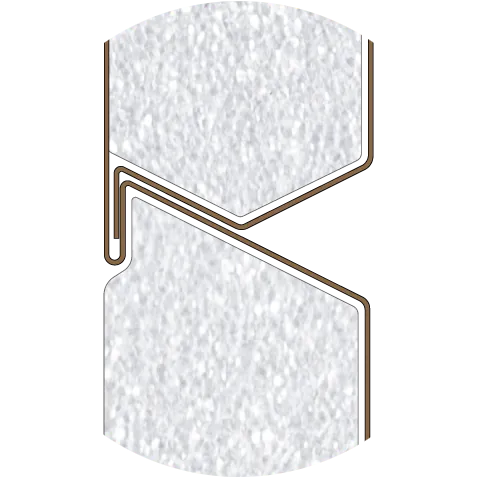
Freeze-thaw cycling is the condition every Minnesota installation has to answer first, and nowhere in the lower 48 does it run harder or longer. Steel doesn't absorb moisture, so there's nothing inside the panel to freeze, expand, and crack when temperatures drop below zero for weeks at a time. The Slide-Lock panel system handles the dimensional changes Minnesota's extreme temperature swings produce in the steel without creating gaps at joints or pulling fasteners loose. Vinyl goes brittle at temperatures well above the lows Minnesota delivers each winter. Wood opens at joints through repeated moisture absorption and release across a freeze-thaw season that runs six months in the north.
Hail across southern and western Minnesota puts Class 4 impact resistance on the specification the same way it does in Iowa or Kansas. Class 4 is the ceiling of the IBHS impact rating system, and Minnesota insurance carriers recognize it for premium discounts on the same basis as Plains state carriers. A Class 4-rated panel takes a two-inch steel ball dropped from 20 feet without cracking or chipping. Homeowners in the Twin Cities and the Rochester corridor who have replaced hail-damaged vinyl already know the cycle. Upgrading to Class 4 steel at the next replacement ends it.
Termite pressure at Moderate across Minnesota's southern half means wood siding at every Twin Cities and southern Minnesota address carries a permanent liability in the soil beneath it. Subterranean colonies are active through the warm months across the metro and the agricultural communities of the southwest. Steel siding gives termites nothing to eat: no wood content in the panel and no moisture pathway a colony can exploit at the wall level. That protection holds without retreatment for the full 40 to 60-year life of the installation.
Minnesota's lake cabin market has one exterior requirement: perform through freeze-thaw and extreme cold without anyone watching. A cabin on Leech Lake or Mille Lacs sits vacant from October through April, absorbing every freeze-thaw cycle without a maintenance visit. Steel siding's 50-year warranty against peeling, chipping, cracking, and flaking runs through a northern Minnesota winter the same way it runs through July, without needing to be checked or serviced between seasons.
Product Specifications
| Spec | Value |
|---|---|
| Gauge | 26-gauge steel (~25% thicker than 29-gauge) |
| Core | EPS foam, R-3.57 continuous insulation value |
| Fire Rating | Class A (highest available) |
| Impact Rating | Class 4 (highest available) |
| Colors | 50 solid colors (Sherwin Williams WeatherXL) |
| Wood Grain | 22 patterns (Kynar 500 resin) |
| Log Profile | Hand hewn log siding with chinking — 4 chinking colors |
| Warranty | 50-year peeling/flaking | 20-year fade/chalk |
| Panel | 10-inch planks, Slide-Lock system, one-person install |
| Base Coat | AZ55 Galvalume (zinc-aluminum alloy corrosion barrier) |
| Origin | New Philadelphia, Ohio — direct ship to all 49 states |
Hand Hewn Log Siding with Chinking
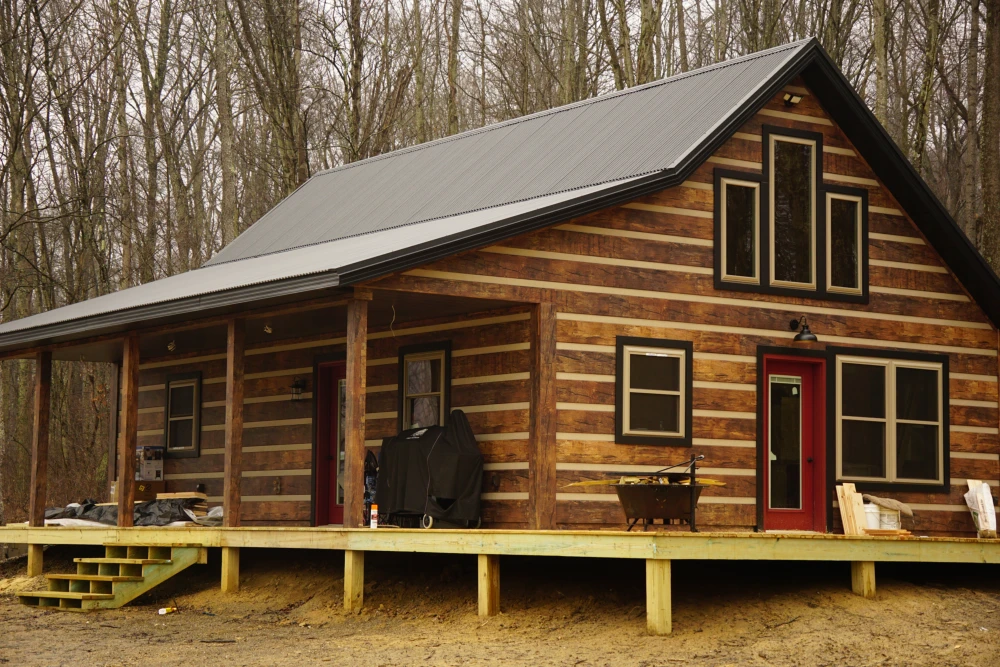
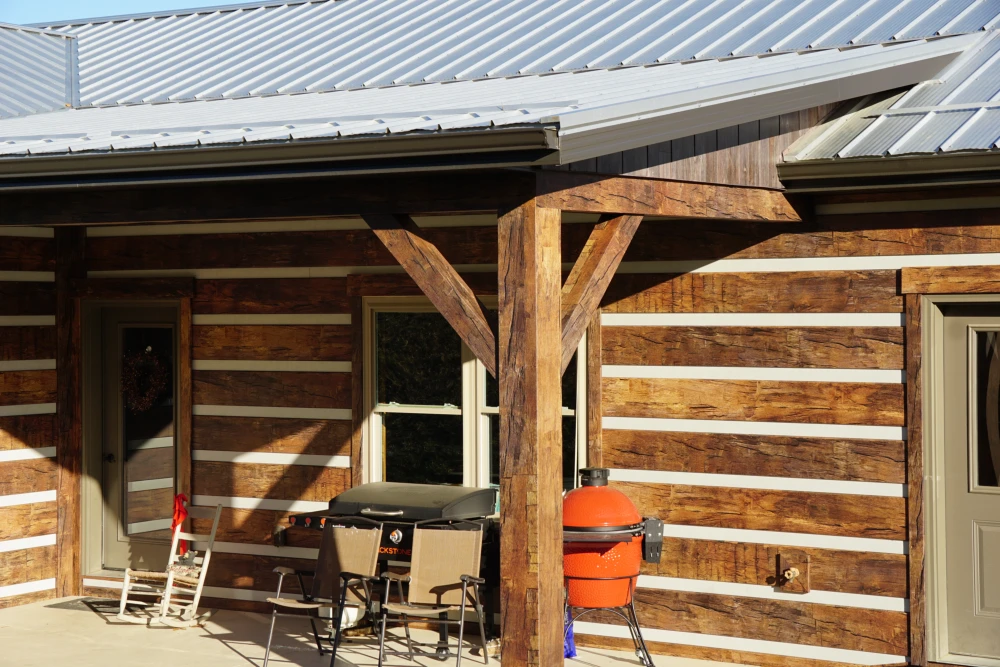
Northern Minnesota carries the strongest log and cabin exterior market in the Upper Midwest. Lake cabins, hunting camps, fishing retreats, and year-round properties from the Brainerd Lakes north through the Boundary Waters country and the communities around International Falls represent a market where the hand hewn log profile is the expected aesthetic for the property type. New cabins get built in it and buyers of lakefront property expect to see it.
Real wood log siding in northern Minnesota faces the state's most demanding freeze-thaw cycling. Moisture works into wood grain and log joints through the long shoulder seasons, and temperatures that reach minus 30 or colder in January run those freeze cycles far harder than in milder climates. The window for exterior work at northern Minnesota lake properties is short, and the cost of repainting or re-staining a remote cabin competes with the brief summer for the same calendar slot.
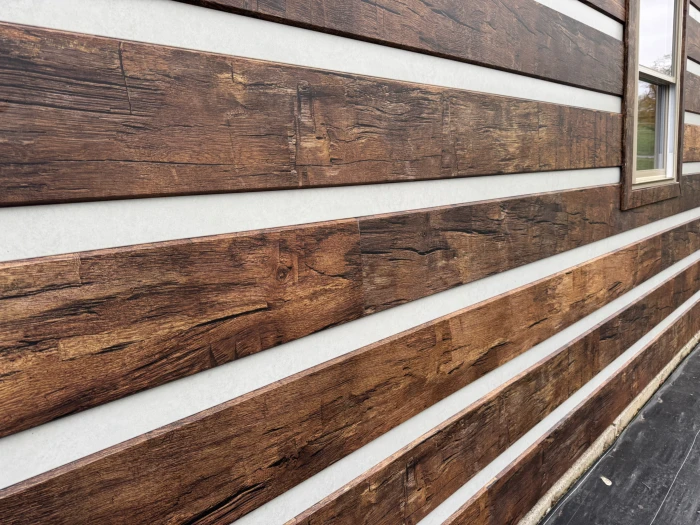
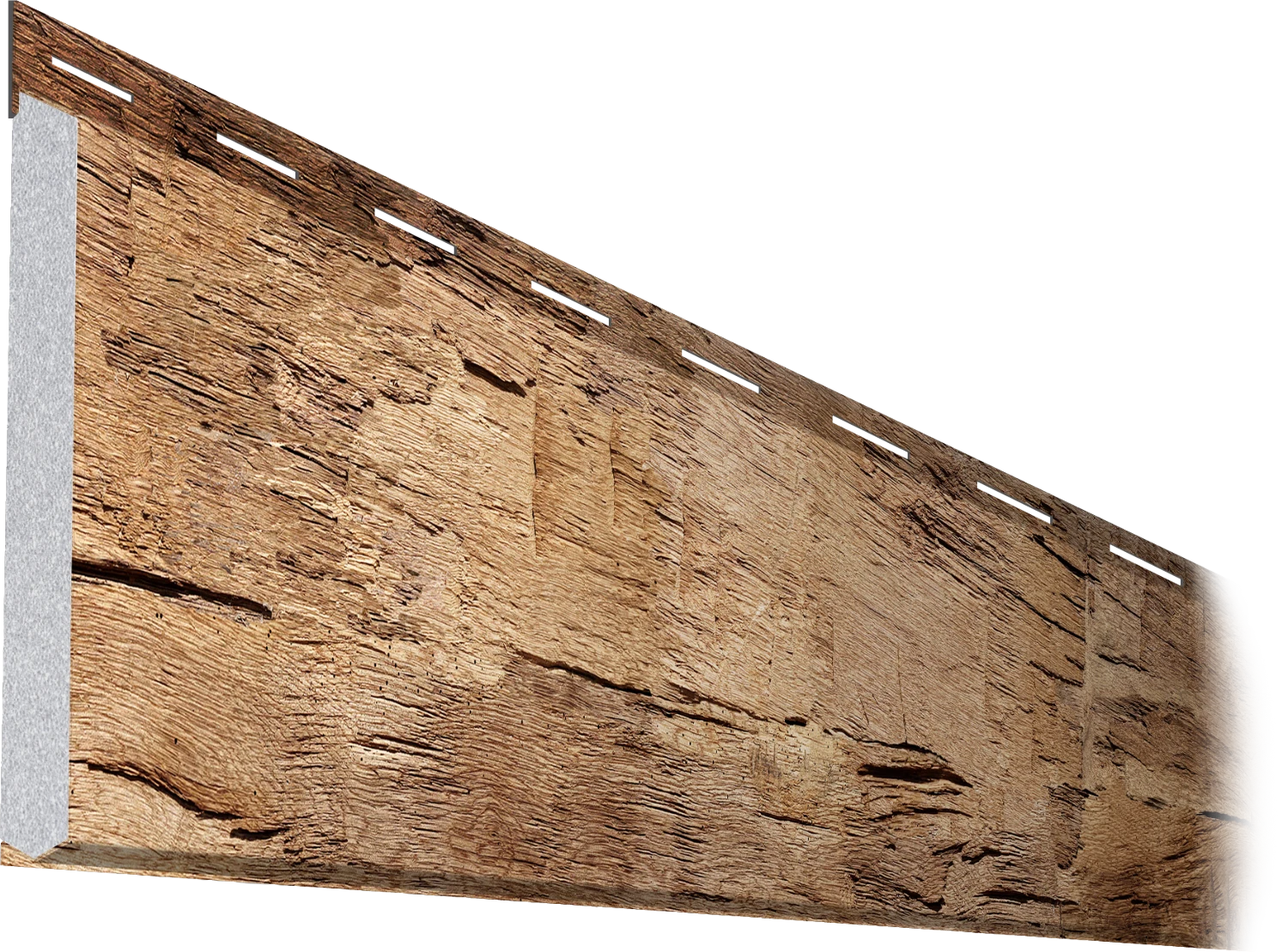
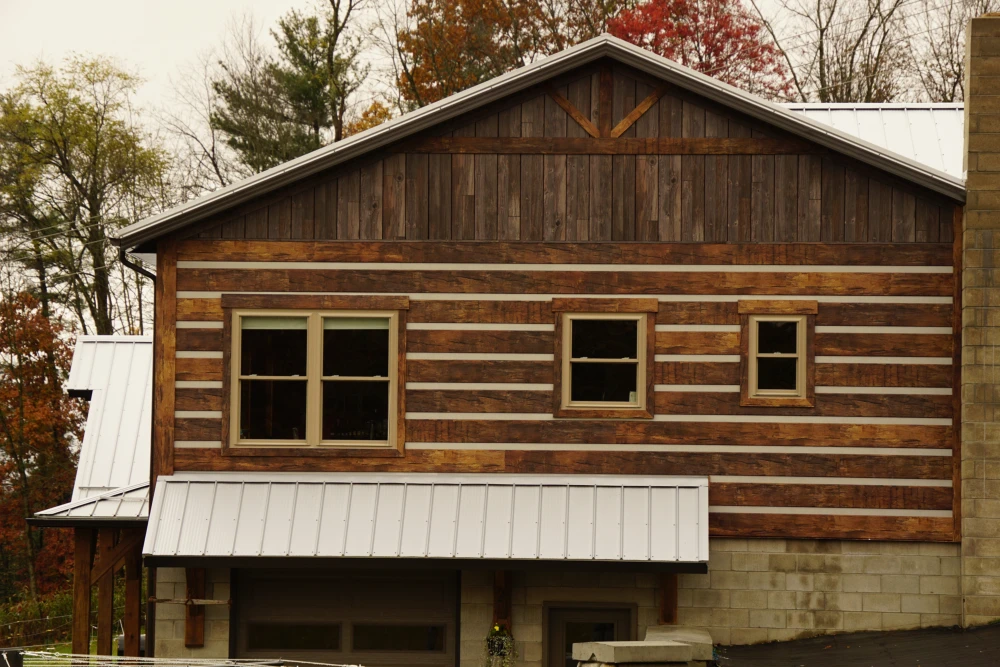
Hand hewn log siding with chinking in 26-gauge steel delivers the northern Minnesota cabin aesthetic without those failure modes. Steel doesn't absorb moisture, so the freeze-thaw cycle that splits wood grain at log joints has nothing to act on. The hand hewn surface replicates the texture and dimensional variation of actual milled log siding. Chinking fills the joints in four colors: Ash Gray, Charcoal, Clay, and Sandstone Tan. From the road, it reads as traditional log construction.
SteeLuxe is the only manufacturer making hand hewn log siding with chinking in steel. It ships direct from New Philadelphia, Ohio to lake cabins, hunting camps, and year-round homes throughout Minnesota's lake country and northern wilderness communities, available across all 22 wood grain patterns in the SteeLuxe line.
Ready to Transform Your Home With Hand-Hewn Log Cabin Siding?
Get the authentic hand-hewn cabin look with the chinking detail you love, and never think about maintenance again. SteeLuxe steel siding is insulated, fire-rated, hail-resistant, and built to last a lifetime. See it and feel it for yourself.
Steel Siding vs the Alternatives
Minnesota's cold puts every major siding material through a performance test that most of the country never applies. Each alternative has a specific failure pattern in this climate, and the state's freeze-thaw intensity accelerates the timeline those failures run on.
Vinyl is the most common replacement siding on Minnesota homes over the last 40 years, and it fails in this climate in two specific ways. Below 20 degrees, vinyl loses the polymer flexibility it needs to absorb wind stress and the expansion and contraction that temperature swings produce. Minnesota winters push vinyl through that brittle range for weeks at a time in the Twin Cities and for months in the north. Hail is vinyl's second problem across the southern half of the state. A hail event at a size that leaves a Class 4-rated steel panel intact sends vinyl siding to an insurance claim and a replacement crew. Replacing vinyl with vinyl in Minnesota restarts both failure clocks.
Fiber cement handles cold better than vinyl and carries a Class A fire rating, but it has two Minnesota-specific liabilities. Moisture absorption at cut edges is the first liability. Minnesota's freeze-thaw season is long enough and cold enough that moisture working into cut fiber cement edges at penetrations and trim goes through dozens of hard freeze cycles per season, causing edge cracking and surface separation that shortens the material's effective life below its rated performance. Factory paint on fiber cement requires repainting on a 10 to 15-year cycle, and in Minnesota's climate that cycle begins on the most exposed elevations before the 10-year mark. Class 4 impact resistance is not available in fiber cement.
Wood siding is the historically appropriate material on Minnesota's early-1900s craftsman and Victorian homes, and historic district guidelines in Minneapolis, St. Paul, and cities like Stillwater and Red Wing require it in designated neighborhoods. The maintenance burden in this climate is the argument wood can't escape. Paint on wood siding in Minnesota's freeze-thaw environment fails every 5 to 8 years. Termites at Moderate pressure across the southern half of the state treat wood siding as a permanent food source. Over a 30-year ownership period, the cumulative cost of maintaining wood in this climate is the argument that sends most Minnesota owners toward a better material at the next replacement.
Frequently Asked Questions
Q:What makes SteeLuxe steel siding different from other steel siding products?
Q:How does the Slide-Lock installation system work?
Q:What wood grain patterns are available?
Q:Does steel siding rust?
Q:How does Minnesota's cold affect steel siding compared to vinyl?
Q:Is steel siding a good choice for a Minnesota lake cabin?
Q:How does Minnesota's hail season affect siding choice?
Q:Does SteeLuxe install in my city?
Q:Does the log siding profile work on a Minnesota lake cabin?
Minnesota Cities & Regions We Serve
SteeLuxe ships from New Philadelphia, Ohio to residential, cabin, and contractor projects across all 87 Minnesota counties, with lead times that work for both the year-round Twin Cities market and the shorter construction season in the northern lake country.
Minneapolis and St. Paul, together with the suburbs of Hennepin, Ramsey, Dakota, Anoka, Washington, Scott, and Carver counties, make up the state's largest residential siding market. Re-siding activity here runs year-round, driven by the aging inner-ring housing stock and the consistent hail claim cycle that moves through the metro each spring and summer.
Duluth, Superior, and the Iron Range communities of Hibbing, Virginia, Eveleth, and Ely represent the northern residential siding market, where the extreme cold argument is most immediate and the housing stock skews older. Lake Superior's influence adds persistent moisture and wind loading to the exterior conditions in Duluth specifically.
Rochester and the southeast Minnesota communities of Austin, Albert Lea, and Winona carry the most active hail exposure in the state and the full Moderate termite pressure of the southern half. The Mayo Clinic corridor drives consistent high-value residential construction and re-siding activity in the Rochester market.
Moorhead, St. Cloud, Willmar, Marshall, and the agricultural communities of the Red River Valley and southwestern Minnesota carry the Plains condition profile: hard freeze-thaw, active hail, and consistent wind load across the open landscape that adds stress to every siding fastener and seam.
Brainerd, Bemidji, Walker, Ely, and the communities of the Boundary Waters and Voyageurs National Park corridor are the state's primary market for the log and cabin siding profile. Properties here range from working-class fishing cabins to four-season retreats on the major northern lake systems.
Full city pages with local installer contacts and current pricing are available for Minneapolis, MN. More Minnesota cities are listed below:
Don't see your city listed here. Contact SteeLuxe directly and someone familiar with Minnesota's regional conditions will point you to the nearest installer and current pricing for your area.
Get a Quote for Steel Siding in Minnesota
SteeLuxe is manufactured in New Philadelphia, Ohio and ships direct. Whether you are planning a full re-siding project or exploring options, we can get you pricing, color samples, and a list of installers in your area.