
Steel Siding & Hand Hewn Log Siding in Michigan
Steel Siding in Michigan
Steel siding in Michigan answers for four conditions across both peninsulas. Freeze-thaw cycling runs hard from October through April statewide, with the Upper Peninsula dropping below minus 30 degrees in hard winters and the Lower Peninsula crossing the freeze-thaw threshold repeatedly across the shoulder seasons. Hail tracks through the mid-Michigan corridor every spring and summer, and insurance carriers price Class 4 impact resistance into premiums the same way Plains state carriers do. Termite pressure is Moderate across the Lower Peninsula. Year-round Great Lakes humidity adds a moisture cycling condition that accelerates failure in every exterior material that absorbs water. Wood grain siding in the 22 patterns SteeLuxe manufactures covers the full Michigan residential aesthetic, from Detroit's colonial suburbs to the painted clapboard cottages of the northern lake communities.
Freeze-thaw cycling applies at every Michigan address but runs very differently across the two peninsulas. The Upper Peninsula sits at the latitude of northern Ontario, and Houghton, Marquette, and the Keweenaw Peninsula regularly record January lows below minus 20 degrees, with a freeze-thaw season spanning September through May in hard years. Michigan's Lower Peninsula is milder but averages January lows near 12 degrees in the south and near zero in the northern counties. Every installation faces a long season where moisture absorption and freezing are the primary stress on exterior materials.
Hail is an active condition across Michigan's Lower Peninsula, with the most consistent activity through the I-96 and I-75 corridors from the Ohio border north through Lansing and Flint. April through June delivers the highest frequency of hail events, and the Detroit metro ranks among the more active hail claim markets in the Great Lakes region. Class 4 is the ceiling of the IBHS impact system, and at that rating a panel takes a two-inch steel ball dropped from 20 feet without cracking.
Termite pressure is Moderate across Michigan's Lower Peninsula, most active in the southeastern counties closest to Ohio and Indiana. Subterranean colonies are active through the warm months at every LP address, and wood siding in these markets carries a permanent liability in the soil underneath it. Termite pressure in the Upper Peninsula is effectively absent, making freeze-thaw and hail the dominant conditions there.
Great Lakes humidity adds a moisture cycling condition on top of freeze-thaw. Lake-effect snow dumps heavy moisture loads on west Michigan from November through February, and humidity runs high across the Lower Peninsula through every season. Exterior materials that absorb moisture cycle through wet and dry states repeatedly over a Michigan year, and that cycling compounds the freeze-thaw damage it enables in cold months. Steel doesn't absorb moisture in any season, so the cycling has nothing to act on.
Michigan's four regions each face these conditions at different intensities. The Detroit metro and southeast Michigan carry the largest re-siding market. West Michigan and the lake-effect corridor run the heaviest winter moisture. Northern Lower Michigan's cottage market is the largest second-home market in the state. Michigan's Upper Peninsula is the log and camp market.
The Most Advanced Steel Siding On The Market
- 20 Year Fading & Chalking Warranty
- 50 Year Flaking & Peeling Warranty
- Lasts 40-60+ Years
- One Person Installation
Climate & Conditions Across Michigan
Michigan's two peninsulas and its position between four Great Lakes produce regional conditions that vary more than in most contiguous states, from the near-Canadian winters of the Upper Peninsula to the urban heat island of metro Detroit.
Detroit and the southeast Michigan suburbs make up the state's largest residential siding market. The metro's housing stock skews toward the brick colonial and ranch homes built in the postwar suburban expansion of Oakland, Macomb, and Wayne counties, and the siding on those homes, whether original aluminum from the 1960s or vinyl from the 1990s, is reaching the end of its useful life at a consistent rate. Freeze-thaw cycling runs moderately hard here, with January lows near 15 degrees in the southeast. Hail is a recurring claim driver across the metro, and termite pressure is Moderate, making this a market where every active Michigan condition is in play.
Grand Rapids and the west Michigan lakeshore communities from Holland and Muskegon north through the Traverse City corridor carry a different condition stack than the east side of the state. Lake Michigan's lake-effect snowfall delivers some of the highest seasonal snow totals in the contiguous United States to communities within 20 miles of the western shoreline, and the moisture load those events carry is higher than standard snowfall. Winters are slightly milder at the shoreline but snowfall is much heavier, and spring thaw happens more slowly. Hail and Moderate termite pressure apply here as they do across the Lower Peninsula.
Northern Lower Michigan from Traverse City and Petoskey through Charlevoix and the Torch Lake corridor is the state's largest second-home and cottage market. Properties on the inland lakes, Grand Traverse Bay, and Little Traverse Bay face a specific requirement: the exterior material has to perform through the full winter without anyone watching. A cottage opened in May with failed siding has already absorbed a full winter of damage. Freeze-thaw cycling runs harder here than in the south, and lake-effect snow adds consistent moisture loading through the winter.
The Upper Peninsula runs a genuinely different climate than the Lower Peninsula, severe enough that it feels closer to the Canadian Maritimes than to the rest of Michigan. Houghton, Marquette, and the Keweenaw Peninsula receive the highest annual snowfall totals in the contiguous United States east of the Rockies, and January lows in the minus 20 to minus 30 degree range are a normal part of most winters. Termite pressure is effectively absent. The hunting camp, sporting camp, and rural property market creates consistent demand for the log and timber aesthetic that fits the landscape and the culture of the region.
Need help finding an installer?
Why Steel Siding Is Right for Michigan
Four conditions are active across Michigan's Lower Peninsula, and three in the Upper. Each one has a documented failure pattern in the materials most Michigan homes currently carry, and each has a specific answer in 26-gauge steel.
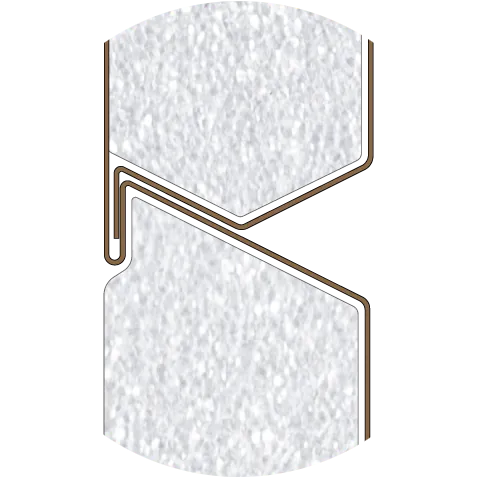
Freeze-thaw cycling is the condition every Michigan installation has to answer first. Steel doesn't absorb moisture, so there's nothing inside the panel to freeze, expand, and crack when temperatures drop. The Slide-Lock panel system handles the dimensional changes temperature swings produce in the steel without creating gaps at joints or pulling fasteners loose. In the Upper Peninsula, where temperatures drop below minus 30 and the freeze-thaw season runs eight months, that advantage over moisture-absorbing materials compounds with every cycle. Vinyl goes brittle below 20 degrees. Wood opens at joints through repeated moisture absorption and release over a Michigan winter.
Hail in Michigan's Lower Peninsula and the Class 4 impact rating work the same way they do in Iowa or Kansas. Class 4 is the ceiling of the IBHS impact system, and Michigan insurance carriers recognize it for premium discounts on the same basis Plains state carriers do. A Class 4-rated panel takes a two-inch steel ball dropped from 20 feet without cracking or chipping. Homeowners in the Detroit metro and the I-96 corridor who have already replaced hail-damaged vinyl know the cycle. Upgrading to Class 4 at the next replacement ends it.
Termites at Moderate pressure across the Lower Peninsula mean wood siding carries a permanent liability at every LP address. Subterranean colonies are in the soil through the warm months in the southeast counties and through a long active season across the rest of the LP. Steel siding gives termites nothing to eat: no wood content in the panel, and no moisture pathway a colony can exploit at the wall level. That protection holds without retreatment for the full 40 to 60-year life of the installation.
Great Lakes humidity and lake-effect moisture cycling add a year-round wet-dry stress that amplifies freeze-thaw damage in winter and accelerates paint failure in summer. Steel doesn't absorb moisture in any season. The EPS foam core adds R-3.57 insulation that reduces the work heating does through a Michigan winter and cuts the cooling load through the humid Great Lakes summer. Class A fire rating is standard across the full SteeLuxe line.
Product Specifications
| Spec | Value |
|---|---|
| Gauge | 26-gauge steel (~25% thicker than 29-gauge) |
| Core | EPS foam, R-3.57 continuous insulation value |
| Fire Rating | Class A (highest available) |
| Impact Rating | Class 4 (highest available) |
| Colors | 50 solid colors (Sherwin Williams WeatherXL) |
| Wood Grain | 22 patterns (Kynar 500 resin) |
| Log Profile | Hand hewn log siding with chinking — 4 chinking colors |
| Warranty | 50-year peeling/flaking | 20-year fade/chalk |
| Panel | 10-inch planks, Slide-Lock system, one-person install |
| Base Coat | AZ55 Galvalume (zinc-aluminum alloy corrosion barrier) |
| Origin | New Philadelphia, Ohio — direct ship to all 49 states |
Hand Hewn Log Siding with Chinking
Michigan's Upper Peninsula carries the state's strongest market for the hand hewn log and timber profile. Hunting camps, sporting camps, and year-round rural properties across the UP represent a market where the log exterior is the expected aesthetic for the property type. Northern Lower Michigan's cottage and lakefront markets share some of that character, particularly in the more remote inland lake communities of Antrim, Charlevoix, and Otsego counties.
Real wood log siding in the Upper Peninsula faces the state's most aggressive freeze-thaw cycling. Moisture works into wood grain and log joints through the long shoulder seasons, and the UP's extreme cold runs those cycles harder than anywhere else in the Great Lakes region. Termite pressure is absent in the UP, but freeze-thaw and the sustained moisture from lake-effect snowfall are sufficient to accelerate surface failure and joint opening faster than in milder climates.
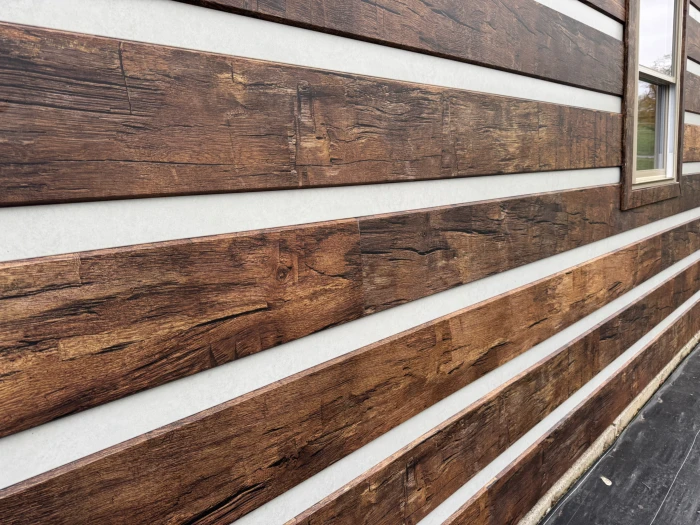
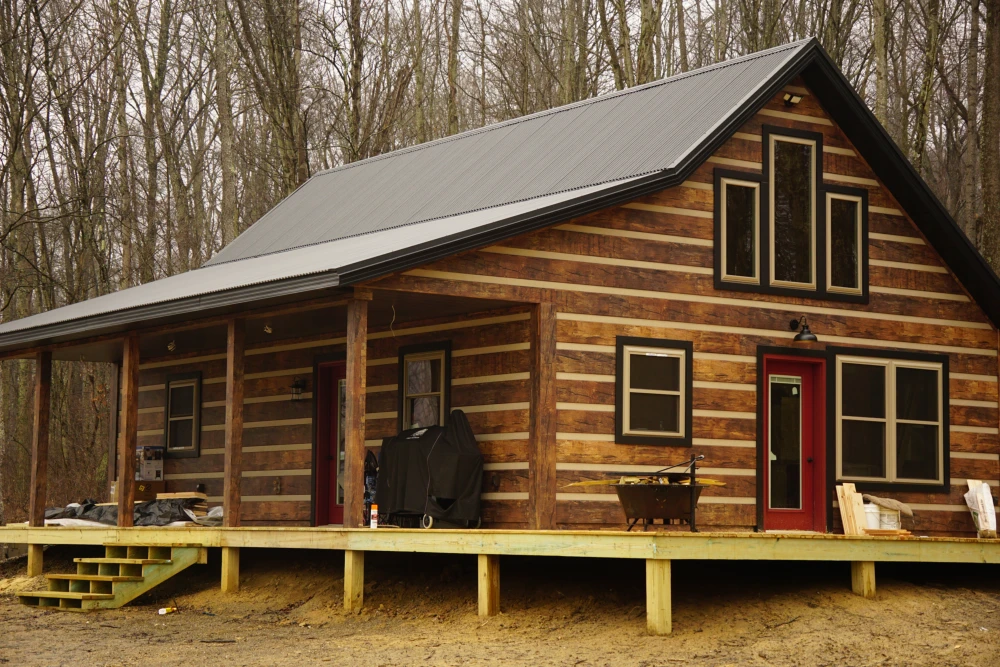
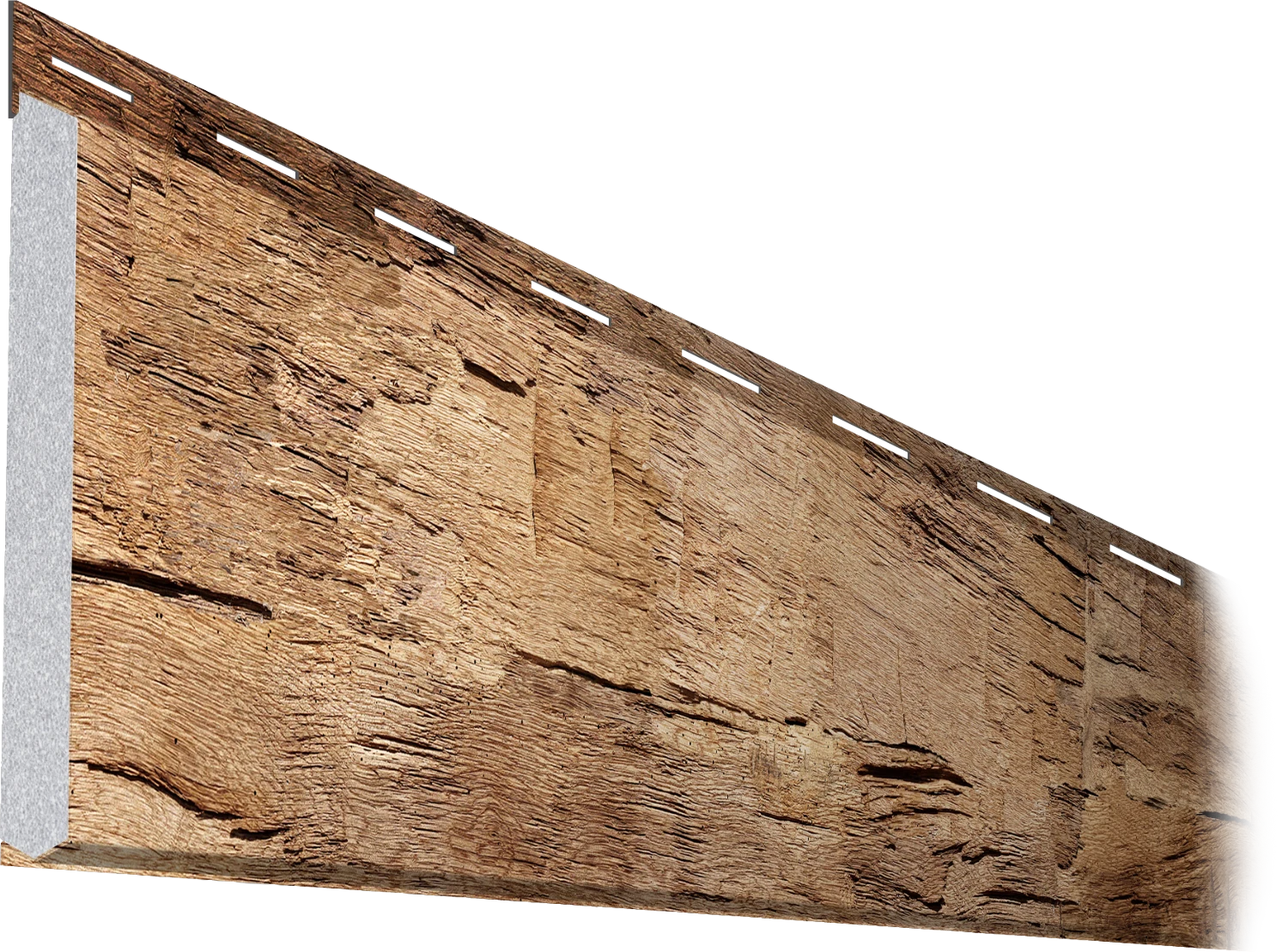
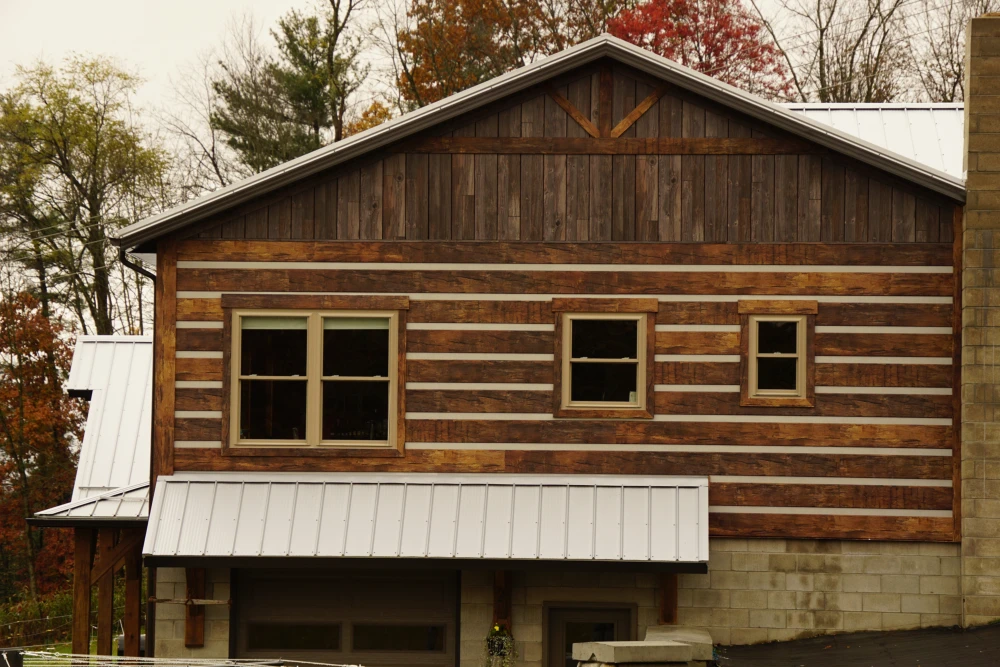
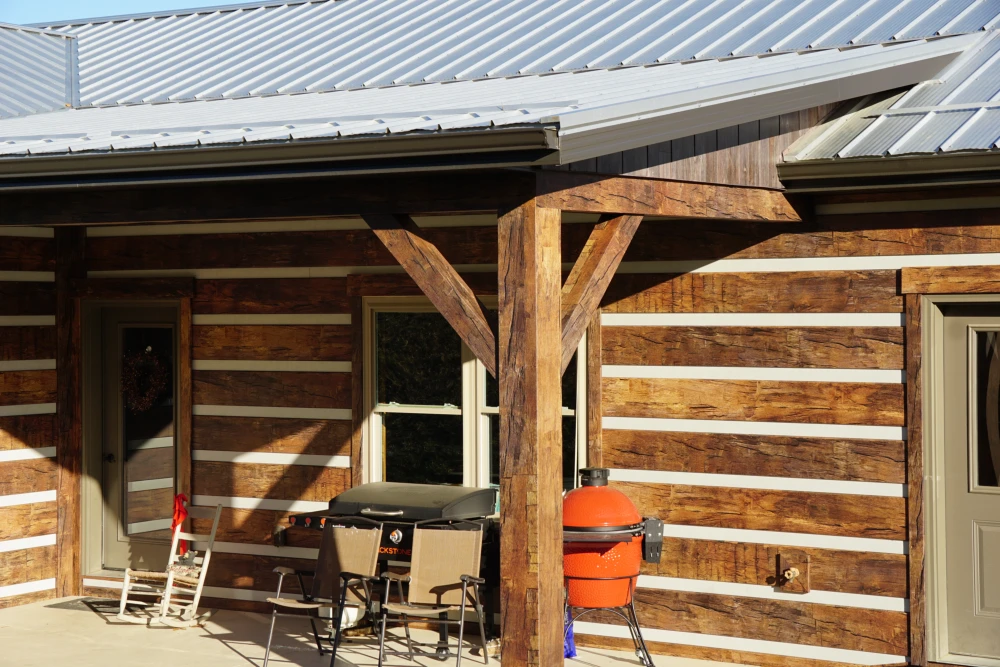
Hand hewn log siding with chinking in 26-gauge steel delivers the UP and northern Michigan aesthetic without those failure modes. Steel doesn't absorb moisture, so the freeze-thaw cycle that splits wood grain at log joints has nothing to act on. The hand hewn surface replicates the texture and dimensional variation of actual milled log siding. Chinking fills the joints in four colors: Ash Gray, Charcoal, Clay, and Sandstone Tan. From the road, it reads as traditional log construction.
SteeLuxe is the only manufacturer making hand hewn log siding with chinking in steel. It ships direct from New Philadelphia, Ohio to hunting camps, lakefront cottages, and year-round homes throughout Michigan's Upper Peninsula and the northern Lower Peninsula, available across all 22 wood grain patterns in the SteeLuxe line.
Ready to Transform Your Home With Hand-Hewn Log Cabin Siding?
Get the authentic hand-hewn cabin look with the chinking detail you love, and never think about maintenance again. SteeLuxe steel siding is insulated, fire-rated, hail-resistant, and built to last a lifetime. See it and feel it for yourself.
Steel Siding vs the Alternatives
Michigan's freeze-thaw and hail combination cuts through material comparisons quickly. Each major alternative has a specific failure pattern in this climate, and the Great Lakes moisture cycle accelerates that failure timeline relative to drier markets.
Vinyl is the most common replacement siding on Michigan homes over the last 40 years, and it has two clear failure modes in this climate. Cold temperatures make vinyl brittle, and below 20 degrees it loses the flexibility it needs to absorb wind stress and the expansion and contraction that temperature swings produce. Michigan winters push vinyl through that brittle range from December through February statewide and through a longer window in the Upper Peninsula. Hail is vinyl's second problem. At Class 4, a steel panel takes impacts that crack and puncture vinyl panels, and a hail event that would leave a steel installation untouched sends vinyl siding to an insurance claim and a replacement crew. Replacing vinyl with vinyl in Michigan restarts both failure clocks.
Fiber cement carries a Class A fire rating and handles cold better than vinyl, but it has two Michigan-specific liabilities. Moisture absorption at cut edges and penetrations is the first liability. Michigan's Great Lakes humidity keeps moisture elevated through every season, and the freeze-thaw season works that moisture into cut fiber cement edges on a cycle that eventually causes edge cracking and surface separation faster than the product's rated performance. Repainting fiber cement on a 10 to 15-year cycle is the standard expectation, and in Michigan's lake-effect moisture environment that cycle can shorten on the most exposed elevations. Class 4 impact resistance is not available in fiber cement, which matters in the hail-active LP corridor.
Wood siding is the appropriate original material on Michigan's Victorian-era homes in communities like Grand Rapids and Traverse City, and some historic district guidelines require it. Maintenance is the problem wood can't escape in this climate. Paint on wood siding fails every 5 to 8 years in Michigan's freeze-thaw and humidity environment, and the prep and repaint cycle on a northern cottage competes with the short northern Michigan summer for the same window. Termites at Moderate pressure across the Lower Peninsula treat wood siding as a permanent food source. Over a 30-year ownership period, the cumulative cost of maintaining wood siding in a Great Lakes climate is the argument that moves most Michigan owners toward a better material at the next replacement.
Frequently Asked Questions
Q:What makes SteeLuxe steel siding different from other steel siding products?
Q:How does the Slide-Lock installation system work?
Q:What wood grain patterns are available?
Q:Does steel siding rust?
Q:How does Michigan's hail affect siding?
Q:Is steel siding a good choice for a Michigan cottage or camp?
Q:Does the Upper Peninsula's extreme cold affect steel siding?
Q:Does SteeLuxe install in my city?
Q:Does the log siding profile work on a Michigan UP hunting camp?
Michigan Cities & Regions We Serve
SteeLuxe ships from New Philadelphia, Ohio to residential, contractor, and camp projects across all 83 Michigan counties, with lead times that work for both the year-round Detroit metro schedule and the shorter northern construction season.
Detroit and the southeast Michigan suburbs, including Oakland, Macomb, Wayne, Washtenaw, and Livingston counties, make up the state's largest residential siding market. Re-siding activity here is driven by the postwar suburban housing stock reaching the end of its original or first-replacement exterior life, combined with consistent hail claim volume that accelerates the replacement cycle on younger vinyl installations.
Grand Rapids and the west Michigan lakeshore communities, including Holland, Muskegon, Kalamazoo, and the communities of Ottawa and Kent counties, make up the state's second-largest residential market. Lake-effect snow and the heavy moisture load it carries make the freeze-thaw and insulation arguments more immediate in this corridor than in the rest of the Lower Peninsula.
Northern Lower Michigan, including Traverse City, Petoskey, Charlevoix, and the Torch Lake and Elk Rapids communities of Antrim and Charlevoix counties, is the state's largest cottage and second-home siding market. Properties here need an exterior that holds condition through a full northern Michigan winter without a maintenance visit.
The Upper Peninsula, including Marquette, Houghton, Sault Ste. Marie, and the hunting and sporting camp communities from the Keweenaw Peninsula through the eastern UP near Newberry and Munising, is the state's primary market for log and timber exterior profiles.
Full city pages with local installer contacts and current pricing are available for Detroit, MI. More Michigan cities are listed below:
Don't see your city listed here. Contact SteeLuxe directly and someone familiar with Michigan's regional conditions will point you to the nearest installer and current pricing for your area.
Get a Quote for Steel Siding in Michigan
SteeLuxe is manufactured in New Philadelphia, Ohio and ships direct. Whether you are planning a full re-siding project or exploring options, we can get you pricing, color samples, and a list of installers in your area.