
Steel Siding & Hand Hewn Log Siding in Rhode Island
Steel Siding in Rhode Island
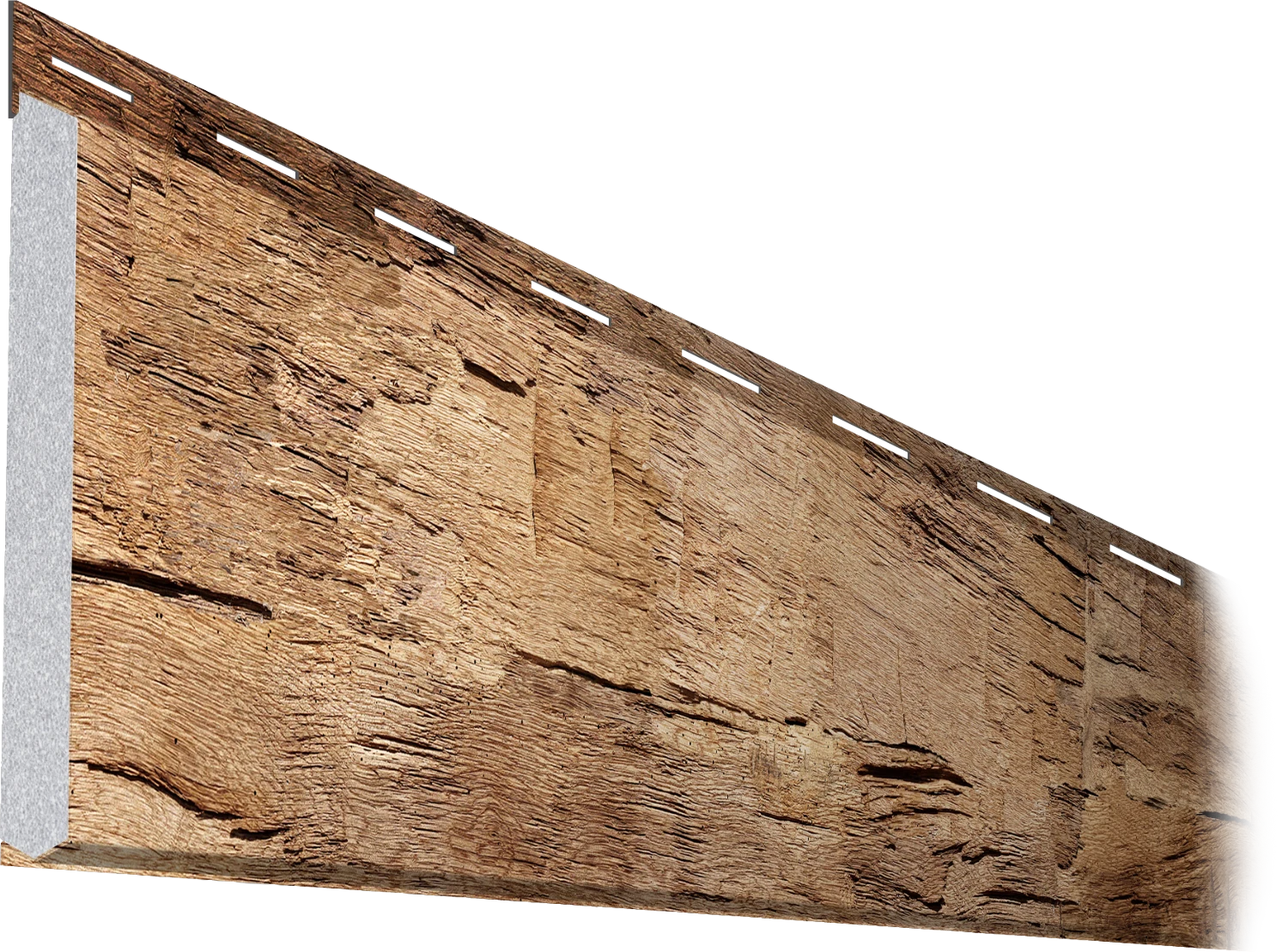
Steel siding in Rhode Island answers for three conditions that arrive together across a state shaped by Narragansett Bay and direct Atlantic exposure. Providence averages a January low near 22 degrees with freeze-thaw cycling from November through March. Sandy's 2012 storm surge set the benchmark for coastal construction along the Bay corridor, and the nor'easters that arrive each winter deliver sustained wind load and driving moisture against exterior wall surfaces multiple times each season. Termites are active statewide from April through October. Wood grain siding in the 22 patterns SteeLuxe manufactures covers the Rhode Island range, from the colonial and cape cod profiles of Providence's established neighborhoods to the shingle and coastal profiles of Newport and the South County shore.
Cold is consistent across Rhode Island's small geography, with Providence averaging a January low near 22 degrees and the northern communities of Woonsocket and Cumberland averaging closer to 18 degrees. Freeze-thaw cycling runs from November through March statewide, and the coastal communities along Narragansett Bay and the South County shore add salt air and wind-driven moisture to the same freeze-thaw stress that Providence and Warwick carry. The combination loads exterior wall surfaces with both thermal and moisture cycling through every winter season.
Atlantic and Narragansett Bay exposure makes Rhode Island's coast the most storm-exposed shoreline on the northeast Atlantic seaboard. Sandy's 2012 storm surge caused significant flooding and structural damage along the Bay from Warwick south through Newport and the South County communities of Narragansett and Westerly. The nor'easters that deliver Rhode Island's most damaging winter weather arrive multiple times each season, driving wind gusts above 60 miles per hour and sustained lateral moisture load against coastal and inland wall surfaces from November through April.
Termites are active across every Rhode Island county from April through October, with the heaviest pressure in the dense residential neighborhoods of Providence, Cranston, and Pawtucket. Eastern subterranean termites are present statewide, and the state's mild coastal climate and high concentration of older wood-framed homes in established neighborhoods across Providence, Kent, and Newport counties give colonies a favorable environment and a ready food source through the full growing season.
Block Island and the Newport waterfront represent Rhode Island's two most storm-exposed markets, each carrying conditions that the broader Bay corridor sees in a more moderate form. The island's location exposes every exterior surface to direct Atlantic wind with no geographic buffer. Newport's historic building stock, including the Gilded Age mansion district and the dense colonial neighborhoods of the Point and Kay-Catherine-Old Beach Road areas, carries direct Bay exposure alongside a residential re-siding market anchored by the most historically significant colonial and Gilded Age buildings in New England.
Rhode Island's conditions don't vary significantly across the state's 1,200 square miles. Every address carries all three. Storm exposure intensifies from inland Providence to the Bay corridor to the ocean-facing South County shore and Block Island, but freeze-thaw cycling, termite pressure, and nor'easter exposure are active at every Rhode Island address.
The Most Advanced Steel Siding On The Market
- 20 Year Fading & Chalking Warranty
- 50 Year Flaking & Peeling Warranty
- Lasts 40-60+ Years
- One Person Installation
Climate & Conditions Across Rhode Island
Rhode Island's geography concentrates its conditions into a small area, and the difference between a Providence address and a Newport waterfront property is less about which conditions apply than about how directly each one arrives.
Providence and the metro communities of Cranston, Pawtucket, Warwick, and North Providence represent the state's largest residential siding market and its most active concentration of freeze-thaw cycling, nor'easter exposure, and termite pressure. The city averages a January low near 22 degrees with freeze-thaw cycling from November through March. Sandy's 2012 remnants brought significant flooding to the Providence waterfront and the Warwick shore, and the nor'easters that define the region's winter storm pattern deliver sustained wind load and driving moisture against exterior surfaces through every storm season. Termites are active across the metro through the full growing season, with the heaviest pressure in the dense wood-framed neighborhoods of Providence's East Side, Cranston, and Pawtucket.
Newport and the Bay communities of Bristol, Middletown, and Portsmouth carry Rhode Island's most direct storm exposure alongside a dense concentration of historic residential buildings. Newport's position at the mouth of Narragansett Bay puts the city in the direct path of Atlantic storms tracking along the coast, and Sandy's storm surge reached the Newport waterfront with enough force to reshape the coastal construction standard for the entire Bay corridor. The historic neighborhoods of Newport carry a large inventory of 18th and 19th century wood-framed buildings where re-siding demand is driven by the age of the exterior material as much as by storm damage.
The South County communities of Narragansett, South Kingstown, and Westerly represent Rhode Island's most directly ocean-exposed residential market. Westerly sits at the Rhode Island-Connecticut border on the Atlantic coast, fully exposed to storm tracks and nor'easter wind load from the south and southeast. South County's large inventory of seasonal and year-round coastal homes drives consistent re-siding demand, and the combination of direct ocean exposure, salt air, and annual nor'easter wind loading makes impact resistance and corrosion resistance the primary siding specifications in this corridor.
Woonsocket, Cumberland, North Smithfield, and the northern Rhode Island communities represent the state's coldest residential market, with January lows averaging near 18 degrees and a freeze-thaw season extending from late October through March. Block Island sits as a separate case entirely: its New Shoreham community is nine miles off the mainland coast with no geographic buffer against Atlantic wind and storm exposure, making it the most wind-exposed and storm-exposed siding address in Rhode Island.
Need help finding an installer?
Why Steel Siding Is Right for Rhode Island
Three conditions are active at every Rhode Island address, and the Providence metro and the Bay corridor carry all three at full intensity through the active storm and growing season. Each has a direct failure pattern in the materials most Rhode Island homes currently carry, and each has an answer in 26-gauge steel.
Freeze-thaw cycling in Rhode Island runs from November through March statewide, with northern communities carrying a season that extends a few weeks on each end. Vinyl loses its flexibility in sustained cold, cracking at fastener points and panel edges through the months it can no longer flex. On coastal properties where wind-driven moisture reaches panel joints through the winter, a crack that admits water in November worsens through March before it can be addressed. Steel holds its shape and size no matter what the Rhode Island winter delivers.
Nor'easters and Atlantic storm exposure deliver the most sustained lateral wind load of any condition on Rhode Island exterior walls. Sandy's storm surge demonstrated what a major coastal event does to standard siding along the Bay corridor, and the nor'easters that arrive every winter compound that exposure with repeated loading each season. Class 4 impact resistance means a panel capable of taking wind-driven debris at storm speeds without cracking or puncturing, and a connection that holds under sustained nor'easter lateral load without peeling from the wall.
Termites across the Providence metro, the Bay corridor, and the South County shore find steel siding nothing to exploit. Eastern subterranean colonies active from April through October need wood to eat, and the large inventory of older wood-framed homes in Providence's established neighborhoods and across Kent and Newport counties gives colonies a ready supply. Steel gives them nothing at the panel surface, eliminating the exterior wall as a termite entry point regardless of what the colonies are doing in the soil below.
Rhode Island's coastal properties carry a corrosion risk that goes beyond what freeze-thaw and impact resistance alone address. Salt air accelerates surface degradation on materials that rely on topcoat integrity for their corrosion resistance, and paint-based protection on alternative siding products begins to fail at coastal proximity within years of installation. SteeLuxe's AZ55 Galvalume base coat is a zinc-aluminum alloy bonded to the steel at the manufacturing stage, providing corrosion resistance that doesn't depend on any surface coating staying intact at a Newport waterfront or a Westerly ocean-facing address.
Product Specifications
| Spec | Value |
|---|---|
| Gauge | 26-gauge steel (~25% thicker than 29-gauge) |
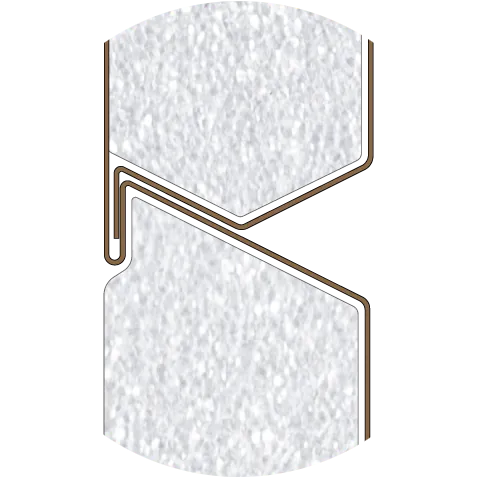
| Core | EPS foam, R-3.57 continuous insulation value |
| Fire Rating | Class A (highest available) |
| Impact Rating | Class 4 (highest available) |
| Colors | 50 solid colors (Sherwin Williams WeatherXL) |
| Wood Grain | 22 patterns (Kynar 500 resin) |
| Log Profile | Hand hewn log siding with chinking — 4 chinking colors |
| Warranty | 50-year peeling/flaking | 20-year fade/chalk |
| Panel | 10-inch planks, Slide-Lock system, one-person install |
| Base Coat | AZ55 Galvalume (zinc-aluminum alloy corrosion barrier) |
| Origin | New Philadelphia, Ohio — direct ship to all 49 states |
Hand Hewn Log Siding with Chinking
Rhode Island's western interior and the rural communities of Kent and Washington counties carry a residential market where the log cabin and rustic lodge aesthetic appears in both year-round homes and vacation properties. The rural corridors of Coventry, Exeter, and Richmond hold a stock of properties where exterior character and cold performance both matter, and where the rustic log profile is the defining aesthetic choice for owners who want the look of traditional New England construction.
Real wood log siding at a western Rhode Island rural property faces freeze-thaw cycling from November through March and termite pressure from April through October with no seasonal separation between the two stresses. Freeze-thaw cycling works moisture into log joints and cracks them open with every hard freeze. Eastern subterranean termites treat log siding as a direct food source and use it as an entry pathway into the wall framing.
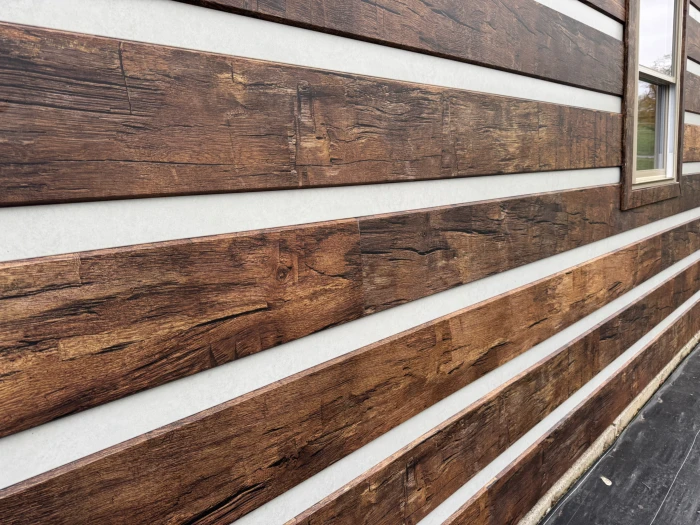
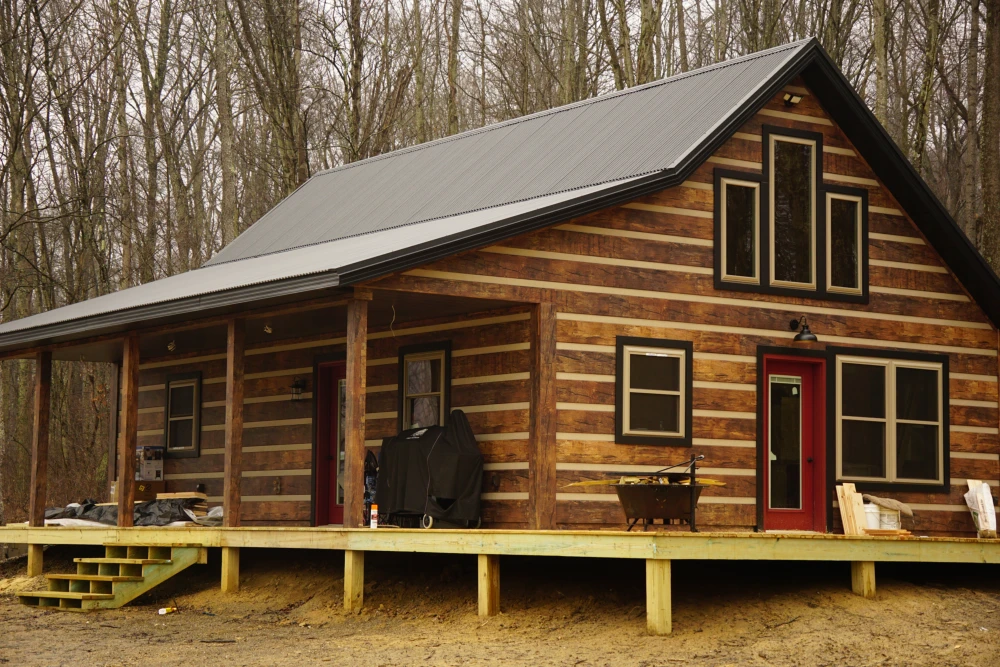
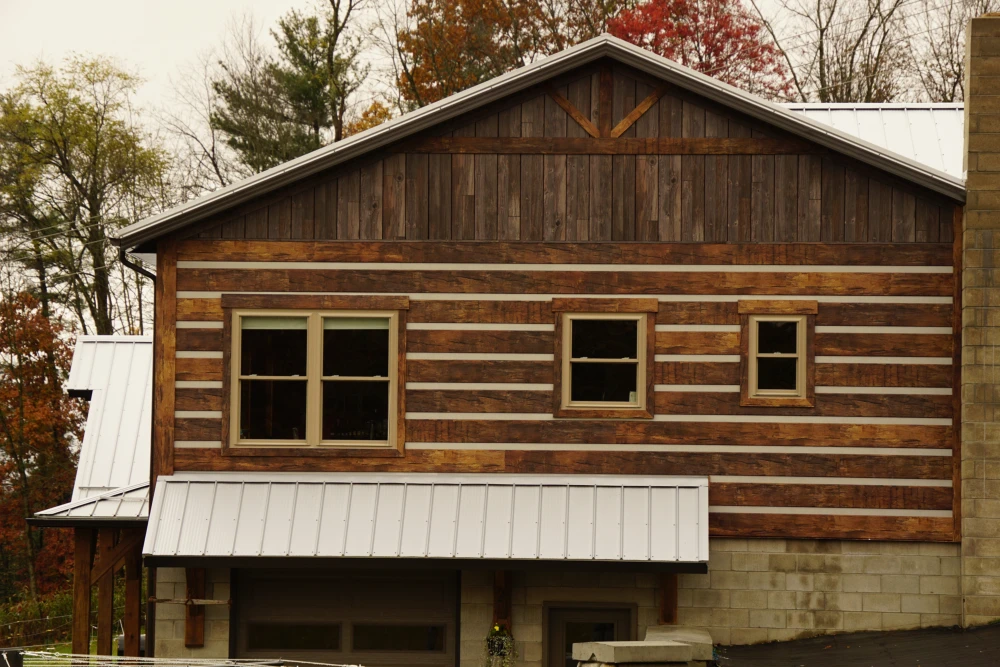
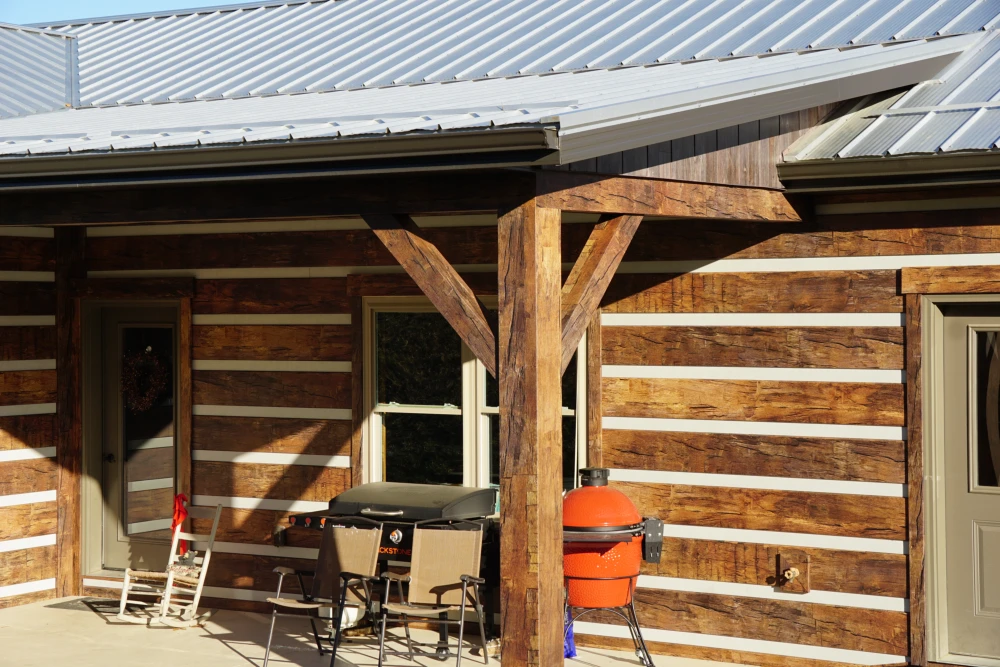
Hand hewn log siding with chinking in 26-gauge steel delivers the traditional New England log cabin aesthetic without those failure modes. Steel doesn't absorb moisture, so freeze-thaw cycling has nothing to act on at the log joints, and it gives termites nothing to eat at the panel surface. Chinking fills the joints in four colors: Ash Gray, Charcoal, Clay, and Sandstone Tan. From the road, it reads as traditional log construction. The 50-year warranty applies through the full Rhode Island winter season.
SteeLuxe is the only manufacturer making hand hewn log siding with chinking in steel. It ships direct from New Philadelphia, Ohio to rural and year-round homes throughout Rhode Island's western interior communities, and is available in all 22 wood grain patterns in the SteeLuxe line.
Ready to Transform Your Home With Hand-Hewn Log Cabin Siding?
Get the authentic hand-hewn cabin look with the chinking detail you love, and never think about maintenance again. SteeLuxe steel siding is insulated, fire-rated, hail-resistant, and built to last a lifetime. See it and feel it for yourself.
Steel Siding vs the Alternatives
Rhode Island's cold, nor'easter, and termite conditions test the three most common siding alternatives against a specification that requires freeze-thaw durability, impact resistance under storm wind load, and pest resistance at the same coastal and inland address. Steel answers all three. Each alternative fails on at least two fronts.
Vinyl is the most common siding on Rhode Island homes, and the state's conditions expose its failure modes in sequence through every season. Cold is the first: vinyl loses its flexibility in the sustained temperatures that Providence and the Bay corridor deliver from November through March, cracking at fastener points and panel edges before the spring storm season begins. Nor'easter wind load arrives next: panels that have gone brittle through the winter are more likely to crack or peel from the wall under the lateral load of a February nor'easter. Termites enter wall assemblies through gaps at penetrations and trim joints regardless of the panel material at the surface.
Fiber cement handles Rhode Island's cold better than vinyl and gives termites nothing to eat at the panel surface. Its Rhode Island liabilities are moisture absorption at cut edges, no Class 4 impact resistance in standard product lines, and a paint cycle that the state's nor'easter seasons and coastal salt air shorten significantly faster than manufacturer estimates predict. Cut edges at penetrations, windowsills, and trim joints absorb moisture through Rhode Island's wet fall and winter seasons, and the freeze-thaw cycle works that absorbed moisture through dozens of hard freezes. The absence of a Class 4 rating leaves Bay and coastal installations without rated storm protection.
Wood siding in Rhode Island faces failure from all three conditions. Paint on wood fails in 5 to 8 years under the state's freeze-thaw cycling, and at coastal and Bay addresses the salt air and nor'easter moisture shorten that interval further every season. Eastern subterranean termites treat wood siding as both a food source and an entry pathway into wall framing. Nor'easter and Sandy-scale storm events load wood panels with lateral stress and moisture that accumulate with each successive season. Steel ends the paint cycle, gives termites nothing to eat, and carries Class 4 impact resistance through every nor'easter season.
Frequently Asked Questions
Q:What makes SteeLuxe steel siding different from other steel siding products?
Q:How does the Slide-Lock installation system work?
Q:What wood grain patterns are available?
Q:Does steel siding rust?
Q:How does Rhode Island's coastal salt air affect siding on Bay and ocean-facing homes?
Q:Is steel siding a good choice for Rhode Island coastal homes after Sandy?
Q:How does termite pressure affect Rhode Island homeowners, and does steel siding help?
Q:Does SteeLuxe install in my city?
Q:What should I know about siding for a Block Island or Newport waterfront property?
Rhode Island Cities & Regions We Serve
SteeLuxe ships from New Philadelphia, Ohio to residential, historic, and contractor projects across all five Rhode Island counties, with lead times that work for the year-round Providence and Bay markets and the seasonal construction windows of Block Island and the South County shore.
Providence, Cranston, Pawtucket, Warwick, and North Providence represent the state's largest residential siding market. Freeze-thaw cycling, active termite pressure, and nor'easter exposure drive consistent re-siding demand across the Providence metro, and the large stock of colonial, cape cod, and Victorian three-decker homes in established neighborhoods makes the metro the state's highest-volume siding market through the full construction season.
Newport, Bristol, Middletown, and Portsmouth represent the Bay corridor market, where direct Atlantic and Narragansett Bay storm exposure combines with a dense inventory of historic colonial and shingle-style buildings. Sandy's 2012 storm surge raised the construction standard for the entire Bay corridor, and the Newport historic district's large re-siding market runs year-round alongside consistent demand in the surrounding waterfront communities.
Narragansett, South Kingstown, and Westerly represent the South County and Atlantic coast market, where direct ocean exposure and salt air make impact resistance and corrosion resistance the primary siding specifications. Seasonal coastal homes alongside year-round residential properties drive re-siding demand concentrated in the spring and early fall construction windows.
Woonsocket, Cumberland, and the northern Rhode Island communities represent the state's coldest interior market, where freeze-thaw cycling runs from late October through March and re-siding demand follows the standard spring-through-fall construction calendar. Block Island's year-round and seasonal residential market drives demand for the highest available impact and corrosion resistance at any Rhode Island address.
Full city pages with local installer contacts and current pricing are available for Providence, RI. More Rhode Island cities are listed below:
Don't see your city listed here. Contact SteeLuxe directly and someone familiar with Rhode Island's regional conditions will point you to the nearest installer and current pricing for your area.
Get a Quote for Steel Siding in Rhode Island
SteeLuxe is manufactured in New Philadelphia, Ohio and ships direct. Whether you are planning a full re-siding project or exploring options, we can get you pricing, color samples, and a list of installers in your area.