
Steel Siding & Hand Hewn Log Siding in New York
Steel Siding in New York
Steel siding in New York answers for three conditions that run from direct Atlantic hurricane exposure on Long Island's south shore to sub-10-degree winter cold in the Adirondacks. New York City averages a January low near 27 degrees, and Sandy in 2012 set the benchmark for what coastal construction on Long Island and Staten Island has to withstand. Buffalo averages 94 inches of snow per year with a January low near 17 degrees. Termites are active across the New York City metro, Long Island, and the Hudson Valley. Wood grain siding in the 22 patterns SteeLuxe manufactures covers the full New York range, from the craftsman and colonial profiles of Long Island and the Hudson Valley to the mountain profiles of the Adirondacks and Catskills.
Cold drives New York's siding specification across every region, intensifying as you move north and west from the coast. New York City averages a January low near 27 degrees with freeze-thaw cycling from November through March. Albany averages a January low near 14 degrees and Syracuse near 18 degrees, both carrying a freeze-thaw season from October through April. Buffalo and the Lake Ontario and Lake Erie snow belt communities average January lows between 17 and 20 degrees alongside lake-effect snow accumulations that compound freeze-thaw cycling with months of sustained snow load on every exposed surface.
Hurricane and nor'easter exposure on the New York coast is direct Atlantic exposure with no geographic buffer. Sandy made landfall in October 2012 and caused catastrophic damage to Staten Island and Long Island's barrier islands, reshaping the coastal building market for years. Long Island's south shore from the Rockaways to Montauk carries full ocean exposure through the hurricane season and through the nor'easters that deliver the most damaging winter storms in the region.
Termites are active across downstate New York from April through October, with the heaviest pressure in the NYC boroughs, Nassau and Suffolk counties, and the Hudson Valley communities of Westchester, Rockland, and Dutchess counties. Eastern subterranean termites find the large stock of wood-framed homes in the metro's established neighborhoods a ready food source and entry pathway. Termite activity is lighter upstate but is not absent.
The Catskills and Adirondacks represent New York's two most active second-home and mountain resort markets, and both carry cold conditions that test exterior materials across a long unattended season. Adirondack valley communities can deliver January lows in the single digits, and the Catskills average January lows between 10 and 20 degrees depending on elevation. Both regions carry a large concentration of vacation cabins, second homes, and historic camps where exterior material performance through a winter when the property may sit unattended for months is the defining specification.
New York's three conditions overlap most completely in the coastal zone. The New York City metro and Long Island carry all three: cold, direct hurricane and nor'easter exposure, and active termite pressure. Upstate communities carry the state's most severe cold. The Catskills and Adirondacks carry cold as the dominant condition alongside a large second-home market.
The Most Advanced Steel Siding On The Market
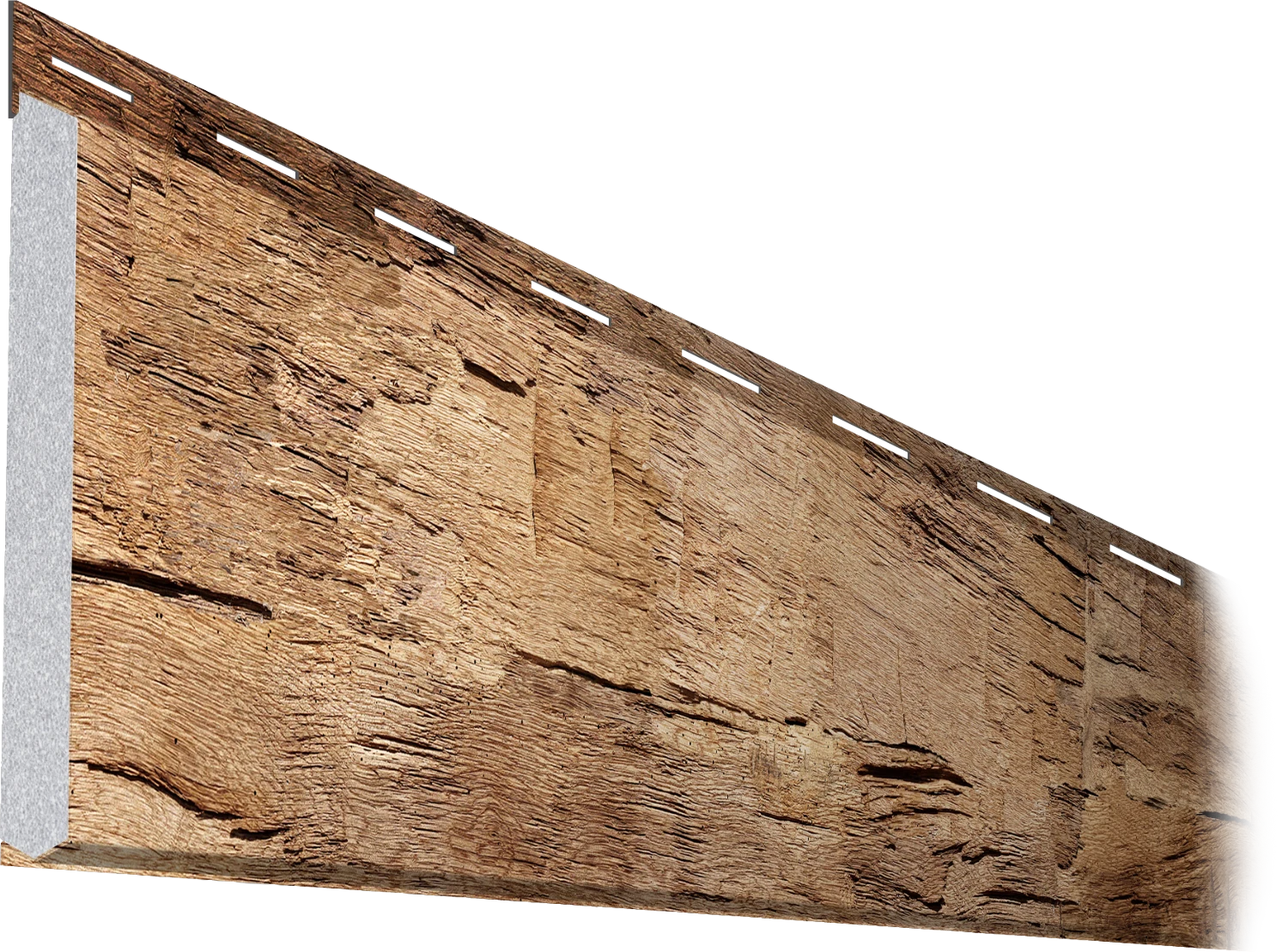
- 20 Year Fading & Chalking Warranty
- 50 Year Flaking & Peeling Warranty
- Lasts 40-60+ Years
- One Person Installation
Climate & Conditions Across New York
New York's conditions span from direct Atlantic hurricane exposure on Long Island's south shore to sub-10-degree January cold in the Adirondack valleys, and the siding specifications those two environments demand have little in common.
New York City and the Long Island communities of Nassau and Suffolk counties represent the state's largest residential siding market and its most active overlap of cold, storm exposure, and termite pressure. The city averages a January low near 27 degrees with freeze-thaw cycling from November through March. Sandy's 2012 landfall caused catastrophic damage to Staten Island and the Long Island barrier islands, and the south shore from the Rockaways to Montauk sits in direct Atlantic storm exposure. Termites are active across the metro, most notably in established neighborhoods of Queens, Brooklyn, Staten Island, Nassau County, and eastern Suffolk County.
Westchester, Rockland, Dutchess, and Orange counties in the Hudson Valley represent New York's most active residential renovation market outside the five boroughs and Long Island. Both Westchester and Rockland average January lows between 22 and 24 degrees, with a freeze-thaw season from November through March and active termite pressure through the growing season. The Hudson Valley's large stock of Victorian, colonial, and craftsman homes drives consistent re-siding demand in communities like White Plains, Nyack, Poughkeepsie, and Kingston, and proximity to the Atlantic storm track brings nor'easters and hurricane moisture through the shoulder seasons.
Albany, Buffalo, Rochester, and Syracuse represent upstate New York's largest siding markets and its most severe cold conditions. January lows average near 14 degrees in Albany, near 17 degrees in Buffalo, and near 18 degrees in Syracuse, all with freeze-thaw seasons running from October through April. Buffalo and the Lake Erie and Lake Ontario snow belt communities receive 80 to 115 inches of snow per year, and the combined stress of severe cold, sustained snow load, and months of freeze-thaw cycling tests exterior materials as hard as any residential climate in the continental United States. Re-siding demand in these markets is driven by the large stock of older wood and vinyl-sided homes in established urban neighborhoods.
The Catskill and Adirondack communities represent New York's second-home and mountain resort markets and its most demanding cold conditions. Adirondack valley communities in Essex, Hamilton, and Franklin counties can average January lows in the single digits, and the Catskill communities of Sullivan, Delaware, and Greene counties average between 10 and 20 degrees depending on elevation and terrain. Both regions carry a large and diverse stock of vacation cabins, historic camps, ski chalets, and second homes where exterior material performance through an unattended winter season is the defining requirement. Re-siding activity in these corridors runs on a tight spring-through-fall construction calendar.
Need help finding an installer?
Why Steel Siding Is Right for New York
Three conditions are active across New York, and the New York City metro and Long Island carry all three at once. Each has a direct failure pattern in the materials most New York homes currently carry, and each has an answer in 26-gauge steel.
Freeze-thaw cycling in New York runs from October through April upstate and November through March in the New York City metro. Buffalo, Syracuse, and Albany deliver sustained winter cold severe enough that vinyl goes brittle for months, cracking at fastener points and panel edges. In the Lake Erie and Lake Ontario snow belt, the combined stress of 80 to 115 inches of annual snow and repeated hard freezes works through every joint and penetration in a siding system that isn't sealed against it. Steel holds its shape and size no matter what the New York winter delivers.
Sandy's 2012 wind and storm surge set the baseline for coastal construction in New York. Class 4 impact resistance means a panel capable of taking wind-driven debris at storm speeds without cracking or puncturing. Vinyl fails under that load, and panels that crack during a storm admit water behind the wall assembly at exactly the wrong moment. Steel won't crack from debris impact, won't peel from the wall under nor'easter wind load, and won't leave the wall assembly exposed when the next major storm arrives.
Termites across the New York City metro, Long Island, and the Hudson Valley find steel siding nothing to exploit. Eastern subterranean colonies active from April through October need wood to eat, and the large inventory of older wood-framed homes in Brooklyn, Queens, Nassau County, and Westchester gives them a ready supply. Steel gives them nothing at the panel surface, eliminating the exterior wall as a termite entry point regardless of what colonies are doing in the soil below.
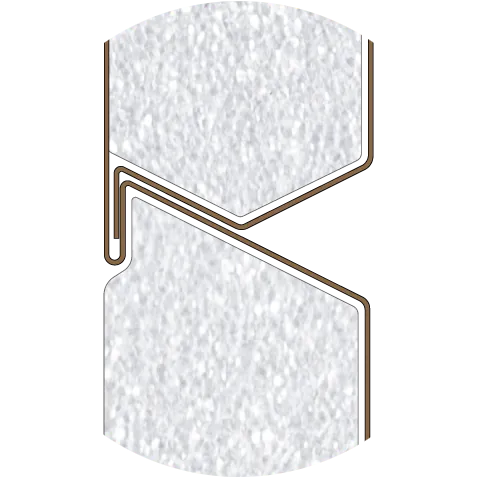
Upstate New York's lake-effect snow corridors add a stress that goes beyond cold alone. In Buffalo, Rochester, and the communities downwind of Lake Erie and Lake Ontario, 80 to 115 inches of annual snowfall means exterior materials carry snow load on horizontal surfaces and in panel joints through months of sustained freeze-thaw cycling. Steel's Slide-Lock panel system locks panel joints mechanically, holding the connection through the repeated expansion and contraction of a Western New York winter without creating gaps or loosening fasteners over time.
Product Specifications
| Spec | Value |
|---|---|
| Gauge | 26-gauge steel (~25% thicker than 29-gauge) |
| Core | EPS foam, R-3.57 continuous insulation value |
| Fire Rating | Class A (highest available) |
| Impact Rating | Class 4 (highest available) |
| Colors | 50 solid colors (Sherwin Williams WeatherXL) |
| Wood Grain | 22 patterns (Kynar 500 resin) |
| Log Profile | Hand hewn log siding with chinking — 4 chinking colors |
| Warranty | 50-year peeling/flaking | 20-year fade/chalk |
| Panel | 10-inch planks, Slide-Lock system, one-person install |
| Base Coat | AZ55 Galvalume (zinc-aluminum alloy corrosion barrier) |
| Origin | New Philadelphia, Ohio — direct ship to all 49 states |
Hand Hewn Log Siding with Chinking
The Adirondacks and Catskills carry New York's most active market for the mountain cabin and historic camp exterior profile. These communities hold a large stock of log cabins, Adirondack great camps, and rustic second homes where the log and wood aesthetic defines the exterior, and where cold performance through a long unattended winter in some of the coldest terrain in the northeast is the practical driver of every material choice.
Real wood log siding at an Adirondack camp or a Catskill mountain cabin faces concentrated failure from New York's most severe cold. Freeze-thaw cycling from October through April works moisture into log joints and cracks them open with every hard freeze. At Adirondack elevations where January lows reach single digits, the stress on wood joints is severe enough to visibly open gaps and split surfaces within a single winter season without maintenance.
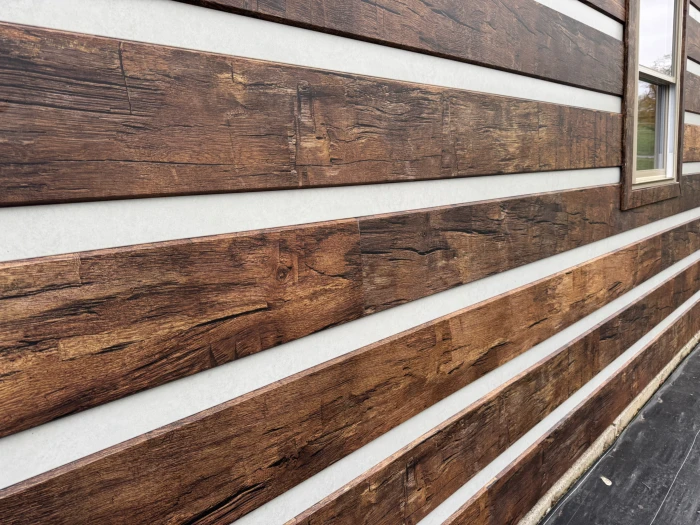
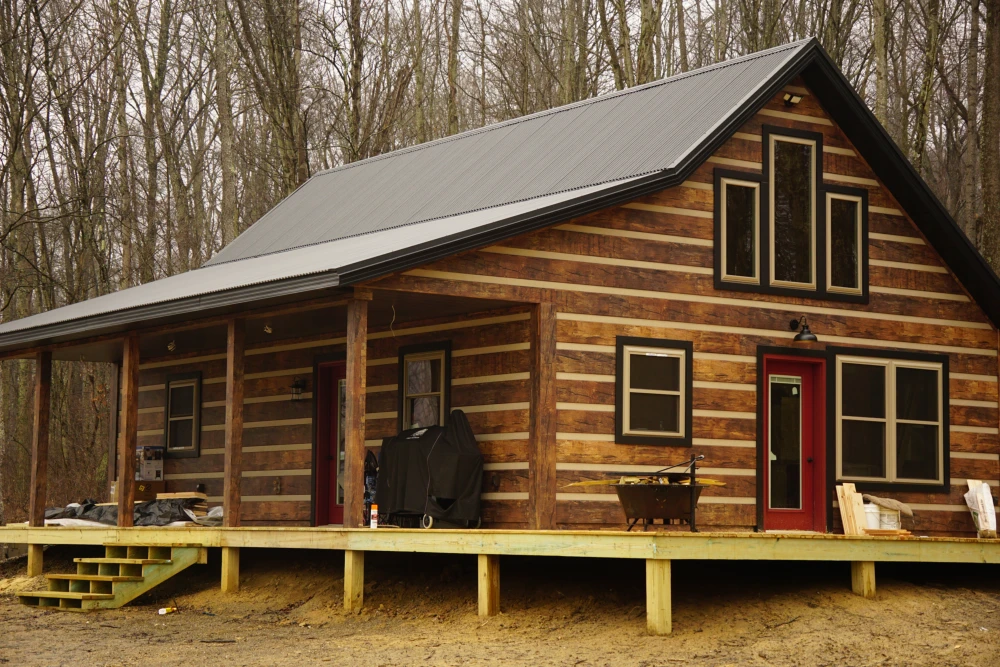
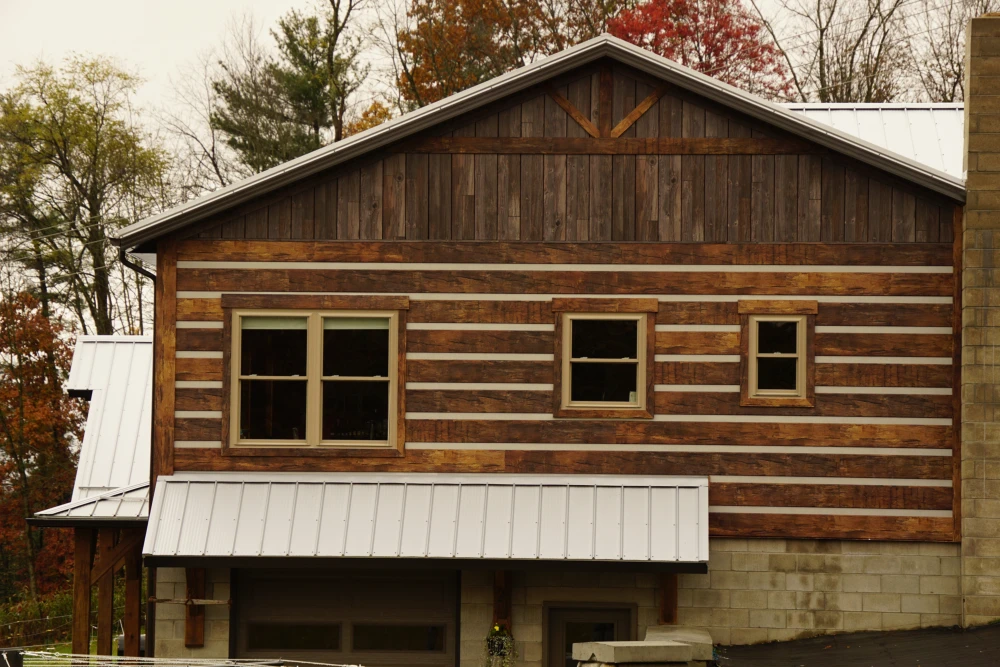
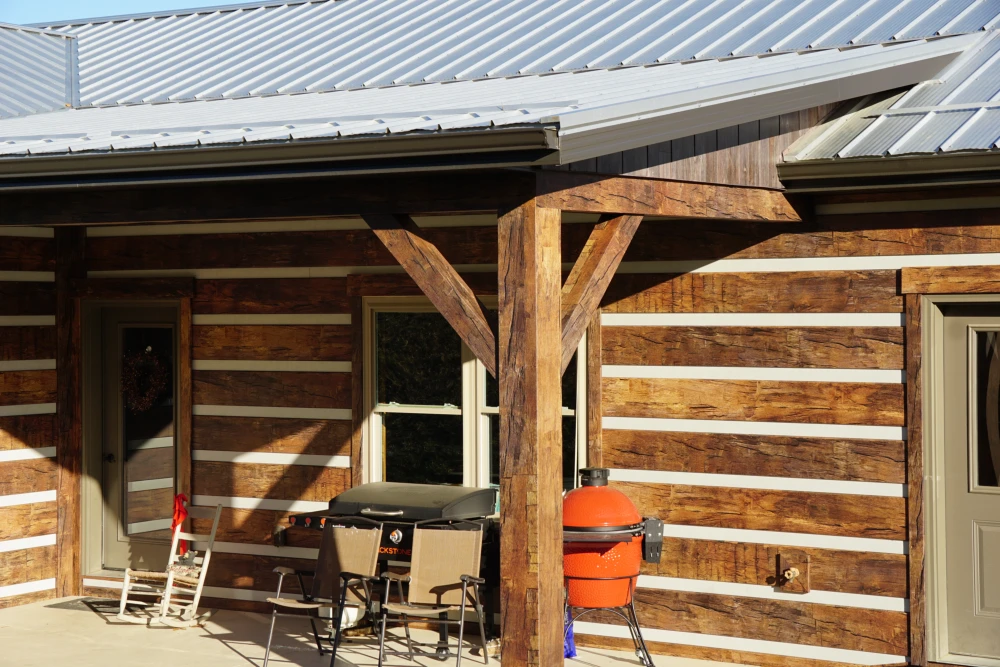
Hand hewn log siding with chinking in 26-gauge steel delivers the Adirondack great camp and Catskill mountain cabin aesthetic without those failure modes. Steel doesn't absorb moisture, so freeze-thaw cycling has nothing to act on at the log joints. Chinking fills the joints in four colors: Ash Gray, Charcoal, Clay, and Sandstone Tan. From the road or the water, it reads as traditional log construction.
SteeLuxe is the only manufacturer making hand hewn log siding with chinking in steel. It ships direct from New Philadelphia, Ohio to mountain camps, lake cabins, ski chalets, and year-round homes throughout New York's Adirondack and Catskill corridors and is available in all 22 wood grain patterns in the SteeLuxe line.
Ready to Transform Your Home With Hand-Hewn Log Cabin Siding?
Get the authentic hand-hewn cabin look with the chinking detail you love, and never think about maintenance again. SteeLuxe steel siding is insulated, fire-rated, hail-resistant, and built to last a lifetime. See it and feel it for yourself.
Steel Siding vs the Alternatives
New York's cold, hurricane, and termite conditions test the three most common siding alternatives against the state's full range of climate demands, from Sandy-scale coastal wind events to sub-10-degree Adirondack winters. Steel answers all three. Each alternative fails on at least two of those fronts in New York's climate.
Vinyl is the most common siding on New York homes, and the state's conditions expose each of its failure modes in turn. Cold is the first: vinyl loses its flexibility in the temperatures that Buffalo, Albany, and Syracuse deliver for months, cracking at fastener points under thermal stress. Hurricane and nor'easter exposure is the second: Sandy demonstrated at scale what wind-driven debris does to vinyl panels on Long Island and Staten Island, and cracked panels during a storm admit water behind the wall assembly at the worst possible time. Termites are not deterred by vinyl panels and enter wall assemblies through gaps at penetrations and trim joints regardless.
Fiber cement handles cold better than vinyl and gives termites nothing to eat at the panel surface. Its New York liabilities are moisture absorption at cut edges, no answer to hurricane and nor'easter wind load, and a paint cycle that the state's wet shoulder seasons and coastal moisture shorten faster than manufacturers' estimates predict. Cut edges at windowsills, trim joints, and penetrations absorb moisture through New York's prolonged wet seasons, and the freeze-thaw cycle works that moisture through dozens of hard freezes per season in upstate markets. Fiber cement also carries no Class 4 impact resistance rating in standard product lines, leaving coastal and storm-exposed installations without rated protection.
Wood siding in New York faces failure from all three conditions. Paint on wood fails in 5 to 8 years under the state's freeze-thaw cycling and wet shoulder seasons, and each repainting cycle on a coastal home arrives sooner under nor'easter and storm moisture. Eastern subterranean termites treat wood siding as both a food source and an entry pathway into wall framing. Sandy-scale wind events drive lateral stress and moisture into wood panels, and the damage compounds with every storm season. Steel ends the repainting cycle, gives termites nothing to eat, and carries Class 4 impact resistance through every Atlantic storm event.
Frequently Asked Questions
Q:What makes SteeLuxe steel siding different from other steel siding products?
Q:How does the Slide-Lock installation system work?
Q:What wood grain patterns are available?
Q:Does steel siding rust?
Q:How does New York's cold climate affect siding in Buffalo, Syracuse, and the upstate region?
Q:Is steel siding a good choice for Long Island and New York City coastal properties after Sandy?
Q:How does termite pressure affect siding choices in the New York metro area?
Q:Does SteeLuxe install in my city?
Q:What should I know about siding for a New York Adirondack or Catskill cabin or second home?
New York Cities & Regions We Serve
SteeLuxe ships from New Philadelphia, Ohio to residential, coastal, and contractor projects across all 62 New York counties, with lead times that work for the year-round metro and Hudson Valley markets and the seasonal construction windows of the Catskill and Adirondack communities.
New York City, Hempstead, Babylon, Islip, Brookhaven, and the communities of Nassau and Suffolk counties represent the state's largest residential siding market. Cold, coastal storm exposure, and active termite pressure drive that volume, and the large stock of postwar colonial and cape cod homes on Long Island sustains consistent re-siding demand through the full construction season.
White Plains, Yonkers, New Rochelle, Spring Valley, Poughkeepsie, and Kingston represent the Hudson Valley corridor, where a large stock of Victorian, colonial, and craftsman homes drives consistent renovation and re-siding activity. Cold, active termite pressure, and seasonal nor'easter and hurricane moisture combine across Westchester, Rockland, Dutchess, and Orange counties from early spring through late fall.
Buffalo, Rochester, Albany, and Syracuse represent upstate New York's largest siding markets, where lake-effect snow, severe cold, and extended freeze-thaw cycling make material performance the primary re-siding driver. Re-siding volume in these markets is driven by the large stock of older homes in established urban neighborhoods where vinyl-sided facades from the 1970s and 1980s are worn out and need replacing.
Woodstock, Livingston Manor, Lake Placid, Saranac Lake, and the communities of the Catskill and Adirondack corridors represent New York's second-home and mountain resort market. Re-siding activity in these regions concentrates in the spring and early fall construction windows, and cold performance and the log cabin aesthetic of hand hewn log siding with chinking are the defining specifications.
Full city pages with local installer contacts and current pricing are available for New York City, NY. More New York cities are listed below:
Don't see your city listed here. Contact SteeLuxe directly and someone familiar with New York's regional conditions will point you to the nearest installer and current pricing for your area.
Get a Quote for Steel Siding in New York
SteeLuxe is manufactured in New Philadelphia, Ohio and ships direct. Whether you are planning a full re-siding project or exploring options, we can get you pricing, color samples, and a list of installers in your area.