
Steel Siding & Hand Hewn Log Siding in Massachusetts
Steel Siding in Massachusetts
Steel siding in Massachusetts has to hold up against four conditions that the state's geography guarantees will arrive. Cold winters average 18 degrees in January and run statewide from November through March. Salt air covers 1,519 miles of Atlantic coastline. Hail moves through the spring and summer severe weather season. And the Cape, the South Shore, and the North Shore carry FEMA hurricane-prone designation that puts a large share of Massachusetts homeowners in a coastal storm zone.
The Atlantic exposure is what separates Massachusetts from most New England states. Boston, Salem, Gloucester, Plymouth, and virtually every community from the North Shore around Cape Cod to the South Shore sits within salt air range. Cape Cod and the Islands carry the state's most direct Atlantic hurricane exposure, and the salt air influence runs several miles inland along the bays and river corridors connecting the coast to interior communities.
Freeze-thaw cycling affects every Massachusetts installation, not just the coldest parts of the state. Western Massachusetts and the Berkshires run harder winters than the coastal plain, but the statewide window of November through March means every homeowner deals with the same cycle of moisture absorption and freezing that wears on exterior materials over time. The Pioneer Valley from Springfield through Northampton is the state's most active hail corridor, and Greater Boston sees hail on a schedule that homeowners with roofing claims in recent years know well.
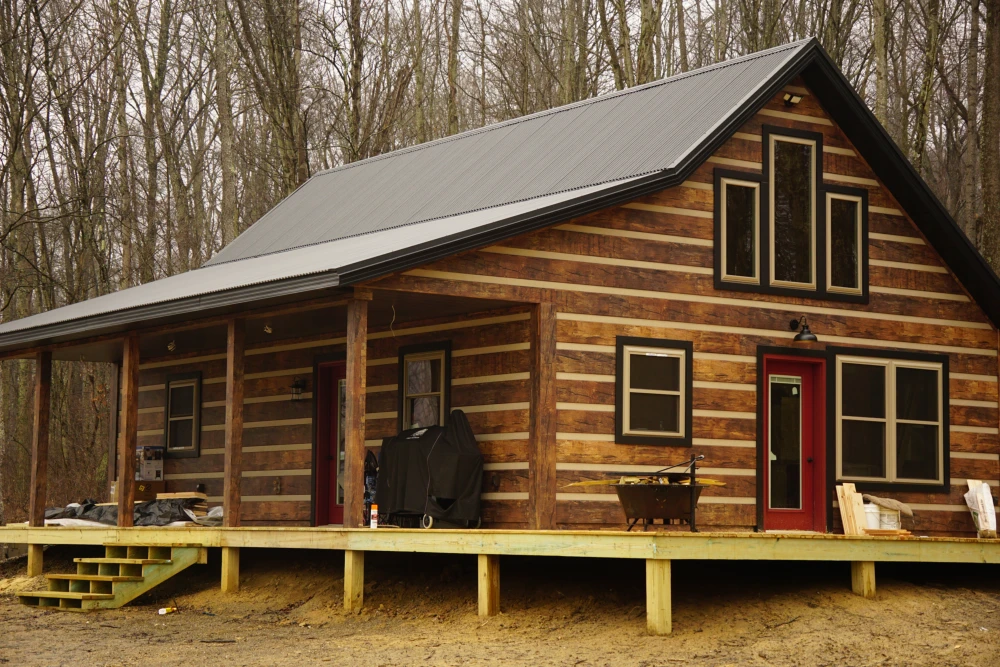
Massachusetts architecture is built on the painted clapboard tradition. Colonial, Georgian, Federal, and cape cod styles built that exterior identity over 300 years, and it reads as painted wood siding on nearly every street in the state. Wood grain siding in the 22 patterns SteeLuxe manufactures covers the full New England aesthetic in profiles that look like painted clapboard from the street, without the repainting cycle that salt air forces on real wood. On coastal properties, that repaint cycle runs every 5 to 8 years.
Steel doesn't absorb moisture, so freeze-thaw cycling doesn't crack it from the inside. The AZ55 Galvalume base coat provides corrosion resistance from inside the material itself, not from a surface layer that eventually fails. Class 4 impact resistance is the highest rating available and the standard Massachusetts insurance carriers use in hail-active areas when calculating premium adjustments. Every panel in the SteeLuxe line also carries Class A fire rating, the highest classification available.
Greater Boston is the largest residential re-siding market in the state, with a dense stock of older colonial and cape homes actively cycling through replacement. Cape Cod, the Islands, and the South Shore are the highest-intensity coastal market. Western Massachusetts runs the coldest winters and the Pioneer Valley is the state's primary hail corridor. Each region gets its own breakdown below, covering what the conditions look like on the ground and what 26-gauge steel does about each one.
The Most Advanced Steel Siding On The Market
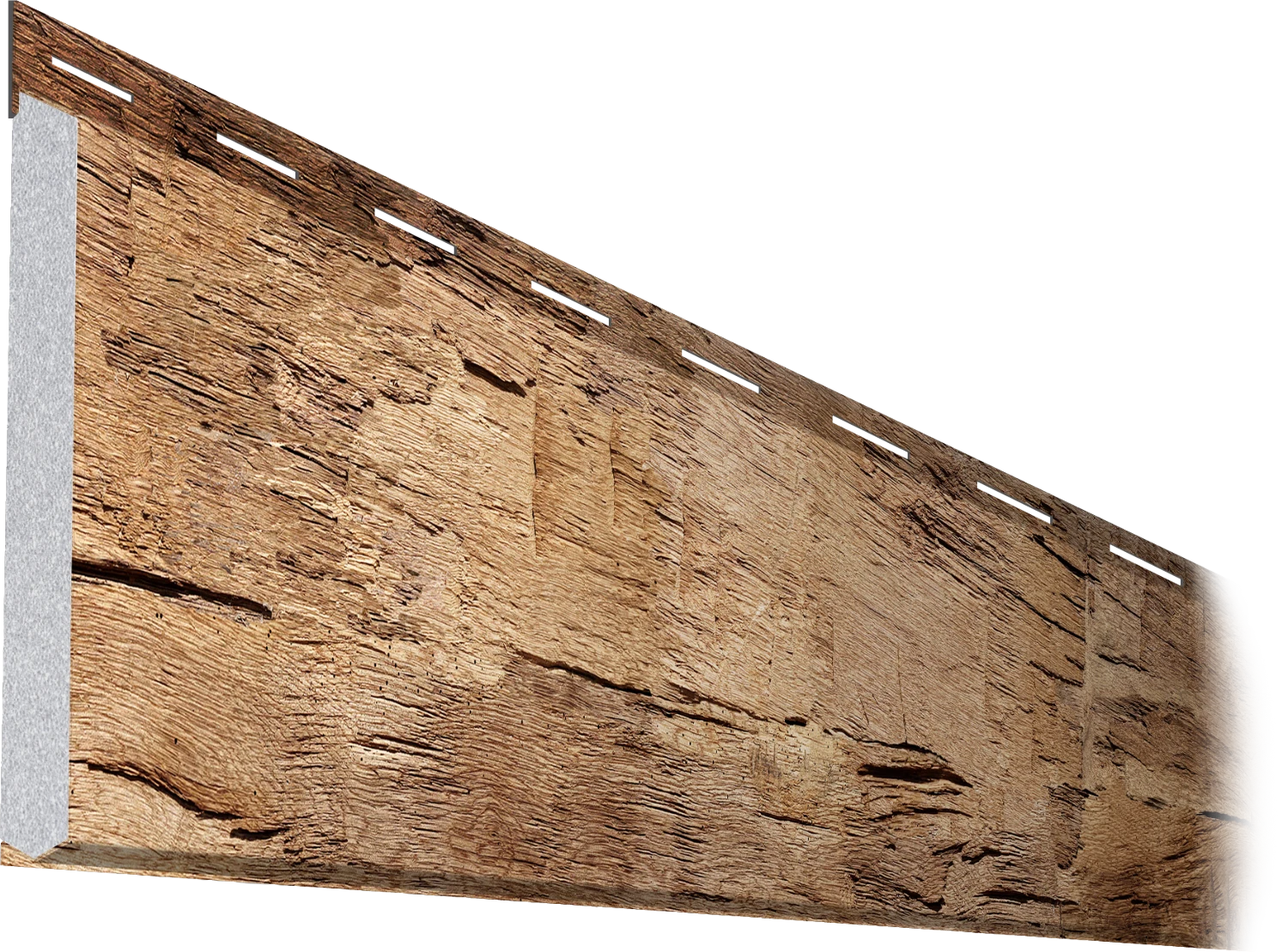
- 20 Year Fading & Chalking Warranty
- 50 Year Flaking & Peeling Warranty
- Lasts 40-60+ Years
- One Person Installation

Climate & Conditions Across Massachusetts
Massachusetts's conditions shift across four distinct regions. What drives the product decision in the Pioneer Valley is different from what matters on Cape Cod, and coastal communities face different specifications than the Worcester hills or the western Berkshires.
Greater Boston and the North Shore
Boston sits at the intersection of coastal exposure and cold-weather cycling that defines eastern Massachusetts. Harbor proximity moderates temperatures compared to inland areas, but salt air is a permanent condition from Gloucester south through Salem, Marblehead, and Cohasset to the South Shore. North Shore communities carry FEMA hurricane-prone designation, and storm surge from nor'easters and Atlantic tropical systems has a documented history of damaging exterior materials on first- and second-row coastal properties. Greater Boston is also the largest residential re-siding market in the state, with a dense stock of colonial and cape homes built between 1900 and 1970 that are actively being replaced.
Cape Cod, the Islands, and the South Shore
Cape Cod extends into the Atlantic on three sides, the marine environment is continuous year-round, and the combination of salt air, hurricane exposure, and sandy soil creates conditions that work aggressively on exterior materials. Nantucket and Martha's Vineyard share the same exposure profile with the added dimension of ferry-dependent logistics for material delivery. South Shore communities from Quincy through Duxbury and Plymouth carry similar coastal conditions at lower intensity, but marine air runs several miles inland along the bay and river corridors. Properties on or near the water deal with corrosion at a rate that makes base-level material protection the relevant specification.
The Pioneer Valley and Western Massachusetts
Springfield, Northampton, and the Connecticut River corridor make up the Pioneer Valley, which is Massachusetts's most hail-active zone. Valley geography funnels spring and summer storm systems and produces hail frequency that exceeds the coastal areas. Western Massachusetts also runs the coldest winters in the state, with Berkshire County communities regularly seeing January lows in the single digits and freeze-thaw cycles that run harder than the coastal plain. Cold and hail drive the product conversation here more than salt air does.
Central Massachusetts and the Worcester Region
Worcester sits in the middle of the state and draws conditions from both directions: cold winters from the western highlands, moderate hail activity from the same storm tracks that affect the Pioneer Valley, and enough moisture cycling through the year to make paint maintenance on wood siding a recurring cost. It's a significant siding market, and homeowners here deal with the same painted clapboard tradition as the rest of the state without the moderating effect that coastal proximity provides in temperature terms.
Need help finding an installer?
Why Steel Siding Is Right for Massachusetts
Massachusetts's four conditions each have a documented failure pattern in the materials most homes in the state are currently wearing, and each one has a specific answer in 26-gauge steel.
Salt air works continuously on every coastal installation. The AZ55 Galvalume base coat bonds a zinc-aluminum alloy to the steel core at the manufacturing stage, providing corrosion resistance that doesn't depend on paint staying intact. For a Cape Cod home, a North Shore colonial, or a South Shore property within a mile of the water, that base-level protection is what matters across a 40-year installation. Painted wood corrodes at fasteners and joints. Fiber cement absorbs salt moisture at cut edges and penetrations. Galvalume-core steel resists from the inside, regardless of surface condition.
Freeze-thaw cycling affects every Massachusetts installation year after year. Steel doesn't absorb moisture, so there's nothing inside the panel to freeze and expand when temperatures drop. The Slide-Lock system handles the dimensional changes that temperature swings produce in the steel itself without creating gaps or pulling fasteners loose. A Massachusetts winter runs five months, and every cycle in that window is a stress that wood and fiber cement handle differently than steel.
Class 4 impact resistance matters across both the Pioneer Valley and Greater Boston, where hail events occur on a schedule that homeowners with roofing damage in recent years know directly. That's the ceiling of the IBHS rating system and the threshold most Massachusetts insurance carriers use when calculating premium adjustments for hail-resistant exterior products. At that rating, the 26-gauge steel in SteeLuxe panels takes the impact without cracking or fracturing.
Hurricane and nor'easter wind-driven rain is the coastal argument. Class A fire rating is standard across the SteeLuxe line. For Massachusetts coastal properties, the steel panel and Slide-Lock interlock system maintains a weather-tight installation under the sustained wind loads and driving rain that Atlantic storms deliver to the Cape and North Shore coastline.
Product Specifications
| Spec | Value |
|---|---|
| Gauge | 26-gauge steel (~25% thicker than 29-gauge) |
| Core | EPS foam, R-3.57 continuous insulation value |
| Fire Rating | Class A (highest available) |
| Impact Rating | Class 4 (highest available) |
| Colors | 50 solid colors (Sherwin Williams WeatherXL) |
| Wood Grain | 22 patterns (Kynar 500 resin) |
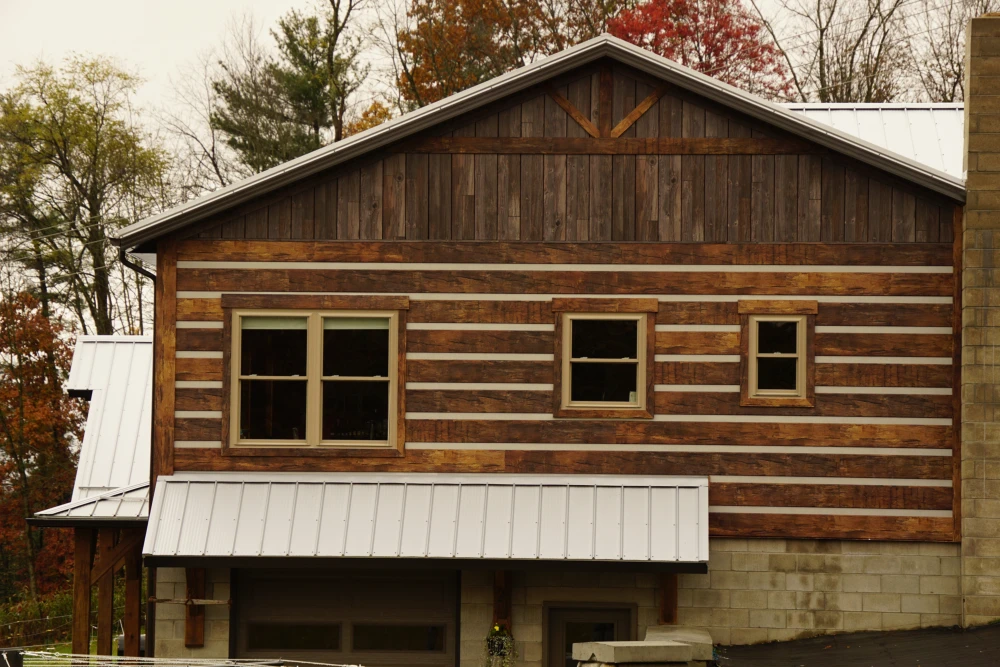
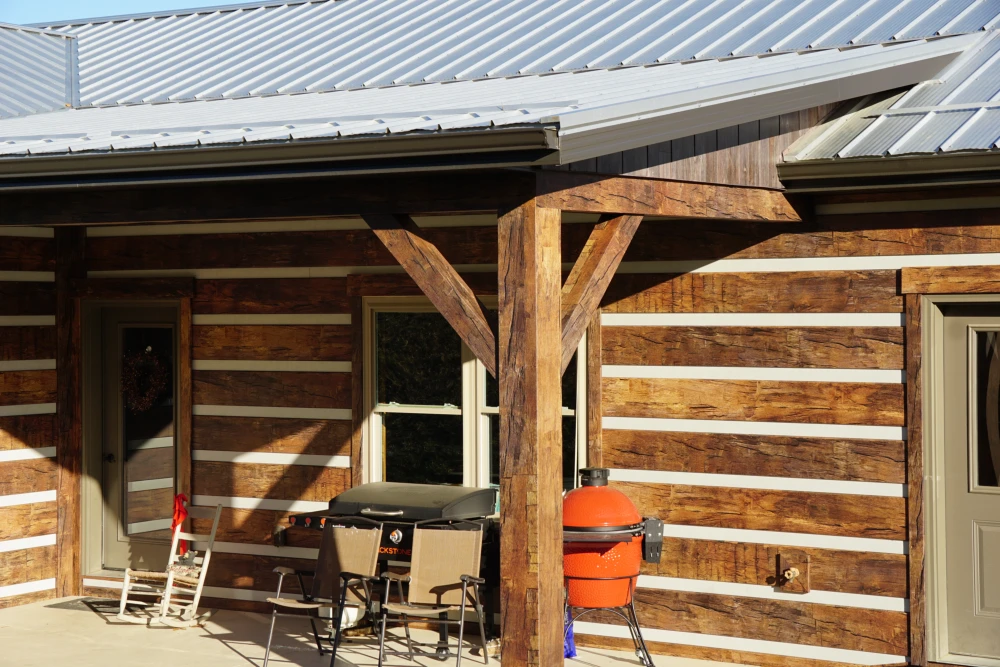
| Log Profile | Hand hewn log siding with chinking — 4 chinking colors |
| Warranty | 50-year peeling/flaking | 20-year fade/chalk |
| Panel | 10-inch planks, Slide-Lock system, one-person install |
| Base Coat | AZ55 Galvalume (zinc-aluminum alloy corrosion barrier) |
| Origin | New Philadelphia, Ohio — direct ship to all 49 states |
Hand Hewn Log Siding with Chinking in Massachusetts
Massachusetts isn't typically associated with log siding the way the Ozarks or the Sierra Nevada are, but the state has a meaningful rural interior where the rustic timber profile fits the landscape. Western Massachusetts, the Berkshires, and the rural hill towns of Worcester County have residential markets where older farmsteads, converted barns, hunting camps, and rural retreats call for a material that reads as timber rather than clapboard.
Real wood log siding in Massachusetts deals with the same problems that affect every wood product in the state's climate: freeze-thaw cycling, moisture absorption, and the salt air influence that reaches further inland than most homeowners expect. Log profiles in wood require consistent maintenance and show surface degradation through the gray weathering and checking that New England winters produce on exposed wood surfaces.
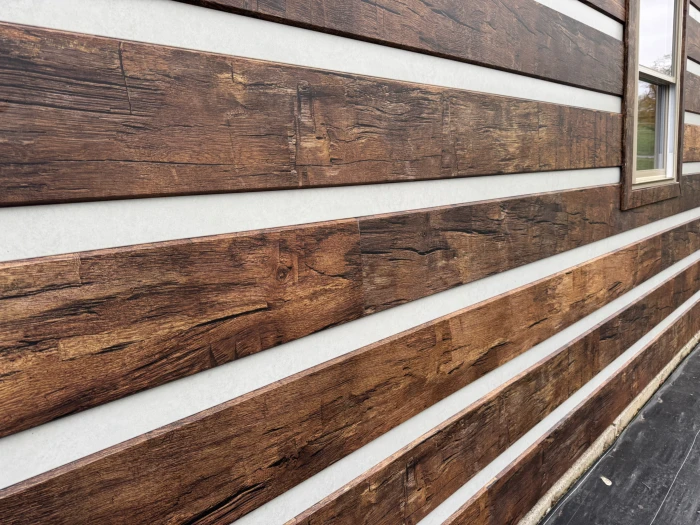
Hand hewn log siding with chinking in 26-gauge steel delivers the authentic timber look without those failure modes. Steel doesn't absorb moisture, doesn't check or crack through freeze-thaw cycles, and holds its finish for decades without the staining or sealing cycle that real wood log siding demands in New England. SteeLuxe is the only manufacturer making this product in steel.
Hand hewn log siding with chinking ships direct from New Philadelphia, Ohio to Massachusetts projects with no distribution markup. It's available in four chinking colors: Ash Gray, Charcoal, Clay, and Sandstone Tan, across all 22 wood grain patterns in the SteeLuxe line.
Ready to Transform Your Home With Hand-Hewn Log Cabin Siding?
Get the authentic hand-hewn cabin look with the chinking detail you love, and never think about maintenance again. SteeLuxe steel siding is insulated, fire-rated, hail-resistant, and built to last a lifetime. See it and feel it for yourself.
Steel Siding vs the Alternatives in Massachusetts
Vinyl is the most common re-siding material on Massachusetts homes from the last four decades, and it carries two clear problems in this climate. Cold temperatures make vinyl brittle, and below 20 degrees it loses the flexibility that allows it to absorb impact without cracking. A hail event in October or April hits vinyl that's already stiff from overnight temperatures, and the result is cracking that requires panel-by-panel replacement. Salt air doesn't degrade vinyl's surface directly, but it corrodes the fasteners and trim systems on vinyl installations at a rate the siding material itself doesn't reveal until the damage is already structural.
Fiber cement performs better than vinyl in cold and impact conditions, but it carries a Massachusetts-specific liability: moisture absorption at cut edges and penetrations. In a climate that cycles through freeze-thaw for five months a year, that absorbed moisture expands and contracts on a schedule that eventually causes cracking at edges and surface separation. Factory paint on fiber cement requires repainting in a salt air environment on a 10 to 15-year cycle, sometimes shorter on direct coastal properties. Class 4 impact resistance is not available in fiber cement, which matters for Pioneer Valley and Greater Boston homeowners after the hail season.
Wood siding is the historically correct choice for Massachusetts colonial and cape architecture, and historic district guidelines may require it on some properties. Maintenance cost is the problem that real wood can't avoid in this climate, and it adds up faster than most homeowners expect. Paint on wood siding in a salt air environment fails every 5 to 8 years and requires full preparation and repainting. Fasteners corrode and need replacement, and wood trim rots at joints and penetrations on a schedule the salt air accelerates. Over a 30-year ownership period in the Massachusetts coastal climate, that cumulative maintenance cost is significant, and the labor to do it is increasingly expensive in Greater Boston and Cape Cod markets.
Steel siding carries the Class 4 impact rating vinyl can't match, the freeze-thaw stability fiber cement loses at cut edges, and a factory finish that doesn't require repainting. For Massachusetts coastal properties, the AZ55 Galvalume core adds the corrosion resistance that painted aluminum and conventional coated steel don't provide at the base material level.
Frequently Asked Questions
Q:What warranty does SteeLuxe steel siding carry?
Q:Can one person install SteeLuxe steel siding?
Q:What colors does SteeLuxe steel siding come in?
Q:Where is SteeLuxe manufactured and how does shipping work?
Q:How does steel siding hold up against Massachusetts freeze-thaw winters?
Q:How does salt air affect steel siding on Cape Cod and the North Shore?
Q:Does Class 4 impact resistance help with insurance costs in Massachusetts?
Q:What Massachusetts cities does SteeLuxe serve?
Q:Will steel siding work on a historic colonial or cape cod home in Massachusetts?
Massachusetts Cities & Regions We Serve
SteeLuxe ships from New Philadelphia, Ohio to residential and contractor projects across Massachusetts, with lead times that work for both re-siding and new construction timelines statewide.
Greater Boston is the largest single siding market in the state. The surrounding communities cover a broad span of housing stock, from urban neighborhoods to the suburban colonial and cape belt running from the North Shore through Metrowest to the South Shore. Re-siding activity in this market is driven by aging wood and deteriorating vinyl on homes built from 1920 to 1980.
Cape Cod, Martha's Vineyard, and Nantucket are the state's highest-intensity coastal market. Salt air is constant, hurricane exposure is real, and the architectural expectation is New England traditional throughout. SteeLuxe wood grain profiles cover the painted shingle and clapboard look that Cape architecture requires without the maintenance cycle that salt air demands of real wood.
The Pioneer Valley, including Springfield and Northampton, is the state's hail market. Worcester and central Massachusetts sit between both the coastal and inland conditions, drawing cold winters from the west and moderate hail activity from the Pioneer Valley storm tracks to the east.
Full city pages with local installer contacts and current pricing are available for Boston, MA. More Massachusetts cities are listed below:
Get a Quote for Steel Siding in Massachusetts
SteeLuxe is manufactured in New Philadelphia, Ohio and ships direct. Whether you are planning a full re-siding project or exploring options, we can get you pricing, color samples, and a list of installers in your area.