
Steel Siding & Hand Hewn Log Siding in Connecticut
Steel Siding in Connecticut
Steel siding in Connecticut has to answer for five conditions at once. Winters bring genuine freeze-thaw cycling, with January lows in the upper teens and swings that drop and rise 30 degrees in a single day. Long Island Sound defines the state's entire southern border, delivering year-round salt air to Stamford, Bridgeport, New Haven, and every shoreline community from Greenwich to Stonington. Spring and summer hail moves through the Connecticut River Valley on a reliable schedule. The coastline sits inside FEMA's hurricane-prone region. And southern Connecticut carries moderate termite pressure that doesn't shut down in winter the way it does further north.
The cold argument is about expansion and contraction. When temperatures swing hard and often, siding materials that expand and contract unevenly show it over time in buckling, gapping, and fastener pull-out. Connecticut doesn't have Minnesota winters, but it has persistent, repetitive freeze-thaw cycling over a long season, and materials that hold their dimension through that cycling perform better over a 40-year installation than materials that absorb and release moisture at the surface.
Salt air is the year-round condition along the Sound. From the Greenwich waterfront east through the Connecticut shore to the Rhode Island line, the marine environment works on exterior surfaces continuously. Paint systems chalk and fade faster, and wood absorbs moisture and cycles through decay. Products with surface-level corrosion protection eventually expose the material underneath when that protection gets scratched or worn. The AZ55 Galvalume base coat in every SteeLuxe panel bonds a zinc-aluminum alloy to the steel core at the manufacturing stage, providing corrosion resistance that doesn't depend on the topcoat staying perfect.
Hail is less dramatic in Connecticut than in the Great Plains, but the Connecticut River Valley sees 18 to 22 significant hail events in an average year with peak season running April through August. Class 4 impact resistance is the highest rating available and the rating insurance carriers use when calculating premium adjustments for impact-resistant exterior products. Connecticut homeowners in the River Valley pay attention to hail damage at a rate that reflects the actual exposure.
The hurricane and coastal storm argument comes from Long Island Sound. Long Island Sound's geography channels storm surge and wind into the Connecticut coast in a way that open ocean coastlines don't always produce. Connecticut was hit directly by the 1938 New England Hurricane and took significant damage from Hurricane Sandy in 2012. Wood grain siding in the 22 patterns SteeLuxe offers handles the New England aesthetic that Connecticut homeowners want, including the traditional painted-wood look that colonial and Federal-style homes require, without the repaint cycle that salt air demands.
Connecticut is a premium market. Fairfield County runs some of the highest median home values in the country, and homeowners in Greenwich, Westport, Darien, and surrounding communities expect exterior materials that hold their finish, hold their form, and don't require maintenance. The combination of 26-gauge steel, a 50-year warranty, and a factory finish that doesn't need repainting maps directly to what that market is looking for.
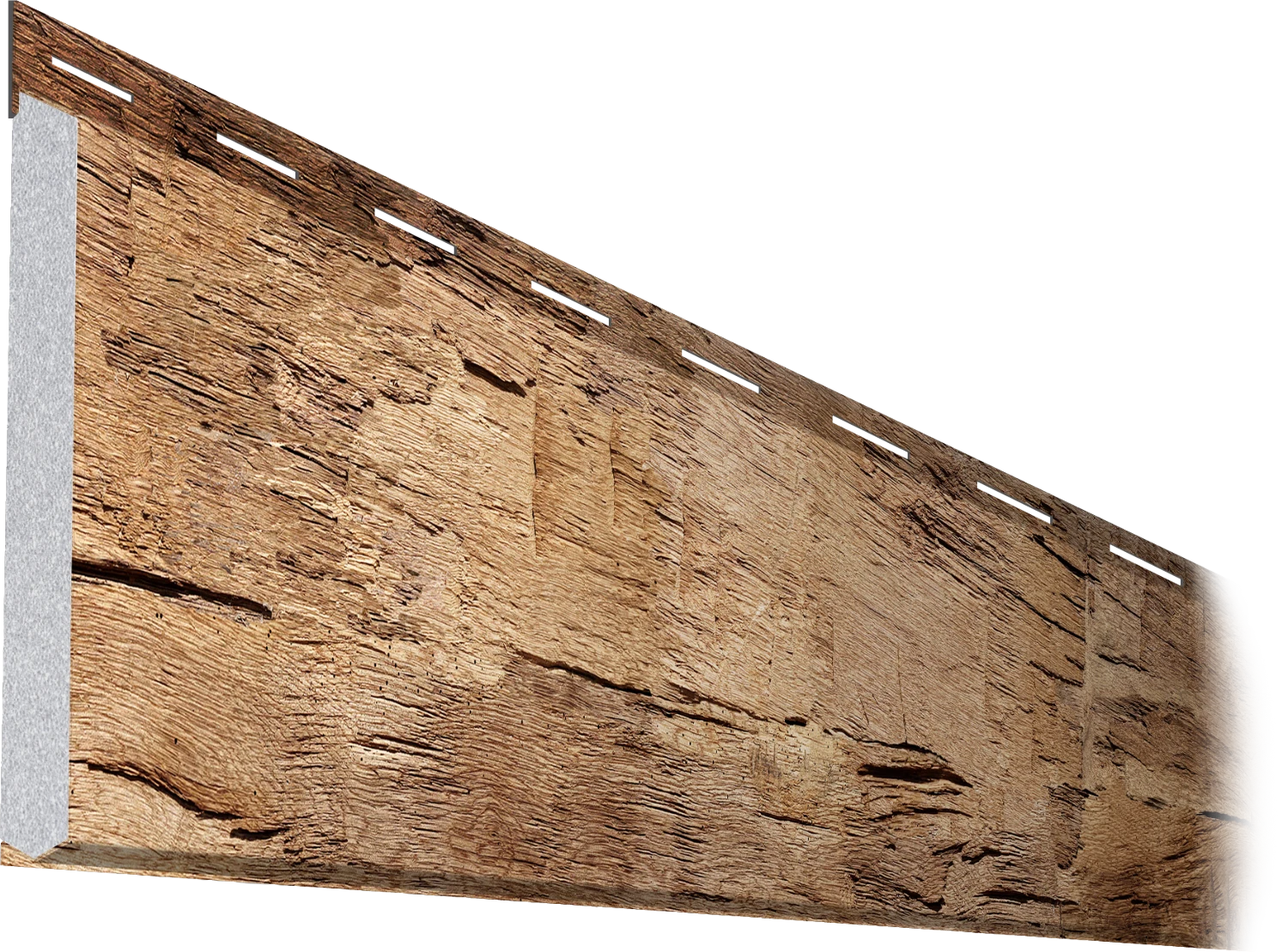
The Most Advanced Steel Siding On The Market
- 20 Year Fading & Chalking Warranty
- 50 Year Flaking & Peeling Warranty
- Lasts 40-60+ Years
- One Person Installation
Climate & Conditions Across Connecticut
The Long Island Sound Shoreline
Every community on or near the Sound carries salt air as a baseline condition. Stamford, Greenwich, Bridgeport, New Haven, Old Saybrook, and the shoreline towns east to Mystic all sit within the coastal exposure threshold. Sound proximity moderates temperature somewhat, with winters less severe right on the water than in the inland hills, but it also delivers consistent marine air that degrades conventional paint and accelerates surface corrosion in materials without core-level protection. FEMA's hurricane-prone region designation covers the Connecticut shoreline, and the state's history of tropical storm impacts makes wind-driven rain and surge exposure part of every coastal installation calculation.
The Connecticut River Valley
Running north through the middle of the state from Old Saybrook to the Massachusetts border, the Connecticut River Valley is the state's most hail-active corridor. The valley's topography and prevailing storm tracks funnel spring and summer convective storms through this corridor more reliably than other parts of the state. Hartford, Middletown, and the communities along the river see the highest concentration of hail events in Connecticut, with storms capable of producing golf-ball-sized hail in peak season. The valley also carries moderate termite pressure in its southern sections, and the spring moisture that comes with the season keeps conditions active for longer than the state's inland areas.
Coastal Fairfield County
The stretch from Greenwich east through Stamford, Norwalk, Westport, and Fairfield combines Long Island Sound salt air with some of the densest concentration of high-value residential properties in New England. Homeowners in these communities are replacing aging cedar shake, deteriorating wood clapboard, and chalk-faded paint systems on colonial, cape, and Federal-style homes. The two factors driving those replacement projects are maintenance cost and appearance, and both arguments resolve in favor of a factory-finished steel product that holds its color and doesn't require repainting.
The Northwest Hills & Inland Connecticut
The northwestern corner of the state, covering Litchfield County and the communities around Torrington and Winsted, runs the coldest winters in Connecticut. Elevations above 1,500 feet produce January lows that can drop into the single digits, and the freeze-thaw cycling here is more aggressive than on the shoreline. Inland Connecticut also carries the state's most traditional New England character: older housing stock, historic district requirements in some towns, and a strong preference for siding profiles that read as painted wood rather than modern product. Wood grain steel siding addresses that preference while holding performance across the freeze-thaw season without absorbing moisture or requiring annual attention.
Connecticut's four regions don't all face the same conditions at the same intensity, but no part of the state escapes more than two of them. The right product conversation shifts as you move from the Sound to the River Valley to the northwest hills, but the underlying arguments for steel hold across all four.
Need help finding an installer?
Why Steel Siding Is Right for Connecticut
Connecticut's five active conditions don't hit with equal force in every part of the state, but any Connecticut home is likely dealing with at least three of them, and most coastal or River Valley properties are dealing with four. Each condition has a documented failure pattern in the materials most Connecticut homes are currently wearing, and each has a specific answer in 26-gauge steel.
Cold and freeze-thaw cycling are the baseline conditions for every Connecticut installation. Steel doesn't absorb moisture. When temperatures drop and water freezes, there's nothing in the panel to expand, crack, or push fasteners loose. The Slide-Lock panel system handles the dimensional changes that temperature swings produce in the metal itself without creating gaps or pulling away from the wall. Connecticut's freeze-thaw season runs roughly November through March, and every cycle it produces is a stress that vinyl and wood fiber absorb differently than steel.
Salt air from the Sound is a corrosion problem, not a cosmetic one, and the difference matters when you're choosing a siding material for a home 500 feet from the water. The AZ55 Galvalume base coat protects from inside the material. It doesn't depend on the paint staying intact. For coastal Connecticut properties, that baseline corrosion resistance is the spec that matters most, and it's one that painted wood, fiber cement, and conventional coated steel products don't match over a 40-year installation.
Hail impact resistance at Class 4 is the ceiling of the rating system. For Connecticut River Valley homeowners who have already replaced a roof after a hail event, Class 4 siding is the natural next conversation. Insurance carriers recognize the rating with premium adjustments in many cases, and the underlying product benefit is real: 26-gauge steel at Class 4 doesn't dent, crack, or chip at the impact energies Connecticut hail produces.
Termites in southern Connecticut carry Moderate to Heavy pressure, active and consistent. Wood siding in that environment is not immune. Steel removes the organic material that termite colonies need, and in a state where the coastal climate keeps termite activity running longer into the fall than northern New England, that removal has practical value for homes along the shoreline and in the lower Connecticut River Valley.
Product Specifications
| Spec | Value |
|---|---|
| Gauge | 26-gauge steel (~25% thicker than 29-gauge) |
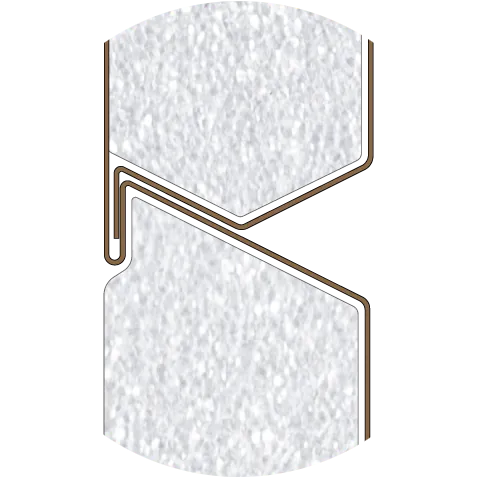
| Core | EPS foam, R-3.57 continuous insulation value |
| Fire Rating | Class A (highest available) |
| Impact Rating | Class 4 (highest available) |
| Colors | 50 solid colors (Sherwin Williams WeatherXL) |
| Wood Grain | 22 patterns (Kynar 500 resin) |
| Log Profile | Hand hewn log siding with chinking — 4 chinking colors |
| Warranty | 50-year peeling/flaking | 20-year fade/chalk |
| Panel | 10-inch planks, Slide-Lock system, one-person install |
| Base Coat | AZ55 Galvalume (zinc-aluminum alloy corrosion barrier) |
| Origin | New Philadelphia, Ohio — direct ship to all 49 states |
Hand Hewn Log Siding with Chinking in Connecticut
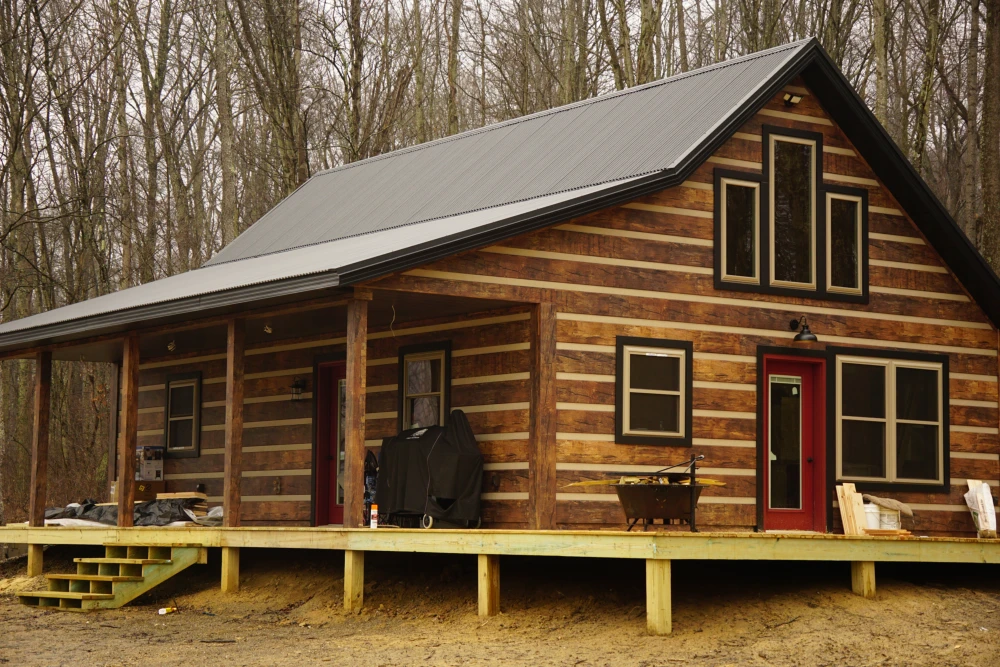
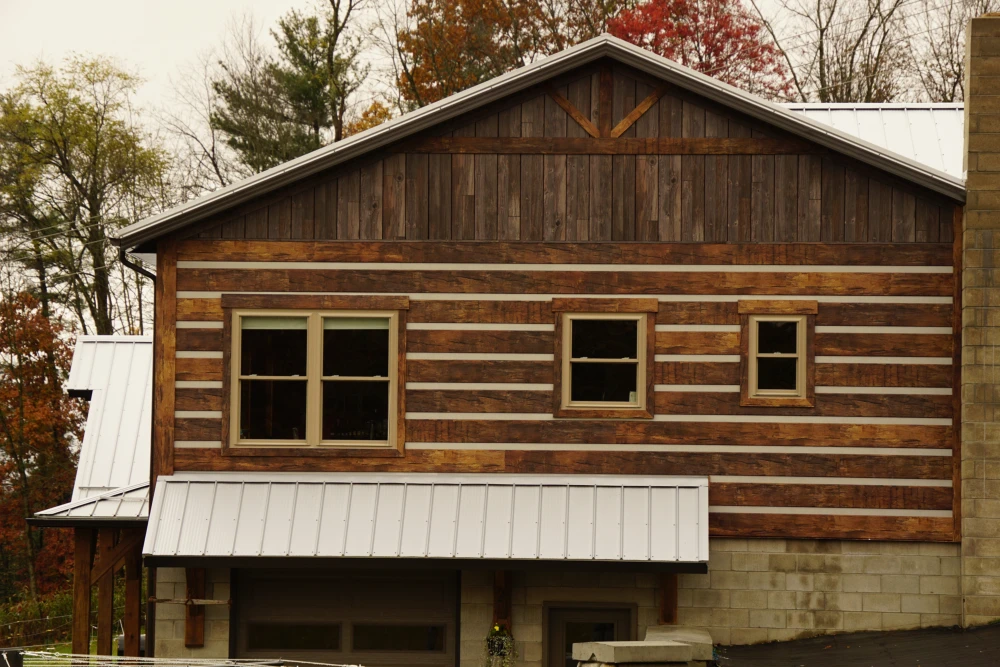
Connecticut doesn't have the mountain resort communities that drive the log siding market in Colorado or the Sierra Nevada, but the state does have a substantial rural and semi-rural interior where the rustic timber aesthetic fits the landscape. Litchfield County, the eastern Connecticut highlands, and the river towns along the upper Connecticut River corridor all have residential markets where the log cabin and timber frame profile is a natural choice for second homes, converted farmsteads, and rural primary residences.
Wood log siding in Connecticut's climate runs into two problems. Coastal moisture, even in inland areas that receive indirect marine influence through weather systems, cycles wood through repeated wet and dry states that accelerate surface degradation. Freeze-thaw cycling then works on whatever moisture has gotten into the wood fiber. Log siding that looks good in year one often shows checking, gray weathering, and surface separation by year five or six without consistent maintenance.
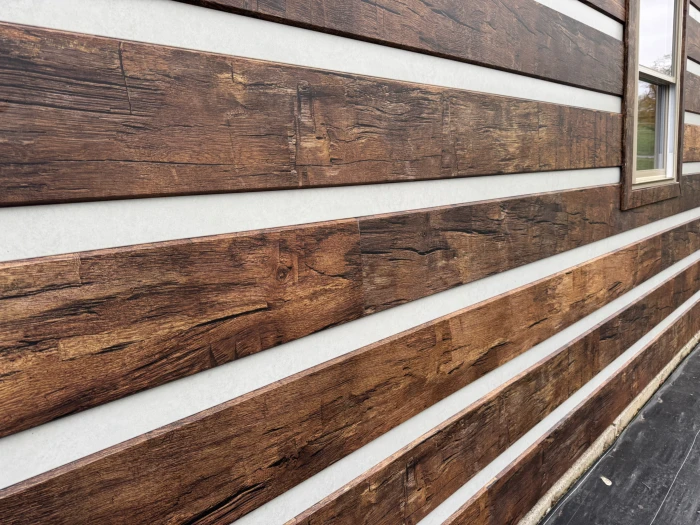
Hand hewn log siding with chinking in 26-gauge steel delivers the authentic log profile with none of those failure modes. The steel core doesn't absorb moisture, doesn't check or crack, and doesn't gray out under UV. SteeLuxe is the only manufacturer producing this product, and it ships direct from New Philadelphia, Ohio to Connecticut with no distribution markup and consistent lead times.
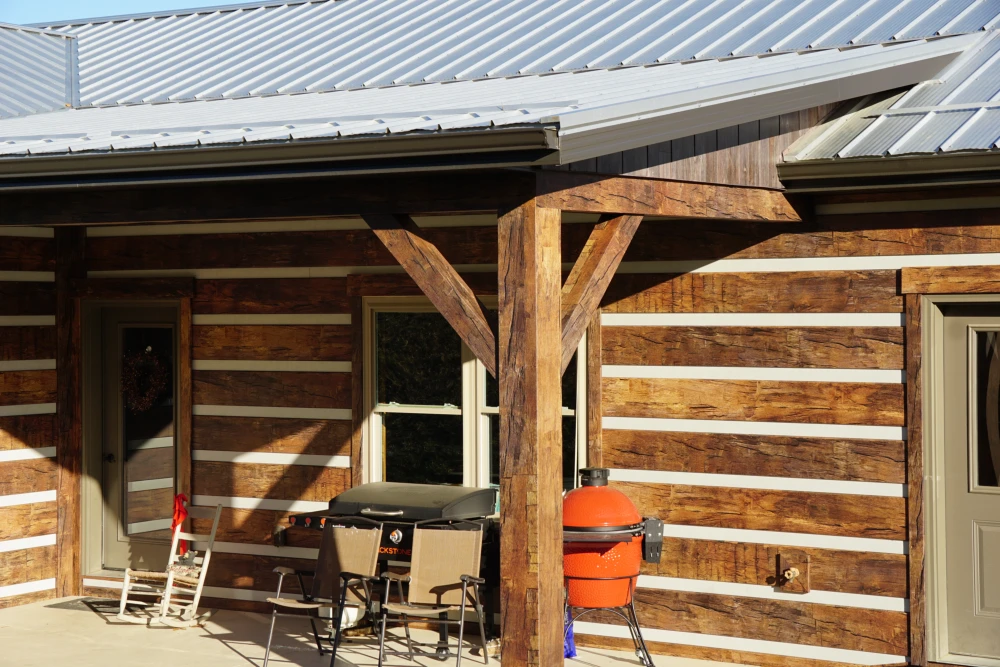
Hand hewn log siding with chinking is available across all 22 wood grain patterns, from weathered gray to warm cedar tones. The four chinking colors are Ash Gray, Charcoal, Clay, and Sandstone Tan, giving rural Connecticut homes the full traditional log-and-chinking look in a steel panel that holds its appearance for decades.
Ready to Transform Your Home With Hand-Hewn Log Cabin Siding?
Get the authentic hand-hewn cabin look with the chinking detail you love, and never think about maintenance again. SteeLuxe steel siding is insulated, fire-rated, hail-resistant, and built to last a lifetime. See it and feel it for yourself.
Steel Siding vs the Alternatives in Connecticut
Vinyl is the most common siding on Connecticut homes built in the last 40 years, and its failure pattern in Connecticut's conditions is well established. Cold temperature makes vinyl brittle, and the impact resistance that matters when hail comes through the River Valley drops significantly once temperatures fall below freezing. A hail event in November hits vinyl differently than the same storm in August. Salt air doesn't degrade vinyl's surface the way it degrades painted products, but vinyl provides no corrosion protection for the structure underneath and carries no Class 4 impact rating. Over a 30-year Connecticut installation, the combination of hail hits, freeze-thaw cycling, and UV fading adds up to a product that needs replacing before its theoretical lifespan.
Fiber cement handles the coastal moisture environment better than vinyl and carries some fire resistance, but it brings Connecticut-specific maintenance requirements that come due on a predictable schedule. The factory paint on fiber cement typically needs repainting every 10 to 15 years in a salt air environment. Along the Long Island Sound shoreline, where marine air works on exterior surfaces year-round, the repainting interval can be shorter. Fiber cement also absorbs water at cut edges and penetrations, which in a freeze-thaw climate means those absorbed moisture points go through repeated expansion cycles over a Connecticut winter. Impact resistance at Class 4 is not available in fiber cement.
Wood siding is the historic choice for Connecticut's colonial, Federal, and cape cod housing stock, and the authentic painted-wood look it produces is what most homeowners in the state grew up seeing. Maintenance is the problem in Connecticut: wood siding requires repainting every 5 to 8 years in a coastal environment, termites in southern Connecticut work on it continuously, and the freeze-thaw cycling that Connecticut winters produce moves moisture in and out of wood fiber across a long season. That ongoing cost and effort of maintaining wood siding is why so much of it in Connecticut gets replaced, and why the conversation about what replaces it increasingly includes materials that hold their finish without repainting.
Steel siding holds the Class 4 impact rating that vinyl can't match, the corrosion protection that fiber cement doesn't have at the core level, and the zero-maintenance finish that wood requires constant intervention to approximate. For Connecticut's conditions across all four regions of the state, that combination of performance attributes covers what the climate actually produces.
Frequently Asked Questions
Q:What warranty does SteeLuxe steel siding carry?
Q:Can one person install SteeLuxe steel siding?
Q:What colors does SteeLuxe come in?
Q:Where is SteeLuxe manufactured and how does shipping work?
Q:How does steel siding hold up against Connecticut's freeze-thaw winters?
Q:Does Class 4 impact resistance actually matter for Connecticut hail?
Q:Is salt air from Long Island Sound a problem for steel siding?
Q:What Connecticut cities does SteeLuxe serve?
Q:Is steel siding common on Connecticut's historic colonial and Federal-style homes?
Connecticut Cities & Regions We Serve
Fairfield County and the Long Island Sound shoreline represent Connecticut's largest premium siding market. The coastal communities running from Greenwich east through Stamford, Norwalk, Westport, and Bridgeport carry salt air exposure, hurricane-zone designation, and high-value housing stock that makes the steel siding conversation most direct. Homeowners in this corridor are replacing wood and fiber cement on older homes and specifying premium materials on new construction.
The Greater New Haven area and the central Connecticut shoreline carry similar conditions with a broader mix of housing stock, from historic neighborhoods near the city centers to newer suburban construction further inland. Salt air, moderate termite pressure, and the hail exposure that comes with the Connecticut River Valley just to the north make this a multi-condition market where steel's performance across several risks at once is the right framing.
The Hartford metro and the Connecticut River Valley corridor are the state's most hail-active market. Homeowners who have already dealt with hail damage to roofing are often the most receptive to the Class 4 impact rating conversation for siding, and insurance carriers recognize the rating with premium adjustments in many cases. SteeLuxe ships direct to Connecticut from New Philadelphia, Ohio, with lead times that work for contractor and homeowner project timelines throughout the River Valley, the northwest hills, and coastal communities statewide.
Full city pages with local installer contacts and current pricing are available for Bridgeport, CT. More Connecticut cities are listed below:
Don't see your city listed here. Contact SteeLuxe directly or use the site search, and someone familiar with Connecticut's conditions will help you find the nearest installer and current pricing.
Get a Quote for Steel Siding in Connecticut
SteeLuxe is manufactured in New Philadelphia, Ohio and ships direct. Whether you are planning a full re-siding project or exploring options, we can get you pricing, color samples, and a list of installers in your area.