
Steel Siding & Hand Hewn Log Siding in Wyoming
Steel Siding in Wyoming
Steel siding in Wyoming answers for a combination of mountain cold, sustained high wind, and hail exposure matched by few states. Cheyenne averages a January low near 18 degrees with sustained wind speeds above 12 miles per hour year-round and gusts above 50 miles per hour common through the winter and spring. Jackson in Teton County averages a January low near 9 degrees with freeze-thaw cycling from September through May. Wood grain siding in the 22 SteeLuxe patterns covers the full Wyoming range, from the ranch and craftsman profiles of Cheyenne and Casper to the log cabin and ski chalet profiles of Jackson Hole and the Teton corridor.
Wyoming's cold is genuine and statewide. Cheyenne averages a January low near 18 degrees, Casper near 16 degrees, Gillette near 10 degrees, and Jackson near 9 degrees, with freeze-thaw cycling from October through April across the state and September through May in the Teton and Wind River corridors. Laramie sits at 7,165 feet and records some of the highest sustained wind speeds of any city in the lower 48. Rock Springs and Rawlins sit in wind corridors where gusts above 70 miles per hour are a regular winter occurrence.
Wyoming's wind is the condition that separates it from every other mountain state. Cheyenne records sustained wind speeds above 12 miles per hour year-round, and gusts above 50 miles per hour arrive regularly from late fall through spring. Casper and Rawlins sit in similar corridors, and Laramie's high-elevation open terrain produces gusts that have exceeded 100 miles per hour. Wind-driven snow and ice coat every exterior surface through winter, and siding systems that rely on a nail hem are directly vulnerable to the wind force Wyoming delivers.
Hail reaches Wyoming's eastern corridor from Cheyenne north through Casper and Gillette from May through September. Cheyenne sits at the northern edge of the Front Range hail belt, and large hail capable of splitting vinyl and cracking fiber cement reaches the Cheyenne, Laramie, and Casper markets regularly through the summer storm season. A Class 4 impact resistance rating means a panel survives a 2-inch steel ball at 88 miles per hour without denting, the standard insurance carriers use for premium discounts.
Wyoming's Jackson Hole corridor and the Teton and Yellowstone region represent a distinct second-home and vacation property market where the log cabin, ski chalet, and western ranch aesthetics define the residential character. The Jackson basin records annual snowfall above 100 inches, and properties in Teton County face a freeze-thaw season that runs from September through May. Many of those properties sit unoccupied through the winter without an active maintenance response.
Wyoming's conditions don't fall equally across the state. Cold and freeze-thaw are most severe in the Jackson and Wind River corridors. Wind is most intense in the Cheyenne, Casper, Rawlins, and Laramie corridors. Hail is concentrated in the eastern markets from Cheyenne north through Casper and Gillette. Jackson and the Teton corridor add a distinct vacation property dimension.
The Most Advanced Steel Siding On The Market
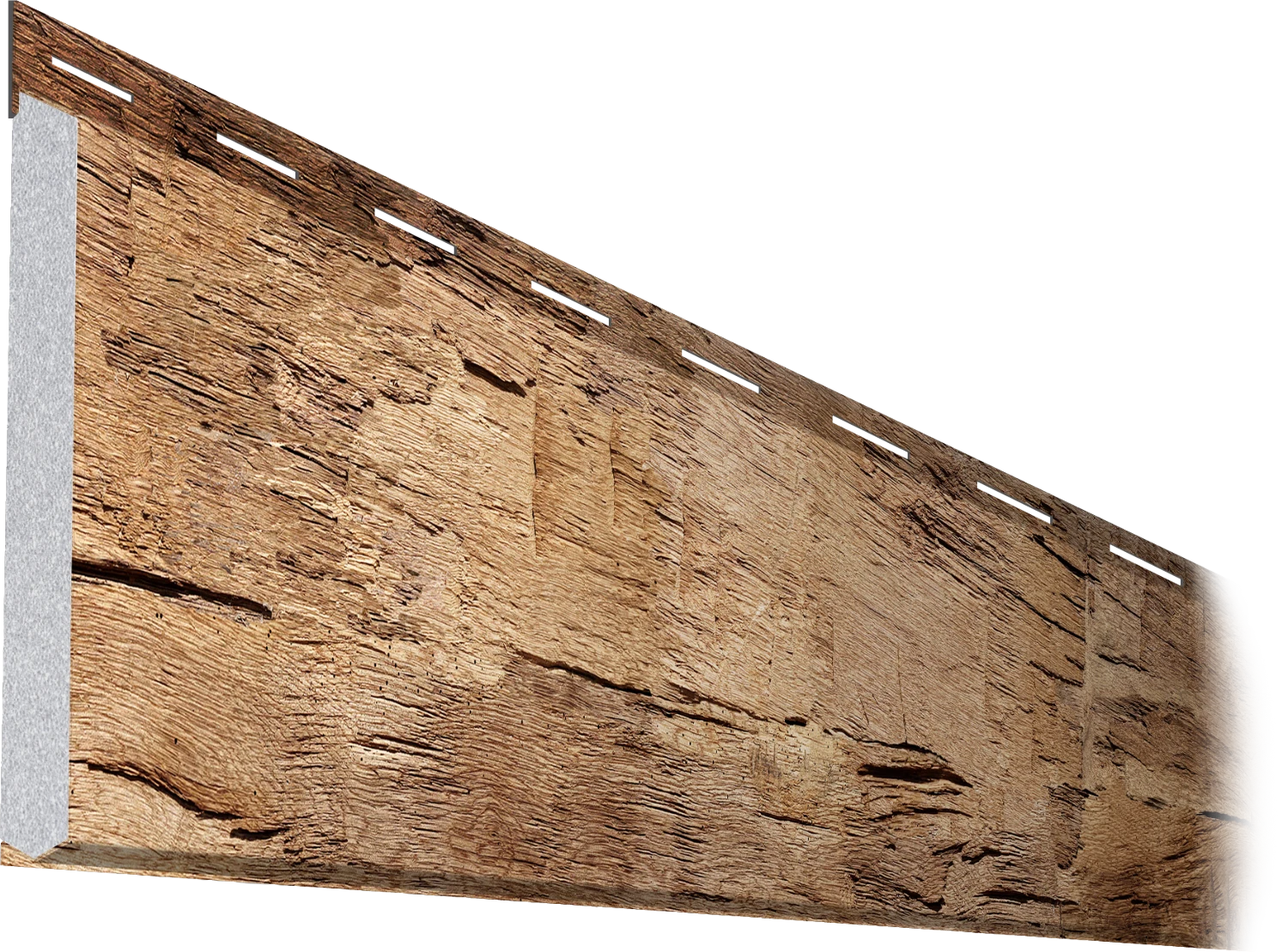
- 20 Year Fading & Chalking Warranty
- 50 Year Flaking & Peeling Warranty
- Lasts 40-60+ Years
- One Person Installation
Climate & Conditions Across Wyoming
Wyoming's conditions follow terrain and elevation across the high plains and mountain ranges. Cold and wind are statewide and most severe in the higher terrain. Hail concentrates in the eastern corridor from Cheyenne through Casper and Gillette.
Cheyenne and the Laramie County corridor represent Wyoming's largest residential siding market, where a January low near 18 degrees, freeze-thaw cycling from October through April, sustained high wind, and summer hail events from the Front Range corridor combine in a market defined by ranch, craftsman, and colonial homes. Laramie in Albany County sits at 7,165 feet with a January low near 14 degrees, freeze-thaw cycling from September through May, and sustained wind exposure that puts nail-hem siding systems under direct stress through every winter season.
Casper and the Natrona County corridor represent Wyoming's second-largest residential market, where a January low near 16 degrees, freeze-thaw cycling from October through April, consistent wind exposure, and summer hail from the eastern Wyoming hail corridor drive consistent re-siding demand through the spring through fall construction window. Gillette in Campbell County represents the fast-growing northern plains market, where the energy sector sustains consistent new construction siding demand and January lows near 10 degrees, freeze-thaw cycling, and summer hail keep the re-siding market active through the construction season.
Rock Springs, Green River, and the Sweetwater County corridor represent southwestern Wyoming's residential market, where January lows near 12 degrees, freeze-thaw cycling from October through April, and sustained wind exposure that reaches the highest levels in the state combine across a residential base built around the energy sector. Rawlins in Carbon County sits in Wyoming's most relentless wind corridor, where the terrain of the high plains between the Rockies and the Laramie Range concentrates wind in ways that regularly produce gusts above 70 miles per hour through the fall and winter months.
Jackson, Cody, and the Teton and Park county mountain corridor represent Wyoming's resort and vacation property market, where January lows near 9 degrees in Jackson, freeze-thaw cycling from September through May, and annual snowfall above 100 inches in the Jackson basin make the Jackson corridor the most severe cold market in the state. Cody in Park County sits at the eastern gateway to Yellowstone with a January low near 14 degrees and a large inventory of western ranch homes and mountain cabins that freeze-thaw cycling and wind work on through the full cold season.
Need help finding an installer?
Why Steel Siding Is Right for Wyoming
Three conditions are active across Wyoming's residential market, and addresses in the eastern corridor face all three through a single calendar year. Each produces a direct failure pattern in the materials most Wyoming homes carry, and each has an answer in 26-gauge steel.
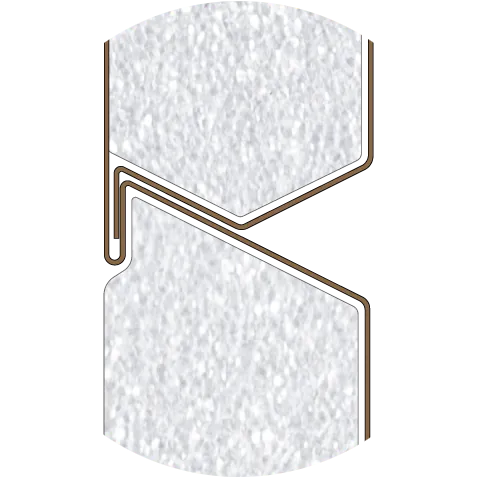
Wyoming's freeze-thaw season runs from October through April statewide and from September through May in the Jackson, Laramie, and Wind River corridors. Vinyl becomes brittle in sustained cold, losing the flexibility it needs to expand and contract through freeze-thaw cycles, and wind-driven snow and ice put weight against already-brittle panels at every freeze event. Steel holds its shape and size through Wyoming's full winter cycle without cracking, gapping, or loosening, and the Slide-Lock interlock holds under the wind force that pulls nail-hem dependent systems apart.
Wyoming's sustained wind is the most direct test of a siding panel connection in the continental United States. Cheyenne and Rawlins produce gust events that pull nail-hem mounted panels away from wall framing, and detached vinyl panels in Wyoming wind corridors are a routine issue rather than an anomaly. The Slide-Lock panel system creates a mechanical interlock between every panel course, so wind force acts on the interlock rather than the nail hem. In Cheyenne, Casper, Laramie, Rawlins, and Rock Springs, that difference is measurable every winter.
Hail reaches Wyoming's eastern corridor every summer storm season, and a Class 4-rated steel panel won't dent under the 2-inch steel ball impact that defines the standard. Cheyenne sits at the northern edge of the Front Range hail belt, and the large hail events that reach Cheyenne, Laramie, Casper, and Gillette from May through September split vinyl panels and crack fiber cement surfaces regularly. Steel's 26-gauge thickness means the panel surface stays intact through those events, and Class 4 rating earns insurance premium discounts across Wyoming's eastern corridor.
Wyoming's dry climate reduces the moisture-driven failure modes that dominate in wetter mountain states, but freeze-thaw cycling still works moisture into panel joints and cut edges through the wet shoulder seasons between winter cold and summer heat. Paint on wood absorbs that moisture at every joint and cut edge, and each temperature cycle works it deeper into the wood behind the panel. Steel doesn't absorb moisture at the panel surface, and the seven-step coating system resists Wyoming's high-altitude UV exposure, where intensity at elevation shortens the life of siding that relies on a surface coat for protection.
Product Specifications
| Spec | Value |
|---|---|
| Gauge | 26-gauge steel (~25% thicker than 29-gauge) |
| Core | EPS foam, R-3.57 continuous insulation value |
| Fire Rating | Class A (highest available) |
| Impact Rating | Class 4 (highest available) |
| Colors | 50 solid colors (Sherwin Williams WeatherXL) |
| Wood Grain | 22 patterns (Kynar 500 resin) |
| Log Profile | Hand hewn log siding with chinking — 4 chinking colors |
| Warranty | 50-year peeling/flaking | 20-year fade/chalk |
| Panel | 10-inch planks, Slide-Lock system, one-person install |
| Base Coat | AZ55 Galvalume (zinc-aluminum alloy corrosion barrier) |
| Origin | New Philadelphia, Ohio — direct ship to all 49 states |
Hand Hewn Log Siding with Chinking
Jackson Hole and the Teton and Yellowstone corridor carry Wyoming's largest concentration of ski chalets, mountain cabins, and vacation homes where the log cabin and western ranch aesthetic defines the residential character. Properties throughout Teton County face a January low near 9 degrees, freeze-thaw cycling from September through May, sustained wind, and annual snowfall above 100 inches. Many sit unoccupied through Wyoming's long cold season without an active maintenance response.
Real wood log siding in the Jackson Hole corridor faces freeze-thaw cycling through an eight-month window, sustained wind that drives snow and ice into every log joint, and UV intensity from Wyoming's high-altitude sun that shortens paint life faster than manufacturers' estimates written for lower elevations predict. Each season, moisture works into log joints and widens cracks that the prior winter started, and properties sitting unoccupied through the winter face those conditions without any maintenance response.
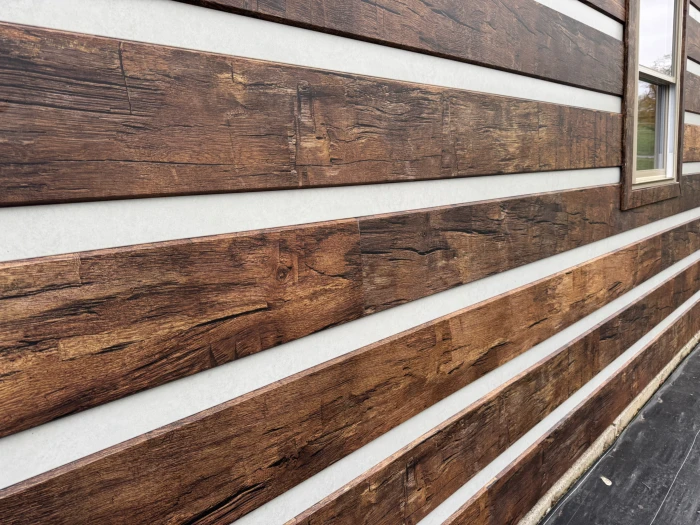
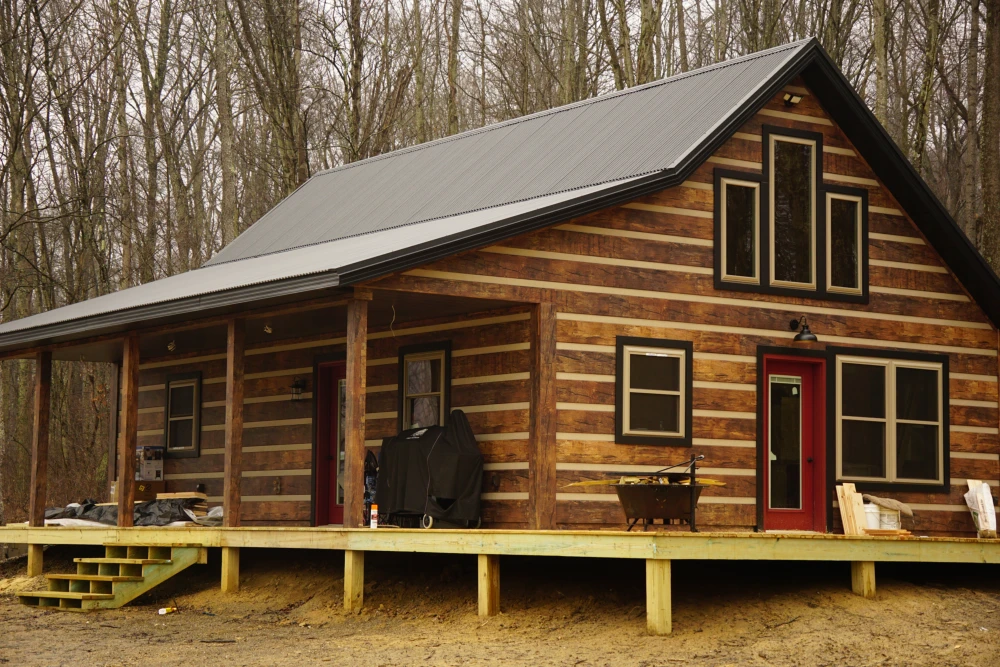
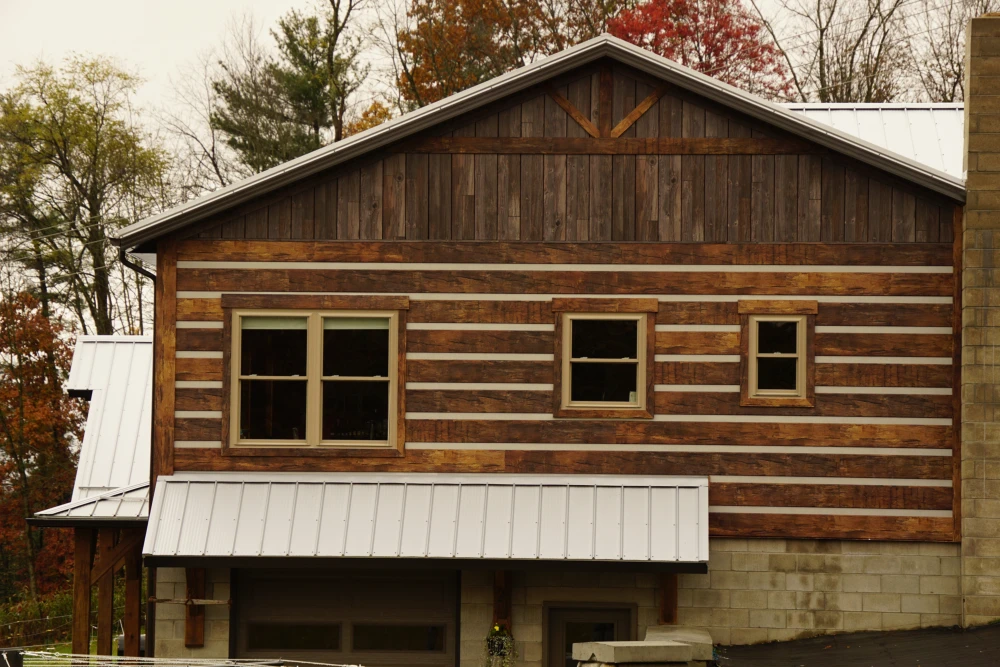
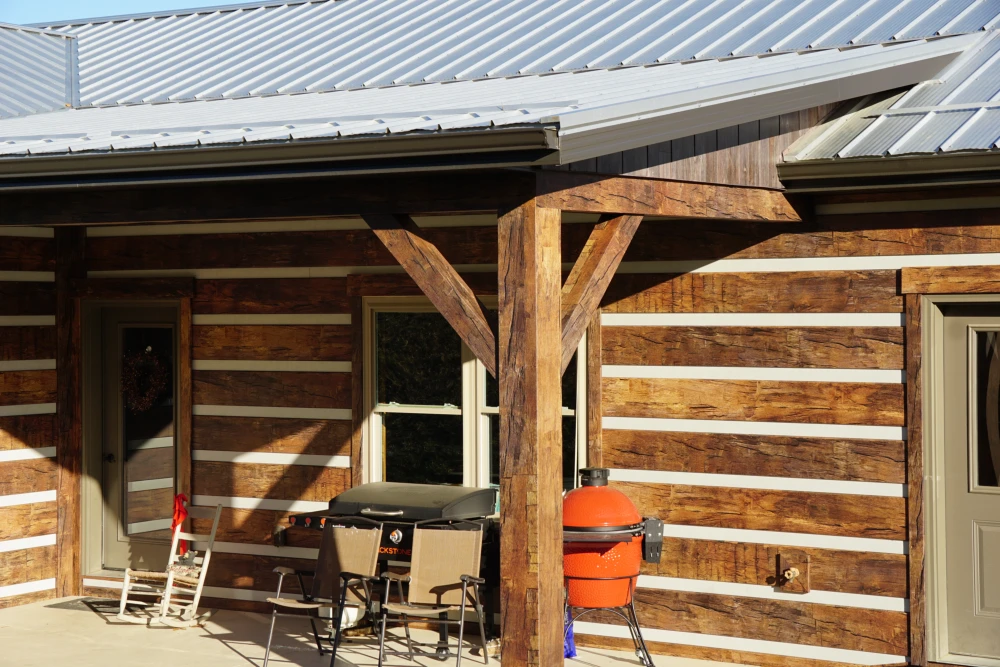
Hand hewn log siding with chinking in 26-gauge steel delivers the Jackson Hole log cabin aesthetic without those failure modes. Steel doesn't absorb moisture, so freeze-thaw has nothing to act on at the log joints, and the Slide-Lock connection holds panel seams tight under Wyoming's sustained mountain wind. Chinking fills the joints in four colors: Ash Gray, Charcoal, Clay, and Sandstone Tan. From the road, it reads as traditional log construction. The 50-year warranty applies through Wyoming's full mountain winter.
SteeLuxe is the only manufacturer making hand hewn log siding with chinking in steel. It ships direct from New Philadelphia, Ohio to ski chalets, mountain cabins, and vacation homes throughout Wyoming's Teton and Yellowstone corridor, and is available in all 22 wood grain patterns in the SteeLuxe line.
Ready to Transform Your Home With Hand-Hewn Log Cabin Siding?
Get the authentic hand-hewn cabin look with the chinking detail you love, and never think about maintenance again. SteeLuxe steel siding is insulated, fire-rated, hail-resistant, and built to last a lifetime. See it and feel it for yourself.
Steel Siding vs the Alternatives
Wyoming's cold, wind, and hail conditions test the three most common siding alternatives against the demands of a high-plains and mountain climate that delivers more wind force than most of the continental United States. Steel answers every condition. Each alternative fails on at least two fronts.
Vinyl is common on Wyoming homes, and the state's conditions expose its failure modes across every region. In sustained cold, vinyl becomes brittle, losing the flexibility it needs to expand and contract through freeze-thaw cycles. Wyoming's winters push well below the brittleness threshold in every county, and wind-driven snow and ice add weight and force against already-brittle panels through the full cold season. In Cheyenne, Casper, Rawlins, and Laramie, the sustained wind and gust events that reach 50 to 70 miles per hour routinely pull nail-hem mounted vinyl panels away from wall framing before a homeowner can respond. Summer hail splits and cracks vinyl panels across Wyoming's eastern corridor from May through September.
Fiber cement handles cold better than vinyl, but Wyoming's conditions expose its key failure modes in both temperature ranges. Cut edges at penetrations, windowsills, and trim joints absorb moisture through Wyoming's shoulder seasons, and the state's freeze-thaw cycling works that moisture through every crack and gap each winter. The panels are also heavy enough that the wind events common in Cheyenne, Rawlins, and Casper stress fastener connections over time in ways that lighter materials handle better. Fiber cement also has no Class 4 impact resistance rating in standard product lines, leaving Wyoming's eastern corridor without rated protection through the hail season.
Wood siding in Wyoming faces failure from cold, wind, and hail. Paint on wood fails in 5 to 7 years under Wyoming's freeze-thaw cycling and high-altitude UV exposure, and wind-driven snow works moisture into panel joints and cut edges through the full winter season. At Jackson Hole and the Teton corridor, the eight-month freeze-thaw window and sustained wind combine to shorten that interval further on exposed wall faces. Summer hail cracks and splits wood panels across the eastern corridor from May through September. Steel ends the paint cycle, holds panel connections under Wyoming's wind force through the Slide-Lock interlock, and won't dent under Class 4 hail impact.
Frequently Asked Questions
Q:What makes SteeLuxe steel siding different from other steel siding products?
Q:How does the Slide-Lock installation system work?
Q:What wood grain patterns are available?
Q:Does steel siding rust?
Q:Why does Wyoming's wind cause so many siding problems?
Q:Is hail a serious siding concern in Wyoming?
Q:How does freeze-thaw cycling affect siding in Wyoming?
Q:Does SteeLuxe install in my city?
Q:What should I know about siding for a Jackson Hole or Teton corridor property?
Wyoming Cities & Regions We Serve
SteeLuxe ships from New Philadelphia, Ohio to residential and mountain property projects across all 23 Wyoming counties, with lead times that work for the year-round Cheyenne and Casper markets and the seasonal construction windows of the Teton and Yellowstone corridor.
Cheyenne and the Laramie County corridor represent Wyoming's largest residential siding market, where freeze-thaw cycling, sustained wind, summer hail from the Front Range corridor, and the large inventory of ranch and craftsman homes drive consistent re-siding demand through the spring through fall construction season.
Casper and Gillette represent Wyoming's central and northern plains markets, where freeze-thaw cycling, sustained wind, summer hail, and the large residential bases across Natrona and Campbell counties drive consistent re-siding demand through the construction season, complemented by the energy sector's consistent new construction activity.
Rock Springs, Green River, and Rawlins represent the southwestern Wyoming market, where freeze-thaw cycling, the state's most sustained wind exposure in the Carbon and Sweetwater county corridors, and the energy-sector residential base drive re-siding demand through the construction season.
Jackson and Cody represent the Wyoming mountain resort market, where freeze-thaw cycling from September through May, sustained cold in the Teton basin, wind across the Yellowstone corridor, and the large inventory of mountain cabins, ski chalets, and vacation homes drive re-siding demand concentrated in the spring through fall construction window.
Full city pages with local installer contacts and current pricing are available for Cheyenne, WY. More Wyoming cities are listed below:
Don't see your city listed here. Contact SteeLuxe directly and someone familiar with Wyoming's regional conditions will point you to the nearest installer and current pricing for your area.
Get a Quote for Steel Siding in Wyoming
SteeLuxe is manufactured in New Philadelphia, Ohio and ships direct. Whether you are planning a full re-siding project or exploring options, we can get you pricing, color samples, and a list of installers in your area.