
Steel Siding & Hand Hewn Log Siding in Texas
Steel Siding in Texas
Steel siding in Texas answers for three conditions across the country's largest residential market. Harvey's 2017 Category 4 landfall near Rockport set the Gulf Coast construction benchmark, and the June-through-November hurricane season keeps that risk present across 367 miles of coastline. The DFW metro leads large US metros in insured hail losses, and Texas leads the country in tornado count. Eastern subterranean termites are active across all 254 counties, and Formosan termites are established in the Houston metro and East Texas. Wood grain siding in the 22 patterns SteeLuxe manufactures covers the full Texas range, from the colonial and craftsman profiles of Dallas and Houston to the log and ranch profiles of the Hill Country and East Texas Piney Woods.
Cold varies more across Texas than any other condition. Amarillo averages a January low near 22 degrees with freeze-thaw cycling from October through April. Dallas averages a January low near 34 degrees with freeze-thaw cycling from November through March. February 2021's Winter Storm Uri extended freeze conditions statewide, reaching Houston and South Texas addresses that had never experienced sustained hard freeze. Austin averages a January low near 38 degrees and San Antonio near 42 degrees, both at winter temperatures that Uri demonstrated can sustain hard freeze.
Texas's hurricane exposure concentrates along the Gulf Coast, and Harvey 2017 defined what that exposure means for residential construction. Harvey made Category 4 landfall near Rockport on August 25, 2017, with sustained winds above 130 miles per hour and catastrophic wind damage across Rockport, Port Aransas, and Victoria. Ike's 2008 Galveston landfall redefined how the upper Gulf Coast and the Houston metro approach exterior construction. The hurricane season runs from June through November.
Texas leads the country in tornado count every year, averaging more than 130 annually, and the DFW metro leads large US metros in insured hail losses. Baseball-size hail struck the DFW corridor in 2016 and 2019, producing insurance losses across hundreds of thousands of homes. The Panhandle and West Texas corridor of Amarillo, Lubbock, and Abilene sits in the core of Hail Alley, where golf-ball to baseball-size hail reaches the plains every active storm season.
Eastern subterranean termites are active across all 254 Texas counties from February through November, with near year-round activity in South Texas and the Gulf Coast counties. Formosan termites are established in the Houston metro and East Texas, with larger colonies and faster damage rates than eastern subterranean colonies alone. The Houston metro and East Texas carry the state's most active two-species termite pressure, but eastern subterranean colonies are present at every Texas address through the long warm season.
Texas's three conditions don't arrive at equal intensity at every address. Hurricane exposure is concentrated on the Gulf Coast. Hail and tornado exposure is highest in North and West Texas. Termite pressure is statewide, with Formosan presence concentrated on the Gulf Coast and in East Texas. In Houston and the Gulf Coast corridor, all three are active through the full storm and growing season.
The Most Advanced Steel Siding On The Market
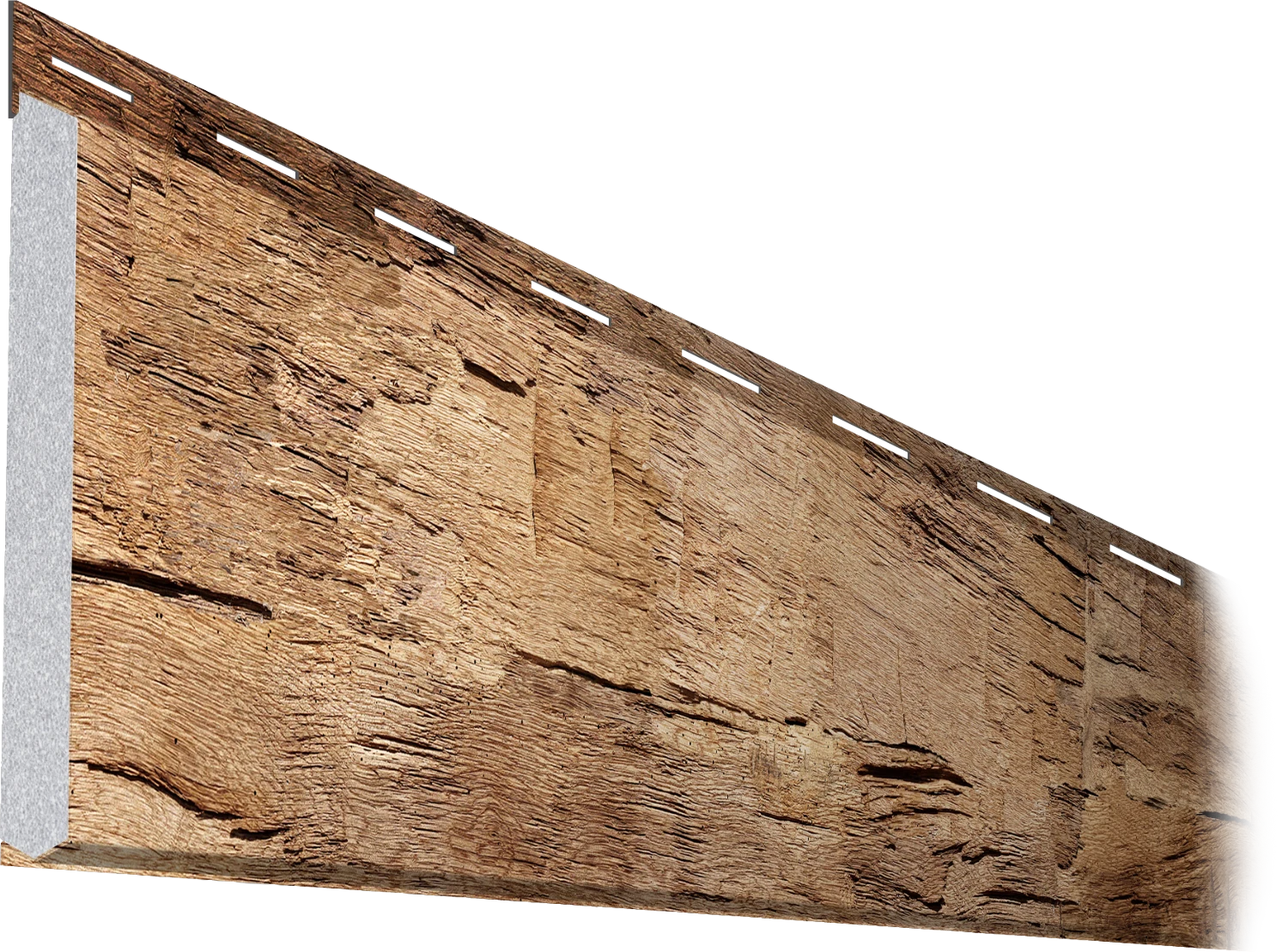
- 20 Year Fading & Chalking Warranty
- 50 Year Flaking & Peeling Warranty
- Lasts 40-60+ Years
- One Person Installation
Climate & Conditions Across Texas
Texas's conditions split across its geography in ways that few states match. The Gulf Coast carries hurricane and Formosan termite pressure, North Texas carries hail and tornado exposure, the Panhandle delivers the state's hardest freeze-thaw winters, and termite pressure is statewide.
Dallas, Fort Worth, Plano, Frisco, McKinney, Arlington, and the surrounding Tarrant, Dallas, Collin, and Denton county corridor represent Texas's largest residential siding market and its most hail-damaged market by insured losses. Baseball-size hail struck the metro in 2016 and 2019, producing insurance claims across hundreds of thousands of homes and confirming why the DFW corridor carries more insured hail losses than any other large US metro. Dallas averages a January low near 34 degrees with freeze-thaw cycling from November through March, and eastern subterranean termites are active from February through November. The enormous stock of established suburban homes across North Texas drives consistent re-siding demand year-round.
Houston, Sugar Land, Katy, The Woodlands, Pearland, and the surrounding Harris, Fort Bend, Montgomery, and Brazoria county corridor represent Texas's largest coastal siding market and the state's most active Formosan termite zone. Harvey's 2017 Category 4 landfall set the construction benchmark for the entire Houston metro and the upper Gulf Coast, and the re-siding demand it produced has remained consistent through every construction season since. Formosan termites are established across Harris and surrounding counties, with near year-round colony activity in the mild Gulf Coast climate, and eastern subterranean colonies are active across the full metro through the long warm season.
San Antonio and Austin, with the surrounding communities of Round Rock, Cedar Park, Georgetown, and New Braunfels, represent the Central Texas corridor, where severe thunderstorm exposure, active termite pressure, and the Winter Storm Uri freeze record define what siding needs to do across a large and fast-growing residential market. Both cities average January lows in the upper 30s to low 40s, winter temperatures that Uri demonstrated can sustain hard freeze. Eastern subterranean and Formosan termites are active across both metros, and the state's fastest-growing suburban markets drive consistent re-siding demand through the full construction season.
The Panhandle and West Texas communities of Amarillo, Lubbock, Abilene, and Midland represent Texas's coldest market, where the state's most sustained winters combine with the core of Hail Alley. Its plains sit in the direct path of severe thunderstorm tracks that deliver golf-ball to baseball-size hail across the region every active season. Eastern subterranean termites are active from February through November across every West Texas county.
Need help finding an installer?
Why Steel Siding Is Right for Texas
Three conditions are active across Texas, and Houston and the Gulf Coast carry all three at full intensity through every storm and growing season. Each produces a direct failure pattern in the materials most Texas homes currently carry, and each has an answer in 26-gauge steel.
Harvey's 2017 Category 4 winds and the baseball-size hail events across DFW in 2016 and 2019 establish what Texas's storm conditions do to exterior materials at scale. Class 4 impact resistance means a panel that takes wind-driven debris and direct hailstones without cracking or puncturing. The Slide-Lock connection holds under sustained hurricane-force lateral load without peeling from the wall. Steel won't crack from hail or debris impact, won't peel under Harvey-scale wind loads, and carries Class 4 impact resistance on every panel.
Eastern subterranean termites are active across all 254 Texas counties from February through November, and Formosan termites are established in the Houston metro and East Texas with near year-round activity in the mild Gulf Coast climate. Both species need wood to eat, and steel gives them nothing at the panel surface, eliminating the exterior wall as a termite entry point regardless of which species is active in the soil below. In the Houston metro, where both species are active through most of the calendar year, steel removes the siding from the termite equation entirely.
Freeze-thaw cycling in Amarillo runs from October through April, and DFW carries a freeze-thaw season from November through March. February 2021's Winter Storm Uri extended sustained hard freeze to every Texas address, including Houston and South Texas properties that had never experienced a hard freeze. Uri established that freeze-thaw is a statewide condition that can arrive at any Texas address in a severe winter. Steel holds its shape and size through Amarillo's Panhandle winters and through the Uri-scale events that reach the Gulf Coast corridor.
Texas's sustained heat and UV exposure shorten the maintenance cycle on paint-based siding faster than most climates allow. El Paso averages more than 300 sunny days per year, and DFW summer highs regularly exceed 95 degrees. In the Gulf Coast corridor, salt air from the open Gulf accelerates corrosion on any siding that relies on a topcoat for protection. SteeLuxe's AZ55 Galvalume base coat is bonded to the steel core at manufacturing, not applied as a surface coat that UV and salt air can degrade.
Product Specifications
| Spec | Value |
|---|---|
| Gauge | 26-gauge steel (~25% thicker than 29-gauge) |
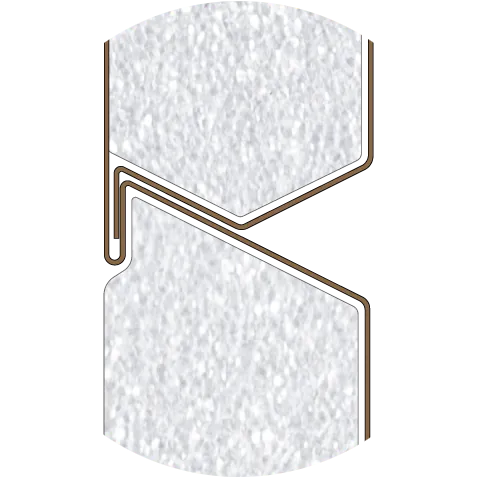
| Core | EPS foam, R-3.57 continuous insulation value |
| Fire Rating | Class A (highest available) |
| Impact Rating | Class 4 (highest available) |
| Colors | 50 solid colors (Sherwin Williams WeatherXL) |
| Wood Grain | 22 patterns (Kynar 500 resin) |
| Log Profile | Hand hewn log siding with chinking — 4 chinking colors |
| Warranty | 50-year peeling/flaking | 20-year fade/chalk |
| Panel | 10-inch planks, Slide-Lock system, one-person install |
| Base Coat | AZ55 Galvalume (zinc-aluminum alloy corrosion barrier) |
| Origin | New Philadelphia, Ohio — direct ship to all 49 states |
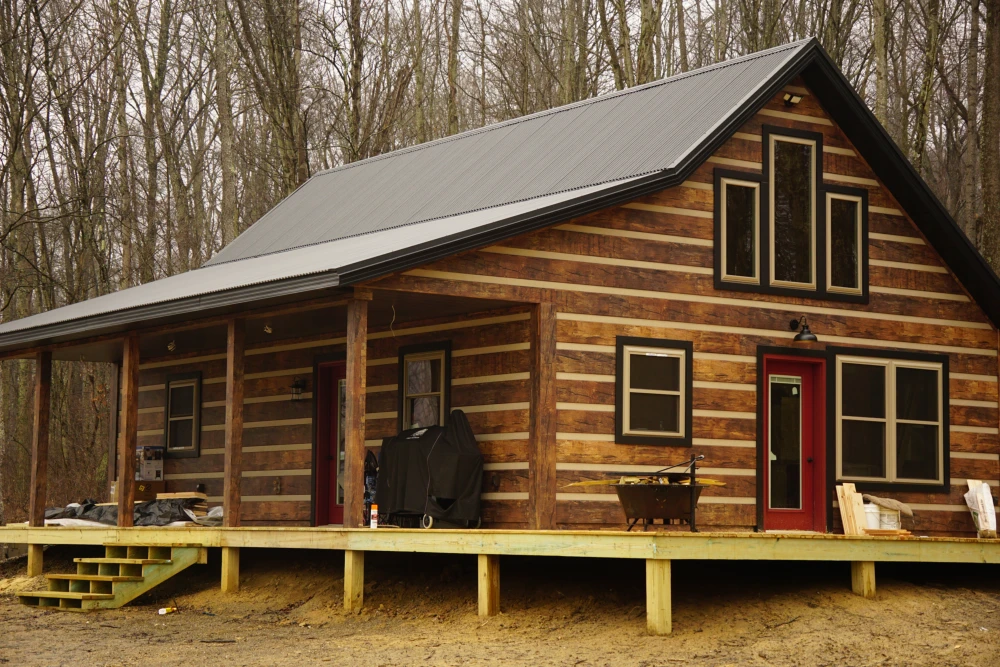
Hand Hewn Log Siding with Chinking
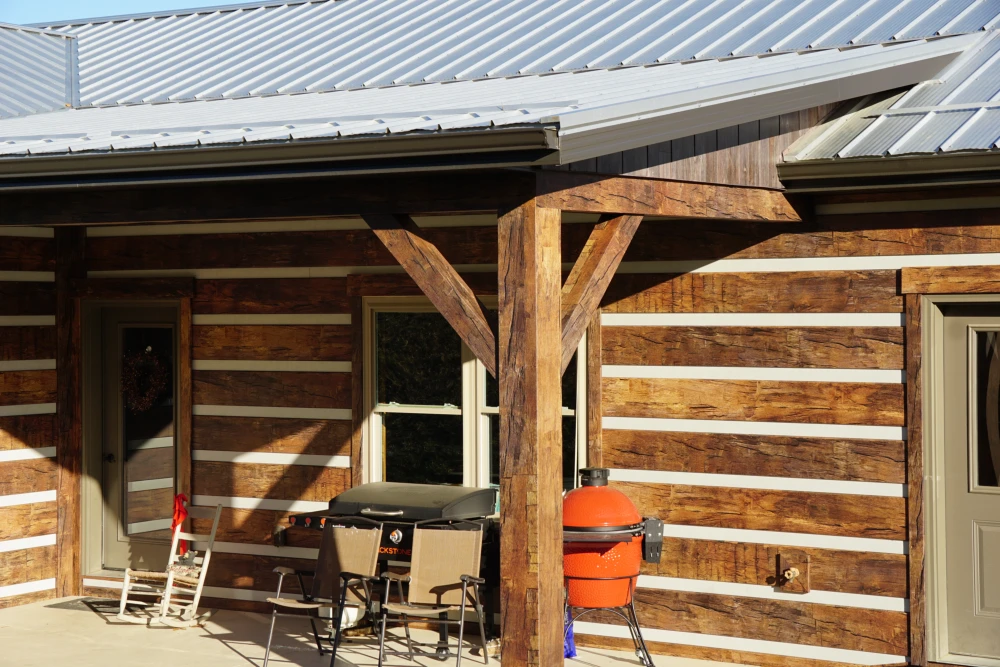
Texas's Hill Country and East Texas Piney Woods carry a large concentration of hunting ranches, rural cabins, and vacation properties where the log and rustic lodge aesthetic defines the exterior character. Kerrville, Fredericksburg, and Bandera represent a Hill Country market where stone-and-log ranch construction is the regional standard. Nacogdoches, Lufkin, and the East Texas Piney Woods carry a large inventory of log cabins and rural properties alongside active termite and storm exposure.
Real wood log siding in the Hill Country and East Texas faces termite pressure from February through November and severe weather exposure through the full storm season. Formosan and eastern subterranean termites are both active in East Texas, with Formosan colonies treating log siding as a direct food source. Freeze-thaw cycling reaches these regions in normal winters and every Texas address in Uri-scale events, working moisture into log joints with every hard freeze.
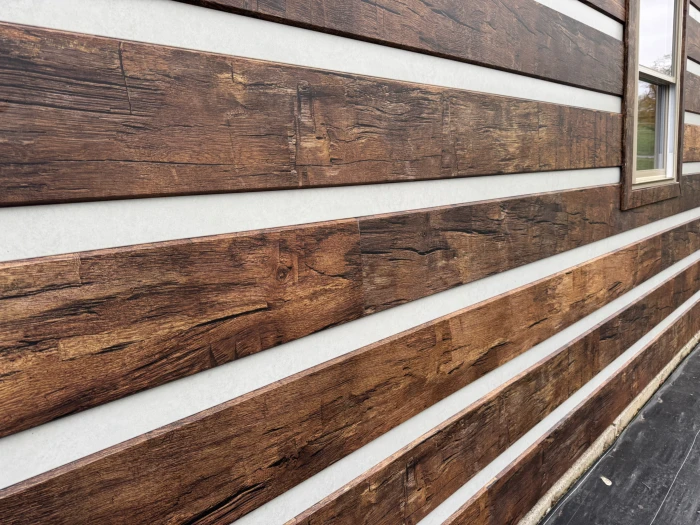
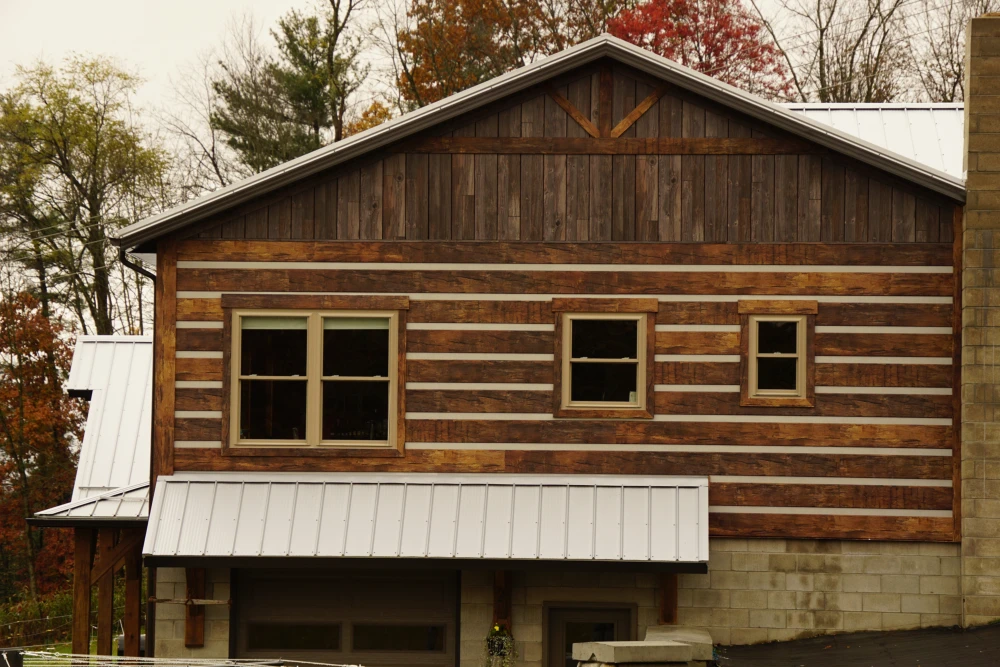
Hand hewn log siding with chinking in 26-gauge steel delivers the Hill Country and East Texas Piney Woods aesthetic without those failure modes. Steel gives termites nothing to eat and doesn't absorb moisture, so freeze-thaw has nothing to act on at the log joints. Chinking fills the joints in four colors: Ash Gray, Charcoal, Clay, and Sandstone Tan. From the road, it reads as traditional log construction. The 50-year warranty covers the full Texas climate range.
SteeLuxe is the only manufacturer making hand hewn log siding with chinking in steel. It ships direct from New Philadelphia, Ohio to hunting ranches, rural cabins, and vacation properties throughout the Texas Hill Country and East Texas Piney Woods corridor, and is available in all 22 wood grain patterns in the SteeLuxe line.
Ready to Transform Your Home With Hand-Hewn Log Cabin Siding?
Get the authentic hand-hewn cabin look with the chinking detail you love, and never think about maintenance again. SteeLuxe steel siding is insulated, fire-rated, hail-resistant, and built to last a lifetime. See it and feel it for yourself.
Steel Siding vs the Alternatives
Texas's hurricane, hail, termite, and freeze-thaw conditions test the three most common siding alternatives against three demands: impact resistance under Gulf Coast and DFW storm loads, pest resistance against two termite species through a long active season, and freeze-thaw durability from the Panhandle to the coast. Steel meets all three, and each alternative fails on at least two.
Vinyl is the most common siding on Texas homes, and the state's conditions expose its failure modes at every scale. In the Gulf Coast corridor, vinyl carries no Class 4 impact resistance rating and no Class A fire rating, leaving homes without rated protection through a hurricane season that Harvey demonstrated can reach Category 4 at the Texas coast. Across the DFW metro and the Panhandle, vinyl's absence of a Class 4 rating means baseball-size hail events produce cracked and punctured panels requiring full replacement. In sustained Panhandle cold, vinyl loses its flexibility, cracking at fastener points and panel edges through the winter. Termites bypass vinyl at the panel surface and enter wall assemblies through gaps at penetrations and trim regardless of what material covers the exterior.
Fiber cement gives termites nothing to eat at the panel surface and handles Texas's freeze-thaw cold better than vinyl. Its Texas liabilities are no Class 4 impact resistance rating in standard product lines, moisture absorption at cut edges, and a paint cycle that Texas's UV load, heat, and coastal salt air shorten faster than manufacturer estimates predict. Cut edges at penetrations, windowsills, and trim joints absorb moisture through Texas's long warm seasons, and any hail event that chips paint at cut edges accelerates the process. The absence of a Class 4 rating leaves Gulf Coast and DFW installations without rated protection through every active storm season.
Wood siding in Texas faces failure from all three conditions. Paint on wood fails in 5 to 7 years under Texas's UV load, heat, and humidity, and coastal salt air shortens that interval further at Gulf Coast addresses. Eastern subterranean and Formosan termites treat wood siding as a direct food source and entry pathway into wall framing. Harvey-scale wind and DFW baseball-size hail both load wood panels with debris impact and lateral stress that accumulate season over season. Steel ends the paint cycle, gives both termite species nothing to eat, and carries Class 4 impact resistance through every Texas storm season.
Frequently Asked Questions
Q:What makes SteeLuxe steel siding different from other steel siding products?
Q:How does the Slide-Lock installation system work?
Q:What wood grain patterns are available?
Q:Does steel siding rust?
Q:How did Hurricane Harvey shape the siding specification for Houston and the Texas Gulf Coast?
Q:Why is Class 4 impact resistance important for DFW and North Texas homes?
Q:How does Texas's termite pressure affect the siding specification?
Q:Does SteeLuxe install in my city?
Q:What should I know about siding for a Texas home after Winter Storm Uri?
Texas Cities & Regions We Serve
SteeLuxe ships from New Philadelphia, Ohio to residential, rural, and coastal projects across all 254 Texas counties, with lead times that work for the year-round DFW and Houston markets and the seasonal construction windows of the Hill Country and Panhandle communities.
Dallas, Fort Worth, Plano, Frisco, McKinney, and Arlington represent Texas's largest residential siding market. The DFW metro's history of baseball-size hail events, the combination of freeze-thaw cycling and year-round termite pressure, and the enormous stock of established suburban homes across North Texas drive consistent re-siding demand through the full construction season.
Houston, Sugar Land, Katy, The Woodlands, and Pearland represent the Gulf Coast market, where Harvey's 2017 construction benchmark, near year-round Formosan termite activity, and direct hurricane season exposure drive re-siding demand across the Gulf Coast's largest residential market. Re-siding volume in the Houston metro is consistent year-round across both established and new-construction neighborhoods.
San Antonio and Austin, with Round Rock, Cedar Park, and Georgetown, represent the Central Texas market, where severe thunderstorm exposure, active termite pressure, and Winter Storm Uri's freeze benchmark combine with the state's fastest residential growth rates to drive consistent re-siding and new-siding demand year-round.
Amarillo, Lubbock, Abilene, and Midland represent the Panhandle and West Texas market, where the state's coldest winters, active hail exposure in the Hail Alley corridor, and year-round termite pressure drive re-siding demand concentrated in the spring through fall construction window.
Full city pages with local installer contacts and current pricing are available for Houston, TX. More Texas cities are listed below:
Don't see your city listed here. Contact SteeLuxe directly and someone familiar with Texas's regional conditions will point you to the nearest installer and current pricing for your area.
Get a Quote for Steel Siding in Texas
SteeLuxe is manufactured in New Philadelphia, Ohio and ships direct. Whether you are planning a full re-siding project or exploring options, we can get you pricing, color samples, and a list of installers in your area.