
Steel Siding & Hand Hewn Log Siding in South Dakota
Steel Siding in South Dakota
Steel siding in South Dakota answers for two conditions that arrive with uncommon intensity. Aberdeen averages a January low near 4 degrees and Sioux Falls near 9 degrees, winters cold enough to test every siding specification on the exterior of a home. South Dakota sits in the core of Hail Alley, ranking in the top five states for hail events per square mile, and golf-ball to baseball-size hail reaches both the eastern plains and the Black Hills corridor every active season. Wood grain siding in the 22 patterns SteeLuxe manufactures covers the full South Dakota range, from the craftsman and colonial profiles of Sioux Falls to the log and lodge profiles of the Black Hills.
Sioux Falls averages a January low near 9 degrees with freeze-thaw cycling from October through April. Aberdeen's January low near 4 degrees extends that season from late September through late April, among the longest in the continental United States. Rapid City averages a January low near 14 degrees, and Chinook wind events create temperature swings of 40 degrees or more within hours, compressing weeks of thermal stress into single weather events.
South Dakota's position in the core of Hail Alley makes hail the state's most destructive single weather event for exterior materials. Golf-ball to baseball-size hailstones reach both the eastern plains and the Black Hills corridor every active season, and the state consistently ranks in the top five nationally for hail events per square mile. The severe thunderstorm season runs from April through September alongside straight-line winds of 60 to 80 miles per hour. Class 4 impact resistance is the primary siding specification across every South Dakota county.
Wind is South Dakota's second most persistent exterior material condition, compounding hail exposure with sustained lateral load year-round. South Dakota ranks among the windiest states in the continental United States by average annual wind speed, and Pierre and Rapid City carry particularly high sustained wind pressure. Severe thunderstorm wind gusts in the 60 to 80 mile-per-hour range arrive multiple times each active season, and winter winds add moisture and thermal stress on top of freeze-thaw cycling.
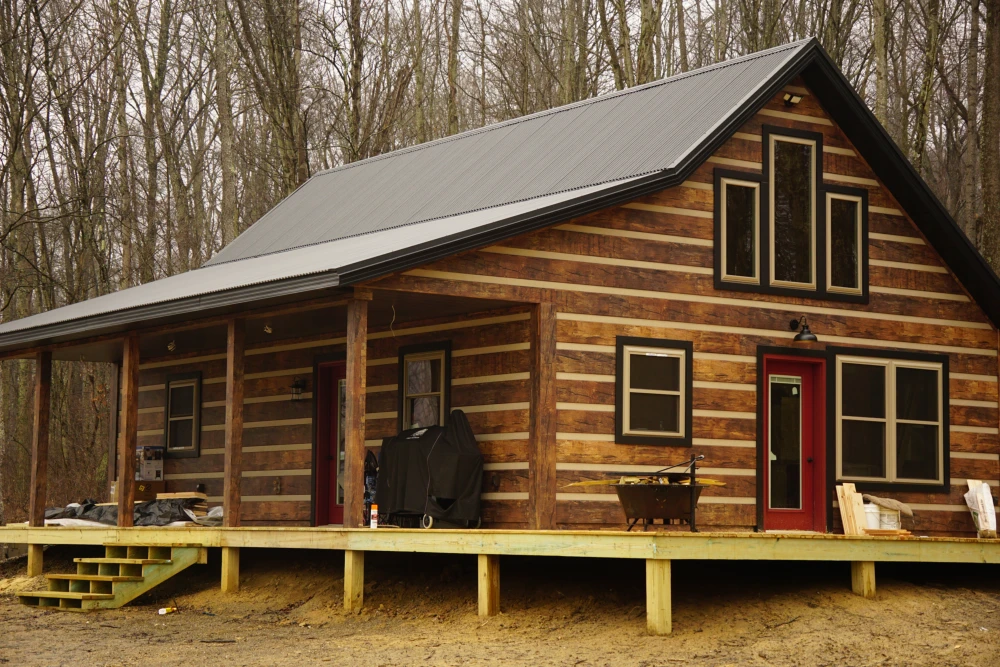
Rapid City and the Black Hills represent South Dakota's most specialized residential siding market, where extreme cold, Chinook thermal events, and active hail exposure combine with a large inventory of mountain cabins, hunting lodges, and vacation properties. Spearfish, Sturgis, Deadwood, Lead, Custer, and Hot Springs carry year-round and seasonal residential markets where the log and rustic aesthetic is the defining exterior character, and where the Black Hills climate demands materials that can take both hail impact and winter cold without cracking or deteriorating between maintenance visits.
South Dakota's two conditions are active statewide, with cold most severe in the northeast and hail most frequent across the eastern plains and the Black Hills storm corridor. Every South Dakota address carries freeze-thaw cycling from October through April and active hail exposure from April through September, with the two seasons overlapping in the shoulder months of April and October at every location.
The Most Advanced Steel Siding On The Market
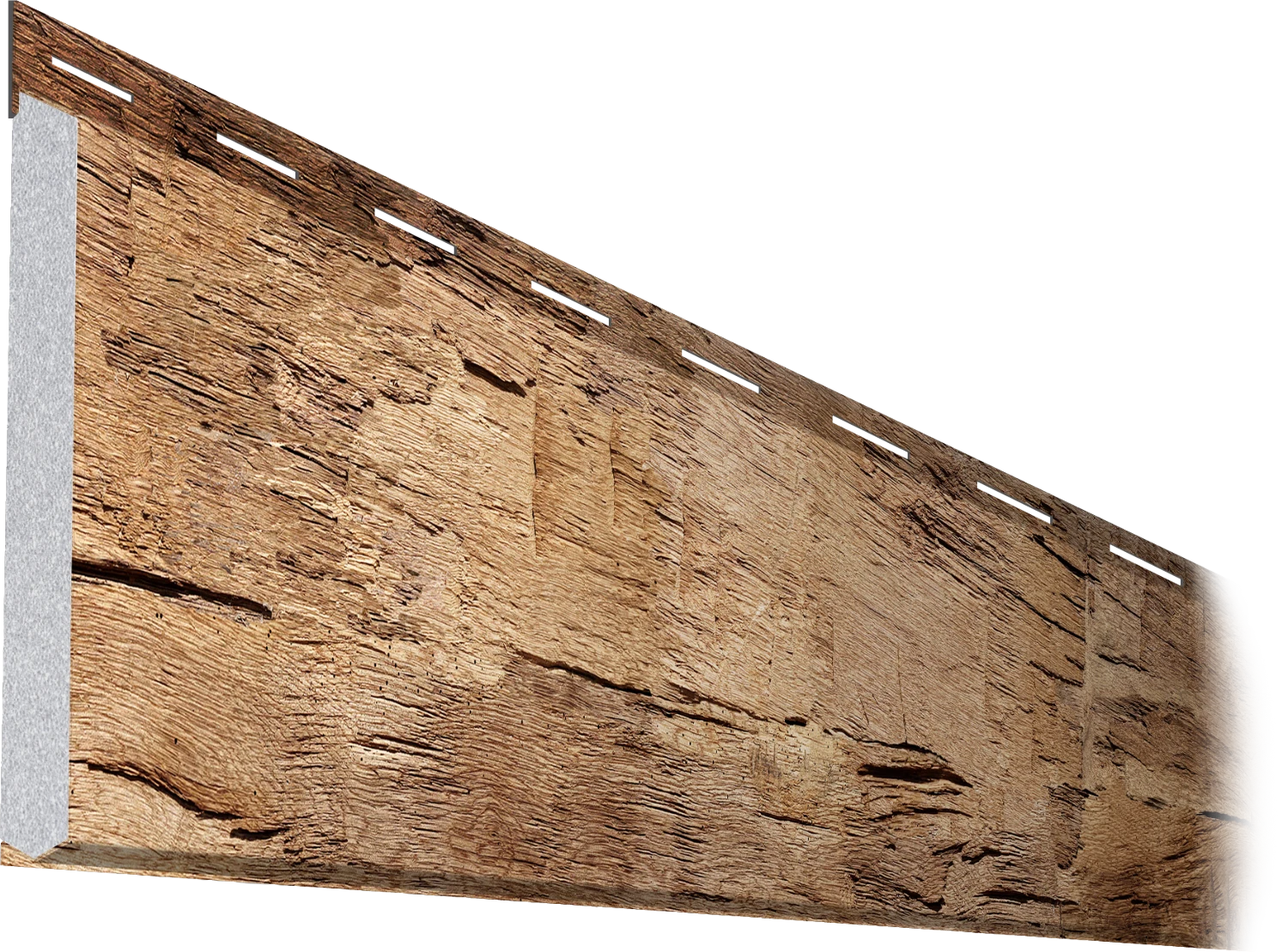
- 20 Year Fading & Chalking Warranty
- 50 Year Flaking & Peeling Warranty
- Lasts 40-60+ Years
- One Person Installation
Climate & Conditions Across South Dakota
South Dakota's conditions don't vary by geography as much as by intensity. The eastern plains and the Black Hills both carry extreme cold and top-five documented hail frequency, and the specification that answers for one region answers for both.
Sioux Falls and the eastern South Dakota communities of Brandon, Tea, Harrisburg, Brookings, and Watertown represent the state's largest residential siding market and its most active hail corridor. The metro sits on the eastern plains in the direct path of severe thunderstorm tracks moving through the Hail Alley corridor, and golf-ball to baseball-size hail is documented there multiple times across active storm seasons. Sioux Falls averages a January low near 9 degrees with freeze-thaw cycling from October through April, and the large stock of ranch and split-level homes in established neighborhoods drives consistent re-siding demand through the full construction season.
Aberdeen and the northeastern South Dakota communities of Watertown, Huron, and the surrounding Brown and Codington county corridor represent the state's coldest residential market. Aberdeen's January low near 4 degrees makes it South Dakota's coldest residential city, and the freeze-thaw season there runs from late September through late April, weeks longer on each end than the Sioux Falls window. Hail exposure is active across northeastern South Dakota through the full severe weather season, and the large stock of older homes in Aberdeen's established neighborhoods drives consistent re-siding demand.
Rapid City and the Black Hills communities of Spearfish, Sturgis, Deadwood, Lead, Custer, Hill City, and Hot Springs represent South Dakota's western residential and resort market, where cold, Chinook wind events, and hail exposure combine with a large inventory of mountain properties. The city averages a January low near 14 degrees, but Chinook events can drive temperature swings of 40 degrees or more in hours, subjecting exterior wall surfaces to rapid thermal cycling that exceeds what even a full month of standard freeze-thaw delivers. Hail is active across the Black Hills corridor through the full severe weather season, and the combination of year-round residential demand and a large vacation property market drives consistent re-siding volume.
Pierre and the central South Dakota communities of Mitchell, Huron, and the surrounding corridor represent the state's most wind-exposed inland market. The city carries average sustained wind speeds that rank it among the windiest state capitals in the continental United States, with year-round wind load against exterior wall surfaces compounding the seasonal hail and freeze-thaw stresses. Mitchell and the central plains communities carry the same active hail corridor as the eastern plains, and the combination of sustained wind exposure, hard winters, and severe thunderstorm seasons drives consistent re-siding demand through the full construction calendar.
Need help finding an installer?
Why Steel Siding Is Right for South Dakota
Two conditions are active at every South Dakota address, and the Sioux Falls metro and the Black Hills both carry cold and hail at levels that produce direct, documented failure in the materials most South Dakota homes currently carry. Both have an answer in 26-gauge steel.
Hail in South Dakota produces the most visible and immediate siding failure of any condition in the state. Golf-ball to baseball-size hailstones crack and puncture standard vinyl in a single storm, and the insurance claims that follow a major hail event across Sioux Falls or the Black Hills corridor show what unrated exterior materials cost at that scale. Class 4 is the highest impact rating available, and SteeLuxe panels carry it on every panel as a standard specification, covering hail at baseball size and the debris load that straight-line thunderstorm winds produce.
Freeze-thaw cycling runs from October through April statewide, and Aberdeen's season extends from late September through late April with January lows near 4 degrees. Vinyl loses its flexibility at the temperatures South Dakota delivers, cracking at fastener points and panel edges through the coldest months. In Rapid City, Chinook events compress large temperature swings into single weather events, and a material that can't hold its shape through rapid thermal change accumulates damage between every Chinook and cold snap. Steel holds its shape and size across South Dakota's full thermal range.
South Dakota's sustained wind load tests siding connections year-round in ways that most states don't experience. Pierre's high average wind speeds mean exterior wall surfaces face constant lateral pressure through every season, not just during severe weather events. Vinyl panel connections that depend on a nail hem can work loose under sustained wind pressure over time, opening gaps at panel joints that worsen with each wind event. The Slide-Lock panel system creates a mechanical interlock between panels that holds under sustained lateral load without depending on the nail hem.
Rapid City's Chinook wind events create a thermal stress unique in South Dakota. When warm air drops off the Black Hills and raises temperatures 40 degrees or more in a few hours, siding materials expand and contract across a temperature range that normally takes weeks to build up. Vinyl, which expands and contracts at a different rate than its fasteners, experiences the greatest stress at those connection points during Chinook events. Steel holds its shape and size across the full Chinook thermal swing.
Product Specifications
| Spec | Value |
|---|---|
| Gauge | 26-gauge steel (~25% thicker than 29-gauge) |
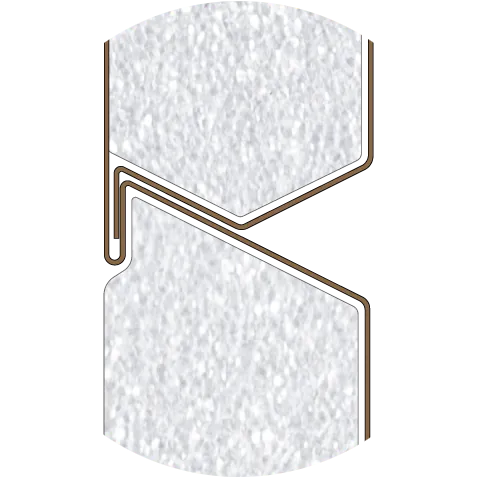
| Core | EPS foam, R-3.57 continuous insulation value |
| Fire Rating | Class A (highest available) |
| Impact Rating | Class 4 (highest available) |
| Colors | 50 solid colors (Sherwin Williams WeatherXL) |
| Wood Grain | 22 patterns (Kynar 500 resin) |
| Log Profile | Hand hewn log siding with chinking — 4 chinking colors |
| Warranty | 50-year peeling/flaking | 20-year fade/chalk |
| Panel | 10-inch planks, Slide-Lock system, one-person install |
| Base Coat | AZ55 Galvalume (zinc-aluminum alloy corrosion barrier) |
| Origin | New Philadelphia, Ohio — direct ship to all 49 states |
Hand Hewn Log Siding with Chinking
The Black Hills carry South Dakota's largest concentration of log cabins, hunting lodges, and mountain vacation properties. Spearfish, Deadwood, Lead, Custer, and Hot Springs represent a market where the log and rustic lodge aesthetic is the defining exterior character, and year-round homes, hunting properties, and vacation cabins throughout the corridor share the same cold and hail exposure alongside a consistent demand for the traditional mountain construction look.
Real wood log siding in the Black Hills faces freeze-thaw cycling from October through April, Chinook thermal events that compress rapid temperature swings into hours, and direct hail exposure through the full severe weather season. Freeze-thaw cycling works moisture into log joints and cracks them open with every hard freeze. Hail at golf-ball size and above leaves impact damage across wood log surfaces that goes unrepaired through seasons where properties sit unoccupied.
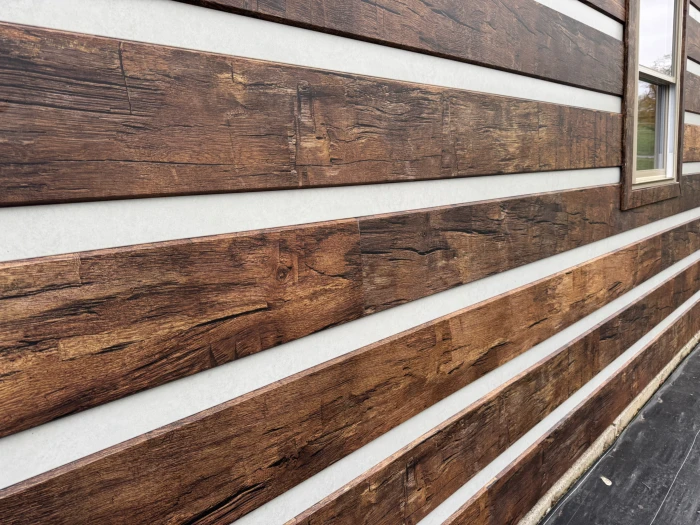
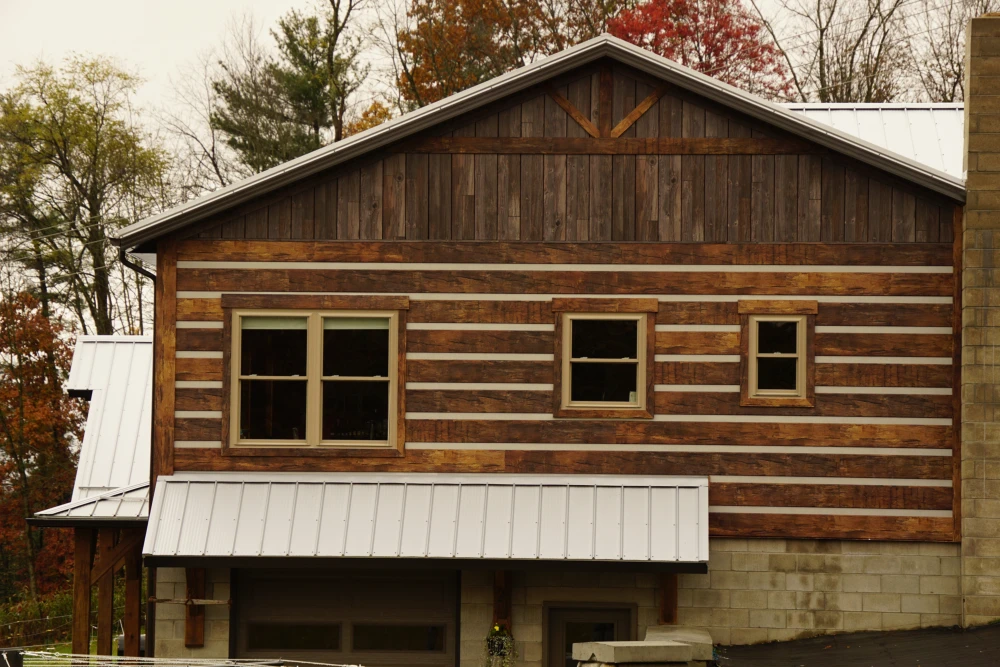
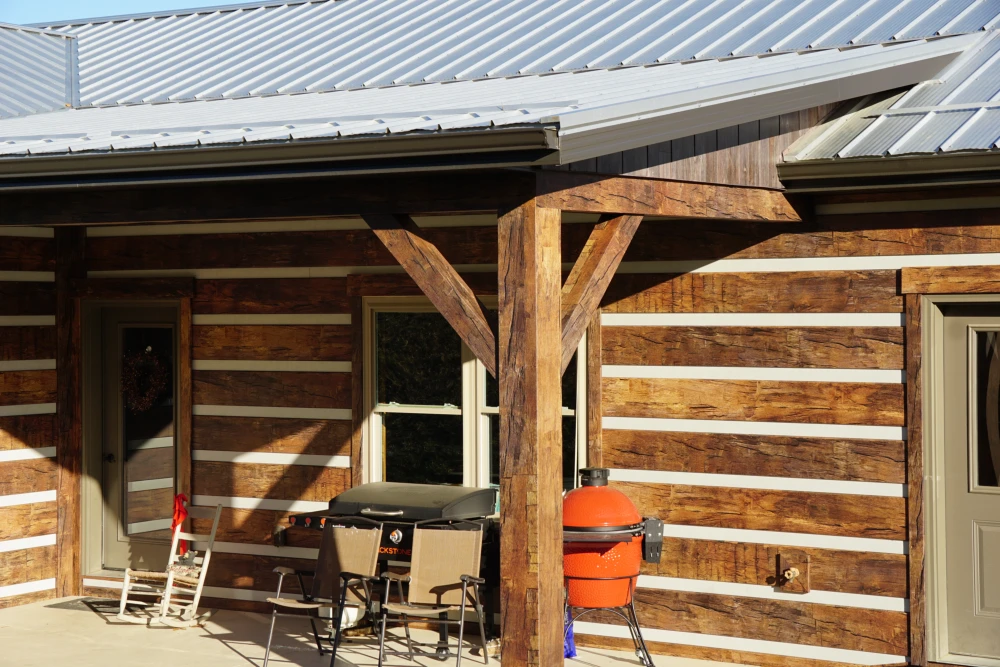
Hand hewn log siding with chinking in 26-gauge steel delivers the Black Hills mountain cabin and lodge aesthetic without those failure modes. Steel doesn't absorb moisture, so freeze-thaw cycling has nothing to act on at the log joints, and it holds its shape through Chinook thermal events that crack wood joints with rapid temperature changes. Chinking fills the joints in four colors: Ash Gray, Charcoal, Clay, and Sandstone Tan. From the road, it reads as traditional log construction. The 50-year warranty covers the full Black Hills climate.
SteeLuxe is the only manufacturer making hand hewn log siding with chinking in steel. It ships direct from New Philadelphia, Ohio to hunting cabins, vacation properties, and year-round homes throughout South Dakota's Black Hills corridor, and is available in all 22 wood grain patterns in the SteeLuxe line.
Ready to Transform Your Home With Hand-Hewn Log Cabin Siding?
Get the authentic hand-hewn cabin look with the chinking detail you love, and never think about maintenance again. SteeLuxe steel siding is insulated, fire-rated, hail-resistant, and built to last a lifetime. See it and feel it for yourself.
Steel Siding vs the Alternatives
South Dakota's cold and hail conditions test the three most common siding alternatives against a specification that requires freeze-thaw durability through a six-month winter season and Class 4 impact resistance through a six-month severe weather season. Steel answers both. Each alternative fails on at least one front and most fail on both.
Vinyl is the most common siding on South Dakota homes, and the state's conditions expose its two central failure modes directly. Cold is the first: vinyl loses its flexibility in the sustained temperatures South Dakota delivers from October through April, cracking at fastener points and panel edges before the spring severe weather season begins. Hail is the second: vinyl carries no Class 4 impact resistance rating and no Class A fire rating, and a major hail event across the Sioux Falls metro or the Black Hills corridor produces dented, cracked, and punctured panels that require full replacement. The insurance cost of carrying unrated siding through South Dakota's hail season is what vinyl's absent Class 4 rating costs in real terms.
Fiber cement handles South Dakota's cold better than vinyl and carries no organic content for hail damage to expose to moisture intrusion. Its South Dakota liabilities are no Class 4 impact resistance rating in standard product lines, moisture absorption at cut edges, and paint maintenance that South Dakota's hard freeze-thaw seasons and hail events shorten faster than manufacturer estimates predict. Cut edges at penetrations, windowsills, and trim joints absorb moisture through South Dakota's long freeze-thaw seasons, and any hail event that chips paint at cut edges accelerates that process. The absence of a Class 4 rating leaves every South Dakota installation without rated hail protection.
Wood siding in South Dakota faces failure from both conditions. Paint on wood fails in 5 to 7 years under the state's freeze-thaw cycling, and any hail event that breaches the paint surface opens wood to moisture intrusion at the point of impact. Freeze-thaw cycling then works that moisture through the wood at every crack and penetration from October through April, with no maintenance window available until spring. At Black Hills properties that sit unoccupied through the winter, damage from fall hail and winter freeze-thaw cycling accumulates through months with no maintenance response. Steel ends the paint cycle and carries Class 4 impact resistance through every South Dakota hail season.
Frequently Asked Questions
Q:What makes SteeLuxe steel siding different from other steel siding products?
Q:How does the Slide-Lock installation system work?
Q:What wood grain patterns are available?
Q:Does steel siding rust?
Q:How does South Dakota's freeze-thaw climate affect siding in Sioux Falls, Aberdeen, and Rapid City?
Q:Why is Class 4 impact resistance important for South Dakota homes?
Q:How does South Dakota's wind affect siding performance in Pierre and across the plains?
Q:Does SteeLuxe install in my city?
Q:What should I know about siding for a Black Hills cabin or vacation property in Rapid City or Spearfish?
South Dakota Cities & Regions We Serve
SteeLuxe ships from New Philadelphia, Ohio to residential, rural, and vacation property projects across all 66 South Dakota counties, with lead times that work for the full-season Sioux Falls and Rapid City markets and the shorter construction windows of the Black Hills and northeastern plains communities.
Sioux Falls, Brandon, Tea, and Harrisburg represent the state's largest residential siding market. The metro sits in the direct path of severe thunderstorm tracks moving through the Hail Alley corridor, and the combination of active hail exposure and a hard freeze-thaw season drives consistent re-siding demand through the full construction season across the established ranch and split-level neighborhoods of Minnehaha and Lincoln counties.
Aberdeen and the surrounding Brown County communities represent the state's coldest residential market, where January lows near 4 degrees and a freeze-thaw season extending from late September through late April drive re-siding demand concentrated in the short but intense spring-through-fall construction window. Hail exposure is active through the full severe weather season alongside the extended cold.
Rapid City, Spearfish, Sturgis, Deadwood, and Custer represent the western South Dakota market, where the combination of cold, Chinook thermal events, and active hail exposure drives year-round and seasonal re-siding demand across both residential neighborhoods and a large inventory of Black Hills vacation and hunting properties. Re-siding volume concentrates in the spring and early fall windows when the construction calendar aligns with property ownership cycles.
Pierre, Mitchell, and Huron represent the central South Dakota market, where sustained wind exposure compounds the seasonal hail and freeze-thaw stresses that the full plains climate delivers. Re-siding demand follows the standard spring-through-fall construction calendar, with consistent volume from the established residential stock in each city's older neighborhoods.
Full city pages with local installer contacts and current pricing are available for Sioux Falls, SD. More South Dakota cities are listed below:
Don't see your city listed here. Contact SteeLuxe directly and someone familiar with South Dakota's regional conditions will point you to the nearest installer and current pricing for your area.
Get a Quote for Steel Siding in South Dakota
SteeLuxe is manufactured in New Philadelphia, Ohio and ships direct. Whether you are planning a full re-siding project or exploring options, we can get you pricing, color samples, and a list of installers in your area.