
Steel Siding & Hand Hewn Log Siding in New Jersey
Steel Siding in New Jersey
Steel siding in New Jersey answers for four conditions, and shore addresses bring all four together at once. Newark and the northern suburbs average January lows in the low 20s and Sussex County near 14 degrees, with freeze-thaw cycling statewide from November through March. Hurricane and tropical storm exposure is direct along the Atlantic coastline, with Sandy in 2012 setting the benchmark for what shore construction has to withstand. Salt air reaches several miles inland along the barrier islands. Wood grain siding in the 22 patterns SteeLuxe manufactures covers the full New Jersey range, from the Victorian and colonial profiles of Cape May and the historic shore towns to the craftsman profiles of the North Jersey suburbs.
Freeze-thaw cycling in New Jersey runs statewide from November through March. Sussex County averages a January low near 14 degrees, Morristown near 18 degrees, and Newark and Trenton near 22 to 24 degrees. Shore communities average a January low between 26 and 28 degrees, moderated by the ocean. Northern New Jersey's freeze-thaw season produces conditions severe enough to expose the failure modes of vinyl and fiber cement through every winter.
Hurricane and tropical storm exposure along the New Jersey coast is direct Atlantic exposure. Sandy made landfall near Brigantine in October 2012, producing a storm surge that destroyed thousands of shore homes and left a reconstruction wave that continued for years. Irene in 2011 caused significant wind and water damage across the shore corridor. The Jersey Shore from Sandy Hook to Cape May sits in the direct Atlantic storm track, with a history of hurricane landfalls and near-misses.
Salt air along the New Jersey coast reaches through the barrier island communities and several miles inland across the shore plain. Long Beach Island, Seaside Heights, Atlantic City, and the Cape May peninsula all carry persistent salt air from the ocean on one side and Barnegat Bay and Delaware Bay on the other. Shore communities face salt air from two directions at once, making corrosion resistance a baseline requirement at coastal addresses.
Termites are active statewide in New Jersey, with Heavy pressure across the interior and Very Heavy pressure in Burlington, Camden, Salem, Cumberland, and Cape May counties. Eastern subterranean termites swarm in spring and stay active from April through October. Southern New Jersey's combination of humid summers, mild winters, and a large stock of wood-sided homes gives termites both the food source and the climate conditions they need through a long active season.
New Jersey's four conditions distribute by geography but overlap at shore addresses. North Jersey carries the most severe winter cold. Shore communities from Monmouth County through Cape May carry all four conditions, with hurricane exposure, salt air, and termite pressure added to the freeze-thaw baseline that applies statewide. South Jersey carries the state's most active termite zone, with Very Heavy pressure in the five southernmost counties.
The Most Advanced Steel Siding On The Market
- 20 Year Fading & Chalking Warranty
- 50 Year Flaking & Peeling Warranty
- Lasts 40-60+ Years
- One Person Installation
Climate & Conditions Across New Jersey
New Jersey packs four distinct siding conditions into a state that runs less than 170 miles from its northern corner to Cape May Point, and the conditions shift meaningfully from the North Jersey highlands to the shore and south.
Newark, Jersey City, and the North Jersey communities of Morristown, Parsippany, and the surrounding Essex, Hudson, Morris, and Passaic county corridors represent the state's largest residential siding market and its most severe winter climate. The city averages a January low near 22 degrees and Morris County suburbs near 18 degrees, with freeze-thaw cycling from November through March. Sussex County in the far north averages a January low near 14 degrees and represents the state's coldest residential corridor. Re-siding demand in that corridor comes from a large and aging stock of colonial, cape cod, and craftsman homes.
The Jersey Shore communities of Asbury Park, Long Branch, Toms River, Seaside Heights, and the surrounding Monmouth and Ocean county areas represent the state's most active combination of hurricane exposure, salt air, and termite pressure. Toms River and Ocean County represent the state's highest-volume shore siding market, with a mix of year-round residents and vacation property owners along the barrier island and mainland shore corridor. Long Beach Island carries a concentrated stock of vacation properties that face full Atlantic exposure on the ocean side and Barnegat Bay salt air on the bay side, combining two corrosion sources at every address.
Atlantic City and the South Jersey communities of Cherry Hill, Camden, Vineland, and the surrounding Atlantic, Burlington, Camden, and Salem county areas carry the state's most active termite pressure alongside real but milder winter cold. The city averages a January low near 26 degrees while interior South Jersey near Camden averages closer to 24 degrees. Very Heavy termite pressure applies across the five southern counties, with colonies active from April through October. South Jersey's combination of mild winters, humid summers, and a large inventory of older wood-sided homes gives termites favorable conditions through a long active season.
Cape May and the communities of the southern peninsula, including Wildwood, Ocean City, and Stone Harbor, represent New Jersey's southernmost siding market and its most concentrated overlap of hurricane exposure, salt air, and Very Heavy termite pressure. The area averages a January low near 28 degrees, the mildest winter in the state, but its position at the southern tip of the Jersey Shore puts it in the direct path of Atlantic storms and at the intersection of Atlantic Ocean and Delaware Bay salt air. That combination of exposures, paired with a large stock of Victorian-era and early 20th century homes, creates a concentrated historic renovation market.
Need help finding an installer?
Why Steel Siding Is Right for New Jersey
Four conditions are active across New Jersey, and shore addresses carry all four at once. Each has a direct failure pattern in the materials most New Jersey homes currently carry, and each has an answer in 26-gauge steel.
Freeze-thaw cycling from November through March puts sustained thermal stress on exterior materials at every New Jersey address. In North Jersey, where Sussex County averages near 14 degrees, vinyl goes brittle at temperatures that arrive for weeks, cracking at fastener points and panel edges when it can no longer flex with temperature changes. Steel doesn't have a cold-weather failure threshold. A panel in Vernon at minus 10 on a January night performs the same way it performs in July, because steel doesn't absorb moisture and has no polymer structure to lose flexibility in cold.
Sandy's 2012 wind and storm event set the standard for what exterior materials on New Jersey shore homes have to survive. Class 4 impact resistance means a panel that takes a direct hit from wind-driven debris at storm speeds without cracking or puncturing. Vinyl siding fails under that wind load, and panels that crack in a storm admit water behind the wall assembly during the worst possible conditions. Steel at the panel level won't crack from debris impact and won't peel from the wall under the lateral storm wind load that direct Atlantic storms deliver.
Salt air at Jersey Shore addresses requires corrosion resistance built into the material itself, not applied as a surface coating that salt spray and moisture degrade over time. At Long Beach Island, Seaside Heights, and the Cape May peninsula, exterior materials face salt air from the ocean and from the bay on the landward side simultaneously. The AZ55 Galvalume base coat bonds a zinc-aluminum alloy to the steel core at the manufacturing stage. No amount of salt spray, storm-driven moisture, or freeze-thaw cycling removes that protection.
Termites across New Jersey, and especially in the Very Heavy pressure zone of the five southern counties, find steel siding nothing to exploit. Eastern subterranean colonies active from April through October need wood to eat. Steel gives them nothing. A re-sided home in Cherry Hill or Vineland where steel replaces wood or fiber cement eliminates the panel surface as a termite entry point and food source, regardless of what the colonies are doing in the soil below.
Product Specifications
| Spec | Value |
|---|---|
| Gauge | 26-gauge steel (~25% thicker than 29-gauge) |
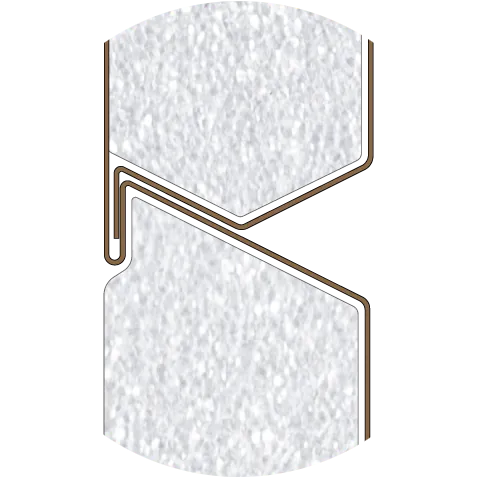
| Core | EPS foam, R-3.57 continuous insulation value |
| Fire Rating | Class A (highest available) |
| Impact Rating | Class 4 (highest available) |
| Colors | 50 solid colors (Sherwin Williams WeatherXL) |
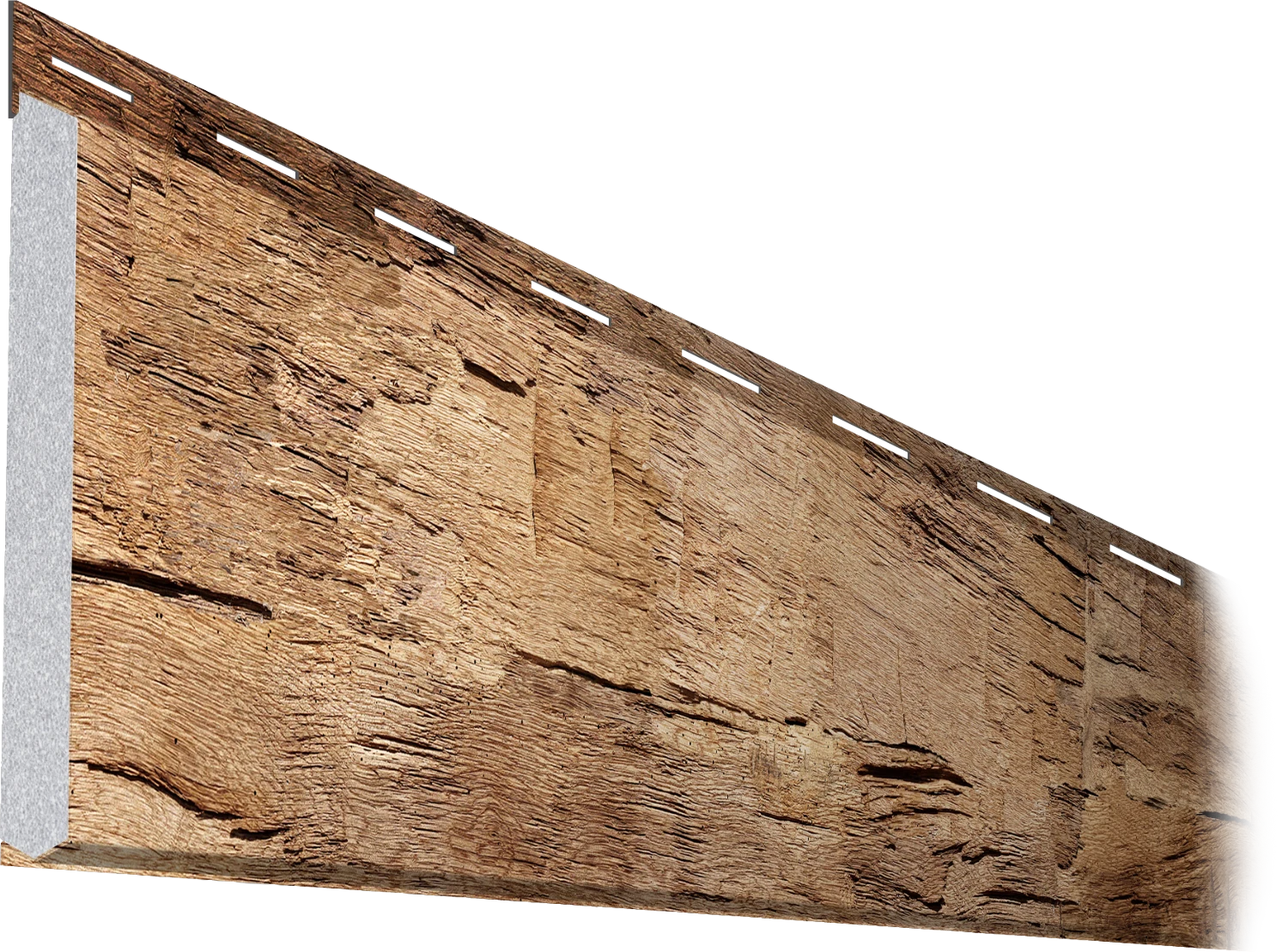
| Wood Grain | 22 patterns (Kynar 500 resin) |
| Log Profile | Hand hewn log siding with chinking — 4 chinking colors |
| Warranty | 50-year peeling/flaking | 20-year fade/chalk |
| Panel | 10-inch planks, Slide-Lock system, one-person install |
| Base Coat | AZ55 Galvalume (zinc-aluminum alloy corrosion barrier) |
| Origin | New Philadelphia, Ohio — direct ship to all 49 states |
Hand Hewn Log Siding with Chinking
New Jersey's shore communities, particularly Cape May and Long Beach Island, carry architecturally significant residential stock that any replacement siding has to respect. Cape May's Victorian-era homes and the early 20th century cottages and bungalows of the barrier island communities define an aesthetic tied to the shore's history. These properties face the full combination of hurricane exposure, salt air, and termite pressure that makes exterior material performance a year-round concern.
Real wood siding on a Cape May Victorian or a Long Beach Island cottage faces compounding failure from every direction. Salt air and shore moisture accelerate paint degradation and work into wood grain over the wet season. Termite colonies in the surrounding soil find wood siding an accessible food source and entry pathway. Hurricane-force winds drive storm moisture behind wood siding at every joint and penetration, and the lateral wind load compounds the damage with each storm season.
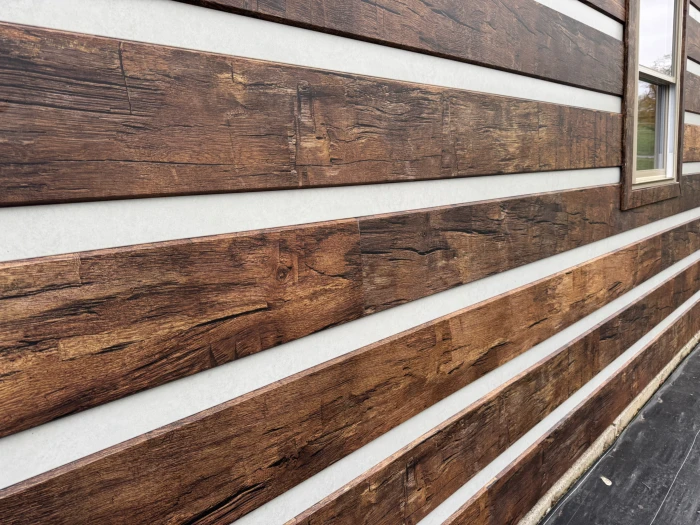
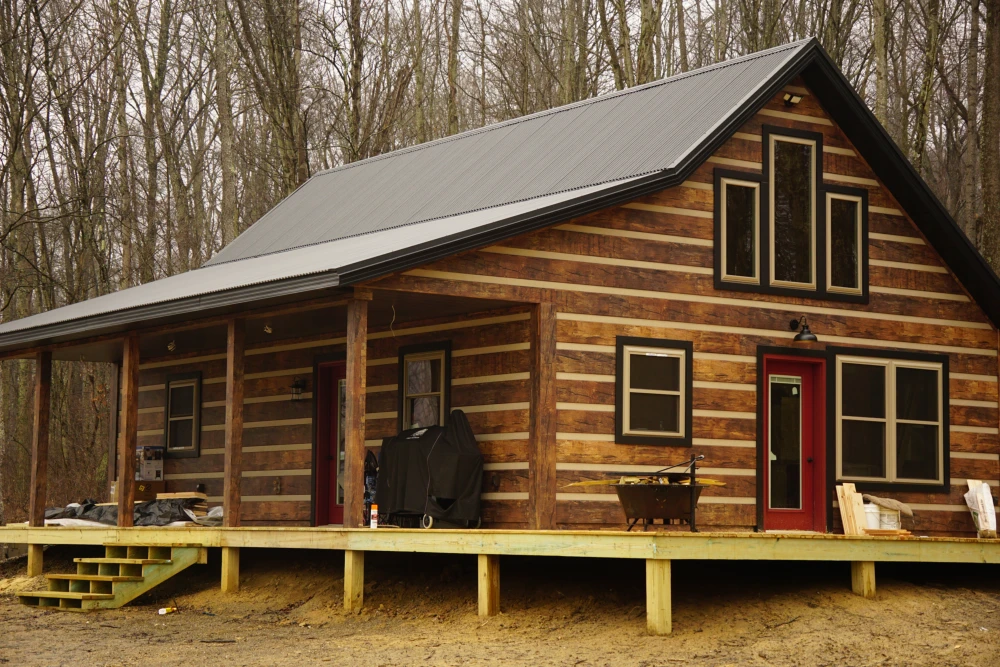
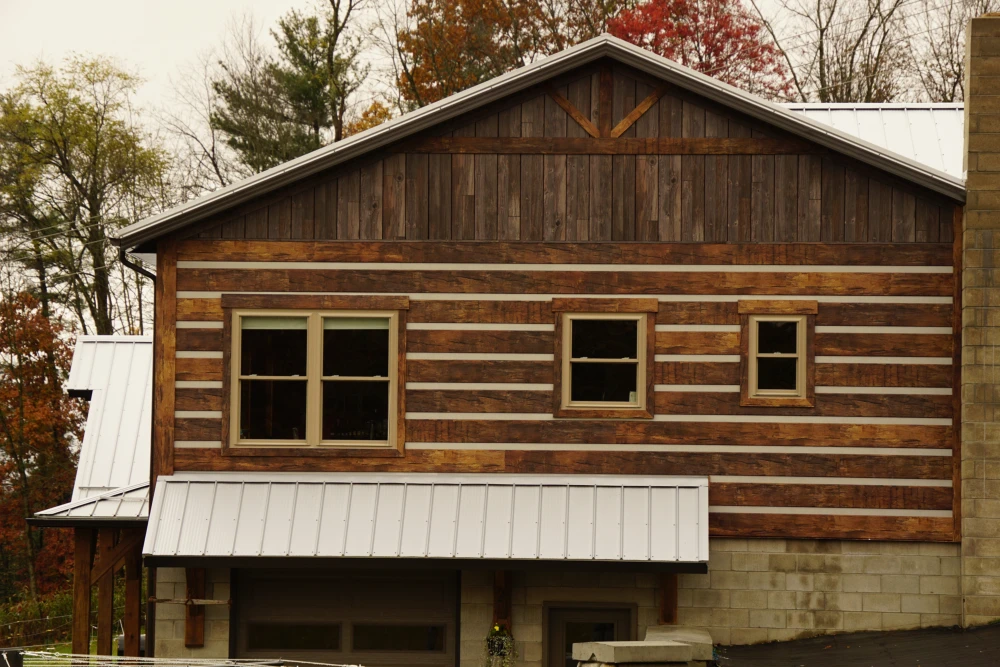
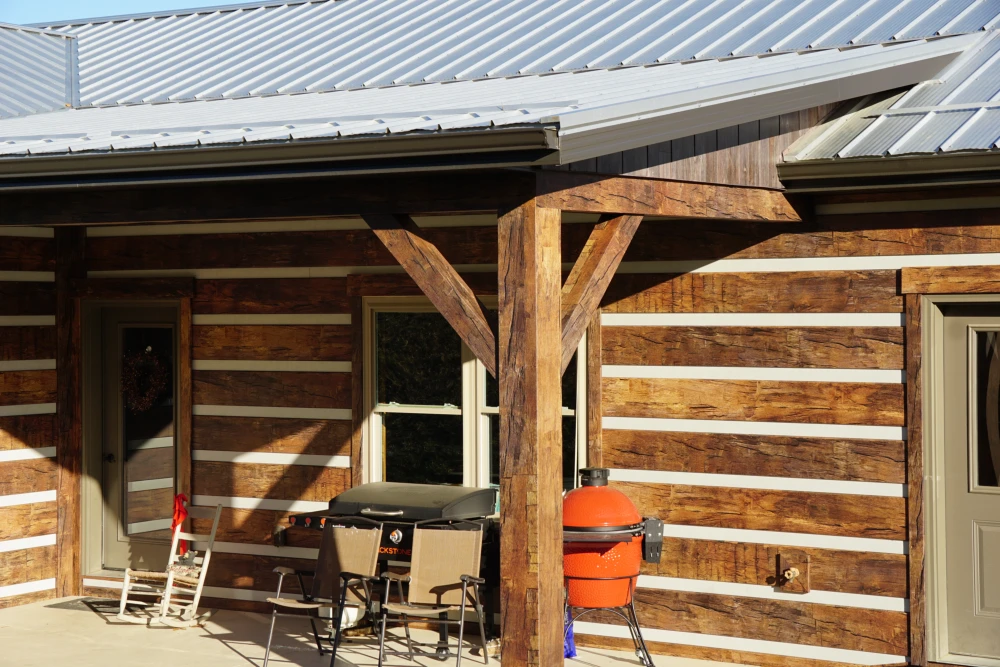
Hand hewn log siding with chinking in 26-gauge steel delivers an exterior profile that fits the historic and cottage aesthetic of New Jersey's shore communities without those failure modes. Steel gives termites nothing to exploit, resists salt air corrosion at the base material level, and carries Class 4 impact resistance in hurricane and storm events. Chinking fills the joints in four colors: Ash Gray, Charcoal, Clay, and Sandstone Tan. From the street, it reads as traditional wood construction.
SteeLuxe is the only manufacturer making hand hewn log siding with chinking in steel. It ships direct from New Philadelphia, Ohio to shore communities, historic renovation projects, and year-round homes throughout New Jersey, available across all 22 wood grain patterns in the SteeLuxe line.
Ready to Transform Your Home With Hand-Hewn Log Cabin Siding?
Get the authentic hand-hewn cabin look with the chinking detail you love, and never think about maintenance again. SteeLuxe steel siding is insulated, fire-rated, hail-resistant, and built to last a lifetime. See it and feel it for yourself.
Steel Siding vs the Alternatives
New Jersey's four conditions test the three most common siding alternatives against a specification that demands real performance on cold, hurricane exposure, salt air, and termite pressure. Steel answers all four. Each alternative fails on at least two of the conditions active in this state.
Vinyl is the most common siding on New Jersey homes, and the state's conditions expose each of its failure modes in sequence. Cold is the first: vinyl loses polymer flexibility below 20 degrees, which North Jersey delivers for weeks through January and February, cracking at fastener points under thermal stress. Hurricane exposure is the second: Sandy demonstrated at scale what wind-driven debris does to vinyl panels, and cracked panels during a storm admit water behind the wall assembly at the worst possible time. Salt air accelerates paint surface degradation on vinyl over time. Termites ignore vinyl panels but are not deterred by them as an entry point into the framing behind.
Fiber cement handles cold better than vinyl and gives termites nothing to eat at the panel surface. Its three main New Jersey liabilities are moisture absorption at cut edges, no Class 4 impact resistance, and a paint cycle that shore and wet-season moisture shortens. Cut edges at penetrations, windowsills, and trim joints absorb moisture through New Jersey's wet shoulder seasons, and the freeze-thaw cycle works that moisture through dozens of hard freezes per season in North Jersey. Fiber cement panels also carry no Class 4 impact resistance rating in standard product lines, leaving shore installations without rated protection against Sandy-level wind-driven debris.
Wood siding in New Jersey faces failure from all four conditions. Paint on wood fails in 5 to 8 years under freeze-thaw cycling, and each repainting cycle on a shore home shortens further under salt air and storm moisture. Eastern subterranean termites treat wood siding as both a food source and an entry pathway into wall framing. Hurricane-force winds load wood panels with lateral stress and storm moisture that accumulate over every season. Steel ends the repainting cycle, gives termites nothing to eat, handles storm wind load at the panel level, and resists corrosion without retreatment.
Frequently Asked Questions
Q:What makes SteeLuxe steel siding different from other steel siding products?
Q:How does the Slide-Lock installation system work?
Q:What wood grain patterns are available?
Q:Does steel siding rust?
Q:How does New Jersey's termite pressure affect siding choices?
Q:Is steel siding a good choice for Jersey Shore properties after Sandy?
Q:How does salt air affect siding at New Jersey shore properties?
Q:Does SteeLuxe install in my city?
Q:What should I know about siding for a New Jersey shore property or vacation home?
New Jersey Cities & Regions We Serve
SteeLuxe ships from New Philadelphia, Ohio to residential, shore, and contractor projects across all 21 New Jersey counties, with lead times that work for both the year-round North Jersey market and the seasonal construction windows of the shore communities.
Newark, Jersey City, Morristown, Parsippany, and the communities of Essex, Hudson, Morris, and Passaic counties represent New Jersey's largest residential siding market. The north Jersey corridor's aging stock of colonial, cape cod, and craftsman homes drives consistent year-round re-siding demand, and the region's cold winters give steel its clearest performance advantage over vinyl in the state.
Asbury Park, Long Branch, Toms River, Brick, and Long Beach Island represent the central Jersey Shore market, where hurricane exposure, salt air, and termite pressure combine at shore and barrier island addresses. Ocean County is one of the state's highest-volume siding markets, driven by the large mix of year-round homes and vacation properties along the Barnegat Bay corridor and the barrier island communities.
Atlantic City, Cherry Hill, Camden, and Vineland represent South Jersey's siding market, where Very Heavy termite pressure is the defining condition alongside real but moderate winter cold. Camden and Burlington counties sit in the state's most active termite zone, and the large inventory of older homes in South Jersey's residential corridors drives active re-siding volume through the full construction season.
Cape May, Wildwood, Ocean City, and Stone Harbor represent the southernmost New Jersey market, where hurricane exposure, dual-source salt air from the Atlantic and Delaware Bay, and Very Heavy termite pressure overlap at every address. The peninsula's concentration of Victorian-era and historic residential properties represents a renovation and re-siding market unlike any other in the state.
Full city pages with local installer contacts and current pricing are available for Newark, NJ. More New Jersey cities are listed below:
Don't see your city listed here. Contact SteeLuxe directly and someone familiar with New Jersey's regional conditions will point you to the nearest installer and current pricing for your area.
Get a Quote for Steel Siding in New Jersey
SteeLuxe is manufactured in New Philadelphia, Ohio and ships direct. Whether you are planning a full re-siding project or exploring options, we can get you pricing, color samples, and a list of installers in your area.