
Steel Siding & Hand Hewn Log Siding in Nevada
Steel Siding in Nevada
Steel siding in Nevada answers for three conditions that split sharply between north and south. Las Vegas averages a July high near 106 degrees and a January low near 39 degrees, with mild winters that produce no meaningful freeze-thaw cycling. Reno at 4,505 feet averages a January low near 24 degrees and a July high near 94 degrees, producing a full four-season range. Wildfire risk in the Sierra Nevada foothills is direct, and termites are active in the Las Vegas metro through the monsoon season. Wood grain siding in the 22 patterns SteeLuxe manufactures covers the Nevada range, from the craftsman profiles of the Las Vegas suburbs to the mountain profiles of the Reno foothills and Tahoe corridor.
Heat is the defining exterior stress in Nevada's southern corridor, where Las Vegas averages 294 sunny days per year and summer temperatures stay above 100 degrees for months. UV intensity at that exposure degrades surface coatings year-round, and the 60-to-70-degree daily temperature swings that the desert delivers expand and contract siding materials on every exposed surface with each cycle. Henderson, North Las Vegas, and Summerlin face the same heat and UV load as the Las Vegas core, with a siding market driven by the large stock of homes built during Nevada's rapid suburban expansion.
Wildfire risk in northern Nevada concentrates in the Sierra Nevada foothills, where fire has moved toward suburban areas in multiple recent seasons. The 2018 Martin Fire burned more than 435,000 acres in northeastern Nevada. Incline Village and the Nevada side of Lake Tahoe sit in direct wildfire exposure terrain, and Carson Valley communities face Sierra foothills fire risk in dry years. Class A fire rating is a practical specification at Reno foothills addresses, Lake Tahoe properties, and rural parcels in the Sierra Nevada corridor.
Termites in Nevada are most active in the Las Vegas metro, where western drywood and subterranean termites exploit the mild winter and the moisture the summer monsoon delivers in July through September. Clark County's large inventory of wood-framed homes gives colonies both the climate and the food source they need through an extended active season. Termite activity drops at higher elevations in Reno and Carson City but is not absent.
Reno and the northern Nevada communities of Sparks, Carson City, and Incline Village face a different set of stresses than Las Vegas. The Sierra Nevada foothills deliver genuine winter cold alongside intense UV and thermal cycling, and wildfire exposure from forested terrain adds a third active condition the southern desert does not share. Reno's growth as a regional business and lifestyle destination has increased residential construction and re-siding activity significantly across Washoe County.
Nevada's three conditions sort by geography. Las Vegas and Clark County carry heat, UV, and termite pressure. Reno, Carson City, and the northern communities carry cold, wildfire, and UV intensity. The Lake Tahoe corridor carries the state's most direct wildfire exposure.
The Most Advanced Steel Siding On The Market
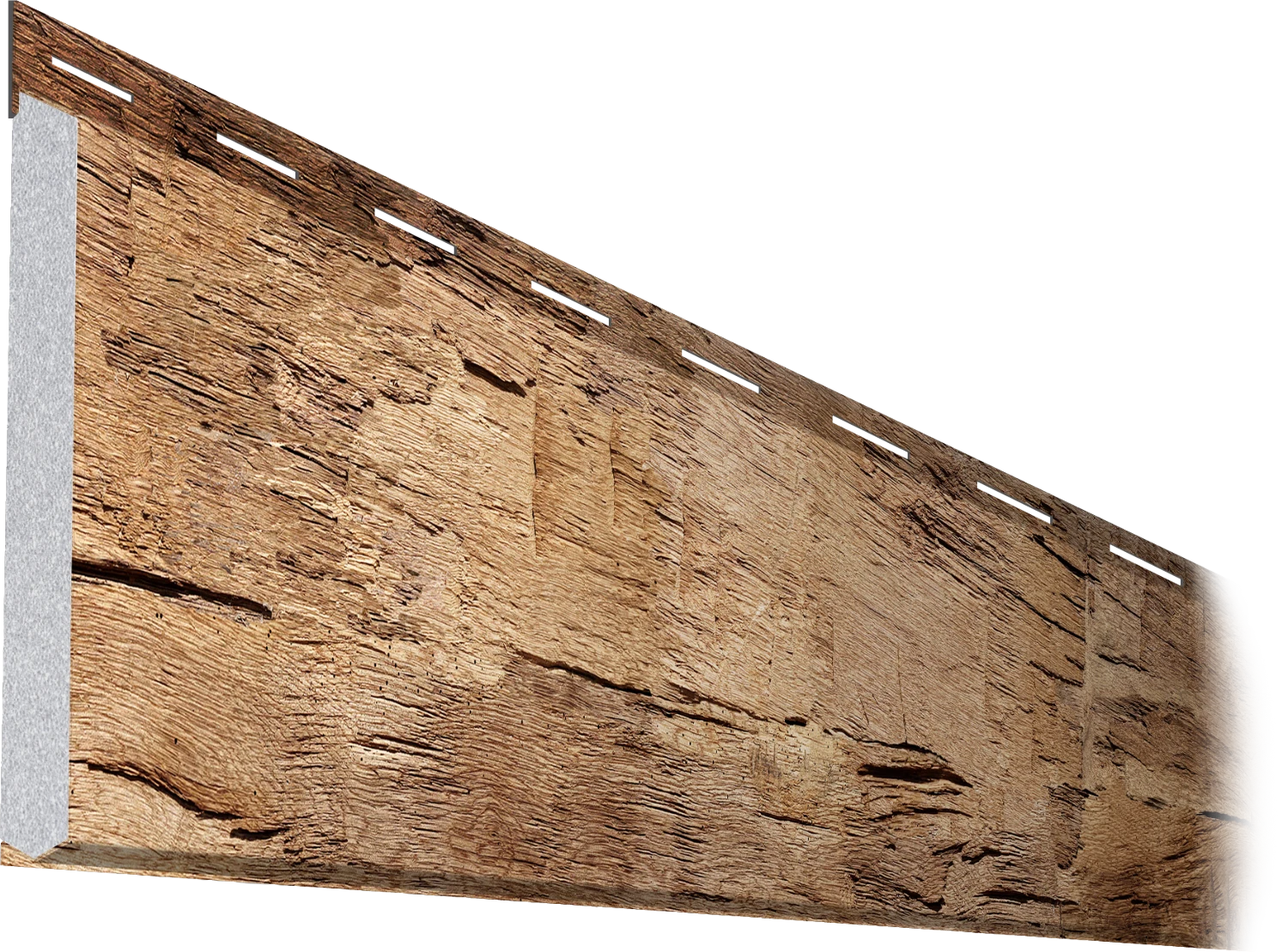
- 20 Year Fading & Chalking Warranty
- 50 Year Flaking & Peeling Warranty
- Lasts 40-60+ Years
- One Person Installation
Climate & Conditions Across Nevada
Nevada's conditions differ so sharply between Las Vegas and Reno that they represent two distinct siding climates sharing a state border, and both are harder on exterior materials than the national average in different ways.
Las Vegas and the Clark County communities of Henderson, North Las Vegas, Summerlin, Boulder City, Mesquite, and Pahrump represent Nevada's largest residential siding market and its most intense heat and UV environment. The metro averages 294 sunny days per year, a July high near 106 degrees, and a January low near 39 degrees, producing a thermal range that is almost entirely driven by summer heat rather than winter cold. Daily temperature swings of 60 degrees or more are common year-round in the desert climate, expanding and contracting exterior materials on every surface with each cycle. Termites are active across the metro, most notably in established neighborhoods with older wood-framed construction.
Reno and the northern Nevada communities of Sparks, Fernley, Fallon, and the surrounding Washoe and Churchill county areas represent Nevada's second-largest metro market and its most active overlap of cold, wildfire, and UV conditions. At 4,505 feet, the city averages a January low near 24 degrees and a July high near 94 degrees, producing a full freeze-thaw season from November through March alongside the summer heat and UV load the high desert delivers year-round. Washoe County's rapid residential growth over the past decade has significantly expanded both the new construction market and the established re-siding market across the metro.
Carson City and the communities of the Carson Valley, including Minden, Gardnerville, and the surrounding Douglas and Carson City county areas, represent Nevada's capital corridor and one of its most wildfire-exposed markets. At 4,748 feet, the capital averages a January low near 22 degrees, carries a freeze-thaw season from October through April, and faces direct Sierra Nevada foothills wildfire exposure on its western edge. The Carson Valley is a growing retirement and relocation destination with significant re-siding activity in its established residential stock.
Incline Village, Crystal Bay, and the Nevada communities of the Lake Tahoe basin represent the state's most direct wildfire exposure and its most concentrated vacation and second-home market. The 2021 Caldor Fire on the California side of the Sierra demonstrated how quickly fire can move through the forested terrain surrounding the Tahoe basin, and Nevada communities on the lake's north and east shores sit in terrain where that same fire behavior applies. Wildfire exposure, genuine mountain cold, and a high-value second-home property base make exterior material performance the primary renovation driver in this corridor.
Need help finding an installer?
Why Steel Siding Is Right for Nevada
Three conditions are active across Nevada, split between the southern heat corridor and the northern mountain and foothill communities. Each has a direct failure pattern in the materials most Nevada homes currently carry, and each has an answer in 26-gauge steel.
Heat and UV intensity in Las Vegas and Clark County test surface coatings year-round, and at 294 sunny days with summer highs above 100 degrees for months at a time, UV load is a constant pressure rather than a seasonal one. Vinyl chalks and fades faster under sustained desert UV than in most other markets, and 60-degree daily temperature swings cause vinyl panel edges to gap and joints to open over time. Steel's Sherwin Williams WeatherXL and Kynar 500 finishes hold their color and gloss under that load and carry a 20-year fade and chalk warranty.
Wildfire risk at Reno, Carson City, and the Lake Tahoe corridor makes Class A fire rating a practical specification for northern Nevada addresses. A Class A-rated steel panel won't catch fire from wind-driven embers landing on or against the siding surface. Fire in the Sierra Nevada foothills can move toward residential areas quickly, as demonstrated on both sides of the range in recent seasons. Vinyl carries no meaningful fire resistance and ignites well below what an active fire front delivers.
Termites in the Las Vegas metro find steel siding nothing to exploit. Western drywood termites in Clark County stay active through the monsoon season and into fall, and the large inventory of wood-framed homes in established Henderson and North Las Vegas neighborhoods gives colonies both food and access. Steel gives them nothing at the panel surface, eliminating the exterior wall as a termite entry point regardless of what colonies are doing in the surrounding soil.
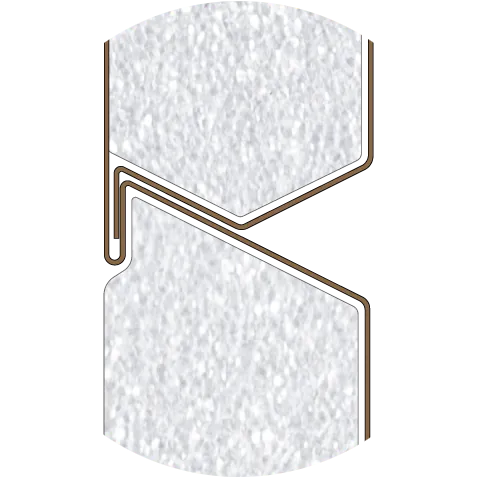
Thermal cycling in both the Las Vegas desert and the Reno high desert puts daily expansion and contraction stress on exterior materials that goes beyond what most climates deliver. A 60-to-70-degree day-to-night swing in Las Vegas, common year-round, and the freeze-thaw cycling that Reno delivers from November through March both work the same way on vinyl, wood, and fiber cement, forcing expansion and contraction until gaps open and fasteners loosen. Steel handles that cycling through the Slide-Lock panel system, which accommodates dimensional changes at the joint level rather than passing the stress to fasteners or panel edges.
Product Specifications
| Spec | Value |
|---|---|
| Gauge | 26-gauge steel (~25% thicker than 29-gauge) |
| Core | EPS foam, R-3.57 continuous insulation value |
| Fire Rating | Class A (highest available) |
| Impact Rating | Class 4 (highest available) |
| Colors | 50 solid colors (Sherwin Williams WeatherXL) |
| Wood Grain | 22 patterns (Kynar 500 resin) |
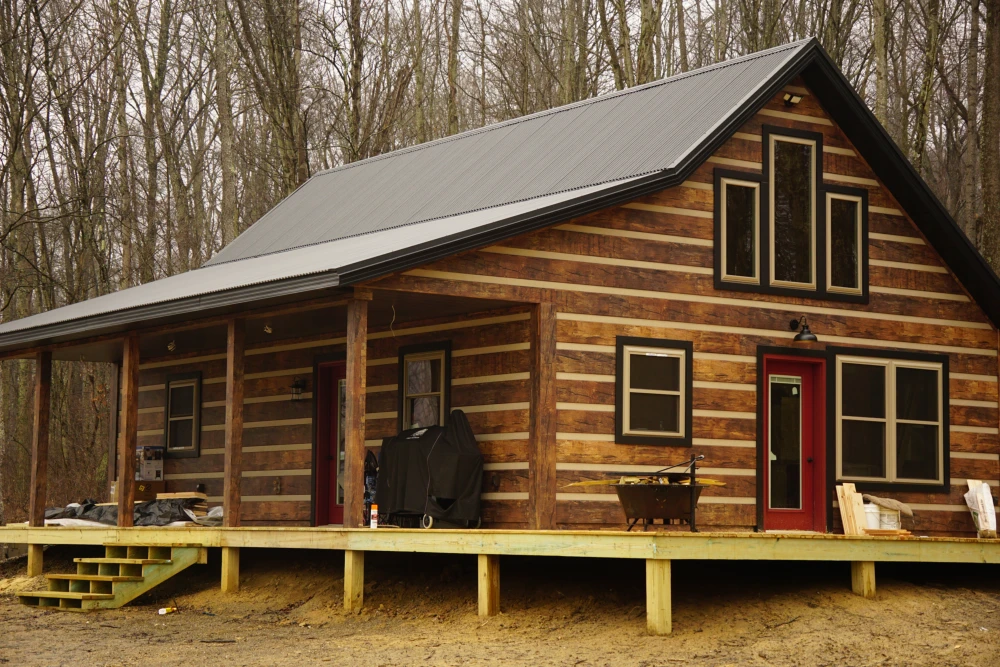
| Log Profile | Hand hewn log siding with chinking — 4 chinking colors |
| Warranty | 50-year peeling/flaking | 20-year fade/chalk |
| Panel | 10-inch planks, Slide-Lock system, one-person install |
| Base Coat | AZ55 Galvalume (zinc-aluminum alloy corrosion barrier) |
| Origin | New Philadelphia, Ohio — direct ship to all 49 states |
Hand Hewn Log Siding with Chinking
Incline Village, the Lake Tahoe corridor, and the Sierra Nevada foothills communities near Reno represent Nevada's most active market for the mountain cabin and lodge exterior profile. These communities carry vacation properties and second homes where the log aesthetic defines the exterior, and wildfire risk from the surrounding terrain makes fire resistance a practical specification rather than an abstract one.
Real wood log siding at a Lake Tahoe cabin or Incline Village vacation property faces failure from every direction. Freeze-thaw cycling from October through April works moisture into log joints and cracks them open. Intense UV at elevation bleaches and degrades the wood surface faster than at lower elevations. Wood in the Sierra Nevada wildfire corridors carries fire risk that steel eliminates at the panel surface. On a property that sits unoccupied for months, any of these failure modes compounds without a maintenance response to stop it.
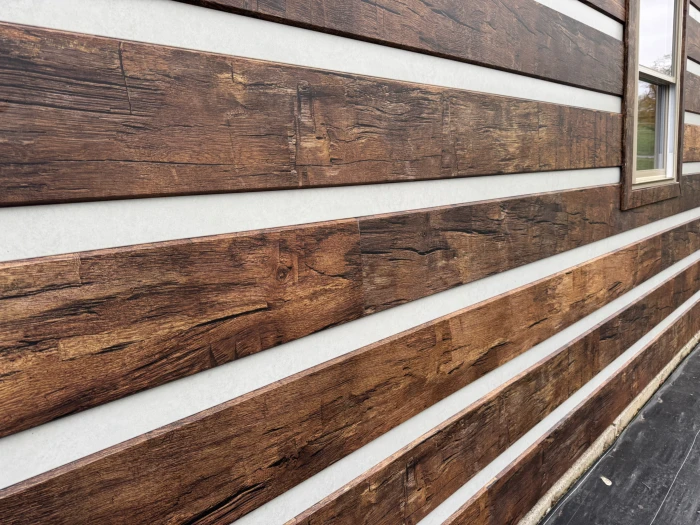
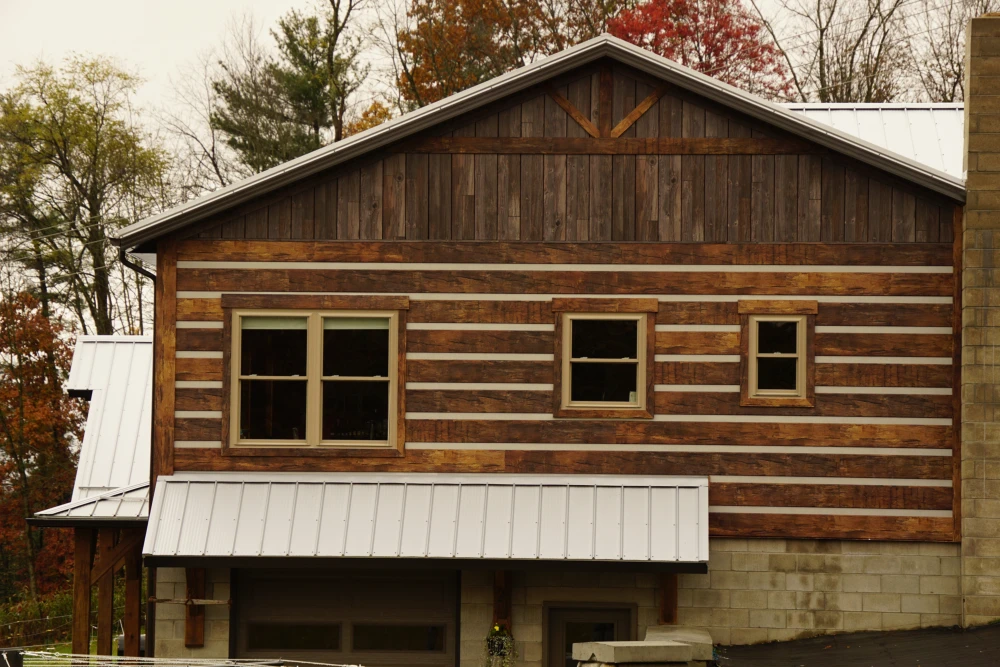
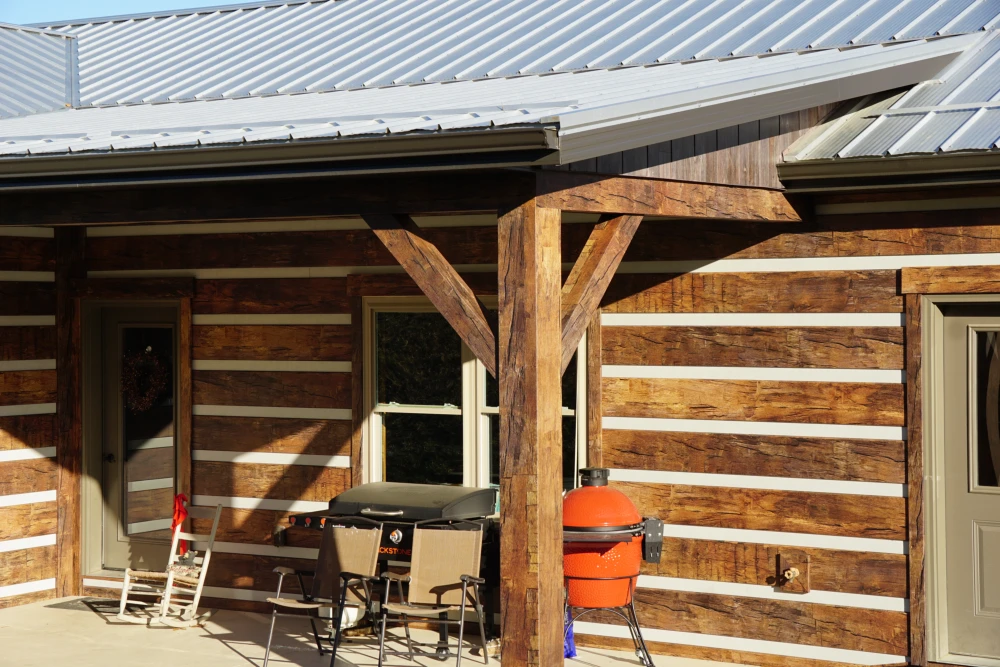
Hand hewn log siding with chinking in 26-gauge steel delivers the Nevada mountain and lake cabin aesthetic without those failure modes. Steel doesn't absorb moisture, so freeze-thaw cycling has nothing to act on at the log joints. The Class A fire rating means the panel surface won't ignite from wind-driven embers. Chinking fills the joints in four colors: Ash Gray, Charcoal, Clay, and Sandstone Tan. From the road or the water, it reads as traditional log construction.
SteeLuxe is the only manufacturer making hand hewn log siding with chinking in steel. It ships direct from New Philadelphia, Ohio to lake cabins, mountain properties, and year-round homes throughout Nevada's Tahoe corridor, Reno foothills, and northern communities, and is available across all 22 wood grain patterns in the SteeLuxe line.
Ready to Transform Your Home With Hand-Hewn Log Cabin Siding?
Get the authentic hand-hewn cabin look with the chinking detail you love, and never think about maintenance again. SteeLuxe steel siding is insulated, fire-rated, hail-resistant, and built to last a lifetime. See it and feel it for yourself.
Steel Siding vs the Alternatives
Nevada's heat, wildfire, and termite conditions test the three most common siding alternatives against a specification built around UV resistance, thermal cycling, fire resistance, and pest resistance. Steel answers all three conditions. Each alternative fails on at least two fronts in Nevada's residential climate.
Vinyl is the most common siding on Nevada homes, and the state's conditions expose its failure modes faster than in most other markets. In Las Vegas, UV intensity and 60-degree daily temperature swings produce chalking, fading, and joint gaps on vinyl siding within a few years of installation on south and west wall faces. It also carries no fire resistance, making it a liability at Reno foothills and Lake Tahoe addresses where wildfire exposure is real. Vinyl offers no resistance to termites reaching the wood framing behind it, and colonies enter wall assemblies through gaps at penetrations and trim joints regardless of the panel material at the surface.
Fiber cement handles fire better than vinyl and gives termites nothing to eat at the panel surface. Its two main Nevada liabilities are UV-driven paint degradation and moisture absorption at cut edges. Factory paint on fiber cement chalks and fades faster under Nevada's sustained sun exposure than in lower-UV climates, triggering a repainting cycle that arrives earlier than in most other markets. In northern Nevada, freeze-thaw cycling through the Reno and Carson City winter works moisture into cut edges at penetrations and windowsills, producing edge cracking and surface separation that accelerates with each winter season.
Wood siding in Nevada faces a maintenance burden that the heat and UV make expensive and fast. Paint on wood degrades in 4 to 6 years under Las Vegas sun exposure, shorter than the national average, and unprotected wood bleaches visibly within a single Nevada summer. In the Sierra Nevada wildfire corridors surrounding Reno, Carson City, and Incline Village, wood siding is a fuel load on a home in fire-risk terrain. Termite colonies in the Las Vegas metro treat wood siding as both a food source and an entry pathway into wall framing behind the panel. Steel ends the paint cycle, gives termites nothing to eat, and carries Class A fire rating on every panel.
Frequently Asked Questions
Q:What makes SteeLuxe steel siding different from other steel siding products?
Q:How does the Slide-Lock installation system work?
Q:What wood grain patterns are available?
Q:Does steel siding rust?
Q:How does Nevada's extreme heat and UV exposure affect siding?
Q:Does Class A fire rating matter for Nevada homes near the Sierra Nevada?
Q:How do termites behave in Nevada's desert climate?
Q:Does SteeLuxe install in my city?
Q:What should I know about siding for a Nevada Lake Tahoe cabin or vacation property?
Nevada Cities & Regions We Serve
SteeLuxe ships from New Philadelphia, Ohio to residential, cabin, and contractor projects across all 17 Nevada counties, with lead times that work for the year-round Las Vegas and Reno markets and the seasonal construction windows of the Tahoe and mountain communities.
Las Vegas, Henderson, North Las Vegas, and Summerlin represent Nevada's largest residential siding market. Heat, UV intensity, and active termite pressure in established neighborhoods drive consistent re-siding demand, and the large stock of homes built during Nevada's rapid suburban expansion gives Clark County the state's highest re-siding volume.
Reno, Sparks, and Fernley represent northern Nevada's largest siding market. Cold, wildfire exposure, and UV intensity give steel its clearest performance advantage over vinyl in the state, and the rapid metro expansion into the surrounding foothills has added new construction alongside the established re-siding market.
Carson City, Minden, and Gardnerville represent the Carson Valley market, where Sierra Nevada foothills wildfire exposure and real winter cold combine. Direct proximity to Sierra foothills terrain puts many addresses in designated wildfire-risk zones, and the area's retirement and relocation demographic drives active renovation and re-siding demand.
Incline Village, Crystal Bay, and the Nevada side of Lake Tahoe represent the state's vacation and second-home market, where wildfire exposure and mountain cold combine at high-value properties. Re-siding projects in this corridor run May through October, and properties here carry the most demanding fire resistance and cold performance specifications in Nevada.
Full city pages with local installer contacts and current pricing are available for Las Vegas, NV. More Nevada cities are listed below:
Don't see your city listed here. Contact SteeLuxe directly and someone familiar with Nevada's regional conditions will point you to the nearest installer and current pricing for your area.
Get a Quote for Steel Siding in Nevada
SteeLuxe is manufactured in New Philadelphia, Ohio and ships direct. Whether you are planning a full re-siding project or exploring options, we can get you pricing, color samples, and a list of installers in your area.