
Steel Siding & Hand Hewn Log Siding in Nebraska
Steel Siding in Nebraska
Steel siding in Nebraska answers for three conditions that operate statewide at meaningful intensity. Freeze-thaw cycling runs from November through March across the full state. Hail runs Nebraska's siding specification: the state sits at the center of the country's most active hail corridor, and Grand Island, Omaha, and Lincoln see severe seasons with real regularity. Termite pressure is Heavy statewide, with colonies active from April through October across the eastern farm belt and Platte River corridor. Wood grain siding in the 22 patterns SteeLuxe manufactures covers the full Nebraska aesthetic, from the craftsman and colonial profiles of Omaha and Lincoln to the farmhouse and ranch profiles of the rural and western communities.
Freeze-thaw cycling in Nebraska runs at moderate intensity compared to Minnesota or North Dakota, but it is a real condition statewide. Omaha averages a January low near 12 degrees and crosses the freezing mark repeatedly through November, February, and March. Lincoln averages near 14 degrees, North Platte near 8 degrees, and the panhandle communities near 10 degrees. Wind across the open plains compounds the thermal effect on exterior materials on every exposed elevation.
Hail across Nebraska is a statewide condition, not a regional one, but the central corridor from Grand Island and Kearney east through Lincoln and Omaha sees the most consistent and damaging activity. Grand Island sits at the intersection of storm tracks that make it the most hail-active city in Nebraska, and the Omaha metro has recorded multiple hail events each exceeding 100 million dollars in insured losses in the past two decades. The western panhandle communities from Scottsbluff through Alliance and the Republican River valley in the south also see active hail seasons most years.
Termite pressure across Nebraska is Heavy statewide, with the most intense activity in the eastern counties along the Missouri River and the Platte River corridor from Omaha west through Columbus and Grand Island. Subterranean colonies are active from April through October, a season six to seven months long. Colony activity is consistent enough that untreated wood at the soil interface is a practical liability at every Nebraska address east of the Sandhills.
Wind in Nebraska is a siding condition as much as a weather event. The open landscape from the Platte River valley through the Sandhills gives wind an unobstructed run for hundreds of miles before it reaches any structure. Wind-driven hail is the most damaging combination Nebraska produces: hail at 60 miles per hour hits siding at angles and velocities that multiply the impact energy compared to vertical fall. The central corridor and Omaha experience this regularly.
Nebraska's three main geographic markets each carry the conditions at different weights. Eastern Nebraska and the Omaha metro carry the heaviest termite pressure and a concentrated hail market. Central Nebraska around Grand Island carries the most consistent hail activity statewide. Western Nebraska and the panhandle carry the coldest winter temperatures and lighter termite and hail conditions.
The Most Advanced Steel Siding On The Market
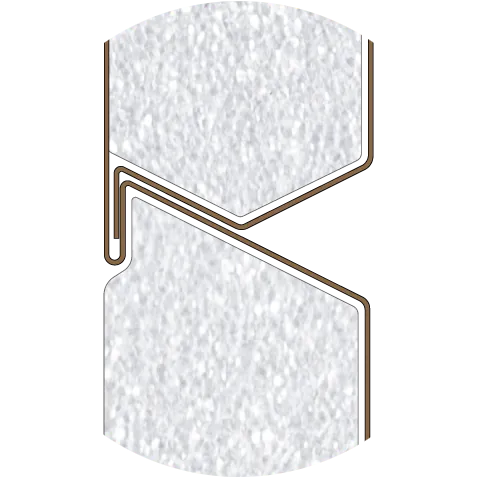
- 20 Year Fading & Chalking Warranty
- 50 Year Flaking & Peeling Warranty
- Lasts 40-60+ Years
- One Person Installation
Climate & Conditions Across Nebraska
Nebraska's geography runs nearly 500 miles from the Missouri River to the Wyoming border, and its position at the center of the Great Plains puts it at the intersection of Arctic air from the north and Gulf moisture from the south that produces the country's most active hail weather.
Omaha and the eastern Nebraska communities of Bellevue, Papillion, La Vista, Fremont, and the surrounding Douglas, Sarpy, and Dodge counties represent the state's largest residential siding market. The city sits on the Missouri River at the eastern edge of the Great Plains, where the termite pressure is the most intense in the state and hail events regularly produce insurance losses counted in the hundreds of millions. January lows in Omaha average near 12 degrees, and freeze-thaw cycling runs from November through March. Heavy termite pressure, active hail, and real freeze-thaw cycling make Omaha the most demanding siding market in the state.
Lincoln and the southeast Nebraska communities of Seward, York, Nebraska City, and the surrounding Lancaster, Seward, and Otoe counties represent the state's second-largest residential market and the capital region. The capital averages a January low near 14 degrees and sits firmly in the state's active hail zone. Termite pressure is Heavy throughout Lancaster County and the surrounding southeast counties, with a colony season that runs from April through October. The southeast Nebraska corridor has seen multiple significant hail events in each of the past several decades, and the re-siding market in Lancaster County reflects that history.
Grand Island and the central Nebraska communities of Kearney, Columbus, Norfolk, and the surrounding Hall, Buffalo, Platte, and Madison counties carry the state's most consistent hail activity and a significant agricultural and rural residential siding market. The city sits at the intersection of storm tracks from the southwest and northwest that make it the most hail-active city in Nebraska. Nebraska's I-80 and Highway 30 corridor connects the agricultural economy and drives a steady re-siding market in the smaller county-seat communities along both routes.
North Platte and the western Nebraska communities of Scottsbluff, Gering, Alliance, McCook, and the surrounding Lincoln, Scotts Bluff, Box Butte, and Red Willow counties represent the state's coldest climate zone and a distinct market driven by ranching, energy, and the I-80 and Highway 26 corridors. The city averages a January low near 8 degrees and the panhandle communities near 10 degrees. Hail in the western counties is less frequent than in central and eastern Nebraska but remains a real seasonal risk. Termite pressure in the panhandle is lighter than in the east but is present in the Scottsbluff and North Platte areas.
Need help finding an installer?
Why Steel Siding Is Right for Nebraska
Three conditions are active across Nebraska, and each has a documented failure pattern in the materials most Nebraska homes currently carry. Each has a direct answer in 26-gauge steel.
Hail is the condition that drives the Nebraska siding specification, and Class 4 impact resistance is the direct answer. A Class 4-rated panel absorbs hail impact at the energy levels the central Plains storm track delivers without denting, cracking, or puncturing the surface. Nebraska's most active hail corridor from Grand Island through Lincoln and Omaha sees one-inch-plus hail in multiple events most years, and many Nebraska carriers in the active hail zone apply a measurable premium discount to Class 4-rated exterior products.
Termite pressure at Heavy statewide makes wood siding a permanent liability at every Nebraska address east of the Sandhills. Subterranean colonies are active from April through October, long enough that any wood near the soil line receives sustained attention each warm season. Steel siding gives termites nothing to eat: no wood content in the panel, no moisture pathway a colony can exploit at the wall level. That protection holds for the full 40 to 60-year life of the installation.
Freeze-thaw cycling across Nebraska doesn't reach the severity of North Dakota or Minnesota, but it runs hard enough to expose the failure modes of vinyl and fiber cement through the full winter season. Steel doesn't absorb moisture, so there's nothing inside the panel to freeze, expand, and crack when temperatures drop to 8 degrees in North Platte or 12 in Omaha. The Slide-Lock panel system handles the dimensional changes temperature swings produce without creating gaps at joints or pulling fasteners loose. Vinyl goes brittle at temperatures Nebraska delivers through December, January, and February across most of the state.
Wind-driven hail is the most damaging form of weather Nebraska's Plains climate produces at siding surfaces, and it's the condition Class 4 impact resistance was built to answer. At wind speeds above 30 miles per hour, hailstones hit siding surfaces at angles and velocities that multiply impact energy compared to vertical fall. Steel at Class 4 rating handles that compound impact without surface damage. Vinyl at any gauge cracks or fractures under the same load, and fiber cement at standard thickness does the same.
Product Specifications
| Spec | Value |
|---|---|
| Gauge | 26-gauge steel (~25% thicker than 29-gauge) |
| Core | EPS foam, R-3.57 continuous insulation value |
| Fire Rating | Class A (highest available) |
| Impact Rating | Class 4 (highest available) |
| Colors | 50 solid colors (Sherwin Williams WeatherXL) |
| Wood Grain | 22 patterns (Kynar 500 resin) |
| Log Profile | Hand hewn log siding with chinking — 4 chinking colors |
| Warranty | 50-year peeling/flaking | 20-year fade/chalk |
| Panel | 10-inch planks, Slide-Lock system, one-person install |
| Base Coat | AZ55 Galvalume (zinc-aluminum alloy corrosion barrier) |
| Origin | New Philadelphia, Ohio — direct ship to all 49 states |
Hand Hewn Log Siding with Chinking
Nebraska's rural retreat and cabin market is driven by Sandhills ranch and lodge properties, recreation properties along the Platte and Niobrara rivers, and a lake and reservoir market around Lake McConaughy and Harlan County Lake. These properties carry a log and ranch exterior profile, and the demands on materials through an unattended Nebraska winter are real.
Real wood log siding at a Sandhills lodge, a Niobrara River cabin, or a Lake McConaughy property faces the same failure cycle as wood anywhere in Nebraska. Moisture works into log joints through the wet shoulder seasons, and freeze cycles that drop below zero in the north-central counties crack those joints and open surfaces to repeated freeze-thaw damage. Termite pressure in the eastern Sandhills counties adds a soil-level liability on top of the cold-weather cycle.
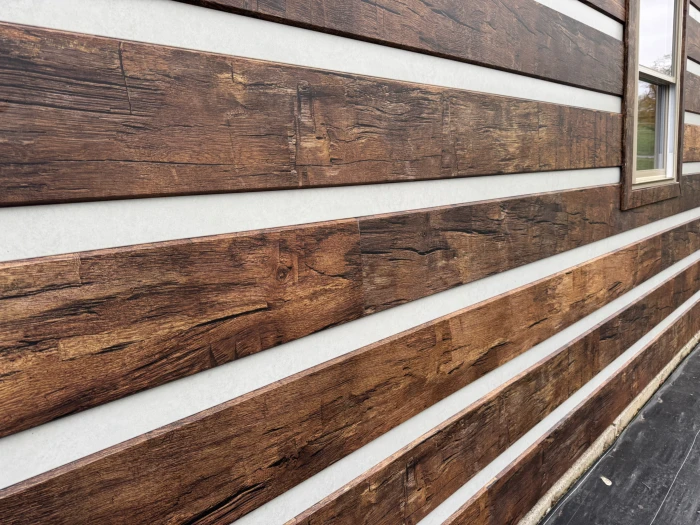
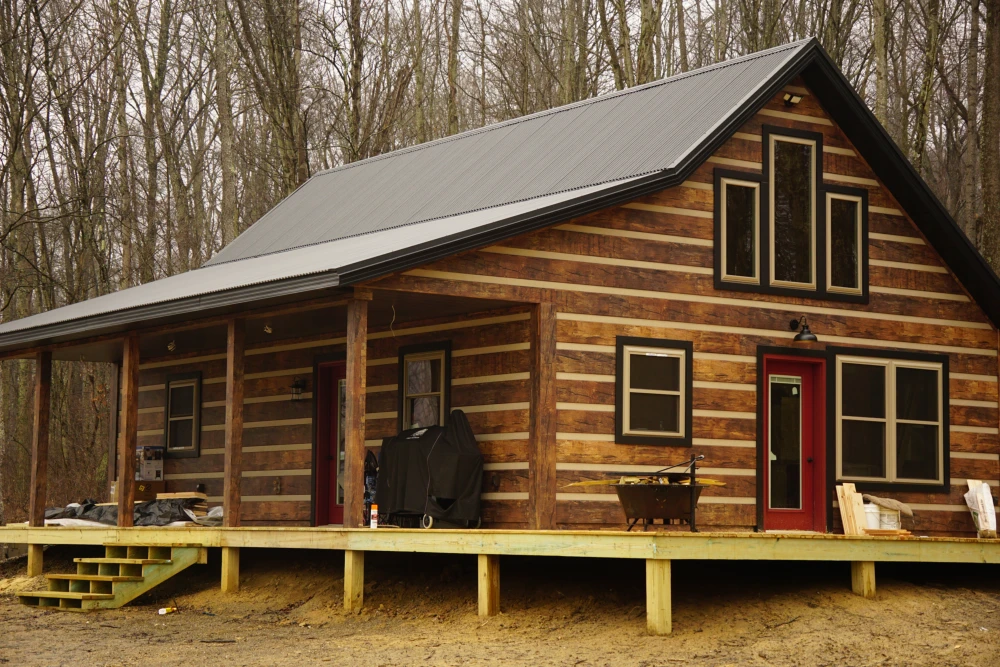
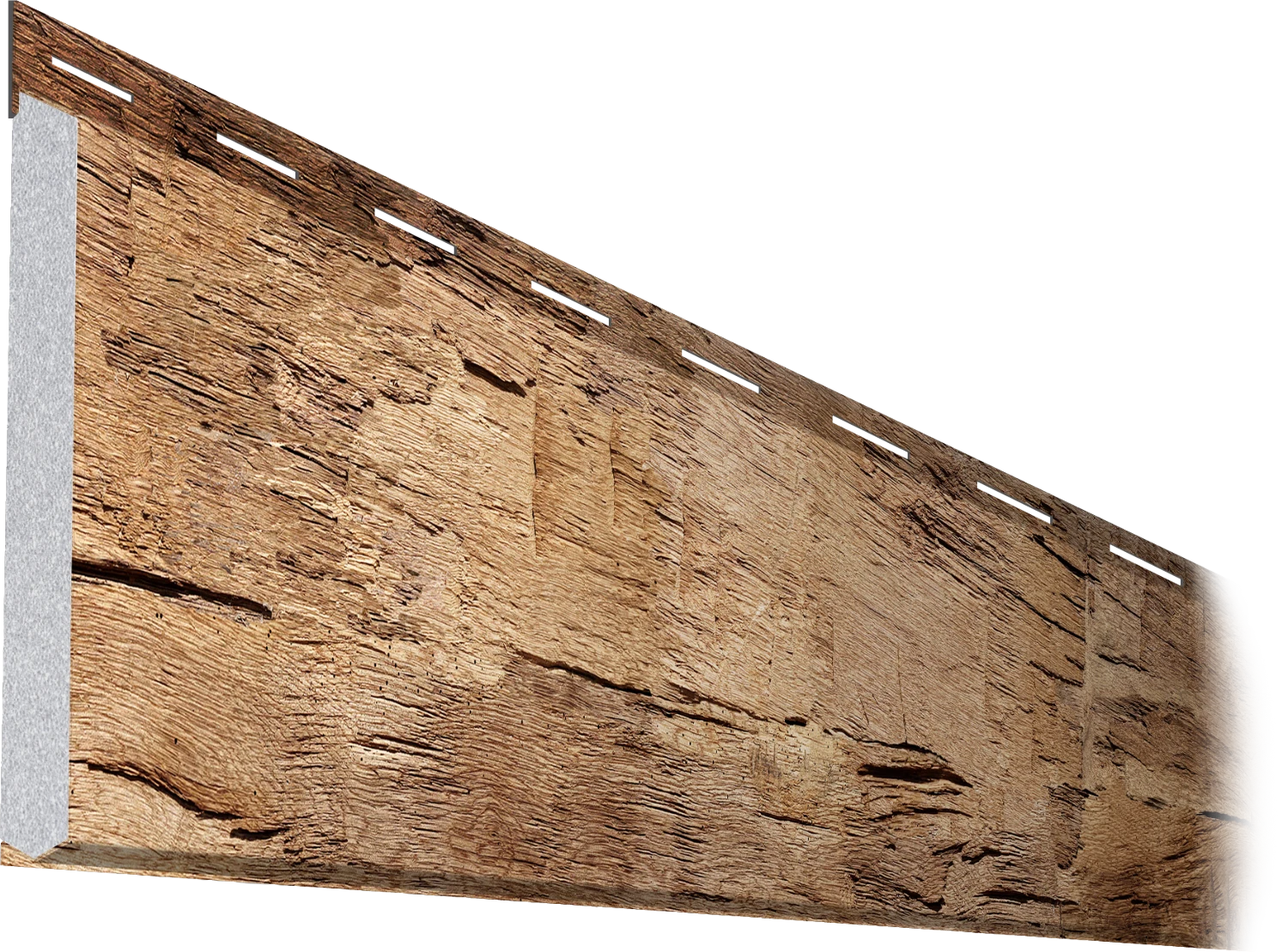
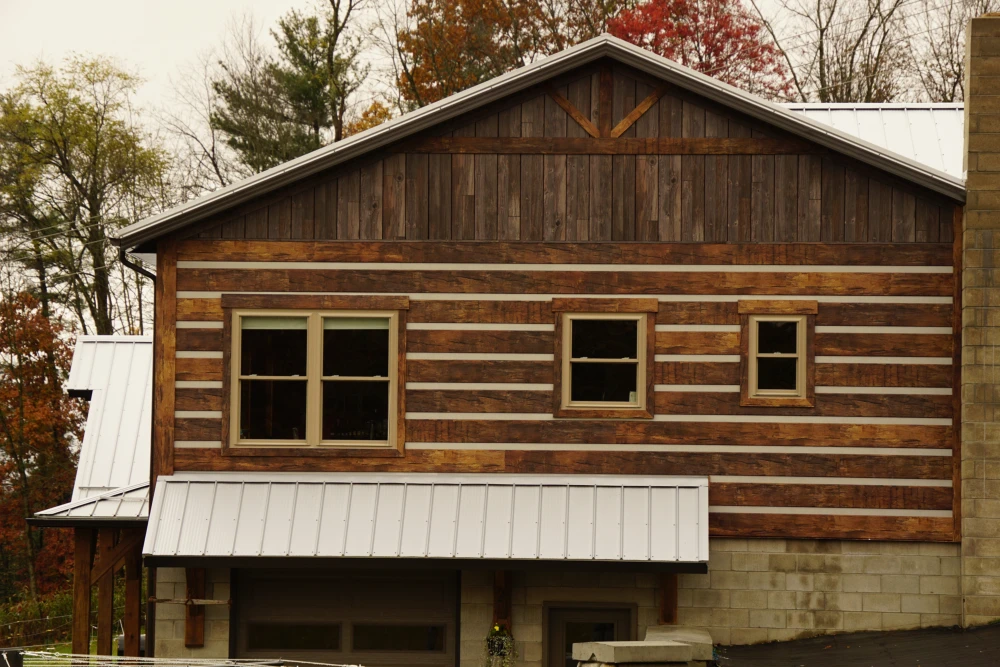
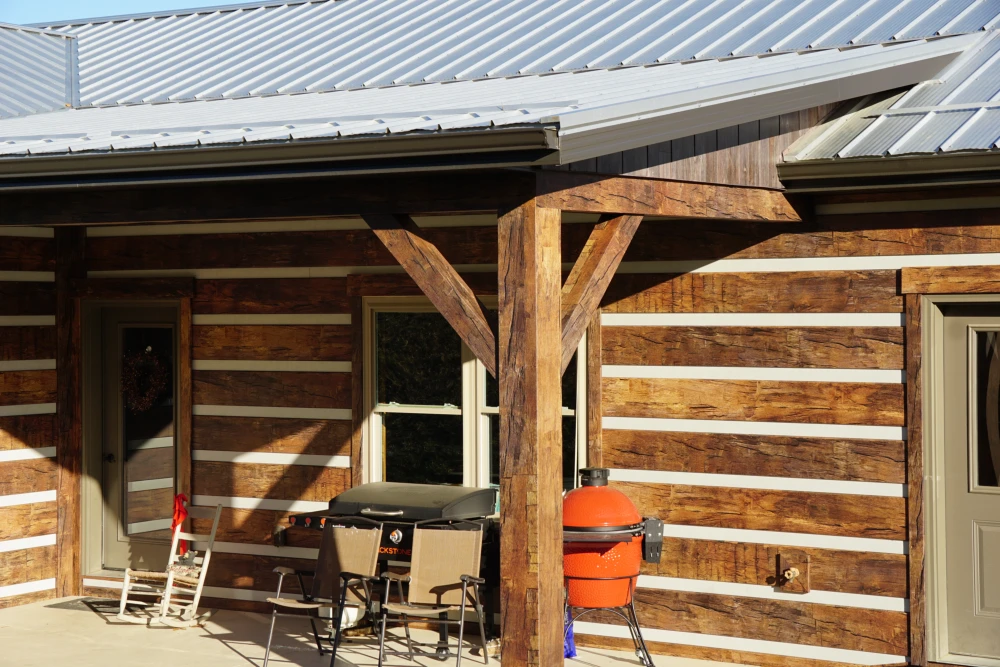
Hand hewn log siding with chinking in 26-gauge steel delivers the Nebraska ranch and cabin aesthetic without those failure modes. Steel doesn't absorb moisture, so the freeze-thaw cycle that splits wood grain at log joints has nothing to act on. The hand hewn surface replicates the texture and dimensional variation of actual milled log siding. Chinking fills the joints in four colors: Ash Gray, Charcoal, Clay, and Sandstone Tan. From the road, it reads as traditional log construction.
SteeLuxe is the only manufacturer making hand hewn log siding with chinking in steel. It ships direct from New Philadelphia, Ohio to ranch lodges, river cabins, reservoir properties, and year-round homes throughout Nebraska's Sandhills and Platte and Niobrara river corridors, available across all 22 wood grain patterns in the SteeLuxe line.
Ready to Transform Your Home With Hand-Hewn Log Cabin Siding?
Get the authentic hand-hewn cabin look with the chinking detail you love, and never think about maintenance again. SteeLuxe steel siding is insulated, fire-rated, hail-resistant, and built to last a lifetime. See it and feel it for yourself.
Steel Siding vs the Alternatives
Nebraska's hail, termite, and cold combination gives each of the three most common siding alternatives a specific condition it can't answer. Steel handles all three in a single panel. Each alternative answers one condition adequately and falls short on at least one other.
Vinyl is the most common replacement siding on Nebraska homes, and Nebraska's conditions expose its failure modes at both ends of the calendar. In winter, vinyl goes brittle at temperatures Nebraska delivers through January and February, cracking at fastener points and panel edges under wind load. During hail season, a hailstone that leaves no mark on a Class 4-rated steel panel at the same energy level cracks or punctures vinyl, and cracked vinyl panels require full-course replacement to restore a sealed installation. Termites treat vinyl indifferently, meaning the wood framing behind the panel stays accessible to subterranean pressure from below.
Fiber cement handles cold better than vinyl and carries a Class A fire rating. Its main Nebraska liabilities are a lack of rated hail protection and moisture absorption at cut edges. Fiber cement has no Class 4 impact resistance option in standard product lines, leaving every Omaha, Lincoln, and Grand Island installation without rated hail protection at the surface level. Moisture absorption at cut edges is also an active concern in Nebraska's climate, where spring and fall cycling through the freezing mark works moisture into exposed edges at penetrations and trim. Factory paint on fiber cement requires repainting on a 10 to 15-year cycle, and Nebraska's freeze-thaw environment starts that clock early on exposed elevations.
Wood siding on Nebraska homes faces an active maintenance burden from three directions: freeze-thaw cycling shortens the paint cycle, hail requires inspection and repair after every significant storm, and Heavy termite pressure means any wood at or near grade level receives sustained subterranean attention across every warm season. Paint on wood in Nebraska's climate fails in 5 to 8 years. Hail damage to painted wood is difficult to assess without a ladder and a trained eye. Termite damage in wood siding often progresses behind the painted surface before it's visible from the outside. Steel removes all three liabilities in one installation.
Frequently Asked Questions
Q:What makes SteeLuxe steel siding different from other steel siding products?
Q:How does the Slide-Lock installation system work?
Q:What wood grain patterns are available?
Q:Does steel siding rust?
Q:How does Class 4 impact resistance protect against Nebraska hail?
Q:How does Nebraska's termite pressure affect siding choice?
Q:Does steel siding perform differently in Nebraska's winter compared to vinyl?
Q:Does SteeLuxe install in my city?
Q:What should I know about siding for a Nebraska ranch or rural property?
Nebraska Cities & Regions We Serve
SteeLuxe ships from New Philadelphia, Ohio to residential, ranch, and contractor projects across all 93 Nebraska counties, with lead times that work for both the year-round Omaha and Lincoln markets and the seasonal construction calendar of the rural and western communities.
Omaha, Bellevue, Papillion, La Vista, Fremont, and the communities of Douglas, Sarpy, and Dodge counties represent the state's largest residential siding market. Termite pressure is the most intense in the state in this corridor, hail events are frequent and large, and re-siding activity here runs year-round driven by the active hail seasons and the Heavy termite pressure on the aging suburban housing stock.
Lincoln, Seward, York, Nebraska City, and the communities of Lancaster, Seward, and Otoe counties represent the state's second-largest metro market. Termite pressure is Heavy and the hail season is active. Re-siding after hail events drives a significant portion of the Lancaster County market each year, and the Heavy termite environment makes wood siding a long-term liability at every address.
Grand Island, Kearney, Columbus, Norfolk, and the communities of Hall, Buffalo, Platte, and Madison counties carry the state's most consistent hail activity. The city's position at the intersection of the state's two primary storm tracks makes it Nebraska's most hail-exposed city, and re-siding after hail events is the dominant driver of exterior cladding activity throughout the central corridor.
North Platte, Scottsbluff, Gering, Alliance, McCook, and the communities of Lincoln, Scotts Bluff, Box Butte, and Red Willow counties represent the state's coldest winter climate and a ranch and agricultural siding market. Freeze-thaw cycling in the panhandle is the most demanding in the state, and hail remains a real seasonal risk in western Nebraska most years.
Full city pages with local installer contacts and current pricing are available for Omaha, NE. More Nebraska cities are listed below:
Don't see your city listed here. Contact SteeLuxe directly and someone familiar with Nebraska's regional conditions will point you to the nearest installer and current pricing for your area.
Get a Quote for Steel Siding in Nebraska
SteeLuxe is manufactured in New Philadelphia, Ohio and ships direct. Whether you are planning a full re-siding project or exploring options, we can get you pricing, color samples, and a list of installers in your area.