
Steel Siding & Hand Hewn Log Siding in Montana
Steel Siding in Montana
Steel siding in Montana answers for two conditions. Freeze-thaw cycling is the dominant statewide condition, running harder here than anywhere else in the lower 48: the Hi-Line along the Canadian border regularly records temperatures below minus 40 degrees. Wildfire exposure is the second condition, concentrated in western Montana where the Bitterroot Valley, the Flathead Valley, and the wildland-urban interface around Missoula and Helena have seen fire seasons grow longer and more intense. Wood grain siding in the 22 patterns SteeLuxe manufactures covers the full Montana aesthetic, from the painted ranch and craftsman homes of Billings and Great Falls to the log and timber profile of the Glacier and Flathead cabin country.
Freeze-thaw cycling in Montana runs at intensities that most of the country never reaches. The Hi-Line from Havre and Malta through Cut Bank averages January lows around minus 20 degrees and regularly drops below minus 40. Eastern Montana from Billings through Miles City runs similarly cold, with wind chill accelerating the effective low on the open plains. Even the milder western valleys, including the Missoula corridor and the Flathead, average January lows well below zero and cycle through the freezing mark from October into April.
Wildfire exposure in Montana is concentrated in the west and southwest, where conifer forest meets a growing residential population in the valleys. The Bitterroot Valley from Missoula south through Hamilton and Darby is a consistently active wildfire corridor, with fire events becoming more frequent and more destructive over the past two decades. Flathead communities from Kalispell and Whitefish north toward Glacier carry significant wildfire exposure, and the Helena Valley sits at the edge of wildfire territory on its eastern and southern flanks.
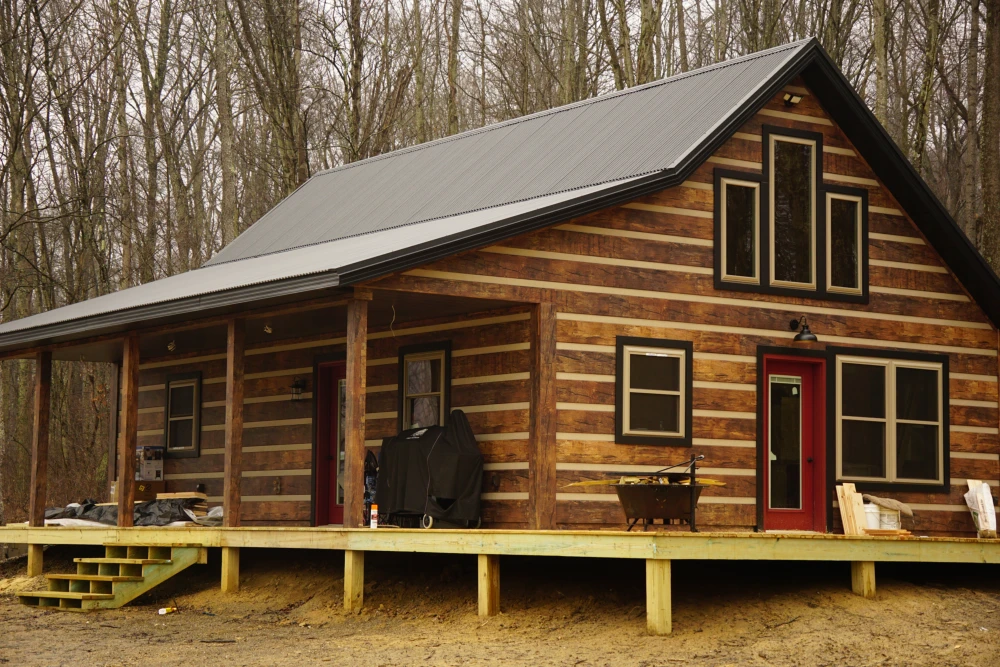
Montana's winters are cold enough that termite colonies cannot establish anywhere in the state. Subterranean termites require sustained soil warmth to maintain colony activity, and Montana's ground temperatures through the winter months eliminate the condition. That removes one of the failure modes that apply in warmer states, but freeze-thaw and wildfire are demanding enough on their own. Montana also carries a large and active log and cabin exterior market in the Mountain West, driven by the Glacier, Flathead, and Bitterroot recreational property markets.
Montana's second-home market is driven by the Glacier corridor, the Flathead Lake basin, and the Bitterroot and Gallatin valleys. Properties range from family cabins on remote forest parcels to four-season retreats within miles of a park boundary or ski area. The exterior material has to hold condition through a Montana winter without anyone there to notice a failure until spring, and in the Bitterroot and Flathead it has to answer a wildfire season that has made non-combustible construction a practical expectation.
Montana's four main regions each carry the conditions at different intensities. Hi-Line and eastern plains communities carry the most extreme cold. Bitterroot and Missoula carry the heaviest wildfire exposure. Flathead Valley and Glacier corridor carry the strongest log and cabin market. The Billings and Yellowstone River corridor carries the state's largest residential siding market.
The Most Advanced Steel Siding On The Market
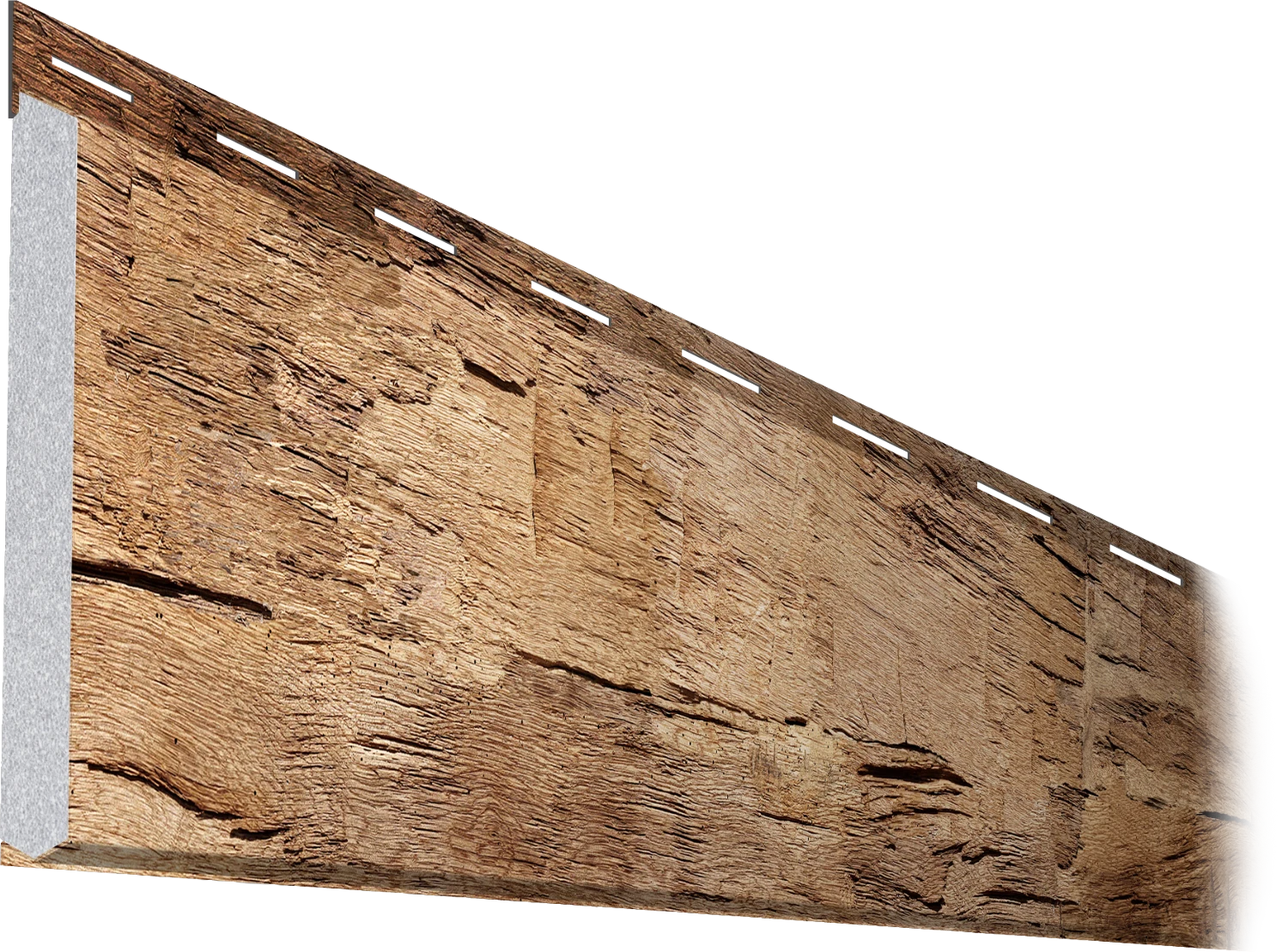
- 20 Year Fading & Chalking Warranty
- 50 Year Flaking & Peeling Warranty
- Lasts 40-60+ Years
- One Person Installation

Climate & Conditions Across Montana
Montana's geography spans more than 500 miles from east to west, and the Rocky Mountain divide splits the state into two distinct climate profiles: a western side shaped by Pacific weather systems and a much colder, drier eastern side exposed to Arctic air from Canada.
The Hi-Line communities from Havre and Malta through Chinook and Cut Bank stretch along the Canadian border in the coldest inhabited corridor in the lower 48. Cut Bank's average January low is near minus 22 degrees, among the coldest of any city in the continental United States, and the Hi-Line regularly records temperatures below minus 40 in January and February. Wind compounds every temperature reading: the open plains terrain provides no shelter from Arctic air moving south out of Alberta and Saskatchewan, and wind chill values regularly push effective temperatures well below the recorded low.
Billings and the Yellowstone River corridor from Laurel and Livingston east through Miles City and Glendive represent Montana's largest residential market. The state's largest city sits at the edge of the Rocky Mountain front where the plains begin, with January lows averaging near minus 2 degrees and hard stretches that drop well below that. Eastern Montana's open landscape gives wind the same unobstructed run as on the Hi-Line, and wind-driven cold is as much of an exterior material concern as the temperature reading. Freeze-thaw cycling here runs from October through April.
Missoula and the Bitterroot Valley south through Stevensville, Hamilton, and Darby represent the state's most active wildland-urban interface corridor. Surrounded by forested hillsides on three sides, Missoula sits at the northern gateway to the state's most active wildfire corridor, and the Bitterroot communities between the Sapphire and Bitterroot mountain ranges channel both summer fire weather and winter cold. Winters here are milder than the Hi-Line or eastern Montana, but January lows in the Bitterroot Valley still average near minus 5 to minus 10 degrees and freeze-thaw cycling runs from November through March. Wildfire pressure in the Bitterroot is the most consistent in the state.
The Flathead Valley from Kalispell and Whitefish through Columbia Falls and the Glacier National Park gateway communities is Montana's largest recreational and second-home market. Flathead Lake, the largest natural freshwater lake west of the Mississippi, anchors the southern end of the valley and supports a dense cabin and lakefront property market. The Glacier corridor to the north draws buyers from across the country, and the cabin and recreation property values here are among the highest in the state. Wildfire exposure is significant throughout the valley, and the Flathead's proximity to major wilderness tracts means fire weather conditions arrive quickly and with limited warning.
Need help finding an installer?
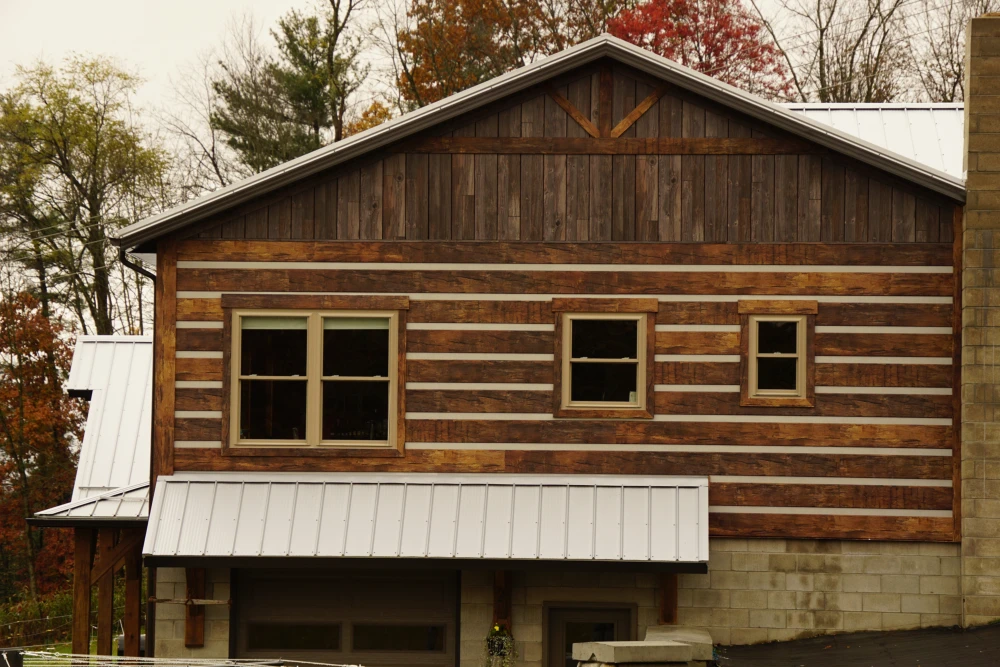
Why Steel Siding Is Right for Montana
Two conditions are active across Montana, and each has a documented failure pattern in the materials most Montana homes currently carry. Each has a direct answer in 26-gauge steel.
Steel answers Montana's freeze-thaw condition more directly than any other siding material. It doesn't absorb moisture, so there's nothing inside the panel to freeze, expand, and crack when temperatures drop below minus 40 on the Hi-Line or below zero across the western valleys. The Slide-Lock panel system handles the dimensional changes that Montana's extreme temperature swings produce in the steel without creating gaps at joints or pulling fasteners loose. Vinyl goes brittle at temperatures well above Montana's winter lows, reaching its failure threshold before January on the Hi-Line. Wood opens at joints through repeated moisture absorption and release across a freeze-thaw season that runs six months or more in the northern and eastern parts of the state.
Wildfire exposure across western and southwestern Montana puts Class A fire rating on the specification for any installation within or near the wildland-urban interface. A Class A-rated panel won't ignite from radiant heat at distances that ignite wood siding, and it won't sustain combustion from wind-driven embers the way vinyl does. In the Bitterroot Valley and the Flathead corridor, where fire events move through residential areas with limited lead time, the difference between a Class A-rated exterior and an unrated one is the difference between a house that survives the fire front and one that becomes part of it.
Montana's cabin and second-home market adds a requirement the other conditions don't create on their own: the material has to perform through an unattended Montana winter, in wildfire country, without the option of a maintenance visit between October and May. A property in the Flathead or Bitterroot that develops a siding failure over the winter absorbs the full freeze-thaw season before anyone is there to find it. Steel siding's 50-year warranty runs through that cycle the same way it runs through July.
Montana's winters eliminate termite pressure statewide because subterranean colonies require sustained soil warmth to maintain activity, and Montana's ground temperatures end that cycle every year before a permanent population can establish. That removes one maintenance liability entirely, leaving freeze-thaw and wildfire as the two conditions that drive Montana's siding specification, both of which steel addresses directly.
Product Specifications
| Spec | Value |
|---|---|
| Gauge | 26-gauge steel (~25% thicker than 29-gauge) |
| Core | EPS foam, R-3.57 continuous insulation value |
| Fire Rating | Class A (highest available) |
| Impact Rating | Class 4 (highest available) |
| Colors | 50 solid colors (Sherwin Williams WeatherXL) |
| Wood Grain | 22 patterns (Kynar 500 resin) |
| Log Profile | Hand hewn log siding with chinking — 4 chinking colors |
| Warranty | 50-year peeling/flaking | 20-year fade/chalk |
| Panel | 10-inch planks, Slide-Lock system, one-person install |
| Base Coat | AZ55 Galvalume (zinc-aluminum alloy corrosion barrier) |
| Origin | New Philadelphia, Ohio — direct ship to all 49 states |
Hand Hewn Log Siding with Chinking
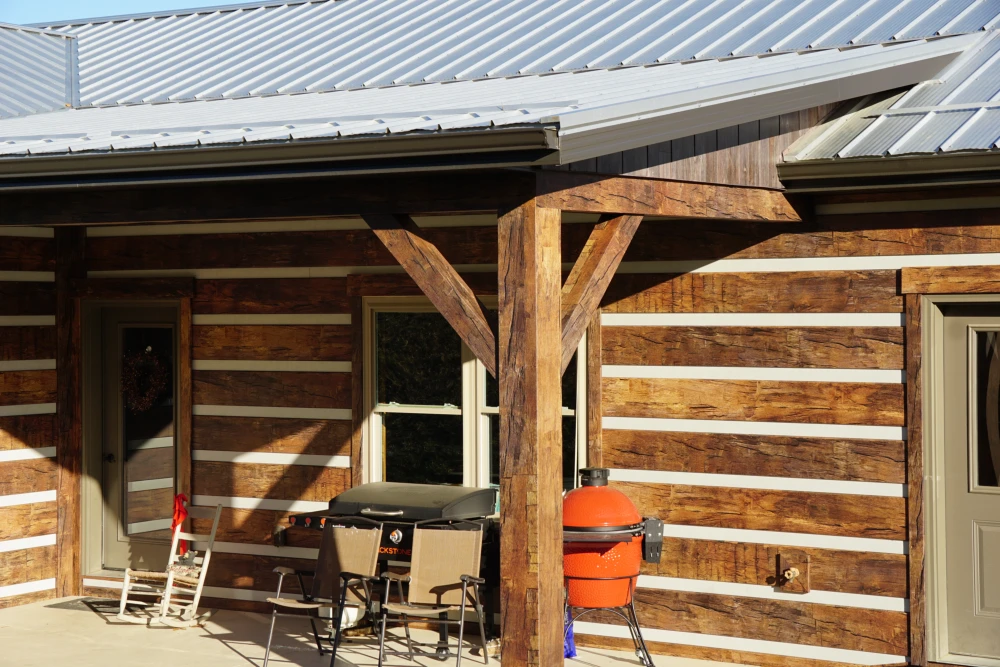
The Glacier corridor and the Flathead Valley carry Montana's strongest market for the log and timber exterior profile. Cabins, fishing lodges, hunting retreats, and four-season properties from Whitefish and Columbia Falls north to the park boundary and south along Flathead Lake are the core of this market. New construction in the cabin and recreation market follows the hand hewn log profile, and buyers entering the Flathead expect to see it.
Real wood log siding in the Flathead and Glacier corridor faces the same failure cycle as anywhere in Montana. Moisture works into log joints through the shoulder seasons, and freeze cycles that reach minus 20 in the Flathead Valley crack those joints and open surfaces to repeated freeze-thaw damage. The maintenance window at a Flathead Lake cabin or a Whitefish ski property is short, and repainting or restaining a remote mountain property competes directly with the brief warm season.
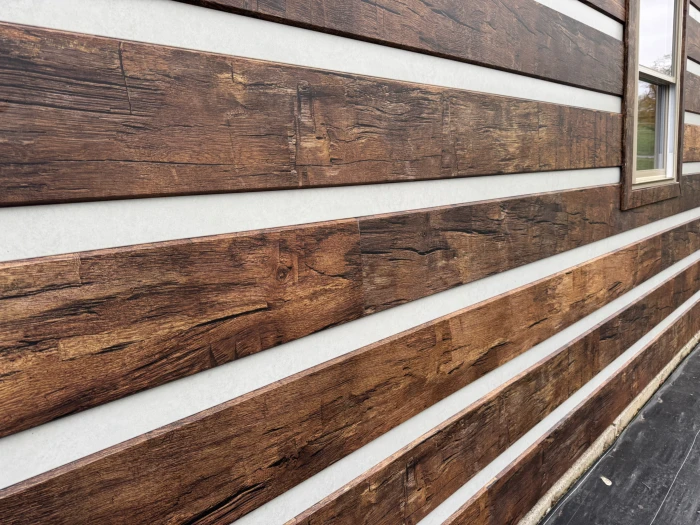
Hand hewn log siding with chinking in 26-gauge steel delivers the Glacier and Flathead cabin aesthetic without those failure modes. Steel doesn't absorb moisture, so the freeze-thaw cycle that splits wood grain at log joints has nothing to act on. The hand hewn surface replicates the texture and dimensional variation of actual milled log siding. Chinking fills the joints in four colors: Ash Gray, Charcoal, Clay, and Sandstone Tan. From the road, it reads as traditional log construction.
SteeLuxe is the only manufacturer making hand hewn log siding with chinking in steel. It ships direct from New Philadelphia, Ohio to cabins, hunting lodges, and year-round homes throughout Montana's Glacier, Flathead, and Bitterroot corridors, available across all 22 wood grain patterns in the SteeLuxe line.
Ready to Transform Your Home With Hand-Hewn Log Cabin Siding?
Get the authentic hand-hewn cabin look with the chinking detail you love, and never think about maintenance again. SteeLuxe steel siding is insulated, fire-rated, hail-resistant, and built to last a lifetime. See it and feel it for yourself.
Steel Siding vs the Alternatives
Montana's cold and wildfire combination puts each of the three most common siding alternatives under a specific condition they can't fully answer. Steel addresses both conditions in a single panel. The alternatives address one condition or neither.
Vinyl is the most common replacement siding on Montana homes over the past 40 years, and Montana's conditions expose both of its core failure modes simultaneously. Below 20 degrees, vinyl loses the polymer flexibility it needs to absorb wind stress and the expansion and contraction that temperature swings produce. Montana's Hi-Line and eastern plains winters push vinyl through that brittle threshold for weeks at a time, and the western valleys push through it most of January and February. Wildfire is vinyl's second problem. Vinyl has no fire resistance rating in any meaningful category. In the Bitterroot or Flathead, where fire events move through a residential area with limited warning, vinyl siding is a combustible cladding on a structure that may already be under ember exposure.
Fiber cement handles cold better than vinyl and carries a Class A fire rating, making it a reasonable specification in mild climates with wildfire exposure. Montana's freeze-thaw intensity is the problem. Moisture absorption at cut edges is fiber cement's consistent liability in freeze-thaw climates, and Montana's freeze cycles are deeper and longer than in any other state where fiber cement is commonly used. Water working into cut edges at penetrations and trim goes through dozens of hard freeze cycles per season in northern and eastern Montana, causing edge cracking and surface separation that shortens the material's effective life well below its rated performance. Factory paint on fiber cement requires repainting on a 10 to 15-year cycle, and Montana's climate starts that cycle on exposed elevations before the 10-year mark.
Wood siding is the historically appropriate exterior on Montana's older homes and carries the log and cabin profile that defines the recreational property market. The maintenance burden in this climate is the argument wood can't escape. Paint on wood siding fails every 5 to 8 years in Montana's freeze-thaw environment, and the window for exterior repainting at a remote mountain property is a few weeks at most each year. Wood is also a combustible material in wildfire country, and historic district requirements notwithstanding, new construction and re-siding projects in the Bitterroot and Flathead wildfire corridors increasingly move toward non-combustible exteriors for reasons the insurance market now prices directly.
Frequently Asked Questions
Q:What makes SteeLuxe steel siding different from other steel siding products?
Q:How does the Slide-Lock installation system work?
Q:What wood grain patterns are available?
Q:Does steel siding rust?
Q:How does Montana's cold compare to other states, and how does steel handle it?
Q:Is steel siding appropriate for a wildfire-risk area in the Bitterroot or Flathead?
Q:Is steel siding a good choice for a Montana cabin or vacation property?
Q:Does SteeLuxe install in my city?
Q:Does the log siding profile work on a Montana cabin?
Montana Cities & Regions We Serve
SteeLuxe ships from New Philadelphia, Ohio to residential, cabin, and contractor projects across all 56 Montana counties, with lead times that work for both the year-round Billings market and the shorter construction seasons of the mountain corridors.
Billings and the Yellowstone River corridor, including Laurel, Livingston, Red Lodge, and the communities of Yellowstone and Carbon counties, represent Montana's largest residential siding market. Re-siding activity here is driven by the aging housing stock and the extreme cold and wind conditions of the eastern Montana plains.
Missoula and the Bitterroot Valley communities of Stevensville, Hamilton, Victor, and Darby represent the state's most active wildland-urban interface market. New construction and re-siding projects in this corridor increasingly specify Class A fire-rated materials, and the steel specification addresses both the wildfire exposure and the valley's cold winters.
Kalispell, Whitefish, Columbia Falls, and the Glacier National Park gateway communities make up the state's largest second-home and cabin market. The Flathead Valley and Glacier corridor see the strongest demand for the log and timber exterior profile, and SteeLuxe's hand hewn log siding with chinking ships to properties throughout this region.
Helena and Great Falls, together with the communities of Lewis and Clark and Cascade counties, carry the mid-state residential market and a mix of wildfire exposure on their western and southern edges and hard freeze-thaw cycling from the Canadian air masses that move through the region each winter.
Bozeman and the Gallatin Valley, including Belgrade and Manhattan, represent the state's fastest-growing residential market and an increasingly active second-home market driven by proximity to Big Sky and Yellowstone National Park. Wildfire exposure in the Gallatin corridor has increased with the growth in the surrounding forest interface.
Full city pages with local installer contacts and current pricing are available for Billings, MT. More Montana cities are listed below:
Don't see your city listed here. Contact SteeLuxe directly and someone familiar with Montana's regional conditions will point you to the nearest installer and current pricing for your area.
Get a Quote for Steel Siding in Montana
SteeLuxe is manufactured in New Philadelphia, Ohio and ships direct. Whether you are planning a full re-siding project or exploring options, we can get you pricing, color samples, and a list of installers in your area.