
Steel Siding & Hand Hewn Log Siding in Mississippi
Steel Siding in Mississippi
Steel siding in Mississippi is up against a harder set of exterior conditions than most states. Very heavy termite pressure covers all 82 counties. Heat and humidity run from late spring through October. The Gulf Coast carries hurricane exposure, including the most destructive storm history per mile of coastline ever recorded on the US Gulf, and active hail tracks through the northern half of the state every spring. No single alternative material handles all four of those conditions in the same panel.
Termites are the constant across all of Mississippi. The state carries the federal government's highest termite classification statewide, covering every county from Southaven in the north to Pascagoula on the Gulf, and subterranean colonies are active in the soil year-round with no lower-pressure zones anywhere. Wood siding in Mississippi is not a long-term option for that reason alone, because it gives termite colonies exactly what they need at the wall. Steel removes the food source entirely.
The Gulf Coast adds the hurricane dimension. Hurricane Katrina struck in August 2005 and caused more destruction per mile of coastline than any other storm in US history. Biloxi, Gulfport, and the communities along the Mississippi Sound lost entire neighborhoods. What rebuilt on that coast was rebuilt by people who had seen what inadequate exterior materials do when a major storm comes ashore. Storm-rated products became the standard on the Gulf Coast after Katrina in a way that is still felt in every siding decision made down there today.
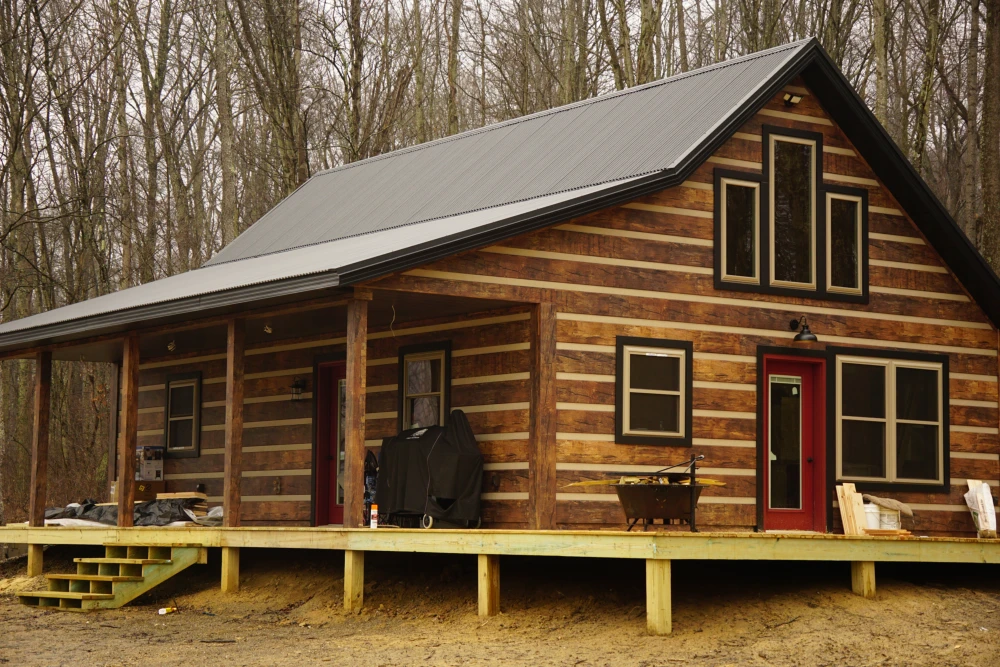
Inland Mississippi runs hot, and the humidity makes it worse. Summer highs average 93 degrees statewide, and the Mississippi Delta and Jackson area see sustained periods above that, with humidity pushing the heat index well past what the thermometer reads from June through September. Wood grain siding in the SteeLuxe line handles Mississippi heat without the warping, paint failure, and moisture damage that come with materials that absorb what the climate throws at them for five months straight.
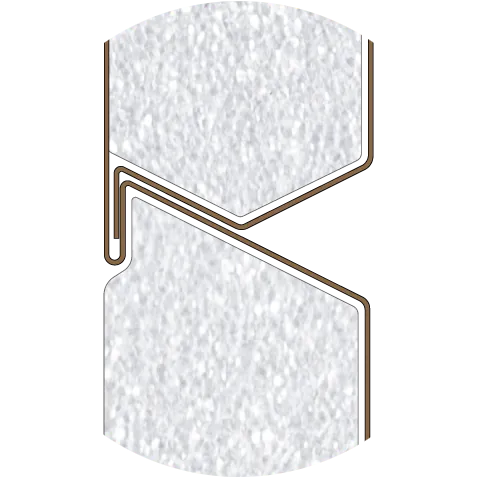
Steel addresses the full list. Class 4 impact resistance is the highest hail rating available, and it holds up under the kind of spring storms that track through the northern half of the state from March through May. Corrosion protection in the AZ55 Galvalume base coat is built into the steel itself, not applied as a surface layer that salt air and humidity wear down over years. The EPS foam core adds R-3.57 of insulation, reducing the work cooling systems do through a Mississippi summer.
Mississippi's siding conditions vary significantly by region. The Gulf Coast, the Delta, Jackson, and north Mississippi each have a different leading condition, and this page covers all four.
The Most Advanced Steel Siding On The Market
- 20 Year Fading & Chalking Warranty
- 50 Year Flaking & Peeling Warranty
- Lasts 40-60+ Years
- One Person Installation
Climate & Conditions Across Mississippi
Mississippi runs about 330 miles from the Tennessee border to the Gulf of Mexico, and the siding conditions at those two ends are meaningfully different, even though the whole state shares the same very heavy termite classification and the same long humid summer.
The Gulf Coast: Biloxi, Gulfport, and the Mississippi Sound
The Mississippi Gulf Coast carries the state's most demanding set of conditions. Hurricane exposure leads the list, and the coastline from Bay St. Louis through Biloxi, Gulfport, and Pascagoula sits in FEMA's hurricane-prone region with the documented storm history to match. Katrina reshaped what the coast looks like and reshaped what Gulf Coast buyers ask for when they side a house. Salt air from the Gulf and from the Mississippi Sound moves inland through the river systems and bayous of Hancock, Harrison, and Jackson counties, reaching neighborhoods miles from open water. Termite pressure in these counties is the highest in the state.
Central Mississippi: Jackson, Hattiesburg, and the Pine Belt
Central Mississippi is heat country. Jackson and the surrounding metro see summer highs above 95 degrees regularly, with humidity that makes the heat index significantly worse than the thermometer reading. The Pine Belt around Hattiesburg carries the same heat profile with slightly more tree cover but no reduction in termite pressure. Hail is active through this region during spring storm season, and the I-55 corridor from Jackson north through Canton and Grenada is in the more active hail zone. Fiber cement and wood siding both absorb moisture through Mississippi's long humid season in ways that compound over years.
The Mississippi Delta and North Mississippi
The Delta is flat, open terrain between Vicksburg and Memphis, and the heat that builds over it in summer is intense. Greenville, Greenwood, Clarksdale. Those towns sit in one of the hottest summer zones in the state with very little topographic relief to break the heat. North Mississippi, including Southaven and Oxford, is the most active hail zone in the state, sitting in the corridor where severe spring weather systems track most frequently. Very heavy termite pressure applies across all of it, Delta to hill country, with no break in the classification anywhere in the state.
Six conditions, distributed differently by region but all present everywhere: heat, hail, hurricane risk on the coast, salt air on the coast, very heavy termites statewide, and sustained year-round humidity. Steel addresses all six.
Need help finding an installer?
Why Steel Siding Is Right for Mississippi
Six conditions are active in Mississippi. Here is what each one does in practice and why 26-gauge steel is the material that handles all six without a trade-off between them.
Termites lead every conversation about exterior siding in Mississippi. The state's very heavy federal classification covers all 82 counties with no lower-pressure zones anywhere on the map, and subterranean termite colonies are in the soil across the entire state, working constantly. Steel siding removes the food source completely. There's no wood in the panel, no moisture for a colony to establish near the foundation, and nothing to tunnel through from the cladding into the wall structure. That's true on the day it goes up and still true 50 years later.
Heat and humidity run year-round across Mississippi, with summer highs averaging 93 degrees and the humidity pushing the heat index past 100 most afternoons from June through September. Vinyl siding expands substantially in sustained heat and can pull loose from fasteners over repeated summer cycles. Fiber cement absorbs the moisture that Mississippi's long humid season delivers and needs repainting every 7 to 10 years because of it, which adds up quickly over a 40-year installation. Steel is not a moisture-absorbing material. The Slide-Lock system lets panels expand and contract with temperature changes without pulling loose or opening up at the seams.
Hail is the main spring risk across north Mississippi and the I-55 corridor. Class 4 is the highest impact rating available from the IBHS and the standard that insurance carriers use when calculating premium discounts for impact-resistant siding. A panel at that rating withstands a two-inch steel ball dropped from 20 feet without cracking or chipping.
Gulf Coast conditions add two more. Salt air corrodes metal that isn't built for it. The AZ55 Galvalume base coat is a zinc-aluminum alloy fused to the steel, not applied on top of it, so it doesn't peel or wear away as surface coatings do. Hurricane wind loads and wind-driven debris are the other Gulf factor. The Slide-Lock mechanical connection between panels resists wind uplift better than nail-hem systems, which are what pulled vinyl siding off so many Gulf Coast homes during Katrina.
Product Specifications
| Spec | Value |
|---|---|
| Gauge | 26-gauge steel (~25% thicker than 29-gauge) |
| Core | EPS foam, R-3.57 continuous insulation value |
| Fire Rating | Class A (highest available) |
| Impact Rating | Class 4 (highest available) |
| Colors | 50 solid colors (Sherwin Williams WeatherXL) |
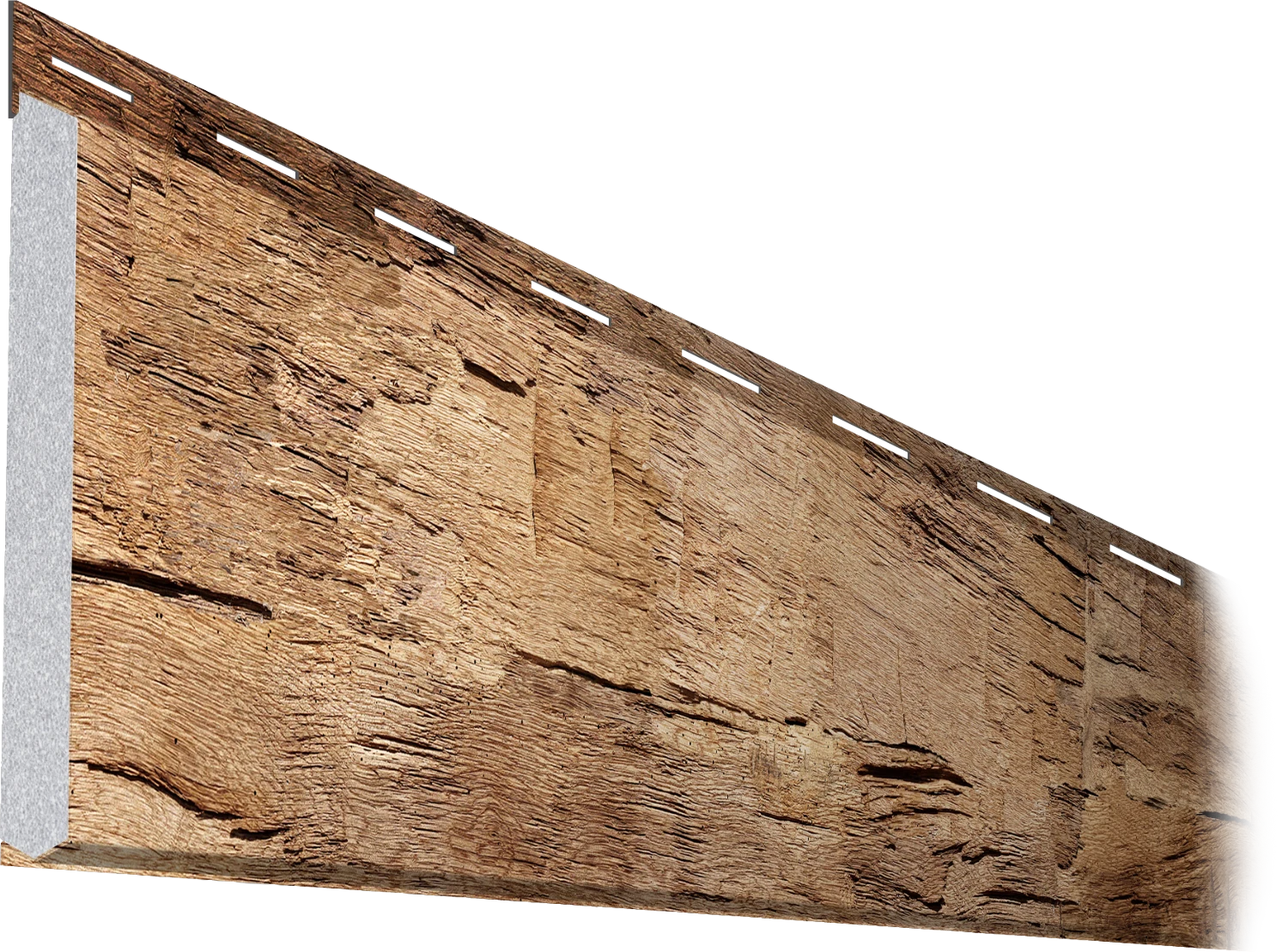
| Wood Grain | 22 patterns (Kynar 500 resin) |
| Log Profile | Hand hewn log siding with chinking — 4 chinking colors |
| Warranty | 50-year peeling/flaking | 20-year fade/chalk |
| Panel | 10-inch planks, Slide-Lock system, one-person install |
| Base Coat | AZ55 Galvalume (zinc-aluminum alloy corrosion barrier) |
| Origin | New Philadelphia, Ohio — direct ship to all 49 states |
Hand Hewn Log Siding with Chinking in Mississippi
Mississippi's residential architecture spans a wide range. The Gulf Coast has its cottage and Creole styles built low to the ground and close to the water. Natchez and the antebellum river towns carry Greek Revival profiles. The working-class craftsman and shotgun houses of Jackson and the river towns make up the bulk of the state's residential stock. Rural Mississippi has a long farmhouse and vernacular tradition where log and timber profiles fit naturally into the landscape and have been the standard for generations.
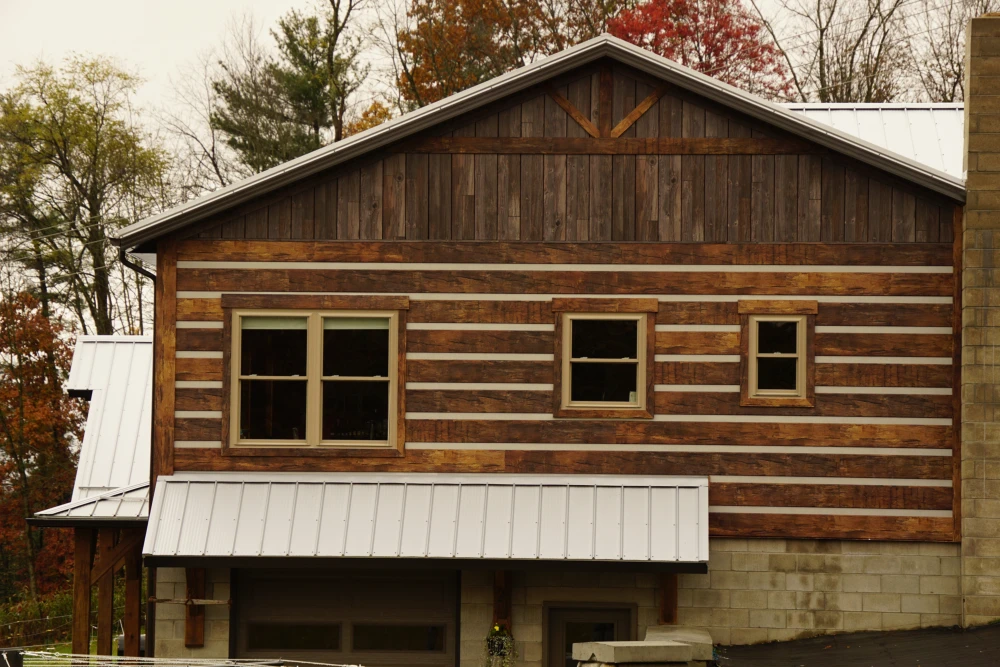
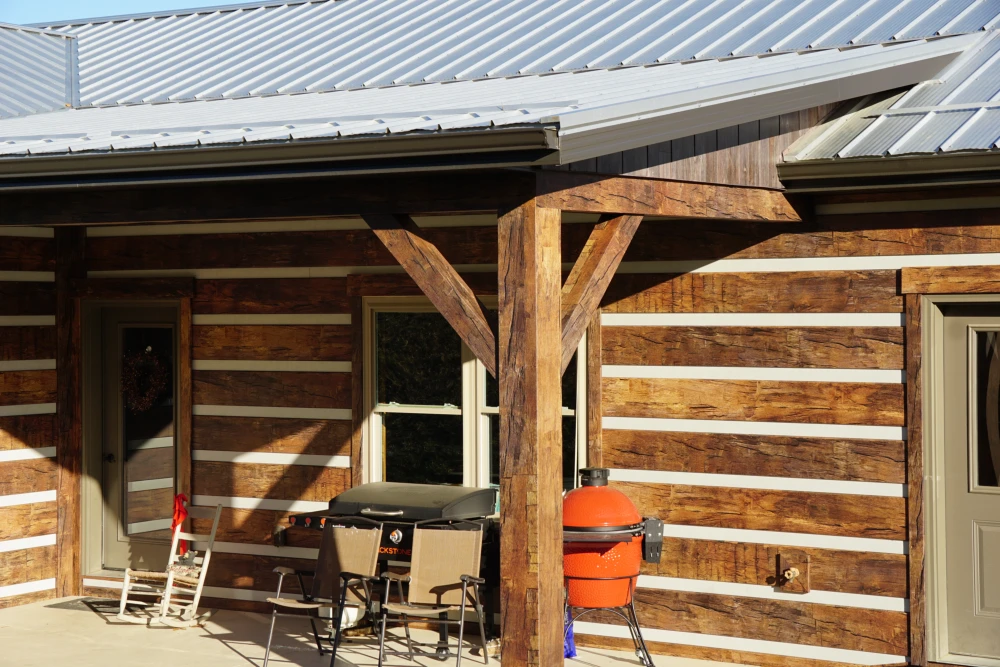
Hand hewn log siding with chinking in 26-gauge steel fits the rural and farmhouse end of that range without the maintenance costs and termite vulnerability of real wood log siding in Mississippi's climate. The hand hewn surface replicates the texture and dimensional variation of actual milled log siding. Chinking fills the joints in four colors: Ash Gray, Charcoal, Clay, and Sandstone Tan. From the street, it reads as traditional log construction.
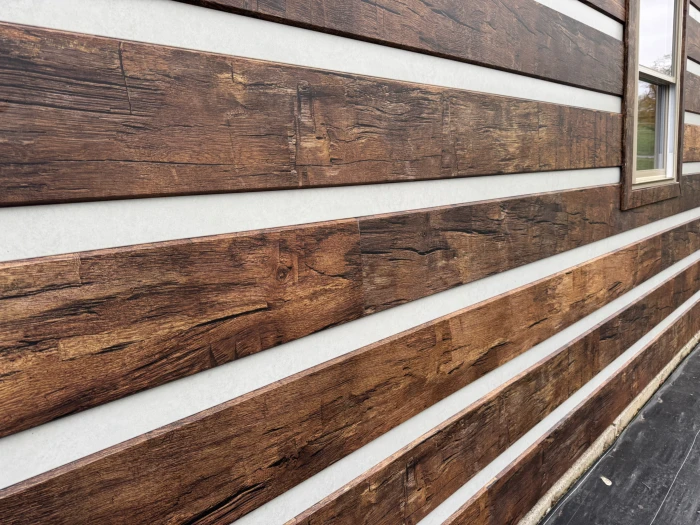
Mississippi's very heavy termite pressure makes the steel version the practical choice for anyone drawn to the log profile. Real wood log siding in a state with the country's most persistent termite pressure gives colonies exactly what they need: food, moisture, and a place to get started at the wall. That's the full invitation. Hand hewn log siding with chinking in steel removes all three from the equation.
SteeLuxe is the only manufacturer producing hand hewn log siding with chinking in steel. No other company makes it. It ships direct from New Philadelphia, Ohio to Mississippi with short lead times, so projects anywhere in the state from Southaven to the Gulf Coast aren't waiting on a long supply line.
Ready to Transform Your Home With Hand-Hewn Log Cabin Siding?
Get the authentic hand-hewn cabin look with the chinking detail you love, and never think about maintenance again. SteeLuxe steel siding is insulated, fire-rated, hail-resistant, and built to last a lifetime. See it and feel it for yourself.
Steel Siding vs the Alternatives in Mississippi
Mississippi's climate cuts through abstractions quickly. Each major siding alternative has a specific, documented failure pattern in this state's conditions, and knowing what those are makes the comparison straightforward.
Steel vs Vinyl
Vinyl has two clear liabilities in Mississippi: heat and wind. On the heat side, vinyl expands substantially in sustained 90-plus-degree temperatures and can pull loose from fasteners or gap at panel joints over repeated summer cycles, which is exactly what Mississippi delivers for five months a year. Mississippi's summers run long and hot, and that expansion-contraction cycle repeats every year. Wind is the second problem, and it's a more serious one on the Gulf Coast. Vinyl uses a nail-hem installation method, which means the panels hang rather than lock, and in hurricane-force winds nail-hem siding peels off. On the Mississippi Gulf Coast, that failure was documented across thousands of homes during Katrina. SteeLuxe panels use a mechanical Slide-Lock interlock that keeps panels from lifting under wind load.
Steel vs Fiber Cement
Fiber cement performs better than vinyl in high-wind situations, but it has two specific problems in Mississippi. Moisture absorption is the first: fiber cement takes in moisture through Mississippi's long humid season and releases it when it dries, and that cycle causes paint to peel. Repainting every 7 to 10 years is the standard expectation for fiber cement in a humid climate like Mississippi's, and that cost adds up over a 40-year installation. Termite vulnerability is the second problem, and it's a different kind than most homeowners expect. Fiber cement itself doesn't feed termites, but most fiber cement installs require wood furring strips or a wood backer behind the panel, and those give colonies a route into the wall structure. Steel panels install without added wood.
Steel vs Wood
Wood siding in Mississippi faces the same two problems it faces in every state with very heavy termite pressure and sustained humidity: termites eat it and moisture rots it. Mississippi's statewide very heavy termite classification means colonies are active in the soil across all 82 counties, and no treatment prevents termite activity permanently. High humidity accelerates paint failure and can compress the repaint cycle to every 4 to 6 years in the most humid parts of the state, particularly along the Gulf Coast and in the Delta. Steel removes both problems at once.
Frequently Asked Questions
Q:How long does SteeLuxe steel siding last in Mississippi's climate?
Q:Is steel siding more expensive than vinyl or fiber cement?
Q:Does steel siding dent?
Q:Can steel siding be painted?
Q:How bad is termite pressure in Mississippi?
Q:How does steel siding perform in a hurricane?
Q:Does steel siding hold up in Mississippi heat and humidity?
Q:What Mississippi cities does SteeLuxe serve?
Q:What changed on the Mississippi Gulf Coast after Hurricane Katrina?
Mississippi Cities & Regions We Serve
SteeLuxe ships from New Philadelphia, Ohio to residential and commercial projects across Mississippi, with short lead times to any part of the state.
Jackson is Mississippi's largest city. The metro and the surrounding Hinds, Madison, and Rankin counties face the state's full interior condition set: sustained heat, high humidity, active spring hail, and very heavy termite pressure. Hattiesburg and the Pine Belt to the south carry the same conditions. Southaven and the Memphis suburbs in DeSoto County sit in the northern part of the state's most active hail corridor.
The Gulf Coast market is unlike the rest of Mississippi. Biloxi, Gulfport, and the communities along the Mississippi Sound have been rebuilding in phases since Katrina, and Bay St. Louis, Pass Christian, and Long Beach all saw catastrophic storm damage in 2005. The Gulf Coast residential market treats storm-rated exterior products as a baseline requirement in a way that most of the rest of the country does not. Salt air from the Gulf moves well inland through the coastal river systems, affecting communities that don't front directly on open water.
Five cities have full pages. Full city pages are available for Jackson, Gulfport, Southaven, Hattiesburg, and Biloxi, each with local installer contacts, current pricing, and condition detail for that specific part of the state. More Mississippi cities across all 82 counties are in the list below:
If your city isn't listed, contact SteeLuxe directly and someone familiar with Mississippi's regional conditions will point you to the nearest installer and current pricing for your area.
Get a Quote for Steel Siding in Mississippi
SteeLuxe is manufactured in New Philadelphia, Ohio and ships direct. Whether you are planning a full re-siding project or exploring options, we can get you pricing, color samples, and a list of installers in your area.