
Steel Siding & Hand Hewn Log Siding in Maryland
Steel Siding in Maryland
Steel siding in Maryland has to answer for the Chesapeake Bay. The largest estuary in the United States runs through the center of the state, and the marine air that moves off its surface reaches communities that don't think of themselves as coastal at all. Baltimore is 30 miles from the Bay's western shore. Annapolis and the Bay-facing suburbs of Anne Arundel County are in continuous salt air contact year-round. That reach changes the material conversation, because the corrosion problem that beachfront homeowners plan around is the same one many inland Maryland homeowners face without realizing it. The AZ55 Galvalume base coat builds corrosion resistance into the steel core itself, not as a surface layer that salt air eventually degrades. Wood grain siding in the 22 patterns SteeLuxe manufactures covers the full Maryland residential aesthetic, from Baltimore's craftsman neighborhoods to the colonial profiles of Annapolis and the farmhouse vernacular of the Eastern Shore.
Freeze-thaw cycling is the second condition, applying statewide from November through March. Maryland averages 24 degrees in January, and Garrett County in the western Appalachians drops well below zero at higher elevations. Winter cold combined with Bay moisture creates a compounding stress on exterior materials that accelerates failure faster than either condition alone. Vinyl goes brittle below 20 degrees. Wood absorbs moisture and expands and contracts through freeze-thaw cycles in ways that open joints and accelerate paint failure.
Termites are active statewide at Moderate to Heavy pressure. Maryland's climate keeps subterranean colonies working through a long active season, and the Bay's moisture influence keeps soil conditions favorable for termite activity across a wider range of the state than the pressure maps suggest. Wood siding at every Maryland address is carrying a permanent liability in the soil underneath it.
Hurricane and coastal storm exposure apply to the Bay-facing communities, the Ocean City Atlantic coast, and the tidal communities of the Eastern Shore. The Chesapeake Bay's funnel geometry concentrates storm surge and nor'easter wind-driven rain into communities well north of where any given storm made landfall on the coast. Both tropical storms and nor'easters have caused significant siding damage across Maryland's Bay communities.
Every panel carries Class 4 impact resistance and Class A fire rating as standard. Class 4 is the rating that covers the hail tracking through the Mid-Atlantic corridor each spring. The EPS foam core adds R-3.57 insulation that matters in Garrett County's mountain winters and cuts the cooling load through Baltimore's humid summers. SteeLuxe's 50-year peeling and flaking warranty and 20-year fade warranty aren't conditional on avoiding the salt air and freeze-thaw conditions Maryland actually produces.
Maryland's four regions each face the conditions at different intensities and with different residential characters attached. Baltimore and the metro, Annapolis and the Bay shore, the Eastern Shore, and Western Maryland each get their own breakdown in the sections below.
The Most Advanced Steel Siding On The Market
- 20 Year Fading & Chalking Warranty
- 50 Year Flaking & Peeling Warranty
- Lasts 40-60+ Years
- One Person Installation
Climate & Conditions Across Maryland
Maryland's geography concentrates most of its siding conditions around the Chesapeake Bay, but the state spans four distinct climate zones from the Atlantic beaches in the east to the Appalachian plateau in the west.
Baltimore is Maryland's largest residential siding market, and its conditions are more coastal than most homeowners expect from an inland city. The Bay is close enough that salt air influences exterior materials across the older neighborhoods that make up most of the city's re-siding market. Housing stock here runs dense: rowhouses, craftsman bungalows, and the painted formstone facades distinctive to Baltimore's neighborhoods, most built between 1900 and 1960. Cold winters, Moderate to Heavy termite pressure, summer humidity, and Chesapeake salt air all apply simultaneously across the Baltimore metro and the surrounding ring of Baltimore County, Howard County, and Harford County.
Annapolis and the communities along the western Chesapeake shore carry the state's most direct Bay exposure. Salt air is continuous year-round, the hurricane-prone designation applies, and nor'easter wind-driven rain tests every seam and fastener on Bay-facing structures each season. The Annapolis market, including the historic district's colonial architecture and the waterfront communities of the surrounding peninsula, creates consistent demand for exterior materials that hold their finish without visible maintenance on high-value properties. Salt air destroys conventional coatings on a timeline that makes regular repainting the only alternative to choosing a better material.
The Eastern Shore spans the Delmarva Peninsula from the Chester River south to the Virginia line, flat and agricultural, with the Bay on its western edge and the Atlantic on its eastern edge. Ocean City and the beach communities carry direct Atlantic exposure. Dorchester and Somerset counties face salt air from two directions and have some of the most active tidal marshlands on the East Coast. Termite pressure on the Eastern Shore runs at the higher end of Maryland's Moderate to Heavy classification, with coastal humidity and tidal salt air keeping soil conditions favorable through most of the year.
Western Maryland runs a genuinely different climate. Garrett County sits on the Appalachian plateau above 3,000 feet, with winter lows that regularly drop below zero and freeze-thaw cycles more aggressive than anywhere else in the state. Allegany County and Cumberland run cold without Garrett County's elevation extremes. No meaningful salt air reaches this end of the state, but the freeze-thaw and moisture argument stands on its own. Deep Creek Lake and the surrounding Garrett County resort communities create demand for the log and timber aesthetic that the rest of Maryland's market doesn't share.
Need help finding an installer?
Why Steel Siding Is Right for Maryland
Five conditions are active across Maryland in different combinations depending on where you are in the state. Each one has a documented failure pattern in the materials most Maryland homes currently wear, and each one has a specific answer in 26-gauge steel.
The Chesapeake Bay salt air argument applies to more Maryland addresses than homeowners typically expect. Galvalume core protection means the corrosion barrier is bonded into the steel at the manufacturing stage, not applied as a topcoat that salt air eventually penetrates. For a Baltimore rowhouse 30 miles from the Bay, that protection is less urgent than for an Annapolis waterfront colonial, but the Bay's marine air influence makes it relevant farther inland than most homeowners plan for when choosing an exterior material they expect to last 40 years.
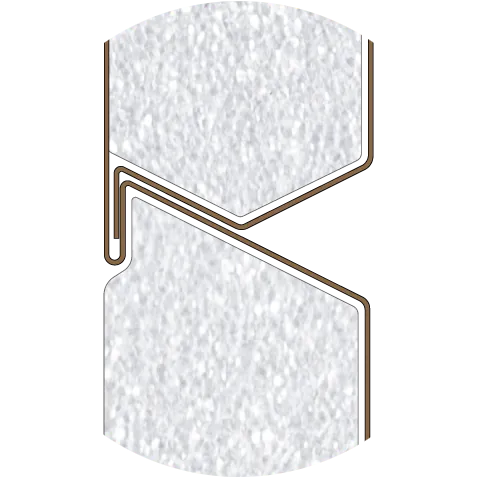
Freeze-thaw cycling is the baseline mechanical argument for every Maryland installation. Steel doesn't absorb moisture, so there's nothing inside the panel to freeze and expand when temperatures drop. The Slide-Lock panel system handles the dimensional changes temperature swings produce in the steel itself without creating gaps or pulling fasteners loose. Maryland winters run November through March, and every freeze-thaw cycle in that window is a stress that vinyl and wood handle differently than steel. In Garrett County, where the cycles are more aggressive and more frequent than anywhere else in the state, that difference accumulates faster.
Termites at Moderate to Heavy pressure statewide mean wood siding carries a permanent liability at every Maryland address. The Bay's moisture influence extends favorable termite conditions farther inland than the temperature-based pressure maps suggest. Steel gives termites nothing to eat because there's no wood content in the panel, no food source, and no moisture pathway a colony can exploit at the wall level. That protection holds without retreatment for the full 40 to 60-year life of the installation.
Hurricane and nor'easter exposure along the Bay and the Atlantic coast put two requirements on the specification: wind resistance and corrosion resistance. SteeLuxe's Slide-Lock panel system creates a mechanical interlock between panels that holds under the sustained wind loads Atlantic storms and Bay-focused nor'easters deliver to Maryland's coastal communities. Class A fire rating is standard across the full line. For Maryland's coastal properties, the combination of Slide-Lock wind resistance and AZ55 Galvalume corrosion protection covers both the storm and the salt air argument in the same panel.
Product Specifications
| Spec | Value |
|---|---|
| Gauge | 26-gauge steel (~25% thicker than 29-gauge) |
| Core | EPS foam, R-3.57 continuous insulation value |
| Fire Rating | Class A (highest available) |
| Impact Rating | Class 4 (highest available) |
| Colors | 50 solid colors (Sherwin Williams WeatherXL) |
| Wood Grain | 22 patterns (Kynar 500 resin) |
| Log Profile | Hand hewn log siding with chinking — 4 chinking colors |
| Warranty | 50-year peeling/flaking | 20-year fade/chalk |
| Panel | 10-inch planks, Slide-Lock system, one-person install |
| Base Coat | AZ55 Galvalume (zinc-aluminum alloy corrosion barrier) |
| Origin | New Philadelphia, Ohio — direct ship to all 49 states |
Hand Hewn Log Siding with Chinking
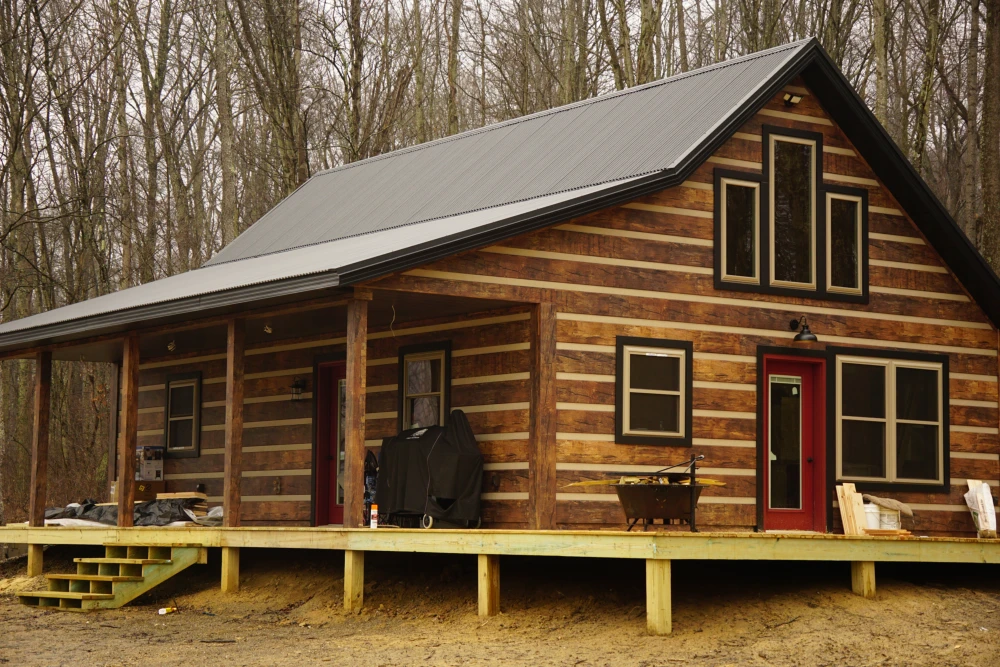
Western Maryland carries the state's strongest market for the hand hewn log and timber profile. Deep Creek Lake and the surrounding Garrett County communities have built a resort economy around the mountain vernacular, and re-siding and new construction projects in this corridor consistently follow the log and timber look the landscape and buyer base both expect. Hunting properties and recreational retreats throughout the Appalachian corridor fit the same profile.
Real wood log siding in Garrett County faces the state's most aggressive freeze-thaw cycling. Moisture works into wood grain and log joints through the shoulder seasons, and the elevation means those cycles run harder and longer than in the valley markets below. Termite pressure applies even in the mountain counties. High summer humidity adds a second moisture cycle that keeps wood at elevated moisture content through the warm months.
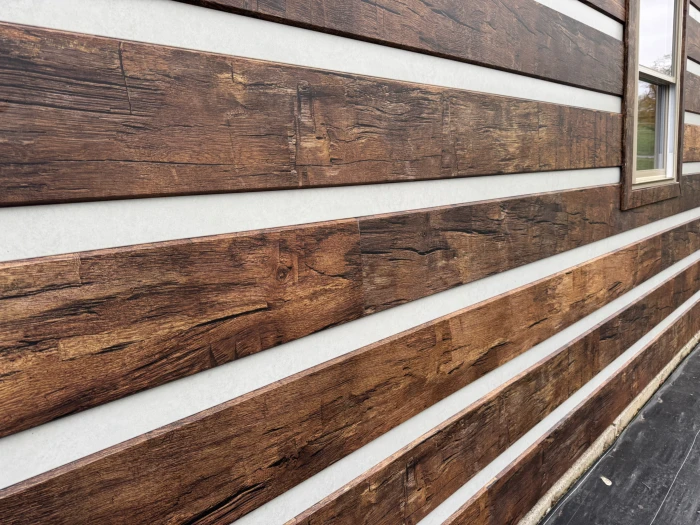
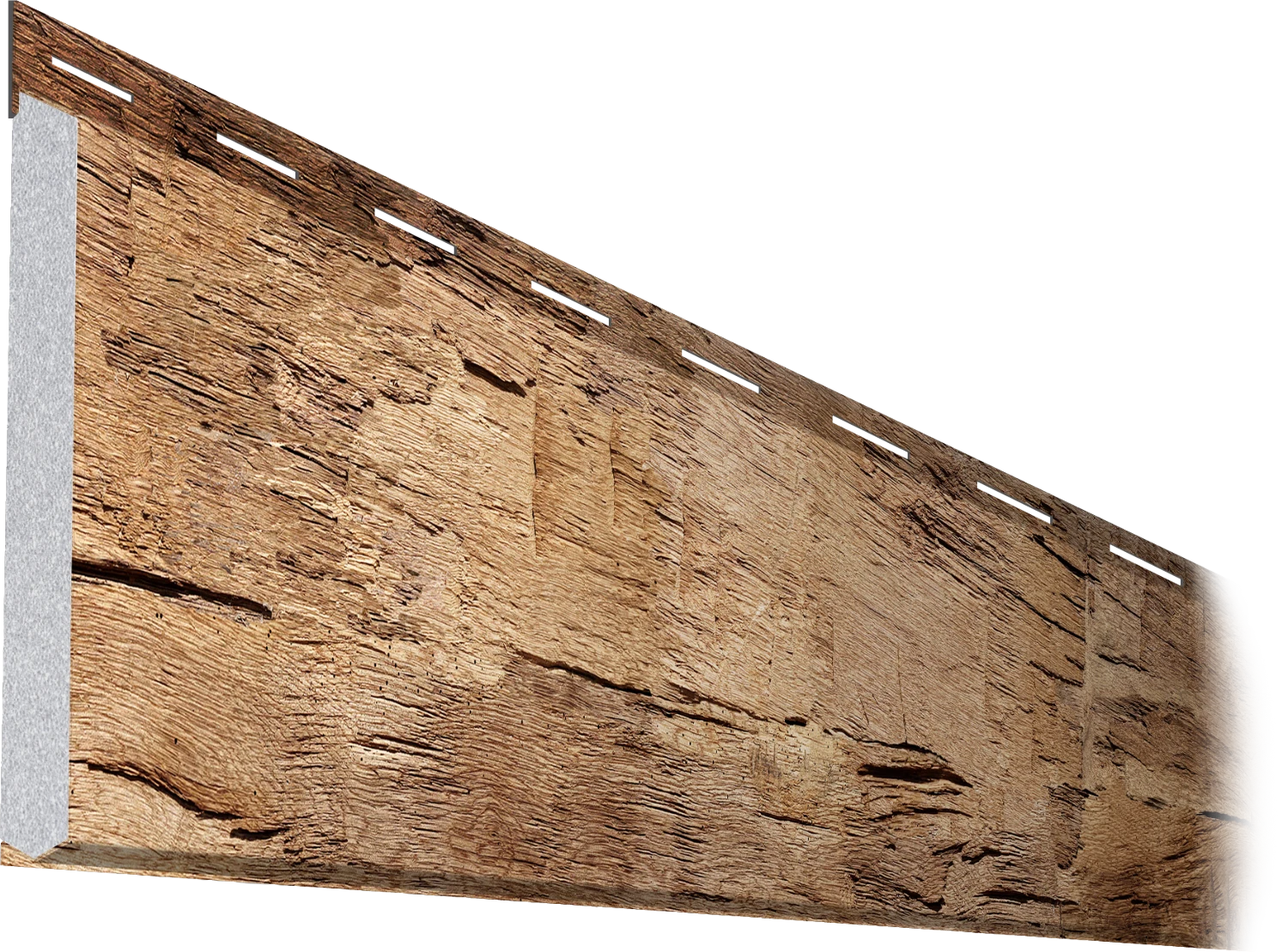
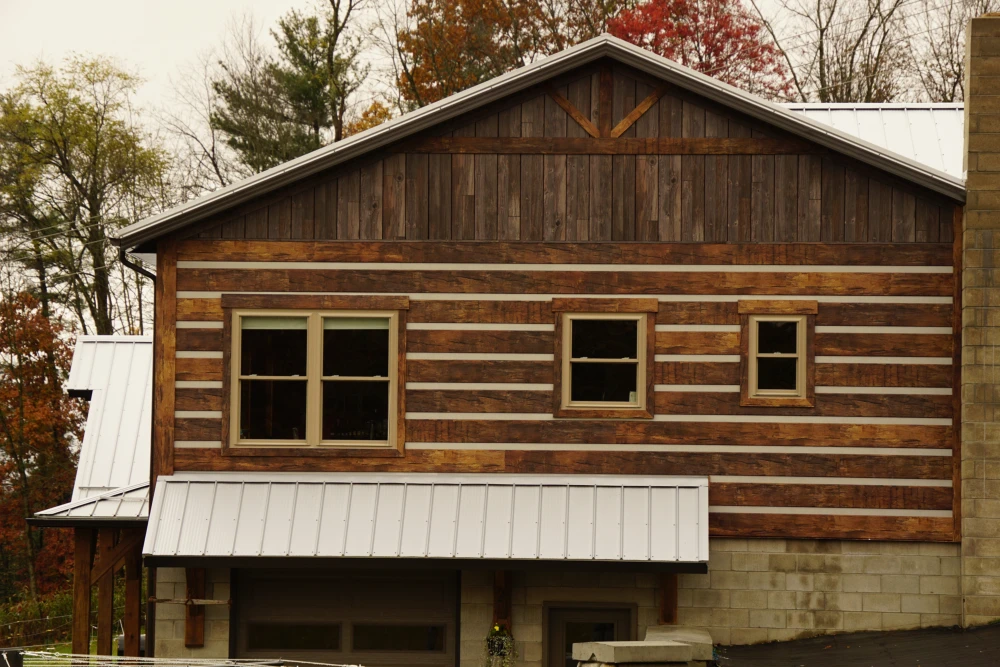
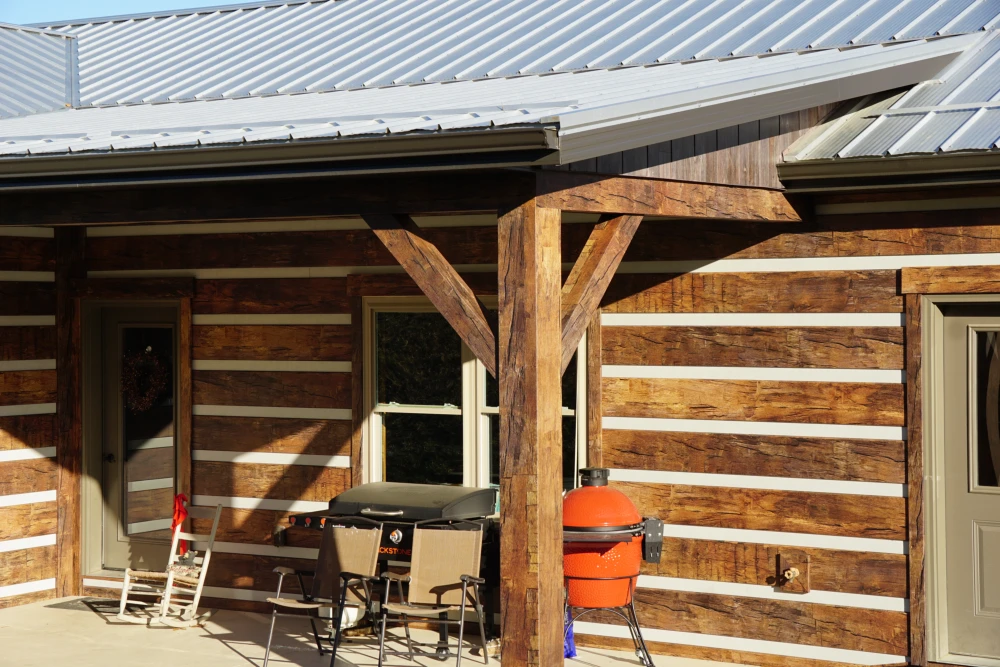
Hand hewn log siding with chinking in 26-gauge steel delivers the mountain aesthetic without those failure modes. Steel doesn't absorb moisture, so the freeze-thaw cycle that cracks wood grain at joints has nothing to work with. Termites get nothing to eat from the steel core. The hand hewn surface replicates the texture and dimensional variation of actual milled log siding. Chinking fills the joints in four colors: Ash Gray, Charcoal, Clay, and Sandstone Tan. From the street, it reads as traditional log construction.
SteeLuxe is the only manufacturer making hand hewn log siding with chinking in steel. It ships direct from New Philadelphia, Ohio to Garrett County, Deep Creek Lake, and every other Maryland project, available across all 22 wood grain patterns in the SteeLuxe line.
Ready to Transform Your Home With Hand-Hewn Log Cabin Siding?
Get the authentic hand-hewn cabin look with the chinking detail you love, and never think about maintenance again. SteeLuxe steel siding is insulated, fire-rated, hail-resistant, and built to last a lifetime. See it and feel it for yourself.
Steel Siding vs the Alternatives
Maryland's salt air and freeze-thaw combination cuts through material comparisons quickly. Each major alternative has a specific failure point in this state's conditions, and Maryland's geography makes the failure timeline faster than in most Mid-Atlantic markets.
Vinyl is the most common replacement siding on Maryland homes over the last 40 years, and it carries two clear problems in this climate. Cold temperatures make vinyl brittle, and below 20 degrees it loses the flexibility it needs to absorb stress from wind load and the expansion and contraction that temperature changes produce. Garrett County's mountain winters push vinyl through that brittle range more frequently than the lower parts of the state, but statewide freeze-thaw cycling stresses vinyl fasteners and seams over a long season regardless of elevation. Salt air doesn't visibly degrade vinyl's surface, which makes the failure invisible: the fasteners and trim systems corrode, and the installation begins pulling apart at connections the homeowner can't see from the street. By the time the problem is visible, it's structural.
Fiber cement carries a Class A fire rating and handles cold better than vinyl, but it has two Maryland-specific liabilities. Moisture absorption at cut edges and penetrations is the first. Maryland's freeze-thaw season works moisture into cut fiber cement edges on a cycle that eventually causes cracking and surface separation, and the Bay's humidity keeps that moisture cycling through longer than in drier climates. Factory paint on fiber cement requires repainting on a 10 to 15-year cycle in a salt air environment, and on properties within direct Bay influence that cycle shortens. Class 4 impact resistance is not available in fiber cement.
Wood siding is the historically correct material for Maryland's colonial, Federal, and craftsman housing stock, and historic district guidelines require it on some properties in Annapolis and Baltimore. Maintenance is the problem that real wood can't escape in this climate. Paint on wood siding in a salt air environment fails every 5 to 8 years and requires full preparation and repainting. Termites at Moderate to Heavy pressure statewide treat wood siding as a permanent food source, and soil treatments don't protect the siding itself. Freeze-thaw cycling pushes moisture into wood grain and accelerates checking and surface degradation across a long Maryland winter. Over a 30-year ownership period, the cumulative maintenance cost of wood siding in Maryland's coastal and Bay-adjacent climate is significant.
Frequently Asked Questions
Q:What makes SteeLuxe steel siding different from other steel siding products?
Q:How does the Slide-Lock installation system work?
Q:What wood grain patterns are available?
Q:Does steel siding rust?
Q:How does the Chesapeake Bay affect siding in Maryland?
Q:Does steel siding hold up in nor'easters and coastal storms?
Q:Are termites a problem in Maryland?
Q:Does SteeLuxe install in my city?
Q:Is steel siding appropriate for historic neighborhoods in Baltimore and Annapolis?
Maryland Cities & Regions We Serve
SteeLuxe ships from New Philadelphia, Ohio to residential and contractor projects across all 23 Maryland counties and Baltimore City, with lead times that work for both re-siding and new construction timelines statewide.
Baltimore City and the surrounding metro counties, including Baltimore County, Howard County, Anne Arundel County, and Harford County, make up the state's largest residential siding market. Re-siding activity here is driven by a large stock of craftsman bungalows, rowhouses, and colonial revival homes built between 1900 and 1960, cycling through exterior replacement at a rate driven by age, hail claims, and paint failure on older wood trim.
Annapolis and the Bay shore communities from Gibson Island south through Chesapeake Beach represent the state's highest-intensity coastal market. Salt air, hurricane-prone designation, and high-value residential properties make this the market where the AZ55 Galvalume corrosion spec and the case for a finish that holds without repainting are most direct. The Anne Arundel County waterfront corridor carries consistent demand for premium exterior materials that hold condition without maintenance.
The Eastern Shore, including Ocean City and the beach communities of Worcester County, the farmhouse and agricultural communities of Queen Anne's, Talbot, Dorchester, Somerset, and Wicomico counties, and the waterman communities along the Bay's tidal tributaries, makes up the state's most geographically spread siding market. Salt air from two directions and termite pressure at the higher end of Maryland's Moderate to Heavy classification are the defining conditions.
Full city pages with local installer contacts and current pricing are available for Baltimore, MD. More Maryland cities are listed below:
Don't see your city listed here. Contact SteeLuxe directly and someone familiar with Maryland's regional conditions will point you to the nearest installer and current pricing for your area.
Get a Quote for Steel Siding in Maryland
SteeLuxe is manufactured in New Philadelphia, Ohio and ships direct. Whether you are planning a full re-siding project or exploring options, we can get you pricing, color samples, and a list of installers in your area.