
Steel Siding & Hand Hewn Log Siding in Kentucky
Steel Siding in Kentucky
Steel siding in Kentucky answers four conditions that run from the Appalachian plateau in the east to the Mississippi River lowlands in the west. Cold winters affect the entire state, with the eastern mountain counties seeing Kentucky's most severe freeze-thaw cycling and the most pronounced cold stress on exterior materials. Active spring and summer hail, particularly through the western half and the Louisville corridor, generates consistent re-siding demand driven by insurance claims. Moderate to Heavy termite pressure applies statewide, running highest in the warmer western and southern counties. High summer humidity stretches from May through September, with the Ohio River valley at Louisville carrying the most persistent moisture in the state.
Kentucky also has a state grant program that connects directly to the Class 4 impact resistance specification. The Strengthen Kentucky Homes Program offers homeowners grants up to ten thousand dollars for impact-resistant upgrades that meet IBHS FORTIFIED standards. Class 4 is the siding specification that qualifies under those standards. For Kentucky homeowners making a re-siding decision, that means a state-funded offset of up to ten thousand dollars toward a Class 4 steel installation. No other siding material delivers Class 4 at scale. This program changes the financial math on the upgrade decision in a way that's unique to Kentucky.
Louisville is the state's largest residential re-siding market. The Ohio River valley keeps humidity elevated through a long season, and summer conditions combine heat and moisture in a way that accelerates wood paint failure faster than the state's drier interior. Active hail through the spring severe weather season generates re-siding demand across the suburban ring, and the Strengthen Kentucky Homes grant applies directly to Louisville homeowners upgrading to Class 4. Wood grain siding in the 22 patterns SteeLuxe manufactures reads as painted wood lap from the street and holds its finish without the repainting cycle Louisville's summers demand from real wood.
The Bluegrass Region around Lexington is Kentucky's most architecturally distinct market. Federal and Greek Revival main houses, tobacco barn vernacular, and the pastoral estate character of horse-country properties create demand for premium, low-maintenance exterior products in a market that is accustomed to spending on quality. The climate here is the state's most temperate, but the four conditions still apply across the region and the grant program still applies to qualifying upgrades. Estate and rural property owners in the Bluegrass have strong practical reasons to use Class 4 steel alongside the premium-material preference that the market already carries.
Eastern Kentucky's Appalachian counties see the state's coldest winters and most sustained freeze-thaw cycling. Mountain terrain produces more pronounced temperature swings through fall and spring than the lowland markets, and older housing stock in the coal-country communities carries a significant volume of deteriorating wood and failing vinyl that ages on an accelerated schedule in the mountain climate.
Four Kentucky markets each carry the conditions at different intensities. Louisville and the Ohio River corridor, Lexington and the Bluegrass, eastern Kentucky's Appalachian counties, and western Kentucky each get their own breakdown below.
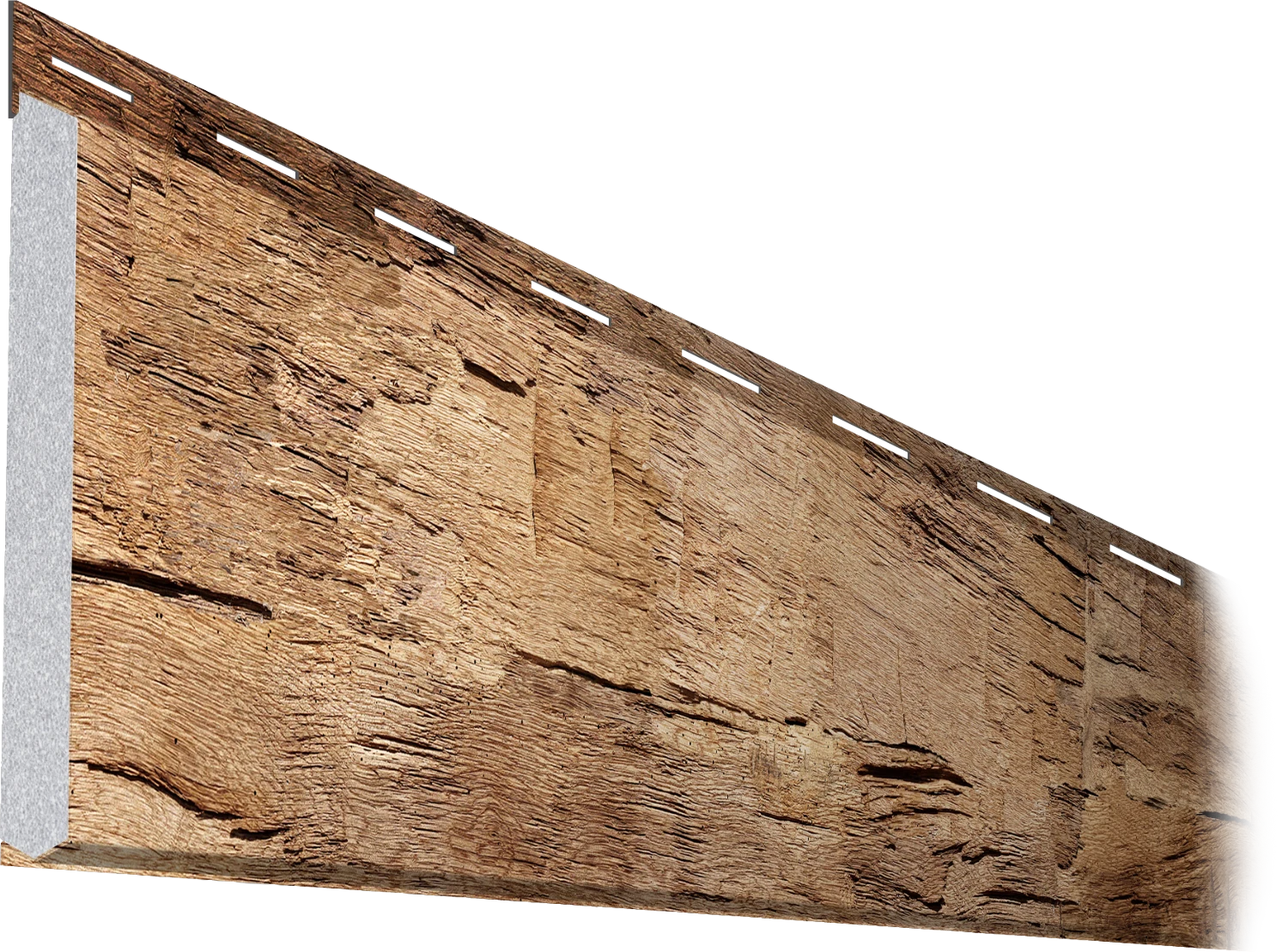
The Most Advanced Steel Siding On The Market
- 20 Year Fading & Chalking Warranty
- 50 Year Flaking & Peeling Warranty
- Lasts 40-60+ Years
- One Person Installation
Climate & Conditions Across Kentucky
All four Kentucky conditions run statewide, but the Appalachian east, the Bluegrass center, the Louisville corridor, and the western lowlands each carry them at different intensities and with different residential contexts.
Louisville and the Ohio River Corridor
Louisville is Kentucky's largest city and its most active re-siding market. The Ohio River valley geography keeps humidity elevated through a long season, and summer conditions in the city combine heat and moisture in a way that accelerates wood paint failure and drives the repainting cycle faster than the state's drier interior. Hail is active through the spring and early summer severe weather season, and Louisville has seen significant metro-wide hail events that generate large-scale re-siding demand across the suburban ring. Winters are cold with January lows averaging around 22 degrees. Termite pressure is Moderate throughout the metro and increases in the warmer southwestern counties. The Strengthen Kentucky Homes Program grants apply statewide, including every Louisville address.
Lexington and the Bluegrass Region
The Bluegrass Region sits at the center of the state and carries Kentucky's most temperate climate. Lexington and the surrounding horse-country communities have a residential character that runs from the historic downtown neighborhoods to the estate properties of the thoroughbred farms, and the appetite for premium exterior products in this market is driven by the same quality-conscious ownership culture that supports the horse-farm economy. Cold, hail, termite pressure, and summer humidity all apply here. The grant program applies to qualifying upgrades at Bluegrass addresses as well, and for estate and agricultural property owners making a long-horizon investment in exterior materials, Class 4 steel is the specification that covers every condition the Bluegrass produces.
Eastern Kentucky and the Appalachian Plateau
Eastern Kentucky sees the state's most severe winter conditions. Appalachian plateau terrain produces more pronounced temperature cycling than the lowlands, and the freeze-thaw windows that bookend the deep cold periods stress every material at joints and fasteners on a more frequent schedule than Louisville or Lexington experience. Coal-country communities carry a significant stock of older housing that was often built with minimal insulation, cycling through exterior replacement at a rate driven by age and climate stress. Vinyl in the mountain counties goes through cold-brittleness cycles more frequently than in the center of the state.
Western Kentucky
Western Kentucky from Bowling Green through Owensboro and Paducah toward the Mississippi River carries the state's warmest temperatures and its highest termite pressure. The climate here approaches the conditions of Tennessee and Missouri, with a longer warm season that keeps termite colonies active longer and a summer heat load that adds UV stress to exterior finishes. Hail is active through the western corridor, and the river-town communities carry an older residential character that generates consistent re-siding demand on the same schedule as Louisville and Lexington.
Need help finding an installer?
Why Steel Siding Is Right for Kentucky
Kentucky's four conditions each have a specific failure pattern in the materials most homes in the state currently wear, and each one has a direct answer in 26-gauge steel. Kentucky also has a state program that pays up to ten thousand dollars toward the cost of upgrading to a Class 4 impact-resistant installation.
The Strengthen Kentucky Homes Program is the product conversation that no other state has. It offers grants up to ten thousand dollars for impact-resistant upgrades meeting IBHS FORTIFIED standards. Class 4 is the impact resistance specification those standards require for exterior siding. Installing Class 4 steel at a Kentucky address means a homeowner can apply for a grant offsetting up to ten thousand dollars of the project cost while qualifying for the insurance premium discounts that Kentucky carriers offer for Class 4 exterior products. Both financial benefits stack on the same installation.
Cold and freeze-thaw cycling are the persistent mechanical argument, running hardest in the eastern mountains. Steel doesn't go brittle in cold and doesn't absorb moisture, so the freeze-thaw cycle doesn't crack it from the inside the way it cracks fiber cement edges or opens joints in painted wood. Slide-Lock keeps panels tight through Kentucky's full seasonal range without the fastener loosening that vinyl builds up through repeated cold cycles. Eastern Kentucky's mountain winters put more freeze-thaw cycles per year on exterior materials than the lowland markets, and steel handles each one the same way.
Termite pressure at Moderate to Heavy statewide means the zero-organic argument applies at every Kentucky address. Subterranean colonies are active in the soil through the warm months at every address in the state, running heaviest in the western and southern counties near the Tennessee line. Steel gives termites nothing to eat because there's no wood content in the panel, no food source at the wall level, and no moisture pathway a colony can exploit. That protection holds for the full 40 to 60-year life of the installation without retreatment.
Summer humidity from May through September adds the fourth argument. Louisville's Ohio River valley and the western lowlands carry the state's most persistent summer moisture. Steel doesn't absorb moisture, so paint bubbling and joint opening that wood accumulates through Kentucky's humid season isn't an issue. The factory finish holds without repainting across Kentucky's full seasonal range, including the combination of winter freeze-thaw and summer humidity that most accelerates paint failure on wood.
Product Specifications
| Spec | Value |
|---|---|
| Gauge | 26-gauge steel (~25% thicker than 29-gauge) |
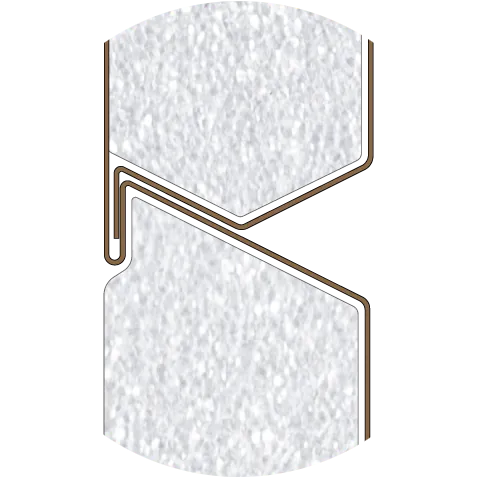
| Core | EPS foam, R-3.57 continuous insulation value |
| Fire Rating | Class A (highest available) |
| Impact Rating | Class 4 (highest available) |
| Colors | 50 solid colors (Sherwin Williams WeatherXL) |
| Wood Grain | 22 patterns (Kynar 500 resin) |
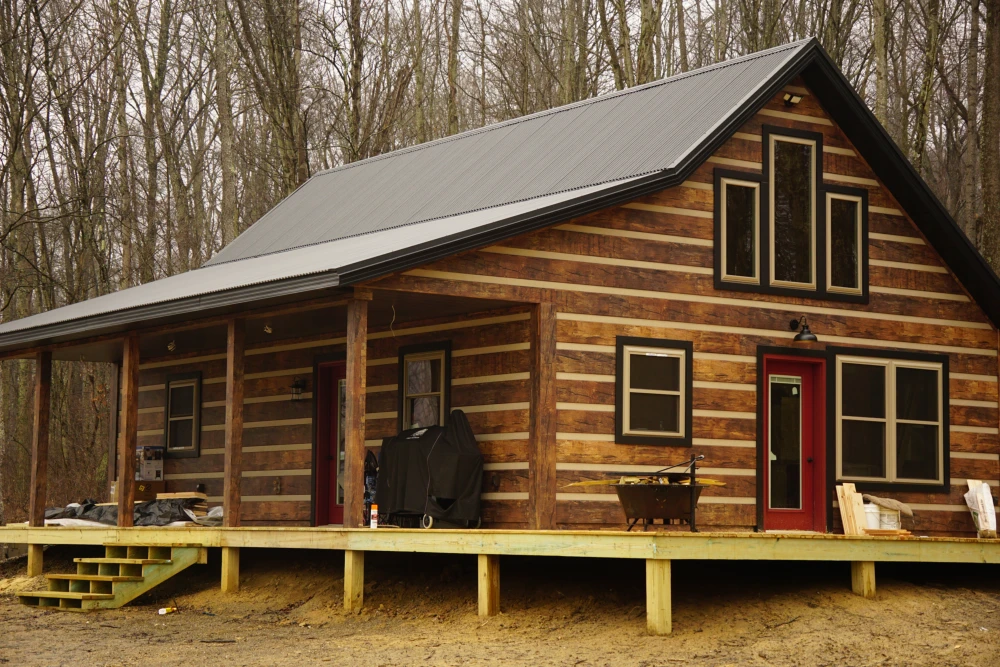
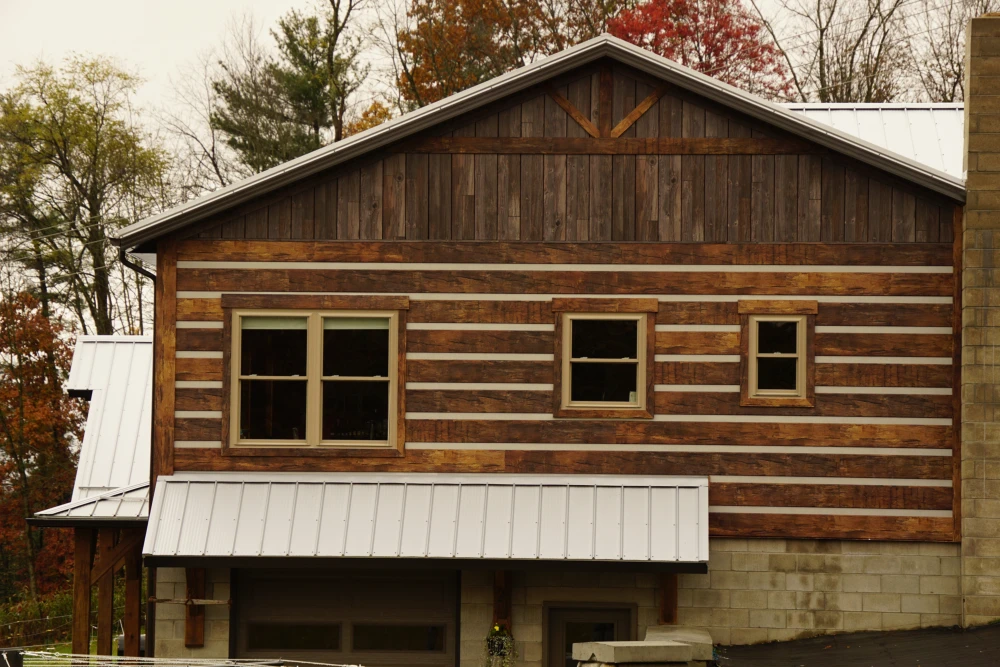
| Log Profile | Hand hewn log siding with chinking — 4 chinking colors |
| Warranty | 50-year peeling/flaking | 20-year fade/chalk |
| Panel | 10-inch planks, Slide-Lock system, one-person install |
| Base Coat | AZ55 Galvalume (zinc-aluminum alloy corrosion barrier) |
| Origin | New Philadelphia, Ohio — direct ship to all 49 states |
Hand Hewn Log Siding with Chinking in Kentucky
Kentucky's rural interior carries a genuine market for the hand hewn log profile. The agricultural and recreational acreages of the Appalachian foothills, the hunting and fishing properties of the western river counties, and the rural retreats across the Knobs and the Cumberland Plateau all have a vernacular where the hand hewn timber aesthetic fits the character of the land and the use of the property.
Real wood log siding in Kentucky deals with the state's full four-condition stack. Eastern mountain winters put freeze-thaw cycling on wood grain and joints through a longer cold season than the lowlands. Active hail through the spring and summer chips and splits exposed wood surfaces. Moderate to Heavy termite pressure means colonies in the soil are a persistent threat at every address through the warm months. High summer humidity keeps wood at elevated moisture content and accelerates the paint and stain failure cycle.
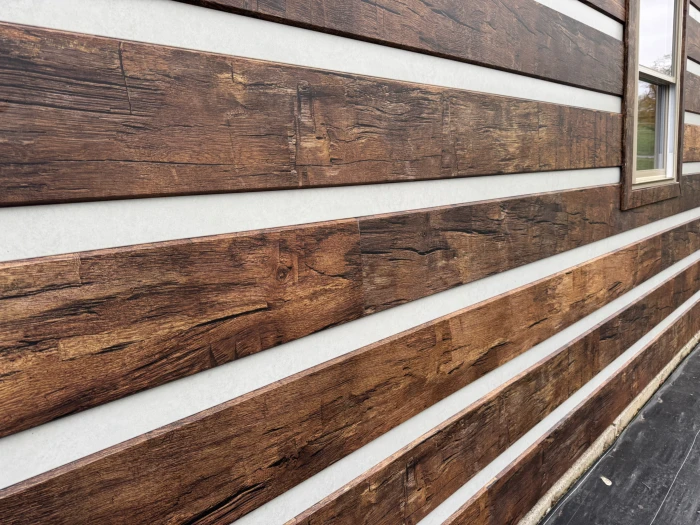
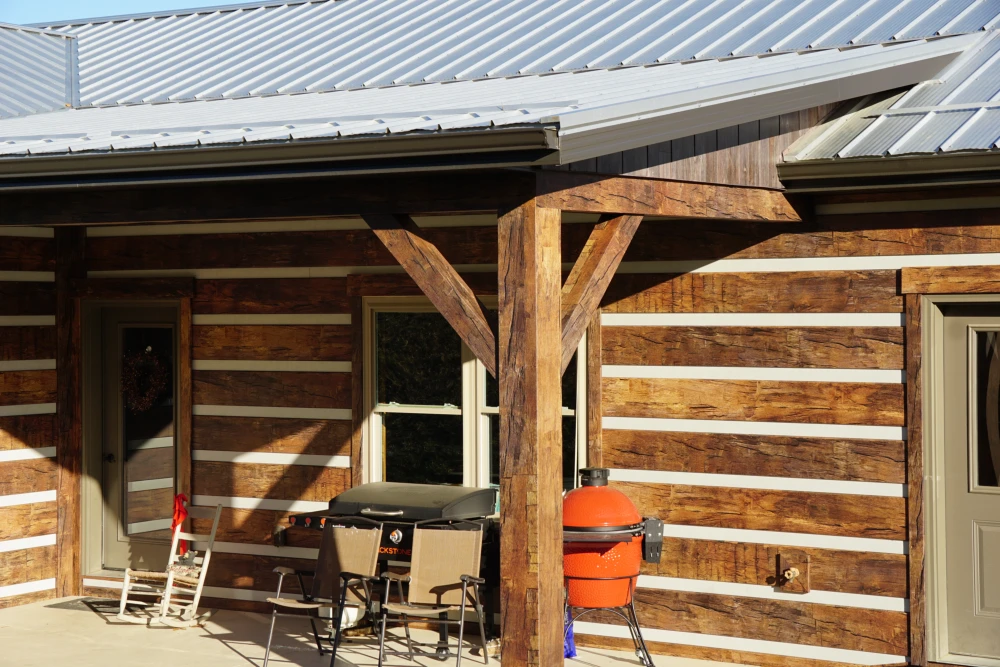
Hand hewn log siding with chinking in 26-gauge steel handles all four. Steel doesn't absorb moisture, so freeze-thaw cycling doesn't work into the panel the way it works into wood grain. Class 4 impact resistance holds through every hail event Kentucky produces. Steel gives termites nothing to eat at the wall level. The factory finish holds through Kentucky's humid season without the staining and sealing cycle real wood log siding demands. SteeLuxe is the only manufacturer making this product in steel.
Hand hewn log siding with chinking ships direct from New Philadelphia, Ohio to Kentucky projects. It's available in four chinking colors: Ash Gray, Charcoal, Clay, and Sandstone Tan, across all 22 wood grain patterns in the SteeLuxe line.
Ready to Transform Your Home With Hand-Hewn Log Cabin Siding?
Get the authentic hand-hewn cabin look with the chinking detail you love, and never think about maintenance again. SteeLuxe steel siding is insulated, fire-rated, hail-resistant, and built to last a lifetime. See it and feel it for yourself.
Steel Siding vs the Alternatives in Kentucky
Vinyl is the most common replacement siding on Kentucky homes from the last 40 years, and it fails here in two ways the state's climate makes consistent. Hail is the first problem: without Class 4 impact resistance, vinyl cracks and dents under the stone sizes Kentucky's spring severe weather season produces on a regular schedule, generating insurance claims in Louisville and the western corridor after most active hail years. Cold is the second failure mode, and below 20 degrees vinyl goes brittle. Eastern Kentucky's mountain winters push temperatures through that brittle range more often than in the lowland markets, and each winter cycle accumulates stress at fasteners and seams that builds into cracking and gap-opening over time.
Fiber cement performs better than vinyl in cold and handles impact better at smaller stone sizes, but Kentucky's climate exposes two specific weaknesses. Moisture absorption at cut edges is the first. Kentucky's freeze-thaw windows in the mountains and its prolonged humid season in the lowlands both keep moisture elevated, and fiber cement absorbs that moisture at cut edges and penetrations through wetting-and-drying cycles that eventually cause cracking and surface separation. Factory paint on fiber cement requires repainting on a 10 to 15-year cycle, a schedule that Kentucky's combination of freeze-thaw cold and summer humidity shortens in practice.
Wood siding is the historic material for Louisville's craftsman bungalows, the Bluegrass estate properties, and the vernacular housing across eastern Kentucky's older communities, and in some historic districts it may be required. In Kentucky's climate, wood maintenance runs on a 5 to 8-year repainting cycle driven by the combination of humid summers and freeze-thaw cycling. Louisville's Ohio River valley humidity is particularly hard on wood paint at joints and grain ends. Hail leaves inspection and repair work after every significant season. Termite pressure adds a soil-level threat at every address through the warm months. A wood-sided craftsman bungalow in Louisville has typically been repainted multiple times, with ongoing maintenance demands that compound across a 30-year ownership period.
Steel at 26-gauge carries the Class 4 impact rating that qualifies for Kentucky's grant program and ends the hail replacement cycle, handles freeze-thaw without going brittle or absorbing moisture, and gives termites nothing to eat at the wall level. For Kentucky homeowners making a 40 to 60-year siding decision, the combination covers every condition the state produces and connects to two financial benefits: the grant and insurance premium discounts.
Frequently Asked Questions
Q:What warranty does SteeLuxe steel siding carry?
Q:Can one person install SteeLuxe steel siding?
Q:What colors does SteeLuxe steel siding come in?
Q:Where is SteeLuxe manufactured and how does shipping work?
Q:What is the Strengthen Kentucky Homes Program and how does it connect to steel siding?
Q:Does Class 4 impact resistance reduce home insurance premiums in Kentucky?
Q:How does steel siding handle Kentucky's freeze-thaw cycling in the eastern mountains?
Q:What Kentucky cities does SteeLuxe serve?
Q:Does steel siding work on Louisville craftsman bungalows and Bluegrass estate properties?
Kentucky Cities & Regions We Serve
SteeLuxe ships from New Philadelphia, Ohio to residential and contractor projects across Kentucky. The Ohio manufacturing location keeps lead times short to Louisville and the northern Kentucky communities near Cincinnati, and the eastern mountain and western river communities ship direct without a distribution step.
Louisville and the Ohio River corridor make up the state's largest residential siding market. Re-siding demand in the metro is driven by the combination of active hail seasons, the wood-maintenance burden that Louisville's humid summers accelerate, and homeowners who qualify for the Strengthen Kentucky Homes Program grant of up to ten thousand dollars when upgrading to a Class 4 impact-resistant exterior product.
Lexington and the Bluegrass Region carry the state's most distinctive premium residential market. The horse-farm estate communities, the Lexington historic neighborhoods, and the rural Bluegrass properties represent the market segment with the strongest appetite for premium low-maintenance exterior products that hold their finish across Kentucky's seasonal range.
Northern Kentucky communities near Covington, Florence, and the Cincinnati metro share Louisville's conditions with different market character. Eastern Kentucky's Appalachian communities carry the state's most demanding cold. Western Kentucky from Bowling Green through Owensboro and Paducah carries the warmest climate and highest termite pressure. Full city pages with local installer contacts and current pricing are available for Louisville, KY.
More Kentucky cities are listed below:
Get a Quote for Steel Siding in Kentucky
SteeLuxe is manufactured in New Philadelphia, Ohio and ships direct. Whether you are planning a full re-siding project or exploring options, we can get you pricing, color samples, and a list of installers in your area.