
Steel Siding & Hand Hewn Log Siding in Iowa
Steel Siding in Iowa
Steel siding in Iowa isn't a new idea. Iowa farmers figured out long ago that it holds up to hail, cold, and weather without demanding anything back, which is why steel has covered Iowa barns and farm outbuildings for generations. The same material logic that made steel the standard for Iowa agricultural buildings applies directly to Iowa homes, and more Iowa homeowners are making that connection now that residential steel siding is available in the profiles, colors, and finishes that match how houses actually look.
Iowa averages 100 to 130 significant hail events per year, putting it consistently among the top hail states in the country. Thunderstorms build over the Plains and track across Iowa from May through August, dropping hailstones that dent, crack, and chip the siding on anything that isn't rated for the impact. Class 4 is the highest impact resistance rating available for exterior siding, and it's the category Iowa insurance carriers recognize when calculating premium discounts for hail-resistant products. Steel siding at Class 4 takes the two-inch steel ball drop test without cracking or fracturing. Vinyl at the same hail size dents, cracks, or shatters depending on temperature. Fiber cement chips at the edges and face.
Iowa winters start hard and stay that way from November through March. January averages 7 degrees statewide, with the northern tier near the Minnesota border running colder. Freeze-thaw cycling is relentless through late fall and early spring, when temperatures cross the freezing point repeatedly in the same week. Vinyl goes brittle below 20 degrees and loses the ability to flex and absorb hail impact when a storm hits in October or April, right at the edges of Iowa's hail season. Steel handles cold and hail independently of temperature.
Termite pressure in Iowa is classified at Moderate to Heavy across the southern two-thirds of the state, covering the Des Moines metro, the Quad Cities corridor along the Mississippi, and most of the agricultural counties between them. Wood siding in these areas is a permanent food source for the colonies working in the soil, and chemical soil treatments don't protect the siding itself. Steel gives termites nothing to eat anywhere in the panel.
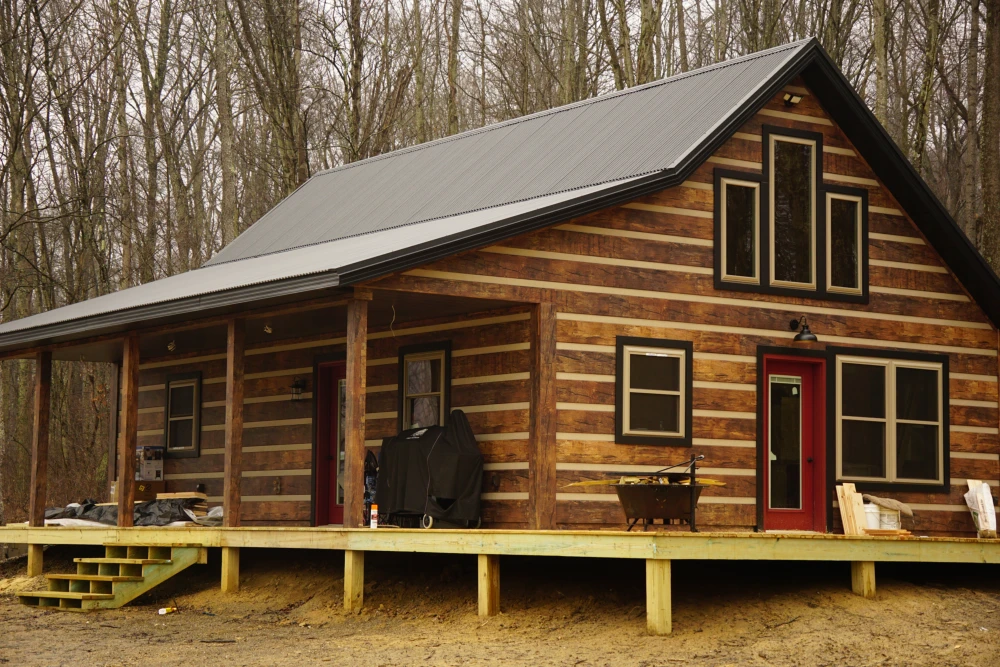
Wood grain siding in the 22 patterns SteeLuxe manufactures fits the Iowa residential landscape naturally. Craftsman bungalows in Des Moines and Cedar Rapids, four-square homes in the older river towns, cape cod suburbs around the metro rings, and the farmhouse vernacular that defines rural Iowa all have their counterpart in the SteeLuxe wood grain line. The finish holds without repainting through Iowa's cold winters, active hail season, and humid summers.
Iowa's four distinct markets each carry the conditions at different intensities and with different product conversations. Des Moines and the central corridor, the Quad Cities and the Mississippi River communities, the northwest and the northern tier, and the rural agricultural interior each get their own breakdown in the sections below.
The Most Advanced Steel Siding On The Market
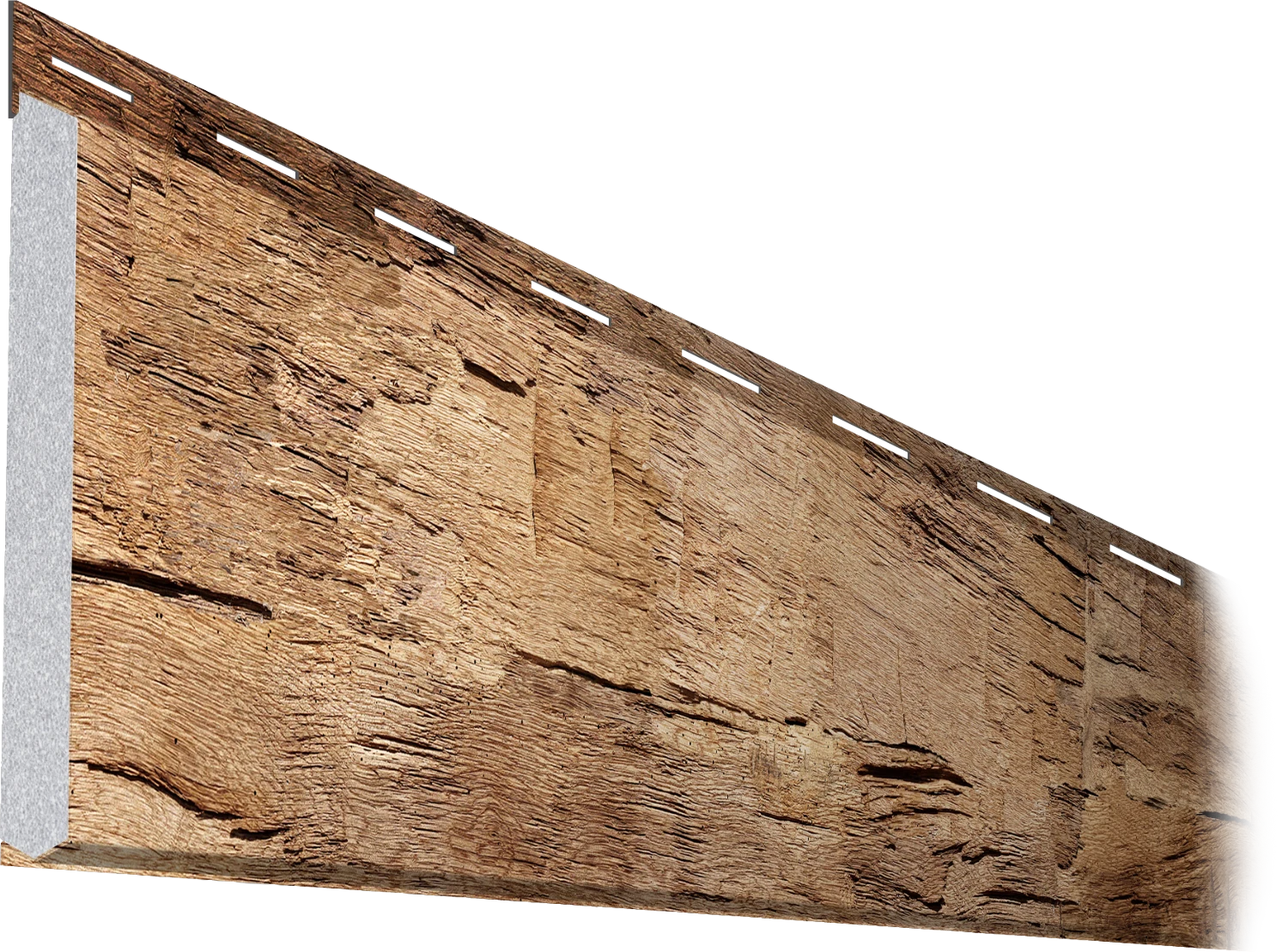
- 20 Year Fading & Chalking Warranty
- 50 Year Flaking & Peeling Warranty
- Lasts 40-60+ Years
- One Person Installation
Climate & Conditions Across Iowa
Hail and cold are the statewide conditions that run through every Iowa market. Termite pressure and humidity vary by region, but no part of Iowa escapes either the hail corridor or the winter.
Des Moines and the Central Corridor
Des Moines is Iowa's largest residential siding market. The metro sits squarely in Iowa's most active hail zone, with storms tracking across the central counties from spring through late summer. Winters run cold but not as extreme as the northern tier, with January lows averaging around 10 degrees. Termite pressure is Moderate to Heavy throughout the metro and the suburban ring counties. Summer humidity runs high through July and August and adds a second seasonal stress on exterior materials. The re-siding market here is large, driven by aging vinyl on homes built from 1960 through 1990 and a growing number of homeowners who've had hail damage claims and are making material upgrades at the same time.
The Quad Cities and the Mississippi River Corridor
Davenport, Bettendorf, and the Iowa communities of the Quad Cities metro sit along the Mississippi River and carry the state's highest termite pressure, running at the upper end of the Moderate to Heavy classification. The river corridor's moisture and soil conditions favor subterranean termite activity more than the drier interior. Hail is active through the same May through August season that hits the rest of the state, and the dense older housing stock in the Quad Cities carries significant wood siding that is both aging and in regular contact with the termite pressure working in the soil.
Northwest Iowa and the Northern Tier
Northwest Iowa sees some of the state's highest hail frequency. Thunderstorms that build over the Dakotas and Nebraska track through the Sioux City corridor and across the northwest counties with regularity, and the flat terrain gives storms nothing to slow them down before they reach residential areas. Winters in the north run harder than the central corridor, with January lows near the Minnesota border regularly dropping below zero. The combination of severe cold and active hail produces the most demanding conditions in the state for siding durability.
Rural Iowa and Agricultural Communities
Iowa's agricultural interior carries the farmhouse and rural vernacular that is the most natural fit for residential steel siding in the state. Generations of Iowa farmers have used steel on their barns, machine sheds, and outbuildings because it holds up without maintenance and outlasts every other material in the same conditions their homes face. The transition from steel farm buildings to steel residential siding is a short conversation in rural Iowa, where the material's performance record is visible on every property along the road.
Need help finding an installer?
Why Steel Siding Is Right for Iowa
Iowa's four conditions each have a specific failure point in the materials most Iowa homes currently wear, and each one has a direct answer in 26-gauge steel.
Hail is the lead argument in Iowa, and Class 4 is the answer. Iowa averages 100 to 130 significant hail events per year. Class 4 is the ceiling of the IBHS impact classification system, and a panel at that rating takes a two-inch steel ball dropped from 20 feet without cracking, splitting, or chipping. Iowa insurance carriers recognize Class 4 for premium discounts on hail-exposed properties. For a Des Moines homeowner who has already filed one hail damage claim on vinyl siding, the argument for upgrading to Class 4 at the next replacement is straightforward.
Cold winters add the second condition. Iowa's freeze-thaw cycle from November through April stresses every material that expands and contracts through the temperature swings. Below 20 degrees, vinyl goes brittle and loses the flexibility it needs to handle hail impact, which means October and April hailstorms hit vinyl panels that are already at their most vulnerable. Steel handles cold and hail at any temperature because its response to impact doesn't change with the thermometer.
Termite pressure at Moderate to Heavy across the southern two-thirds of the state is the third argument. Subterranean colonies are active in the soil through the warm months, and wood siding gives them direct access to food at the wall level. Chemical soil treatments protect the soil perimeter but don't extend protection to the siding material itself. Steel gives termites nothing to eat and holds that protection for the full 40 to 60-year life of the panel without retreatment.
Summer humidity rounds out the four conditions, running hard from June through August in the Des Moines and Mississippi River corridors. The moisture load that comes with it causes paint on wood siding to bubble and peel on a 5 to 8-year cycle in the most humid parts of the state. Steel doesn't absorb moisture. The factory finish holds without repainting, and the 26-gauge panel holds its shape and size through Iowa's wide seasonal temperature range.
Product Specifications
| Spec | Value |
|---|---|
| Gauge | 26-gauge steel (~25% thicker than 29-gauge) |
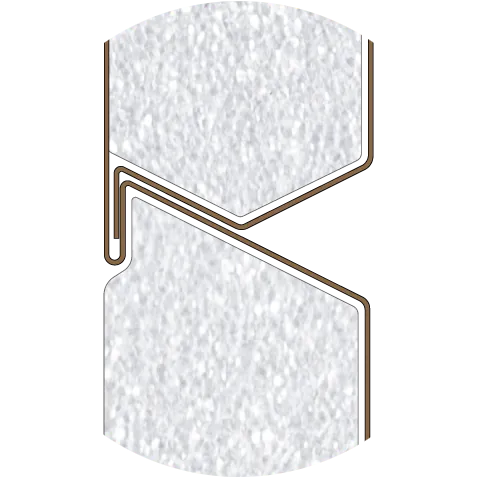
| Core | EPS foam, R-3.57 continuous insulation value |
| Fire Rating | Class A (highest available) |
| Impact Rating | Class 4 (highest available) |
| Colors | 50 solid colors (Sherwin Williams WeatherXL) |
| Wood Grain | 22 patterns (Kynar 500 resin) |
| Log Profile | Hand hewn log siding with chinking — 4 chinking colors |
| Warranty | 50-year peeling/flaking | 20-year fade/chalk |
| Panel | 10-inch planks, Slide-Lock system, one-person install |
| Base Coat | AZ55 Galvalume (zinc-aluminum alloy corrosion barrier) |
| Origin | New Philadelphia, Ohio — direct ship to all 49 states |
Hand Hewn Log Siding with Chinking in Iowa
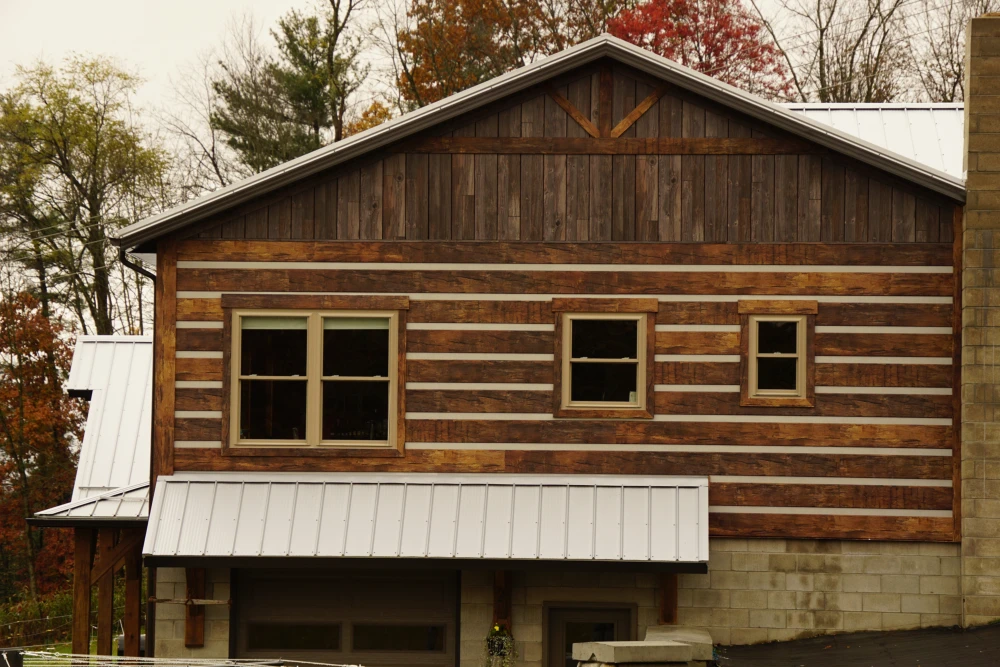
Iowa's rural and small-town character carries a genuine market for the log and timber profile. Hunting properties and recreational retreats in the timbered river valleys of northeast Iowa, rural acreages across the interior, and properties along the Missouri River bluffs in the west all carry a vernacular where the hand hewn log profile fits the landscape and the use of the property.
Real wood log siding in Iowa faces the same hail, cold, and termite conditions that defeat other wood products in this climate. Iowa's hail season drops stones that split and crack exposed wood grain. Freeze-thaw cycling works moisture into wood joints and grain, accelerating surface checking and eventual rot. Moderate to Heavy termite pressure in the southern counties means colonies in the soil are a permanent threat at every wood installation.
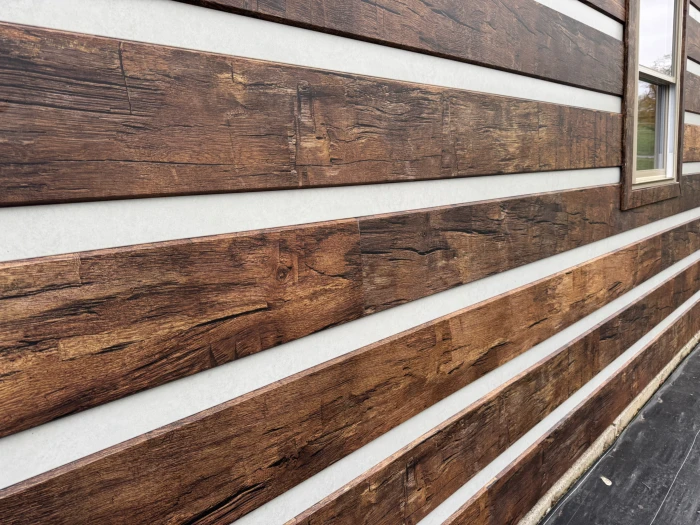
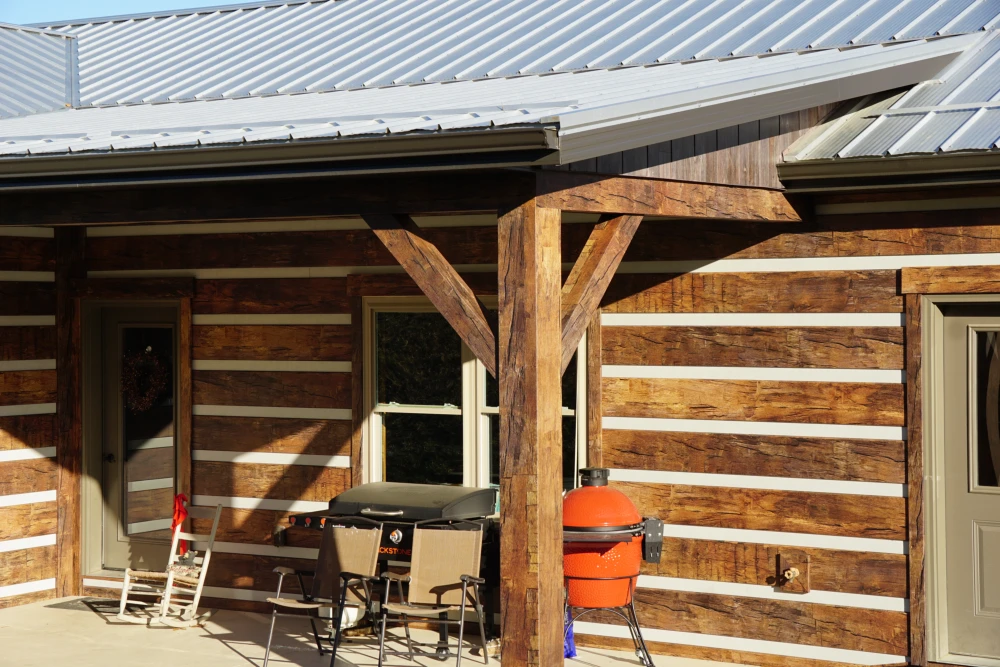
Hand hewn log siding with chinking in 26-gauge steel delivers the authentic timber look without those failure modes. Class 4 impact resistance handles Iowa hail regardless of size or season. The steel core doesn't absorb moisture, so freeze-thaw cycling doesn't crack the panel from the inside. Steel gives termites nothing to eat at the wall level. SteeLuxe is the only manufacturer making this product in steel.
Hand hewn log siding with chinking ships direct from New Philadelphia, Ohio to Iowa projects. It's available in four chinking colors: Ash Gray, Charcoal, Clay, and Sandstone Tan, across all 22 wood grain patterns in the SteeLuxe line.
Ready to Transform Your Home With Hand-Hewn Log Cabin Siding?
Get the authentic hand-hewn cabin look with the chinking detail you love, and never think about maintenance again. SteeLuxe steel siding is insulated, fire-rated, hail-resistant, and built to last a lifetime. See it and feel it for yourself.
Steel Siding vs the Alternatives in Iowa
Vinyl is the most common replacement siding on Iowa homes from the last 40 years, and it fails here in two specific ways that Iowa's climate makes unavoidable. Cold is the first. Below 20 degrees, vinyl goes brittle and cracks under hail impact that warmer vinyl would flex through. Iowa's hail season doesn't stop before the cold arrives: October and April storms hit panels that are already at their most vulnerable, and November and March cold snaps follow hail windows closely enough that the brittleness problem is a real seasonal overlap. Heat is the second: Iowa's summer temperatures push vinyl through expansion and contraction cycles that loosen fasteners over the years and cause surface fading that can't be addressed without full replacement.
Fiber cement performs better than vinyl in impact resistance and doesn't go brittle in cold the same way, but Iowa's hail produces stones that chip and fracture fiber cement at panel edges and face surfaces, and those chips require panel replacement rather than repair. Moisture absorption at cut edges is the second problem. Iowa's freeze-thaw cycle works moisture into cut edges and penetrations in fiber cement, and repeated freezing and thawing causes edge separation and surface cracking over time. Add a repainting requirement every 10 to 15 years and the long-term cost comparison with steel shifts considerably.
Wood siding is the historically correct material for Iowa craftsman bungalows and farmhouses, and in some communities it's the expected look. In Iowa's climate, wood maintenance runs on a 5 to 8-year repainting cycle even in areas without the termite pressure, and that cycle shortens in the Quad Cities and southern Iowa where Moderate to Heavy termite activity means colonies in the soil are working at the foundation level continuously. Wood also takes hail damage that requires inspection and spot repair after every significant storm. A wood-sided Iowa farmhouse built in 1930 has usually been repainted six or eight times and may have had sections replaced entirely.
Steel at 26-gauge carries the Class 4 impact rating that vinyl can't reach, handles Iowa cold without going brittle, resists moisture absorption at cut edges that cracks fiber cement, and gives termites nothing to eat at the wall level. For Iowa homeowners, the math on a 40 to 60-year installation without a repainting schedule makes the case on its own.
Frequently Asked Questions
Q:What warranty does SteeLuxe steel siding carry?
Q:Can one person install SteeLuxe steel siding?
Q:What colors does SteeLuxe steel siding come in?
Q:Where is SteeLuxe manufactured and how does shipping work?
Q:Does Class 4 impact resistance actually reduce home insurance premiums in Iowa?
Q:How does steel siding handle Iowa's freeze-thaw cycling and cold winters?
Q:Is steel siding a good fit for Iowa farmhouses and rural properties?
Q:What Iowa cities does SteeLuxe serve?
Q:Does steel siding make sense on Iowa craftsman bungalows and older homes in the city?
Iowa Cities & Regions We Serve
SteeLuxe ships from New Philadelphia, Ohio to residential and contractor projects across Iowa. Lead times to the Des Moines metro and the Quad Cities are consistent, and rural acreage and small-town projects ship direct with no distribution step.
Des Moines and the central Iowa metro counties are the state's largest residential siding market. Re-siding volume here is driven by aging vinyl on post-war housing stock and a growing segment of homeowners upgrading to Class 4 material after hail damage claims on the previous installation.
Cedar Rapids, Iowa City, and the Corridor region make up the state's second-largest metro market. The river towns along the Cedar carry older craftsman and four-square housing that cycles through re-siding more frequently than newer suburban construction, and both cities sit in Iowa's active hail zone.
The Quad Cities metro, including Des Moines, IA and the surrounding communities along the Mississippi, carries the state's highest termite pressure alongside the standard Iowa hail and cold conditions. Sioux City and the northwest corridor carry some of the state's highest hail frequency and the most demanding cold.
Full city pages with local installer contacts and current pricing are available for Des Moines, IA. More Iowa cities are listed below:
Get a Quote for Steel Siding in Iowa
SteeLuxe is manufactured in New Philadelphia, Ohio and ships direct. Whether you are planning a full re-siding project or exploring options, we can get you pricing, color samples, and a list of installers in your area.