
Steel Siding & Hand Hewn Log Siding in Idaho
Steel Siding in Idaho
Steel siding in Idaho answers two conditions that the state's geography makes unavoidable: wildfire and cold. Over 38 percent of Idaho is managed federal forestland, and the Sawtooth, Selway-Bitterroot, and Frank Church River of No Return wildernesses place virtually every mountain community in high-risk fire terrain. The Boise foothills are a documented wildfire interface zone where suburban neighborhoods sit directly at the edge of the sagebrush and dry grass that carry fire into residential areas each summer. Class A is the highest fire rating available for exterior siding, and it means a steel panel won't ignite from flying embers, won't spread flame, and won't add to the fire load when wind-driven embers reach the wall.
Cold is the second condition. Idaho winters run hard across the mountain regions and the northern Panhandle, with January lows averaging 21 degrees statewide and the communities around Coeur d'Alene, Sandpoint, and the upper Snake River plain running significantly colder. Freeze-thaw cycling through late fall and early spring stresses every material that expands and contracts through the temperature swings. Steel handles cold without losing its structural integrity, and the Slide-Lock panel system keeps panels tight through Idaho's full seasonal range without the fastener-loosening that vinyl accumulates after years of thermal cycling.
Idaho's residential identity is built around log and timber architecture in a way that few other states match. Mountain resort communities in the Sawtooth Valley, the Sun Valley corridor, the lake communities of northern Idaho, and the rural valleys throughout the state have constructed their residential character around the log cabin and timber frame vernacular. That's not a stylistic preference layered over a neutral baseline. It's what Idaho homes look like, and new construction in these communities is expected to follow that profile. Wood grain siding in the 22 patterns SteeLuxe manufactures covers that aesthetic without the fire risk that real wood carries in a wildfire-active state.
Boise and the Treasure Valley represent Idaho's largest residential market. The Boise North End, with its craftsman bungalows and established tree cover, sits close enough to the foothills that wildfire discussions are part of the homeowner conversation. Eagle, Meridian, and newer suburban development pushing toward the foothills carry an even more direct interface exposure. For these homeowners, Class A siding is an insurance-relevant specification, not just a preference. Insurance carriers in Idaho are actively pricing wildfire risk into premiums for properties in and near the foothills interface.
Northern Idaho's Panhandle, including Coeur d'Alene, Sandpoint, and Bonners Ferry, combines the state's most extreme cold with dense forested terrain that carries some of the highest wildfire risk in the Pacific Northwest. The lake communities here have a strong second-home and resort market with a preference for exterior materials that hold condition without annual maintenance through Idaho's hard winters and active fire seasons.
Four Idaho markets each carry the conditions at different intensities. The Treasure Valley and Boise foothills, the Snake River Plain, the Panhandle and northern lake communities, and the mountain resort valleys each get their own breakdown below.
The Most Advanced Steel Siding On The Market
- 20 Year Fading & Chalking Warranty
- 50 Year Flaking & Peeling Warranty
- Lasts 40-60+ Years
- One Person Installation
Climate & Conditions Across Idaho
Wildfire risk and cold winters are present across all four Idaho regions, but each carries them at different intensities and with different product conversations attached.
The Treasure Valley: Boise, Nampa, and Meridian
Boise's foothills form a direct wildfire interface where suburban development meets the sagebrush and dry grass terrain that carries fire quickly under the hot, dry conditions Idaho's summers produce. Eagle and Meridian have pushed residential development further into that interface over the past decade, and the combination of hot dry summers, low humidity, and proximity to both grass and timber fire fuel makes Class A siding a practical specification for any Boise-area property within a few miles of the foothills. Winters in the Treasure Valley are milder than the mountain communities, with January lows averaging around 25 degrees, but freeze-thaw cycling through March and November still stresses siding at fasteners and joints over time.
The Snake River Plain: Twin Falls, Pocatello, Idaho Falls
The Snake River Plain stretches southeast from the Treasure Valley through Twin Falls, Pocatello, and Idaho Falls toward the Wyoming border. Winters get progressively harder moving east, with Idaho Falls and Pocatello running colder than Boise by 5 to 10 degrees on average January lows. Wildfire risk is active throughout the corridor from the sagebrush steppe that covers the plain and from the timber terrain of the surrounding ranges. The region is less densely developed than the Treasure Valley but carries a consistent residential market for steel siding where cold and wildfire both factor into the product conversation.
Northern Idaho and the Panhandle
Coeur d'Alene, Sandpoint, and the communities of the Idaho Panhandle see the state's most extreme winters and some of the most significant forest fire exposure in the Pacific Northwest. The dense cedar and pine forests of northern Idaho carry Very High wildfire risk ratings, and major fire events have burned through residential and resort areas in this region in recent decades. January lows in the Panhandle regularly drop well below zero at higher elevations, and the combination of severe cold and active forest fire risk makes the Class A plus cold-performance argument more complete here than anywhere else in the state.
Mountain Resort Valleys
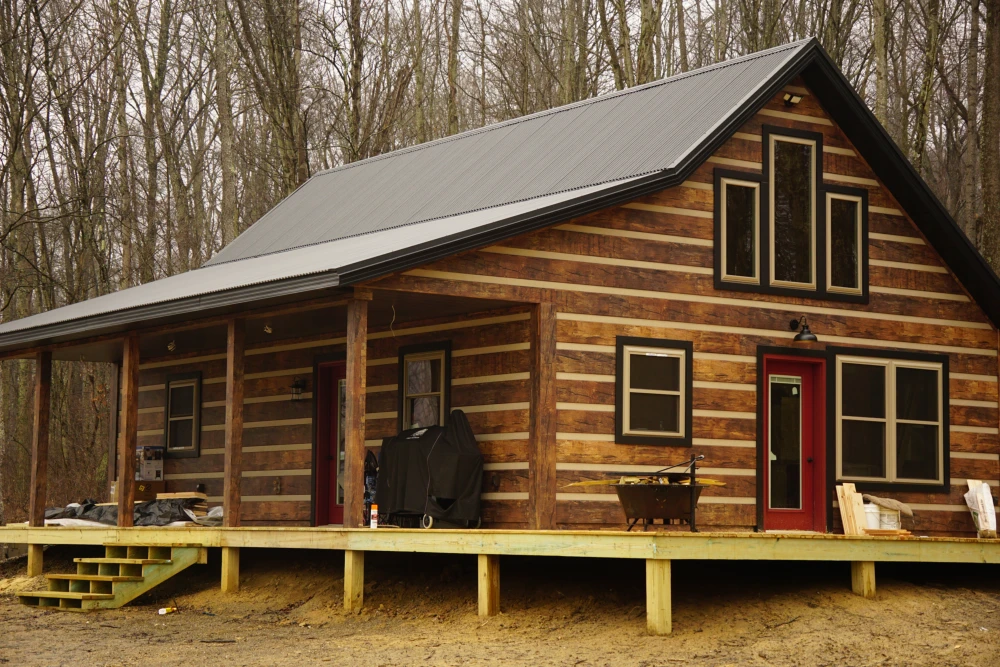
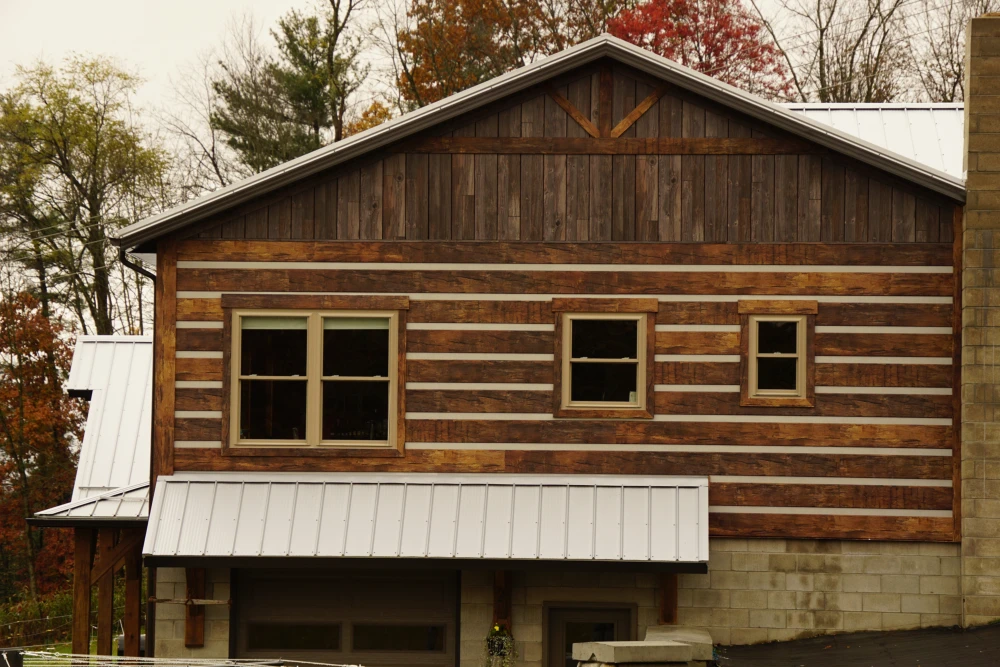
Sun Valley, the Sawtooth Valley, McCall, and the Stanley Basin carry Idaho's most distinct residential identity: log and timber architecture that the resort and recreation economy has built its aesthetic around for a century. New construction in these communities is expected to follow the log profile, and the wildfire risk surrounding them is very high. Steel in the hand hewn log siding with chinking profile delivers the look these communities require along with the Class A fire rating that wood log siding can't provide.
Need help finding an installer?
Why Steel Siding Is Right for Idaho
Idaho's two primary conditions each have a documented failure pattern in the materials most homes in the state currently wear, and each one has a direct answer in 26-gauge steel.
Wildfire is the lead argument for most Idaho markets. Class A is the highest fire rating available for exterior siding. It means the panel won't ignite from flying embers, won't spread flame across the surface, and won't contribute to the fire load when a wildfire pushes into a residential neighborhood. Wood and vinyl both fail this test in their own ways: wood catches fire directly, vinyl melts and contributes fuel when exposed to direct flame. For any Idaho homeowner within fire interface terrain, the Class A rating is the specification that matters most. In Boise's foothills corridor and in the mountain resort communities, that conversation is already happening at the insurance carrier level.
Cold and freeze-thaw cycling are the second argument. Mountain winters produce the full range of conditions that stress exterior materials at fasteners, joints, and seams. Steel doesn't absorb moisture, so there's nothing inside the panel to freeze and expand during Idaho's freeze-thaw windows. The 26-gauge thickness holds its shape and size from summer highs in the low 90s in the Treasure Valley to single-digit lows in the Panhandle. Slide-Lock keeps panels mechanically interlocked through the full seasonal range without accumulating the fastener loosening that thermal cycling causes in vinyl over years of use.
The log and timber aesthetic requirement in Idaho's resort communities adds a third argument specific to this state. Many Idaho mountain communities either require or strongly expect the log profile for new construction and re-siding projects, and the only material that delivers a Class A fire-rated log profile in a low-maintenance panel is steel. Wood log siding carries no Class A fire rating and requires regular staining and sealing in Idaho's dry, UV-intense mountain environment. Steel delivers the profile with the fire rating and without the maintenance schedule.
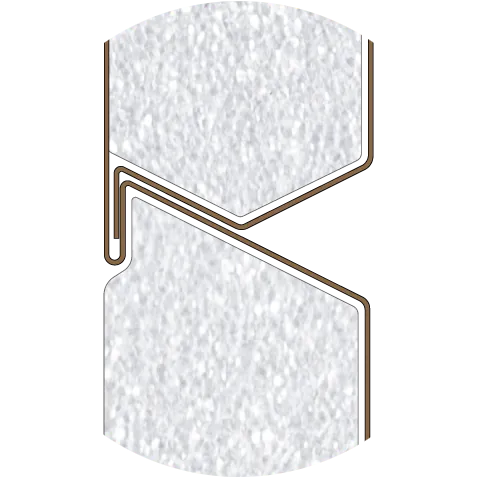
The 26-gauge thickness also matters in Idaho's temperature range. Thicker steel holds its shape better through the wide swings Idaho produces, from hot dry Treasure Valley summers to Panhandle winters that drop well below zero. The EPS foam core adds R-3.57 insulation value, which contributes meaningfully in mountain homes where the altitude and cold both increase heating demand.
Product Specifications
| Spec | Value |
|---|---|
| Gauge | 26-gauge steel (~25% thicker than 29-gauge) |
| Core | EPS foam, R-3.57 continuous insulation value |
| Fire Rating | Class A (highest available) |
| Impact Rating | Class 4 (highest available) |
| Colors | 50 solid colors (Sherwin Williams WeatherXL) |
| Wood Grain | 22 patterns (Kynar 500 resin) |
| Log Profile | Hand hewn log siding with chinking — 4 chinking colors |
| Warranty | 50-year peeling/flaking | 20-year fade/chalk |
| Panel | 10-inch planks, Slide-Lock system, one-person install |
| Base Coat | AZ55 Galvalume (zinc-aluminum alloy corrosion barrier) |
| Origin | New Philadelphia, Ohio — direct ship to all 49 states |
Hand Hewn Log Siding with Chinking in Idaho
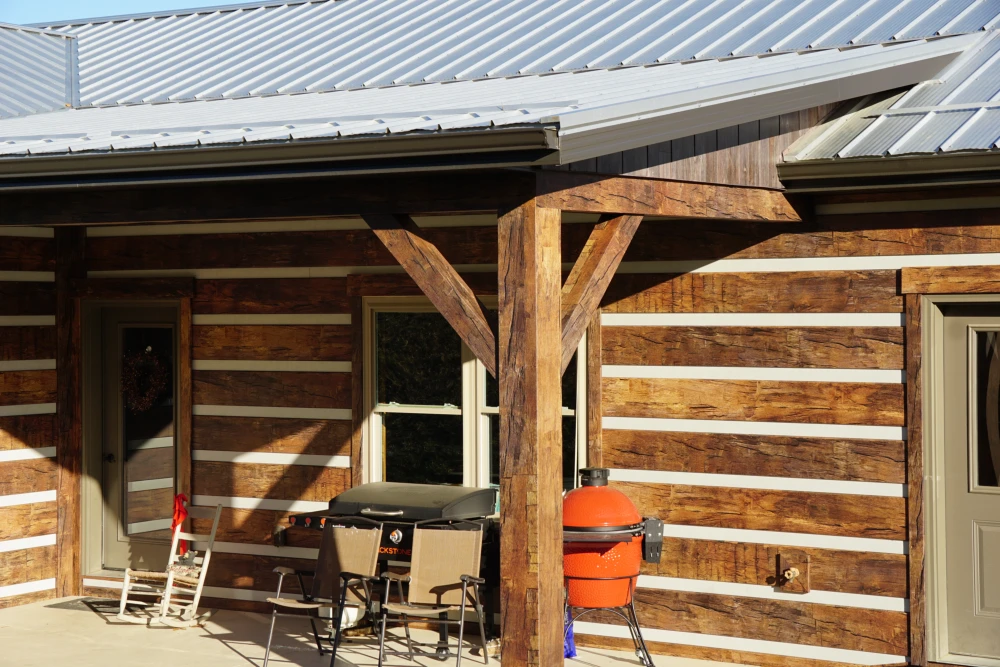
Idaho has the strongest case for hand hewn log siding with chinking of any state in the system. The log and timber vernacular isn't a regional accent here. It's the defining residential aesthetic of the mountain communities that make up much of Idaho's resort and second-home market. Sun Valley, McCall, Cascade, the Sawtooth Valley, and the lake communities of the Panhandle have all built their residential identity around the log profile, and HOAs and local character in these communities actively hold new construction to that standard.
The problem with real wood log siding in Idaho is fire. These same communities sit inside or adjacent to very high wildfire risk terrain. Wood log siding carries no Class A fire rating, burns directly when embers reach the wall, and in a wildfire event becomes part of the fuel load rather than a barrier. Idaho has lost structures to wildfire in resort areas precisely because the log aesthetic and the fire risk arrive together, and there has historically been no solution that handles both.
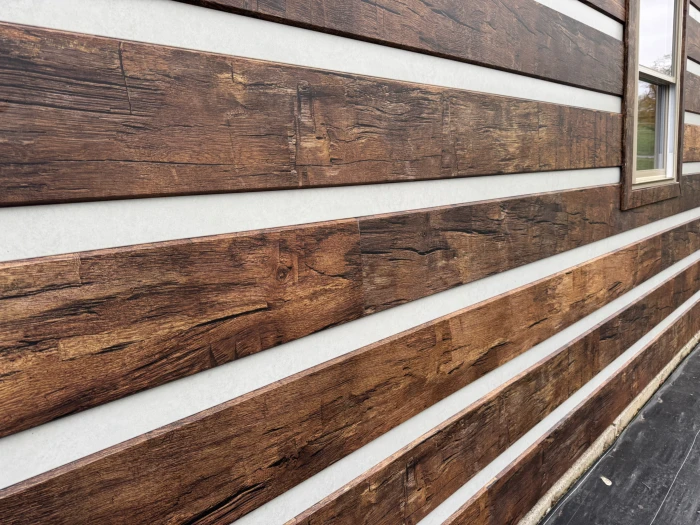
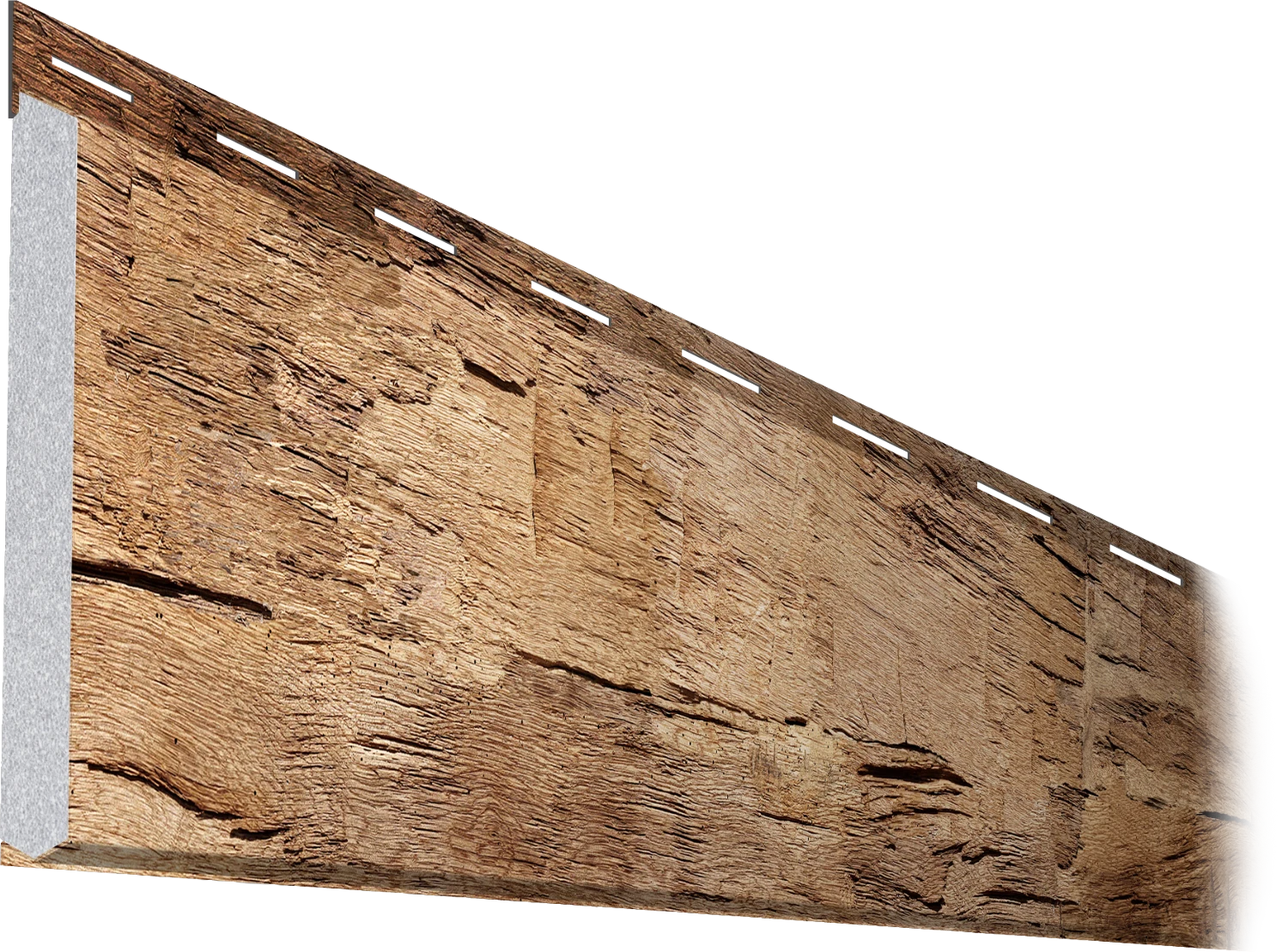
Hand hewn log siding with chinking in 26-gauge steel handles both at once. The hand hewn texture reads as authentic milled log siding from the street. Chinking comes in four colors: Ash Gray, Charcoal, Clay, and Sandstone Tan. The steel core carries a Class A fire rating that no wood log siding product can match. SteeLuxe is the only manufacturer making this panel in steel.
Hand hewn log siding with chinking ships direct from New Philadelphia, Ohio to Idaho projects. It's available across all 22 wood grain patterns in the SteeLuxe line, covering the full range of tones Idaho mountain architecture uses.
Ready to Transform Your Home With Hand-Hewn Log Cabin Siding?
Get the authentic hand-hewn cabin look with the chinking detail you love, and never think about maintenance again. SteeLuxe steel siding is insulated, fire-rated, hail-resistant, and built to last a lifetime. See it and feel it for yourself.
Steel Siding vs the Alternatives in Idaho
Vinyl is common on Idaho homes built from the 1970s through the 2000s in the Treasure Valley and the Snake River Plain, and it has two specific problems in this state. Cold is the first and most consistent: below 20 degrees, vinyl goes brittle and loses the ability to flex under stress from wind and temperature change. Idaho's mountain winters and Panhandle cold regularly push temperatures well below that threshold, and each winter cycle that vinyl spends in that brittle range accumulates stress at fasteners and seams. Fire is the second problem. Vinyl has no fire rating, melts in direct flame, and in a wildfire it contributes fuel rather than resisting the fire. For any Idaho property within wildfire interface terrain, vinyl is a liability at the wall level.
Fiber cement performs better than vinyl in cold conditions and holds its shape without going brittle, but it carries two Idaho-specific problems. Moisture absorption at cut edges and penetrations is the first. Idaho's freeze-thaw cycle works moisture into cut edges, and repeated freezing and thawing causes edge separation and surface cracking over time, particularly in the mountain communities where the temperature crosses freezing dozens of times each winter. The second problem is fire resistance. Fiber cement is classified as non-combustible but does not carry a Class A fire rating that matches steel's performance in a wildfire ember exposure scenario. Insurance carriers in Idaho's wildfire interface zones increasingly distinguish between products by fire rating category.
Wood siding is the most complicated comparison in Idaho because the log and timber aesthetic it represents is genuinely valued in this state. The look isn't the problem. What happens to wood in a wildfire is. Wood catches fire directly when embers reach the surface, and in a wildfire event wood siding accelerates the home's ignition rather than delaying it. Idaho's mountain communities have watched that happen to structures in fire events over the past two decades. Beyond fire, wood log siding in Idaho's dry, high-UV mountain environment requires consistent staining and sealing to maintain the profile, typically every 3 to 5 years at altitude.
Steel delivers the Class A fire rating that vinyl can't provide, handles Idaho's cold without going brittle, resists moisture at cut edges that cracks fiber cement, and offers the only fire-rated log profile available for Idaho's mountain communities where the timber aesthetic and the wildfire risk arrive together on the same property.
Frequently Asked Questions
Q:What warranty does SteeLuxe steel siding carry?
Q:Can one person install SteeLuxe steel siding?
Q:What colors does SteeLuxe steel siding come in?
Q:Where is SteeLuxe manufactured and how does shipping work?
Q:Is SteeLuxe steel siding rated for Idaho's wildfire interface zones?
Q:How does steel siding handle Idaho's cold winters and freeze-thaw cycling?
Q:Does steel siding work in Idaho mountain communities that require a log aesthetic?
Q:What Idaho cities does SteeLuxe serve?
Q:Does Class A fire-rated siding affect home insurance premiums in Idaho?
Idaho Cities & Regions We Serve
SteeLuxe ships from New Philadelphia, Ohio to residential and contractor projects across Idaho. Lead times to the Treasure Valley metro are consistent, and mountain resort and rural project delivery ships direct with no distribution step.
Boise and the Treasure Valley make up the state's largest residential siding market. The North End craftsman neighborhoods, the foothills-adjacent communities of Eagle and Meridian, and the suburban ring around the metro all carry active Class A fire specification conversations driven by the foothills wildfire interface.
The Snake River Plain corridor from Twin Falls through Pocatello to Idaho Falls carries the cold and wildfire case across a stretch of communities with a mix of agricultural and small-city residential character. Both the Boise City, ID and Boise City, ID markets in this corridor are active re-siding markets where aging vinyl on post-war housing stock is cycling through replacement.
Northern Idaho and the Panhandle, including Coeur d'Alene and Sandpoint, carry the state's most demanding cold alongside Very High forest fire risk. Mountain resort communities across the state, including Sun Valley, McCall, and the Sawtooth Valley, are the primary hand hewn log siding with chinking market in Idaho.
Full city pages with local installer contacts and current pricing are available for Boise City, ID. More Idaho cities are listed below:
Get a Quote for Steel Siding in Idaho
SteeLuxe is manufactured in New Philadelphia, Ohio and ships direct. Whether you are planning a full re-siding project or exploring options, we can get you pricing, color samples, and a list of installers in your area.