
Steel Siding & Hand Hewn Log Siding in Delaware
Steel Siding in Delaware
Steel siding in Delaware works against five conditions that don't let up. No point in the state is more than 35 miles from tidal water, which means salt air is a statewide condition rather than a coastal one. Delaware Bay and the Delaware River corridor place every major city within range of the marine air that corrodes exterior materials slowly and continuously. Cold winters run from November through March. Summer humidity is high throughout the coastal plain and southern counties. Termites are classified at Moderate to Heavy across the entire state, with Sussex County carrying the heaviest pressure. Delaware's coastline sits inside FEMA's hurricane-prone region, with the Atlantic shore and the bay taking the most direct exposure.
Delaware doesn't have wildfire exposure or major hail corridors. What it has is a cumulative set of conditions that work on exterior materials without pause: salt air that corrodes continuously, cold that freezes and thaws through winter, termites active year-round in the southern counties, humidity elevated through the long summer season, and Atlantic storms that push wind-driven rain into every seam and fastener along the coast. No single condition causes catastrophic failure on its own. Together, they determine which materials last.
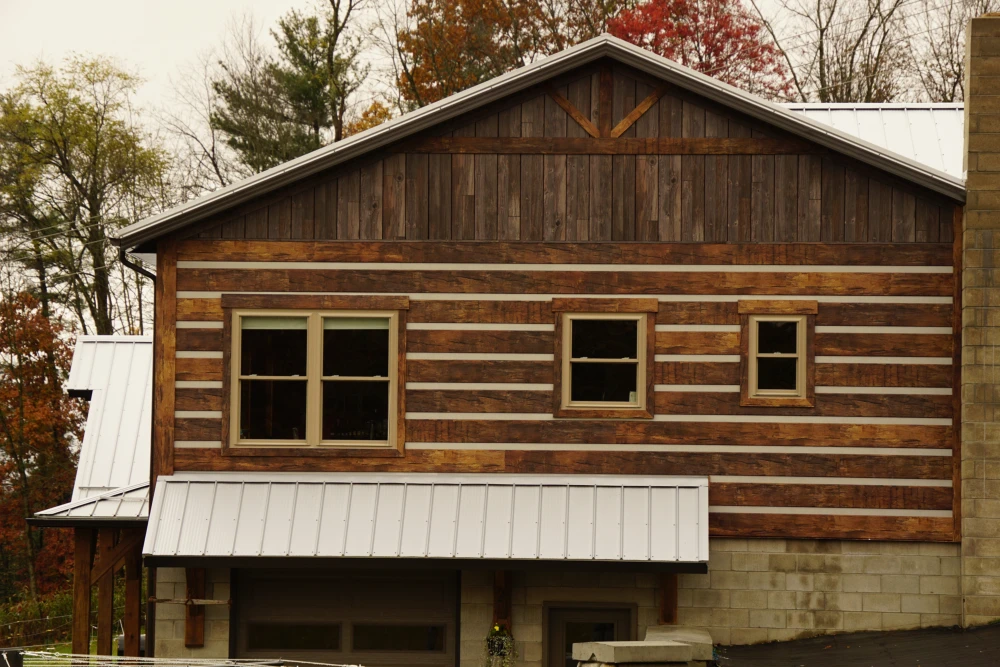
The beach cottage and shore-home architecture that defines Sussex County and the Atlantic coast sets a specific expectation: exterior materials should require nothing. Homeowners who use these properties seasonally don't want annual maintenance, and year-round coastal residents have learned from experience what salt air does to painted wood on a three-year timeline. Wood grain siding in the 22 patterns SteeLuxe manufactures covers the shore-home aesthetic that Delaware's coastal communities are built around, in a finish that holds without repainting or resealing.
The Wilmington suburbs in northern New Castle County carry a different aesthetic and a different condition profile. Colonial and cape-style architecture dominates, winters run colder than the southern counties, and the termite pressure is present but lower than Sussex. For these homeowners, the argument for steel is freeze-thaw stability and low maintenance rather than the beach-home zero-upkeep case.
Every SteeLuxe panel is built on an AZ55 Galvalume steel core, a zinc-aluminum alloy bonded at the manufacturing stage that provides corrosion resistance from inside the material. For Delaware, that matters statewide. Salt air doesn't stop at a property line based on how far it is from the ocean. It travels inland with weather systems, and in a state this narrow between two bodies of tidal water, it reaches every address. Class 4 impact resistance and Class A fire rating are standard across the full line.
Four distinct Delaware markets each have their own conditions and product conversation. The Atlantic coast and Sussex County shore communities lead with salt air, hurricane exposure, and beach-home aesthetics. Dover through Wilmington along the Delaware Bay corridor carries year-round salt air and cold winters. Northern New Castle County runs the coldest winters in the state. Southern Sussex County has the heaviest termite pressure and the most persistent summer humidity. Each gets its own breakdown below.
The Most Advanced Steel Siding On The Market
- 20 Year Fading & Chalking Warranty
- 50 Year Flaking & Peeling Warranty
- Lasts 40-60+ Years
- One Person Installation
Climate & Conditions Across Delaware
Delaware's conditions shift from one end of the state to the other, but the salt air thread runs through all four regions. Statewide proximity to tidal water means every SteeLuxe installation in Delaware should be specified with the AZ55 Galvalume base coat regardless of distance from the shore.
The Atlantic Coast and Sussex County Shore Communities
Rehoboth Beach, Lewes, Bethany Beach, and Dewey Beach carry the state's most direct exposure. The Atlantic ocean frontage puts these communities in constant salt air contact, and the hurricane track through Delaware's coastline means wind-driven rain is a regular part of the storm season. Shore homes here are seasonal for many owners, which creates a specific requirement: materials that hold their condition without maintenance when no one is there. Vinyl fades and corrodes at fasteners on a timeline salt air accelerates. Wood demands repainting and resealing on a schedule the shore environment shortens significantly. Steel holds without either.
The Delaware Bay Corridor: Dover to Wilmington
The western side of the state faces Delaware Bay rather than the Atlantic, but the marine air influence is consistent year-round along this corridor. Dover sits at the midpoint of the bay shoreline, and the communities from Smyrna north through Middletown to Wilmington all carry the same salt air exposure at lower intensity than the Atlantic coast. Winters here are colder than the southern shore, and the freeze-thaw cycle from November through March adds a second condition to the salt air case. Termite pressure is active throughout this corridor at Moderate to Heavy levels.
Northern New Castle County
Wilmington and the northern Delaware suburbs run the coldest winters in the state, with January lows averaging 24 degrees. Proximity to the Philadelphia metro corridor means these communities carry a different residential character than the beach towns to the south: denser, older housing stock with colonial and cape architecture, higher re-siding activity driven by aging vinyl and deteriorating wood, and a product conversation centered on freeze-thaw durability and long-term finish stability rather than beach-home aesthetics. Salt air is still present here from the Delaware River corridor, but it's cold and age that drive the decision.
Southern Sussex County
The inland southern tier carries the state's highest termite pressure and the most persistent summer humidity. Termites classified at Moderate to Heavy are active in the soil year-round, and the clay soil and drainage patterns in southern Sussex keep moisture elevated at the foundation level. High humidity through summer months adds a second year-round stress on exterior materials. Steel gives termites nothing to eat and doesn't absorb moisture regardless of how humid the summer gets, making it the straightforward answer in this market.
Need help finding an installer?
Why Steel Siding Is Right for Delaware
Delaware's five conditions each have a specific failure point in the materials most homes in the state are wearing, and each one has a specific answer in 26-gauge steel.
Salt air is the dominant condition for the overwhelming majority of Delaware homeowners because the state's geography makes it unavoidable. The AZ55 Galvalume base coat bonds a zinc-aluminum alloy to the steel core at the manufacturing stage, providing corrosion resistance that doesn't depend on the paint staying intact. Painted wood corrodes at fasteners and joints within a few years of a coastal installation. Vinyl's surface holds, but the fasteners and trim underneath corrode and fail. Galvalume-core steel resists from the inside, regardless of what happens at the surface.
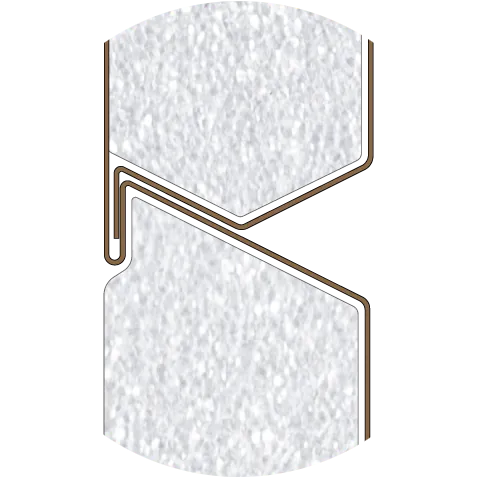
Hurricane and nor'easter wind-driven rain tests every seam and fastener on Delaware's Atlantic and bay coastlines. The Slide-Lock panel system creates a mechanical interlock between panels that holds under the sustained wind loads Atlantic storms deliver. Class A fire rating is standard across the full SteeLuxe line. For the shore-home market, the combination of wind resistance, corrosion resistance, and zero-maintenance finish covers every condition a coastal Delaware property faces.
Termites at Moderate to Heavy pressure statewide mean wood siding carries a permanent liability at every Delaware address. Southern Sussex County carries the heaviest activity in the state. Steel gives termites nothing to work with: no wood, no food source, no moisture a colony can exploit near the foundation. That protection doesn't require retreatment or monitoring the way chemical soil treatments do. It's built into the material and holds for the full life of the installation.
Cold winters in northern Delaware and freeze-thaw cycling throughout the state add the final argument. Steel doesn't absorb moisture, so there's nothing inside the panel to freeze and expand. The Slide-Lock system handles the dimensional changes temperature swings produce in the steel itself without pulling fasteners loose or opening seams. A Delaware winter runs four months, and every freeze-thaw cycle in that window is a stress that wood and fiber cement handle differently than steel.
Product Specifications
| Spec | Value |
|---|---|
| Gauge | 26-gauge steel (~25% thicker than 29-gauge) |
| Core | EPS foam, R-3.57 continuous insulation value |
| Fire Rating | Class A (highest available) |
| Impact Rating | Class 4 (highest available) |
| Colors | 50 solid colors (Sherwin Williams WeatherXL) |
| Wood Grain | 22 patterns (Kynar 500 resin) |
| Log Profile | Hand hewn log siding with chinking — 4 chinking colors |
| Warranty | 50-year peeling/flaking | 20-year fade/chalk |
| Panel | 10-inch planks, Slide-Lock system, one-person install |
| Base Coat | AZ55 Galvalume (zinc-aluminum alloy corrosion barrier) |
| Origin | New Philadelphia, Ohio — direct ship to all 49 states |
Hand Hewn Log Siding with Chinking in Delaware
Delaware doesn't have the mountain resort communities where log and timber architecture is required by HOA or local character, but the state has a rural interior in western Sussex and Kent counties where older farmsteads, country retreats, and converted agricultural properties carry the kind of character that a rustic timber profile suits better than painted clapboard.
Real wood log siding in Delaware's climate deals with the same compounding conditions that affect every wood product in the state: salt air that reaches inland through weather systems, freeze-thaw cycling in the northern counties, year-round termite activity in the soil, and persistent summer humidity across the coastal plain. Log profiles in wood require consistent staining and sealing and show surface degradation faster in a high-humidity environment than they would in a drier climate.
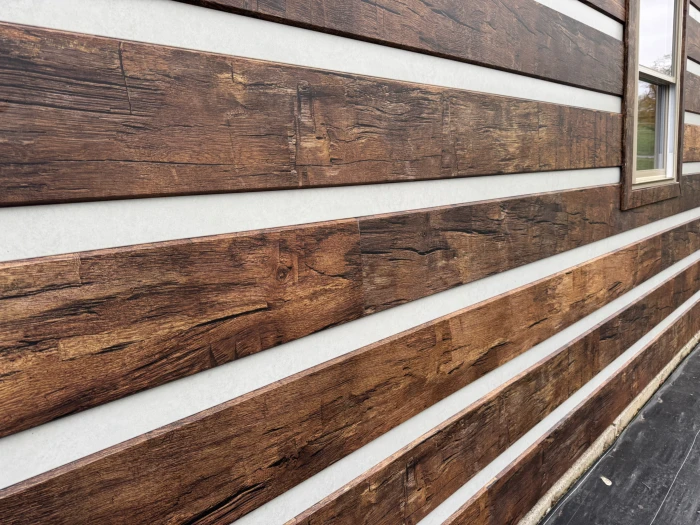
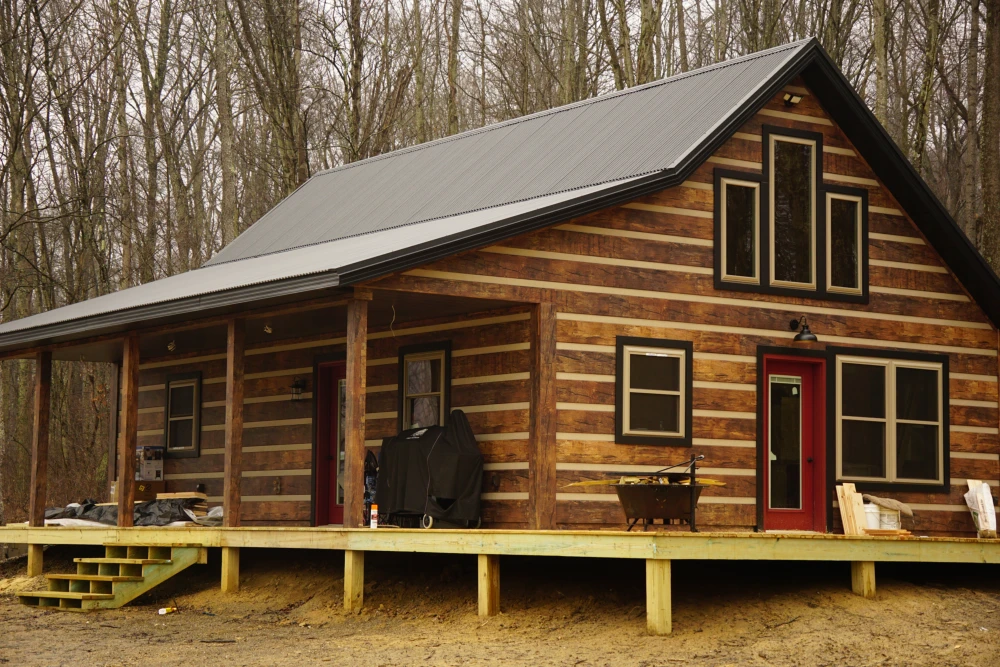
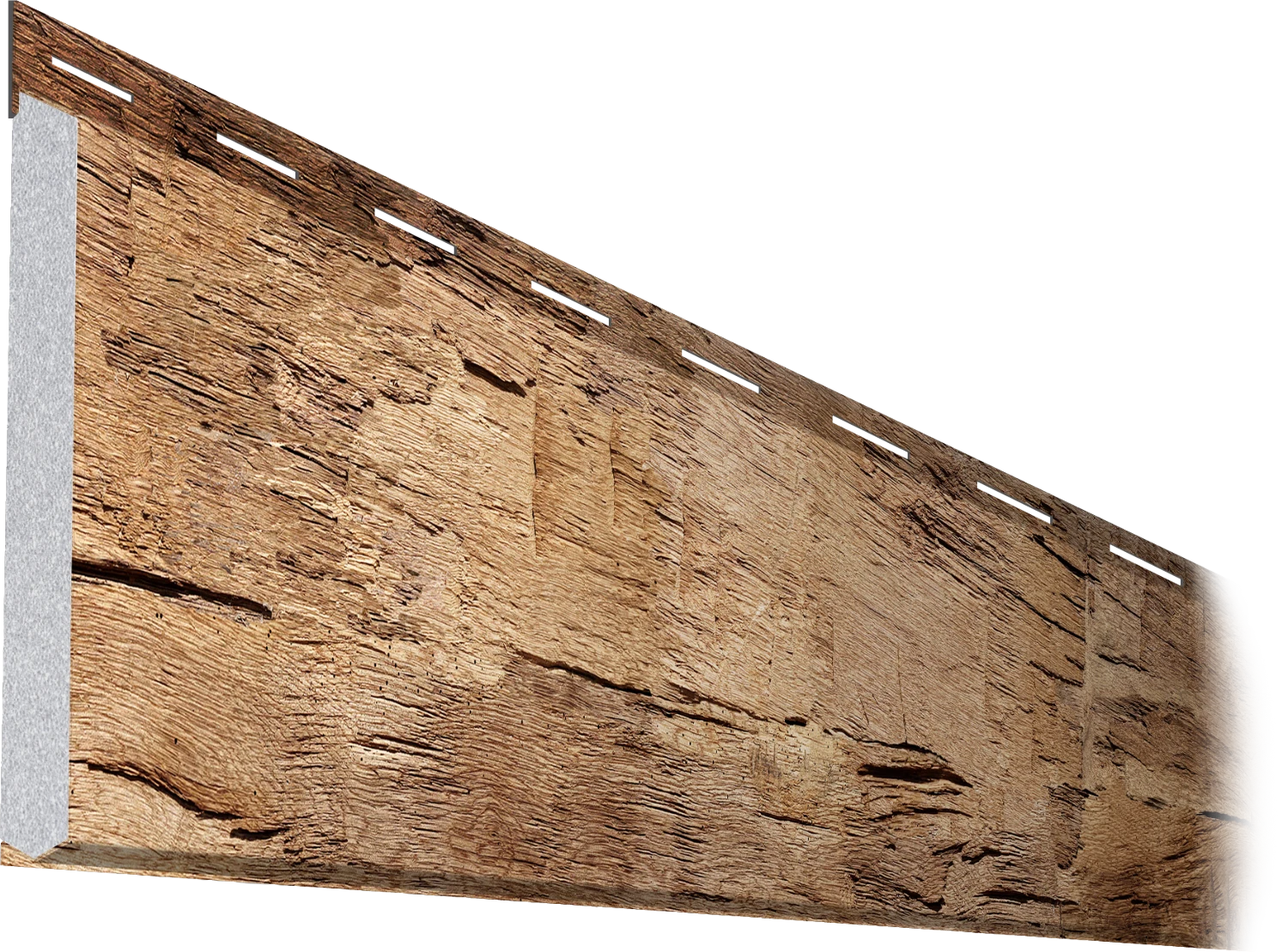
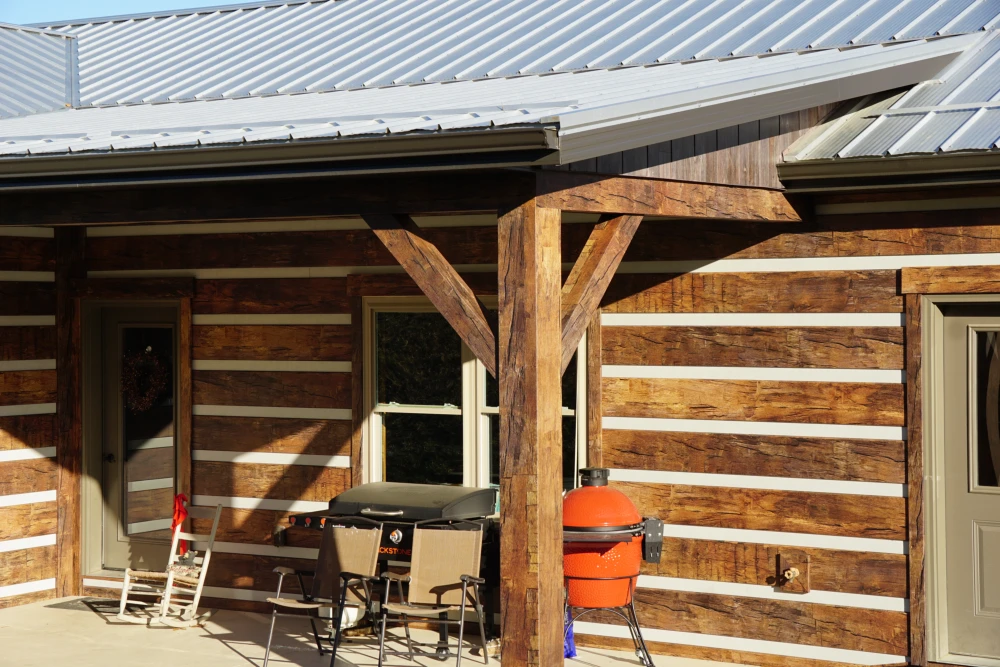
Hand hewn log siding with chinking in 26-gauge steel delivers the authentic timber profile without those failure modes. The steel core doesn't absorb moisture, doesn't give termites anything to work with, and holds its finish through Delaware's humidity and salt air cycle without the maintenance schedule real wood demands. SteeLuxe is the only manufacturer making this product in steel.
Hand hewn log siding with chinking ships direct from New Philadelphia, Ohio to Delaware projects. It's available in four chinking colors: Ash Gray, Charcoal, Clay, and Sandstone Tan, across all 22 wood grain patterns in the SteeLuxe line.
Ready to Transform Your Home With Hand-Hewn Log Cabin Siding?
Get the authentic hand-hewn cabin look with the chinking detail you love, and never think about maintenance again. SteeLuxe steel siding is insulated, fire-rated, hail-resistant, and built to last a lifetime. See it and feel it for yourself.
Steel Siding vs the Alternatives in Delaware
Vinyl is the most common replacement siding on Delaware homes from the last 40 years, and it has two clear liabilities in this state. Salt air doesn't visibly degrade vinyl's surface, which makes the problem invisible until it's structural: the fasteners corrode, the trim systems fail, and the installation starts to pull apart at connections that the homeowner can't see from the street. Along the Atlantic coast and Delaware Bay, that process happens faster than most homeowners expect, particularly on south and west exposures. Cold winters add a second problem: below 20 degrees, vinyl goes brittle and loses the ability to flex and absorb stress from wind load and the expansion and contraction that temperature changes produce.
Fiber cement performs better than vinyl in cold conditions and doesn't corrode at fasteners the way vinyl trim does, but it carries its own Delaware-specific liability: moisture absorption at cut edges and penetrations. In Delaware's humid coastal climate, that absorbed moisture creates a cycle of swelling and drying that eventually causes cracking and surface separation. Factory paint on fiber cement requires repainting on a 10 to 15-year cycle even in moderate climates, and salt air accelerates that timeline. On Sussex County coastal properties, those installations frequently need repainting within 7 to 10 years.
Wood siding carries the full set of Delaware liabilities simultaneously. Salt air accelerates paint failure to a 5 to 8-year cycle on coastal properties. Termites classified at Moderate to Heavy statewide treat wood siding as a permanent food source, and chemical treatments don't protect the siding itself, only the soil around the foundation. Freeze-thaw cycling in the northern counties pushes moisture into wood grain and accelerates checking and surface degradation. Summer humidity keeps wood at elevated moisture content through the long season. Wood demands more maintenance in Delaware's climate than in almost any Mid-Atlantic state.
Steel holds the Class 4 impact rating vinyl can't match, avoids the moisture absorption that cracks fiber cement, and holds its factory finish without the repainting cycle that salt air forces on wood. For Delaware coastal properties specifically, the AZ55 Galvalume core provides corrosion resistance that no painted metal or vinyl product delivers at the base material level.
Frequently Asked Questions
Q:What warranty does SteeLuxe steel siding carry?
Q:Can one person install SteeLuxe steel siding?
Q:What colors does SteeLuxe steel siding come in?
Q:Where is SteeLuxe manufactured and how does shipping work?
Q:Why does salt air matter for siding if I'm not right on the water?
Q:How does steel siding hold up against Delaware's termite pressure?
Q:Does steel siding hold up to hurricane-force winds on the Delaware coast?
Q:What Delaware cities does SteeLuxe serve?
Q:Is steel siding a good choice for a Delaware shore home or beach cottage?
Delaware Cities & Regions We Serve
SteeLuxe ships from New Philadelphia, Ohio to residential and contractor projects across Delaware. The state's compact size means short lead times to any address, and Delaware's statewide coastal proximity means every installation qualifies for the AZ55 Galvalume specification.
Wilmington and northern New Castle County make up the state's largest residential siding market. The housing stock here is older, the winters are the coldest in the state, and re-siding projects are driven by aging vinyl and deteriorating wood on colonial and cape homes built from 1940 through 1980.
Dover, Middletown, and the central Delaware corridor sit along the Delaware Bay and deal with year-round salt air in addition to cold winters and active termite pressure. These communities combine the coastal corrosion argument with the freeze-thaw and termite case that the northern counties share.
Sussex County and the Atlantic shore communities carry the state's most direct coastal exposure. Rehoboth Beach, Lewes, Bethany Beach, and Dewey Beach are the shore-home market where the zero-maintenance case for steel siding is strongest, and where salt air, hurricane exposure, and high humidity all arrive together.
Full city pages with local installer contacts and current pricing are available for Wilmington, DE. More Delaware cities are listed below:
Get a Quote for Steel Siding in Delaware
SteeLuxe is manufactured in New Philadelphia, Ohio and ships direct. Whether you are planning a full re-siding project or exploring options, we can get you pricing, color samples, and a list of installers in your area.