
Steel Siding & Hand Hewn Log Siding in California
Steel Siding in California
Steel siding in California is, more than anywhere else in the country, a wildfire story. The 2025 Palisades and Eaton fires destroyed over 16,000 structures, killed 30 people, and produced total economic losses estimated between $95 billion and $164 billion, making them the costliest wildfire event in United States history. These fires burned through established suburban neighborhoods in Los Angeles County, not remote wilderness, and they burned through them because the siding, decking, and roofing materials those homes were built with did not stop the fire at the exterior wall. The rebuilding conversation that followed has been almost entirely about Class A non-combustible exterior products, and steel siding is one of the few siding materials that qualifies.
California's wildfire exposure is not limited to Los Angeles. The 2018 Camp Fire destroyed the entire town of Paradise in Butte County, killing 85 people in the deadliest California fire in a century. CAL FIRE maps show Very High or Extreme wildfire risk across the Sierra Nevada foothills, the coastal ranges, the chaparral hills of Southern California, and hundreds of communities that homeowners would not have described as wildfire-adjacent a decade ago. California's Department of Insurance cited wildfire risk as the primary driver behind non-renewal notices affecting more than two million homeowners' policies. The insurance market has already made a risk judgment about wood and vinyl in California fire zones.
Wildfire dominates, but California's full conditions picture is more complex than that. Salt air affects 840 miles of Pacific coastline and reaches well inland through the Bay Area marine layer and the river channels of the Sacramento-San Joaquin Delta. Wood grain siding in the SteeLuxe line holds color and surface integrity under sustained Pacific UV and salt air exposure in a way that conventional painted finishes degrade over time, and the AZ55 Galvalume base coat provides corrosion resistance built into the metal itself rather than as a surface coat that eventually fails.
Termite pressure runs Very Heavy across Southern California, the Bay Area, and most of the Central Valley, the highest classification on the map. Some coastal Southern California communities carry an even more intensive designation. Year-round warmth means termite colonies in California do not go dormant the way they do in colder states. Wood siding in these areas is not a deferred maintenance problem. It's an active one.
Inland California adds extreme summer heat to the mix. The Central Valley regularly exceeds 105 degrees, and Sacramento, Fresno, and Bakersfield all see sustained periods above 100 degrees from June through September. At those temperatures, vinyl's thermal expansion becomes a visible performance problem over time.
California conditions vary by region, by elevation, and by proximity to the coast, but the wildfire argument cuts across all of them. No other state in the country has produced the volume of documented fire losses that California has in the past seven years, and no other state has generated the same level of homeowner, insurer, and code-writer urgency around non-combustible exterior materials.
The Most Advanced Steel Siding On The Market
- 20 Year Fading & Chalking Warranty
- 50 Year Flaking & Peeling Warranty
- Lasts 40-60+ Years
- One Person Installation
Climate & Conditions Across California
Southern California Coast & the Los Angeles Basin
The Los Angeles Basin and the coastal communities from San Diego north through Santa Barbara carry the state's most layered set of siding conditions. Wildfire exposure from the surrounding chaparral and mountain ranges combines with Very Heavy termite pressure, Pacific salt air, and sustained UV heat to create a market where no single-condition siding material handles everything a California coastal home faces. The 2025 Palisades and Eaton fires burned through communities that had been considered relatively protected, and the rebuilding specifications in those neighborhoods now center on non-combustible Class A cladding as a baseline requirement.
The Central Valley
Inland California from Bakersfield north through Fresno, Modesto, and Sacramento sits in some of the most extreme summer heat in the continental United States. Central Valley cities regularly reach 105 to 110 degrees through July and August, and Very Heavy termite pressure runs across the valley floor year-round without the cold-weather break that northern states get. Wildfire from the surrounding Sierra Nevada and Coast Range foothills is a growing concern in the communities on the valley's eastern and western edges, and the smoke seasons that now run from June through October have shifted how Central Valley buyers think about what their homes are exposed to.
The Bay Area & Northern Coast
San Francisco, Oakland, the peninsula, and the East Bay hills combine two conditions that rarely appear together: Pacific marine air from the bay and the ocean, and direct wildfire interface with the chaparral and oak woodland on the hills above the bay's eastern and western edges. The 2018 Camp Fire in Butte County and the 2017 Tubbs Fire in Sonoma County both created significant homeowner awareness of fire risk in communities that had not previously been priced as high-risk. Marine salt air from the bay and the Pacific coast is a year-round condition in the greater Bay Area that accelerates corrosion in conventional steel or aluminum products that lack base-level corrosion protection.
Sierra Nevada Foothills & Mountain Communities
The western slope of the Sierra Nevada, running from Tehachapi north through Placerville, Auburn, Grass Valley, and into the Tahoe Basin, carries the state's most consistently Extreme-rated wildfire terrain. Communities in the foothills have been rebuilding from fire damage on a recurring basis for more than a decade, and the building aesthetic in these communities runs strongly toward log and timber construction that fits the mountain setting. The combination of extreme wildfire exposure and a log-profile building vernacular is where hand hewn log siding with chinking makes its strongest case in California.
California's conditions do not resolve into one regional story. Southern California, the Central Valley, the Bay Area, and the Sierra foothills each have a different leading condition, and the right product conversation shifts as you move across the state.
Need help finding an installer?
Why Steel Siding Is Right for California
California's active conditions span wildfire, salt air, termites, and heat. Each one has a documented failure history with the materials that are currently on most California homes, and each one has a specific answer in 26-gauge steel.
Wildfire is the primary condition. Class A fire rating means the panel won't ignite from wind-driven embers, won't spread flame along its surface, and won't contribute combustible fuel load the way vinyl and wood cladding do during a fire event. Most of the homes destroyed in the Palisades and Eaton fires were sided with materials that carried no meaningful fire resistance classification for the thermal and ember exposure they received. Class A is not an incremental improvement over vinyl or fiber cement in a wildfire event. It's a categorically different response to the fire's arrival.
Salt air is a year-round condition for every coastal community in California, and a substantial inland condition across the Bay Area and the Sacramento-San Joaquin Delta corridor. The AZ55 Galvalume base coat in every SteeLuxe panel is a zinc-aluminum alloy bonded to the steel core, providing corrosion resistance at the material level rather than as a painted surface coat that scratches, chips, and eventually fails. In a salt air environment, the difference between surface protection and core protection becomes visible within years rather than decades.
Termites are active statewide and year-round in California's warm climate, with Very Heavy pressure across Southern California and the Central Valley meaning subterranean colonies work continuously in the soil beneath most structures in the state's two largest population centers without the winter slowdown that colder states get. Steel siding removes the food source completely. There is no wood in the panel, no cellulose for termite colonies to use, and no moisture path at the wall that accelerates infestation.
Heat is the fourth condition in the Central Valley and the inland Southern California markets. At sustained temperatures above 100 degrees, vinyl expands beyond what the material handles reliably over decades of thermal cycling. Steel's Slide-Lock panel system handles expansion and contraction predictably across the full temperature range California produces without the gapping, warping, or fastener pull-out that vinyl shows in the most extreme inland heat zones.
Product Specifications
| Spec | Value |
|---|---|
| Gauge | 26-gauge steel (~25% thicker than 29-gauge) |
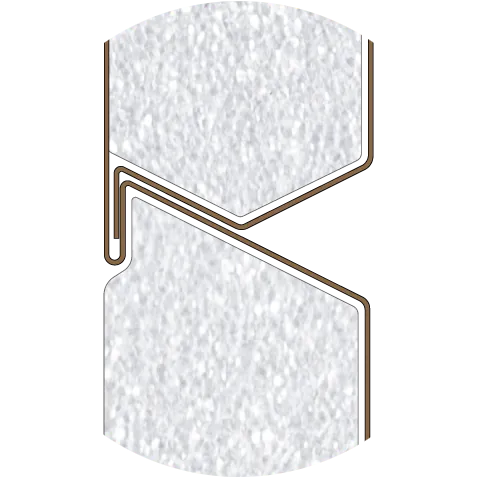
| Core | EPS foam, R-3.57 continuous insulation value |
| Fire Rating | Class A (highest available) |
| Impact Rating | Class 4 (highest available) |
| Colors | 50 solid colors (Sherwin Williams WeatherXL) |
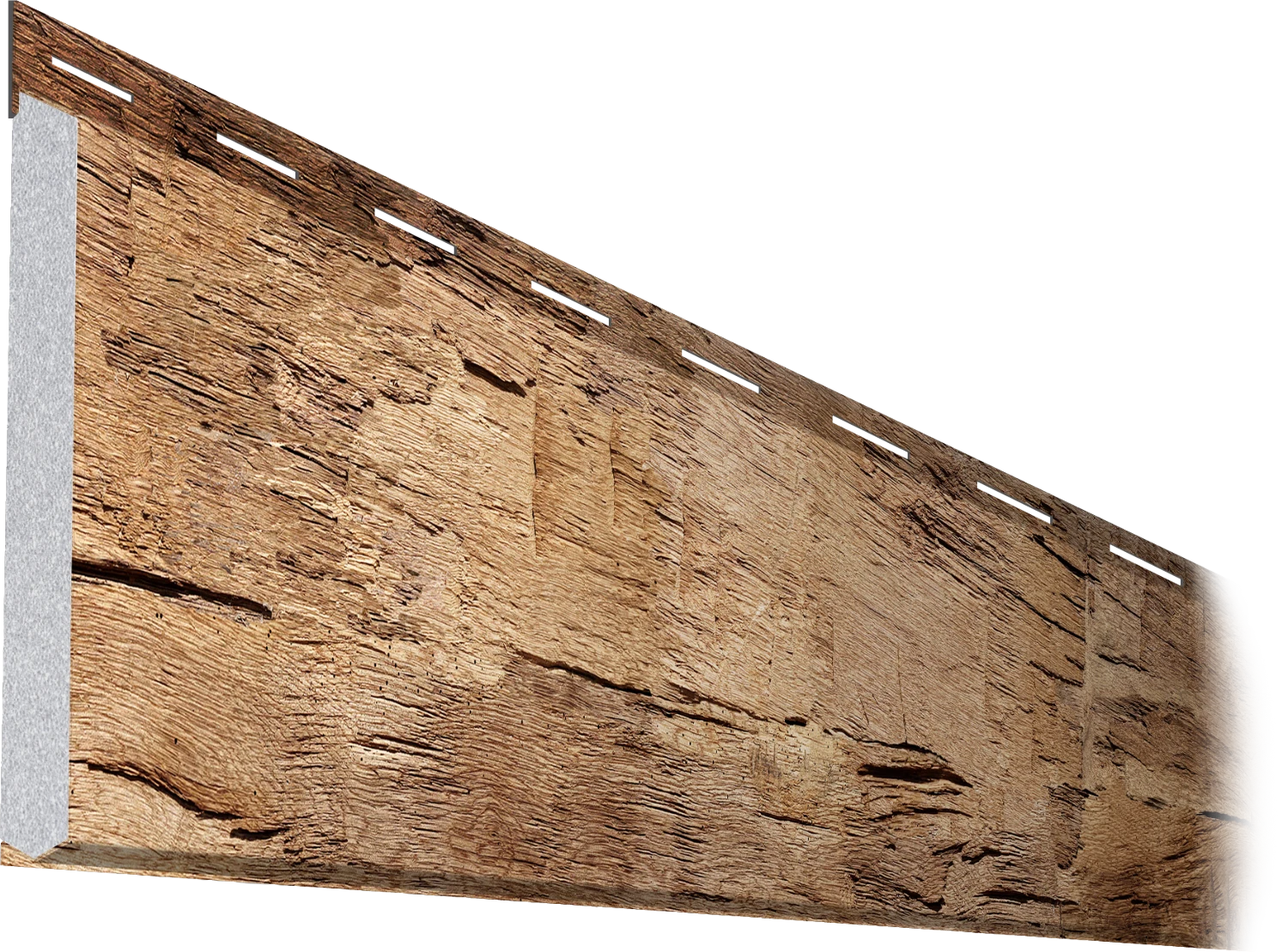
| Wood Grain | 22 patterns (Kynar 500 resin) |
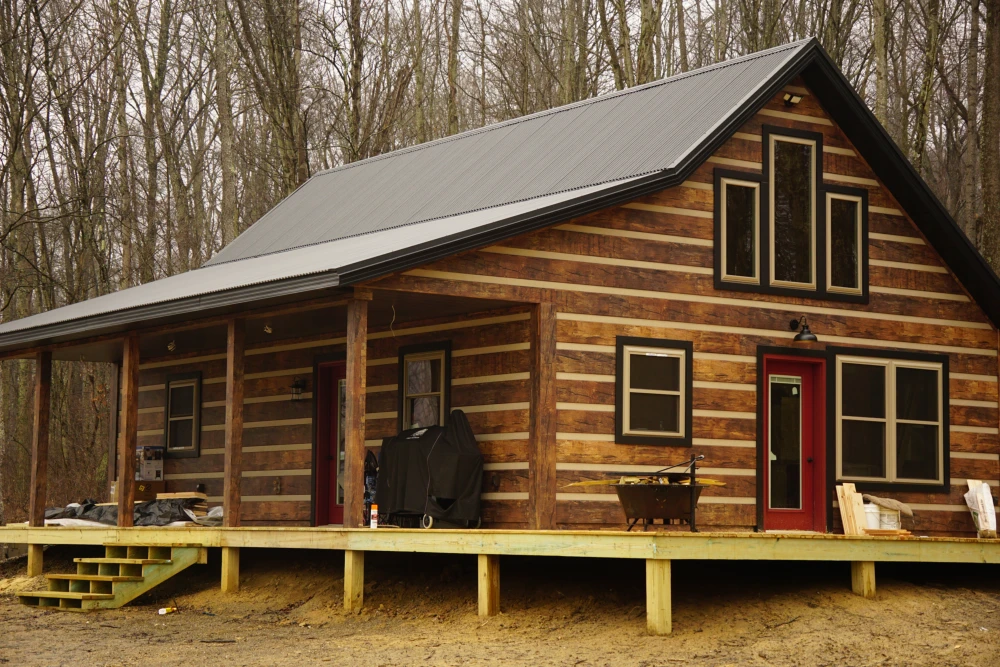
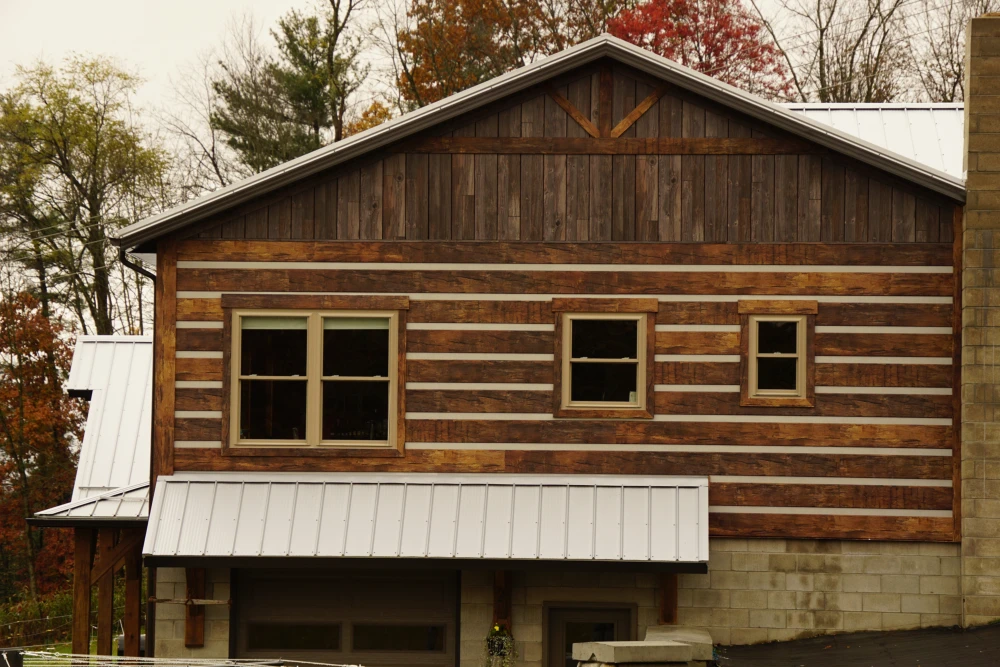
| Log Profile | Hand hewn log siding with chinking — 4 chinking colors |
| Warranty | 50-year peeling/flaking | 20-year fade/chalk |
| Panel | 10-inch planks, Slide-Lock system, one-person install |
| Base Coat | AZ55 Galvalume (zinc-aluminum alloy corrosion barrier) |
| Origin | New Philadelphia, Ohio — direct ship to all 49 states |
Hand Hewn Log Siding with Chinking in California
California's mountain resort communities are built around log and timber architecture. The Lake Tahoe Basin, Big Bear Lake and the San Bernardino Mountains, Mount Shasta, and the Sierra Nevada resort towns all have residential markets where the log cabin and rustic timber profile is the expected exterior look, and homeowners in these communities expect their siding to match the mountain setting they chose.
Wood log siding in these communities now carries a fire risk problem that has grown significantly over the past decade. Very High to Extreme CAL FIRE wildfire risk ratings cover most of the Sierra Nevada foothills and mountain resort corridors, and the combination of combustible log siding and dry forest terrain has been directly linked to structure loss in California fire events. The log profile is what buyers want. Class A fire rating is increasingly what codes and insurers require. Building with wood puts those two requirements in direct conflict.
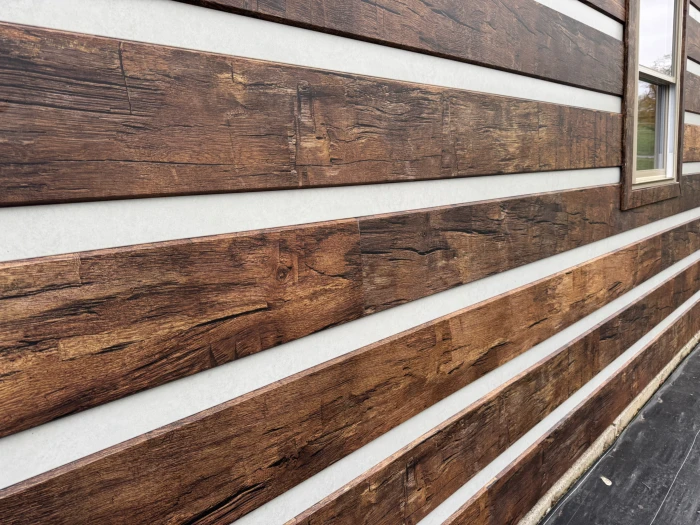
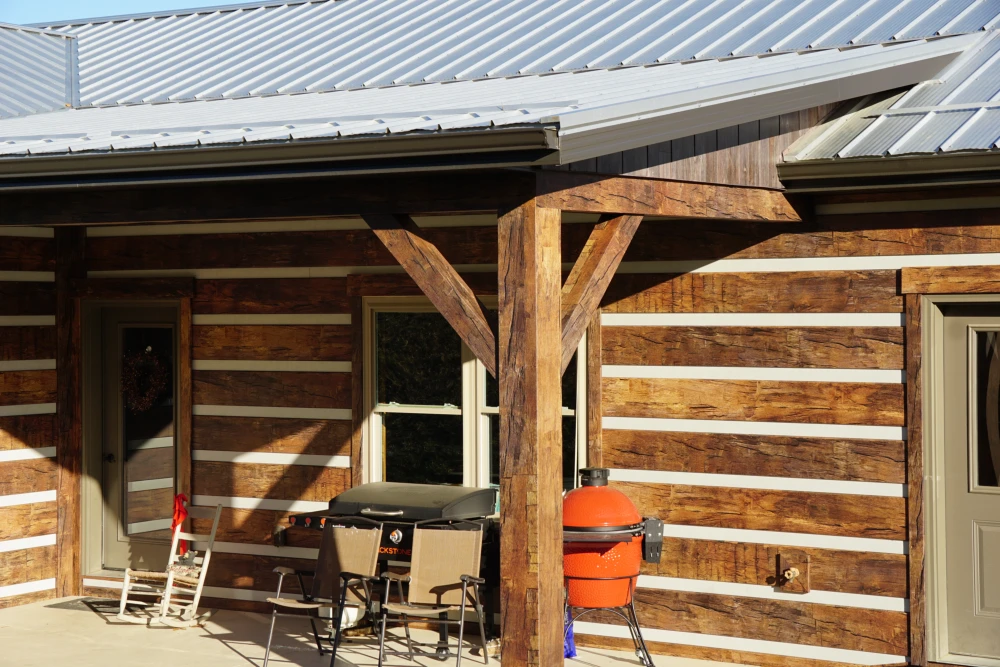
Hand hewn log siding with chinking in 26-gauge steel resolves that conflict. It delivers the authentic hand hewn log profile with a Class A non-combustible rating that wood log siding cannot provide. SteeLuxe is the only manufacturer making this product, and it ships direct from New Philadelphia, Ohio to the Tahoe Basin, the Sierra foothills, and the Southern California mountain communities.
All 22 wood grain patterns are available, from weathered gray to warm cedar brown. Hand hewn log siding with chinking comes in four chinking colors: Ash Gray, Charcoal, Clay, and Sandstone Tan.
Ready to Transform Your Home With Hand-Hewn Log Cabin Siding?
Get the authentic hand-hewn cabin look with the chinking detail you love, and never think about maintenance again. SteeLuxe steel siding is insulated, fire-rated, hail-resistant, and built to last a lifetime. See it and feel it for yourself.
Steel Siding vs the Alternatives in California
Vinyl's problems in California run across three conditions simultaneously. On the wildfire side, vinyl carries no meaningful fire resistance rating and no Class A classification, so when wind-driven embers hit vinyl siding during a fire event, the material provides no resistance at the exterior wall. Termites are the second issue: vinyl itself is not organic but can be penetrated, doing nothing to prevent colonies from reaching the wood structure beneath it. Heat is the third: sustained temperatures above 100 degrees in the Central Valley and the inland Southern California markets put vinyl into a thermal expansion range that produces visible gapping and distortion over repeated annual cycles.
Fiber cement carries a Class A fire rating, which is a meaningful advantage over vinyl in California's wildfire markets. Its failure points are different: moisture absorption and hail. California's coastal areas do not experience the same humid moisture loading that the Southeast does, but the Pacific marine layer delivers consistent moisture cycling to coastal fiber cement installations that accelerates paint breakdown and requires periodic repainting. Hail is less of a California concern than in the mountain states, but Northern California's winter storm season can deliver significant impact events, and fiber cement chips and cracks at panel edges under those impacts. The repainting requirement is the more consistent long-term cost in most California markets.
Wood siding fails on two counts in California and both are severe. Termites eat wood, and Very Heavy pressure across Southern California and the Central Valley means colonies are in the soil and working actively at most structures in the state's two largest population centers year-round. Fire is the second failure, and in California it is not theoretical. The Camp Fire that destroyed Paradise, the Tubbs Fire that swept through Santa Rosa neighborhoods, and the Palisades and Eaton fires that burned through Los Angeles County suburbs all moved through communities sided and roofed with combustible materials. Evidence that wood cladding contributes to structure loss in California fire events is not statistical. It comes from direct, documented losses in communities that looked like any other suburb until the fire reached them.
Steel removes both failure modes with one material. No wood content means no food for termites and no combustible cladding load during a fire event. The Class A rating holds for the full installation life without degrading, and it applies across every California climate zone where wildfire risk is present.
Frequently Asked Questions
Q:What warranty does SteeLuxe steel siding carry?
Q:Can one person install SteeLuxe steel siding?
Q:What colors does SteeLuxe come in?
Q:Where is SteeLuxe manufactured and how does shipping work?
Q:Does steel siding actually qualify as Class A for California wildfire building code purposes?
Q:How does steel siding hold up against California's Pacific coast salt air?
Q:Are termites a serious problem for California homeowners considering siding replacement?
Q:What California cities does SteeLuxe serve?
Q:What should California homeowners rebuilding after the 2025 Los Angeles fires know about steel siding?
California Cities & Regions We Serve
Southern California is the state's largest residential siding market. Wildfire exposure from surrounding mountain ranges, Very Heavy termite pressure, and Pacific salt air combine in the Los Angeles Basin and the communities stretching south through the San Diego metro to make steel's full performance profile directly relevant. The rebuilding market following the 2025 Palisades and Eaton fires represents the most concentrated Class A non-combustible siding demand in California history.
The Central Valley, running from the Sacramento area south through Fresno and Bakersfield, is the state's most heat-intensive residential market. Sustained summer temperatures above 100 degrees, Very Heavy termite pressure, and growing wildfire exposure from the surrounding foothills make this one of the clearest vinyl replacement markets in California. SteeLuxe ships direct from New Philadelphia, Ohio to the Central Valley with short lead times.
The Bay Area carries two conditions that define its siding market: Pacific marine air from the bay and surrounding waters, and direct wildfire interface on the hills and ridgelines above the bay. Both conditions are year-round. The AZ55 Galvalume base coat handles the salt air argument, and the Class A fire rating handles the fire interface argument.
California's Sierra Nevada foothills and mountain resort communities are where hand hewn log siding with chinking makes its strongest case in the state. Extreme wildfire risk combined with a log-and-timber building vernacular creates a direct demand for the product that no other siding material satisfies. SteeLuxe serves these communities direct from Ohio.
Full city pages with local installer contacts and current pricing are available for Los Angeles, CA. More California cities are in the list below:
Don't see your city listed here. Contact SteeLuxe directly or use the site search, and someone who knows California's regional conditions will help you find the nearest installer and get current pricing for your area.
Get a Quote for Steel Siding in California
SteeLuxe is manufactured in New Philadelphia, Ohio and ships direct. Whether you are planning a full re-siding project or exploring options, we can get you pricing, color samples, and a list of installers in your area.