
Steel Siding & Hand Hewn Log Siding in Arkansas
Steel Siding in Arkansas
Steel siding in Arkansas is primarily a hail story. Arkansas ranks in the top ten states nationally for hail frequency, averaging 50 to 80 significant events per year, and the northwest part of the state, the Fayetteville-Springdale-Rogers corridor, sits in the most active stretch of that track. Wood grain siding in the SteeLuxe line and every other panel profile carry Class 4 impact resistance, the highest rating available, because that's what an active storm environment in a top-ten hail state demands.
Heat and humidity run alongside hail as the secondary conditions. Summer highs average 93 degrees statewide. The Arkansas River Valley and the Delta lowlands in the east hold that heat and the accompanying humidity longer than the Ozark highlands do, but no part of the state gets a break from the combination in July and August. Materials that absorb moisture and expand in heat perform poorly in those conditions over time. Steel doesn't absorb moisture, and it expands and contracts in a predictable range that the Slide-Lock panel system accounts for by design.
Termites are the third condition, and they're active in every Arkansas county. The state carries moderate to heavy termite pressure statewide, with the southeastern delta counties running at the higher end of that range. Subterranean colonies are in the soil across all of Arkansas year-round, and wood siding gives them both food and a direct path into the wall structure from the outside. Steel siding removes both of those things. There's no wood in the panel, no moisture a colony can use to get established, and nothing to tunnel through from the cladding into the framing behind it.
Arkansas covers four distinct regions. Each one has a different leading condition, and the siding conversation changes depending on which of the four you're in. Northwest Arkansas is the fastest-growing market in the state and its most hail-active zone. Central Arkansas around Little Rock is the largest single market, dealing with hot summers and active spring storm corridors that run through the center of the state. Fort Smith and the River Valley to the west are somewhat more sheltered but still active on heat and hail. Out east, the Delta is the hottest and most humid part of the state, with the highest termite pressure of the four regions.
Steel addresses all four conditions without trading one off against another. Class 4 handles the hail. Not absorbing moisture handles the humidity and reduces freeze-thaw risk in the Ozarks. Having no organic content means termites have nothing to work with across the full 40 to 60 year life of the panel. The AZ55 Galvalume base coat builds corrosion resistance into the steel itself, not into a surface layer that time and weather wear away.
The sections below walk through each region and what conditions look like on the ground, why each one matters for exterior siding, how steel compares to vinyl, fiber cement, and wood, and where SteeLuxe ships across the state.
The Most Advanced Steel Siding On The Market
- 20 Year Fading & Chalking Warranty
- 50 Year Flaking & Peeling Warranty
- Lasts 40-60+ Years
- One Person Installation
Climate & Conditions Across Arkansas
Arkansas sits at a climatic crossroads. It's hot enough in summer to qualify as Deep South territory, cold enough in the Ozark highlands to produce real freeze-thaw cycles in winter, and active enough in spring storm season to rank nationally for hail frequency. Conditions shift meaningfully across the state's four main regions.
Northwest Arkansas: Fayetteville, Springdale, Rogers, and Bentonville
Northwest Arkansas is the state's fastest-growing residential market and its most hail-active zone. The Fayetteville-Springdale-Rogers corridor sits in the storm track that produces the highest frequency of damaging hail events in Arkansas, with peak season running April through June. Hailstones here regularly split vinyl and chip fiber cement. The Ozark terrain surrounding this market also shapes a strong buyer preference for natural-looking exterior materials, stone, timber, and log profiles, which is why wood grain steel siding and hand hewn log siding with chinking connect here in a way they don't in most other parts of the state.
Central Arkansas: Little Rock and the I-40 and I-30 Corridors
Little Rock sits at the intersection of the state's two main storm corridors. The I-40 corridor runs east-west and the I-30 corridor runs southwest, and both are high-frequency hail zones. Little Rock is where they cross. Summer heat here is intense, with highs regularly above 95 degrees from June through August, and the metro carries moderate to heavy termite pressure throughout Pulaski and the surrounding counties. For a homeowner in Little Rock, hail, heat, and termites are all active at the same time.
Arkansas River Valley: Fort Smith and the Western Corridor
The River Valley runs from Little Rock west through Conway, Russellville, and Fort Smith to the Oklahoma line. Fort Smith is at the far end, sitting between the Ozark Plateau to the north and the Ouachita Mountains to the south, with heat that builds in the valley floor and storm systems that funnel in from the west. Termite pressure here is moderate. Hail is active from April through June along this entire corridor.
The Arkansas Delta: Jonesboro and the Eastern Lowlands
The Delta is flat, open lowland along the Mississippi River from Jonesboro south through Helena-West Helena. Summers there are the hottest in the state, and the humidity never fully breaks between June and September, making it the most persistently uncomfortable stretch of the Arkansas calendar for any exterior material that absorbs moisture. Termite pressure in the southeastern delta counties runs at the higher end of Arkansas's statewide range. Hail is less frequent here than in the northwest, but heat and termites are the leading conditions year-round. Steel's resistance to moisture absorption and heat-related panel movement matters more here than anywhere else in the state.
Need help finding an installer?
Why Steel Siding Is Right for Arkansas
Four conditions are active across Arkansas. Each one works differently depending on which part of the state you're in, and each one has a documented track record with the siding materials that tried to handle it. Here is what 26-gauge steel does about all four.
Hail leads across most of the state. Class 4 is the highest impact rating the IBHS awards for exterior siding. A panel at that rating takes a two-inch steel ball dropped from 20 feet without cracking, chipping, or fracturing, and that is the test standard Arkansas insurance carriers use when calculating premium discounts for impact-resistant siding. In northwest Arkansas and along the I-40 and I-30 corridors, many carriers offer meaningful premium reductions for Class 4-rated products. A Class 4 panel doesn't just survive an Arkansas hail event better than vinyl or fiber cement. It typically survives with no structural damage at all.
Heat and humidity are the year-round interior conditions across all of Arkansas. Summer highs average 93 degrees statewide, and the humidity pushes the heat index significantly above that from June through September. Vinyl expands substantially in sustained heat and can gap at panel joints over repeated seasonal cycles. Fiber cement absorbs moisture through Arkansas's long humid season and needs repainting every 7 to 10 years because of it. Steel doesn't absorb moisture. The Slide-Lock system lets panels expand and contract slightly with temperature changes without pulling loose or opening up, which is how steel avoids the seam problems vinyl accumulates over time.
Termites are statewide and active year-round. Arkansas carries moderate to heavy pressure across all counties, with the southeastern delta counties running at the higher end of that range. Steel gives termite colonies nothing to work with, no food, no moisture a colony can establish near the foundation, and no organic material to tunnel through from the cladding into the wall structure. That protection holds for the full life of the installation without renewals or treatments.
Arkansas winters add a freeze-thaw dimension that most of the Deep South doesn't have. The average winter low is 28 degrees statewide, and the Ozark highlands regularly drop below that, producing cycles that stress any siding material that absorbed moisture through the summer. Fiber cement that soaks in summer humidity can crack when that moisture freezes in January. Steel doesn't absorb moisture, so there's nothing inside the material to freeze and expand.
Product Specifications
| Spec | Value |
|---|---|
| Gauge | 26-gauge steel (~25% thicker than 29-gauge) |
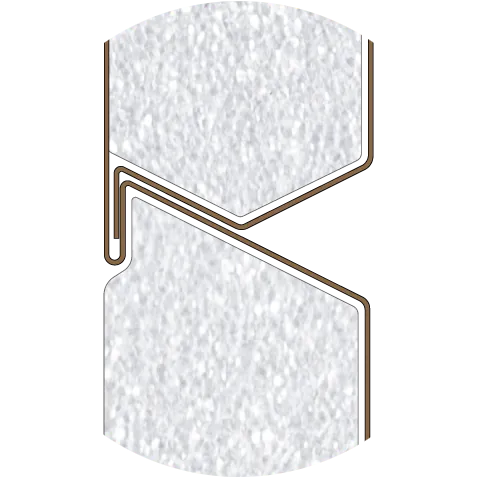
| Core | EPS foam, R-3.57 continuous insulation value |
| Fire Rating | Class A (highest available) |
| Impact Rating | Class 4 (highest available) |
| Colors | 50 solid colors (Sherwin Williams WeatherXL) |
| Wood Grain | 22 patterns (Kynar 500 resin) |
| Log Profile | Hand hewn log siding with chinking — 4 chinking colors |
| Warranty | 50-year peeling/flaking | 20-year fade/chalk |
| Panel | 10-inch planks, Slide-Lock system, one-person install |
| Base Coat | AZ55 Galvalume (zinc-aluminum alloy corrosion barrier) |
| Origin | New Philadelphia, Ohio — direct ship to all 49 states |
Hand Hewn Log Siding with Chinking in Arkansas
The Ozarks have their own building vernacular, and it's distinct from the rest of Arkansas. Stone foundations, timber framing, and log cabin profiles are the standard across the mountain communities of northwest and north Arkansas. Northwest Arkansas is a fast-growing market bringing in buyers from outside the state, and a significant portion of them connect to that Ozarks look even in new construction. Log profiles read as authentic here. Smooth panel siding doesn't carry the same weight.
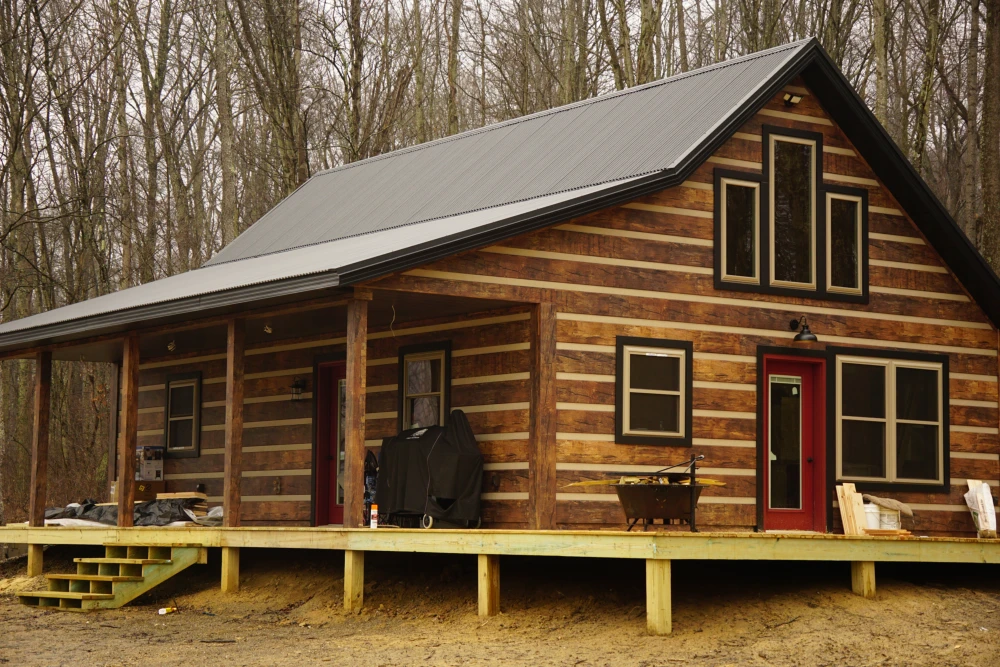
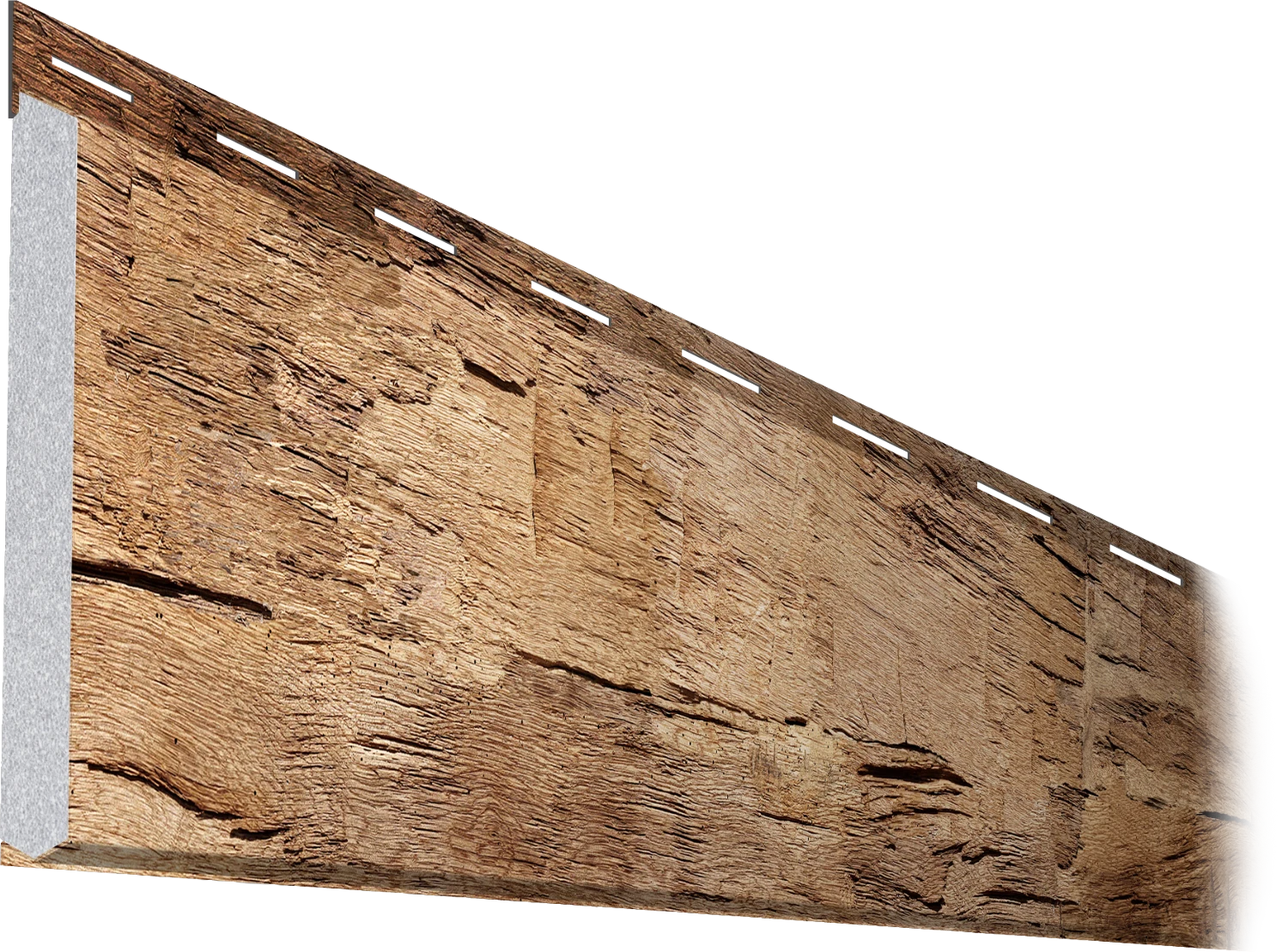
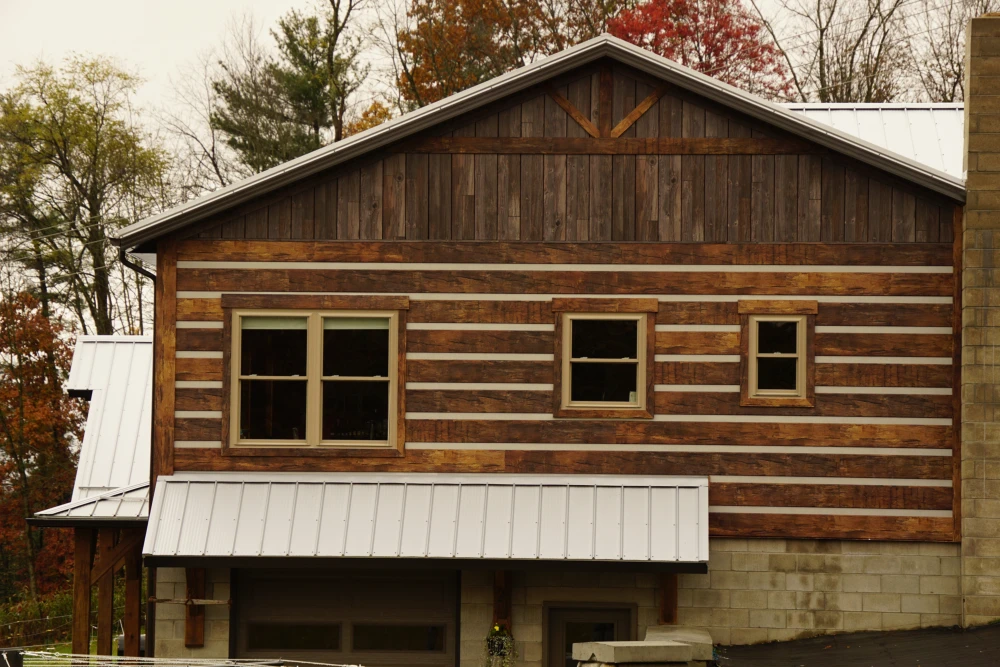
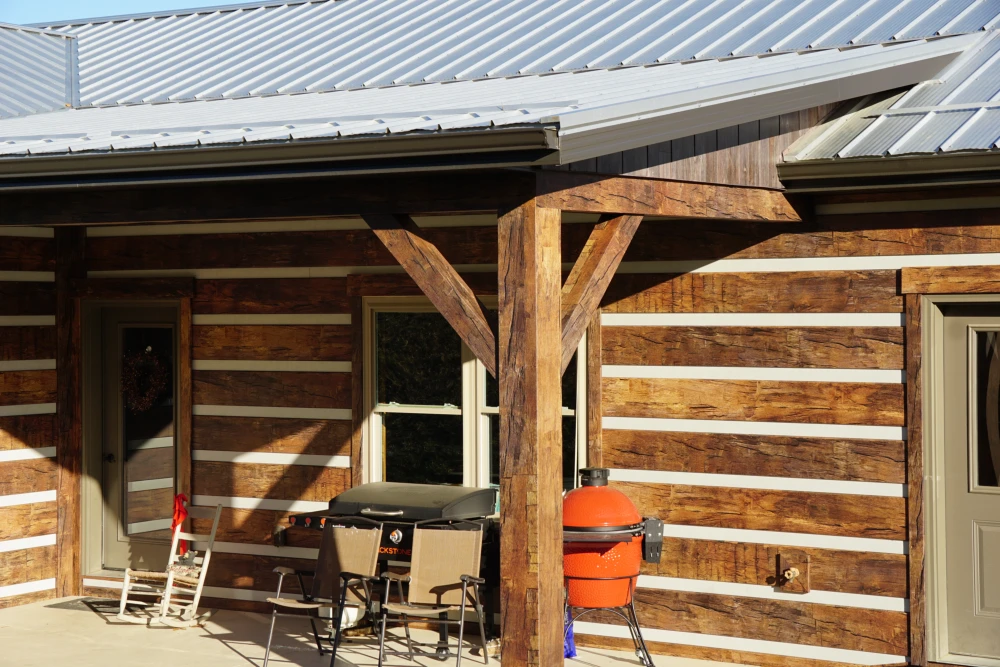
Hand hewn log siding with chinking in 26-gauge steel delivers that look without the maintenance burden and hail vulnerability that real wood log siding carries in an active storm zone. The hand hewn surface replicates the texture and dimensional variation of milled logs. Chinking fills the joints in four colors: Ash Gray, Charcoal, Clay, and Sandstone Tan. From the street, it reads as traditional log construction.
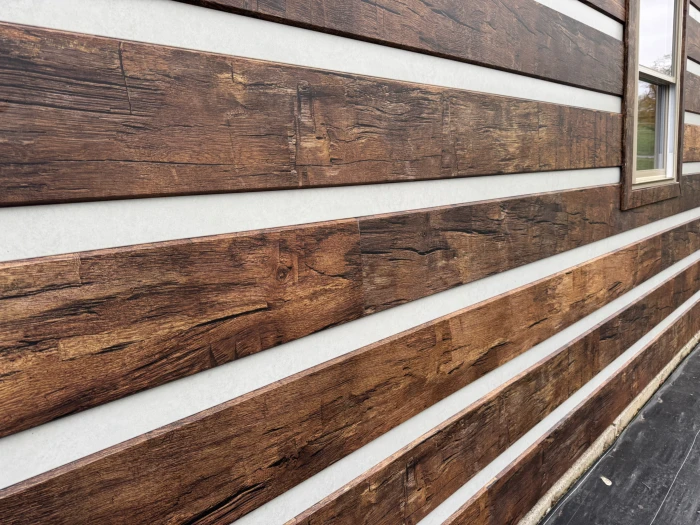
Real wood log siding in northwest Arkansas is fighting hail, humidity, and termites at the same time, and it doesn't have good answers for any of them. Class 4-rated steel handles the hail. Not absorbing moisture handles the humidity and the freeze-thaw risk in the Ozark highlands. Having no organic content means termites have nothing to start with at the wall. The log profile holds up through Arkansas storm seasons in a way real wood simply cannot.
SteeLuxe is the only manufacturer making hand hewn log siding with chinking in steel, and no other company builds this product in any form. Ships direct from New Philadelphia, Ohio. It reaches northwest Arkansas and every other part of the state with short lead times.
Ready to Transform Your Home With Hand-Hewn Log Cabin Siding?
Get the authentic hand-hewn cabin look with the chinking detail you love, and never think about maintenance again. SteeLuxe steel siding is insulated, fire-rated, hail-resistant, and built to last a lifetime. See it and feel it for yourself.
Steel Siding vs the Alternatives in Arkansas
Arkansas's hail frequency cuts through abstract comparisons quickly. The question isn't which product looks best on a calm day. It's which one holds up when a storm comes through, and what happens if it doesn't.
Steel vs Vinyl
Vinyl has two problems in Arkansas: hail and heat. On the hail side, vinyl cracks and splits under large hailstone impacts, and Arkansas averages 50 to 80 significant hail events annually, ranking in the top ten nationally. A single storm can leave an entire elevation requiring full panel replacement, and in northwest Arkansas that's a realistic outcome every spring. On the heat side, vinyl expands substantially in 90-plus-degree summers and can pull loose at panel joints over repeated seasonal cycles. Class 4-rated 26-gauge steel holds up under the hail events that split vinyl, and the Slide-Lock system keeps panels from gapping in the heat.
Steel vs Fiber Cement
Fiber cement is more impact-resistant than vinyl but still cracks under large hail at the sizes Arkansas regularly produces. The bigger problem in Arkansas is moisture. Fiber cement absorbs water through the long humid season, and that absorption drives a paint failure cycle that requires repainting every 7 to 10 years. In the Ozarks and north Arkansas, fiber cement that soaks in summer humidity can crack when that moisture freezes during a cold snap in January or February. Steel absorbs no moisture, so neither problem applies and there's no repaint cycle and no freeze-thaw cracking to manage.
Steel vs Wood
Wood siding in Arkansas has three strikes against it from the start. Termites are active statewide and wood gives them exactly what they need at the wall. High humidity through the summer accelerates paint failure and wood rot. In northwest Arkansas, add Class 4-level hail to the list, because wood has no impact rating and large hailstones gouge and split it. The repaint cycle in the most humid parts of the state runs every 4 to 6 years. Steel removes all three problems in one material choice.
Frequently Asked Questions
Q:How long does SteeLuxe steel siding last in Arkansas's climate?
Q:Is steel siding more expensive than vinyl or fiber cement?
Q:Does steel siding dent?
Q:Can steel siding be painted?
Q:How does Class 4 impact rating help with insurance in Arkansas?
Q:How does steel siding hold up in Arkansas's heat and humidity?
Q:Does hand hewn log siding with chinking hold up in northwest Arkansas weather?
Q:What Arkansas cities does SteeLuxe serve?
Q:Why is northwest Arkansas such a strong market for steel siding?
Arkansas Cities & Regions We Serve
SteeLuxe ships from New Philadelphia, Ohio to residential and commercial projects across Arkansas, with short lead times to every part of the state.
Northwest Arkansas is SteeLuxe's strongest Arkansas market. Fayetteville, Springdale, Rogers, and Bentonville make up the fastest-growing residential corridor in Arkansas, with a homeowner base drawn to the Ozarks aesthetic and a storm environment that makes Class 4 hail protection a real and practical priority, not just a specification upgrade.
Little Rock is the state's largest siding market. The central metro includes North Little Rock, Conway, and Benton, and all of it faces hot summers, significant spring hail along the I-40 and I-30 corridors, and moderate to heavy termite pressure. All four of Arkansas's main conditions are in play at once across this market.
Fort Smith anchors the western River Valley. Jonesboro is the Delta's largest city and the eastern anchor of the state. Both cities deal with Arkansas's full interior condition set, with Jonesboro carrying the higher termite pressure that comes with being in the southeastern delta counties near the Mississippi border.
If your city isn't listed, contact SteeLuxe directly and someone familiar with Arkansas's regional conditions will point you to the nearest installer and current pricing for your area.
Get a Quote for Steel Siding in Arkansas
SteeLuxe is manufactured in New Philadelphia, Ohio and ships direct. Whether you are planning a full re-siding project or exploring options, we can get you pricing, color samples, and a list of installers in your area.