
Steel Siding & Hand Hewn Log Siding in Arizona
Steel Siding in Arizona
Steel siding in Arizona splits into two distinct conversations depending on where in the state you build. Phoenix, Mesa, Chandler, Scottsdale, Tucson, and the desert lowlands are primarily a heat and termite story. Mountain communities above the Mogollon Rim, including Flagstaff, Prescott, and Sedona, are primarily a wildfire story. Steel addresses both ends of that split with the same panel and the same installation, which is why it works across Arizona in a way that no other single siding material does.
Phoenix is the hottest major city in the United States, and 2023 was its hottest year on record. Temperatures exceeded 100 degrees for more than 100 consecutive days, with highs pushing past 110 regularly through July and August. At those sustained levels, vinyl siding expands substantially, warps, and distorts at panel joints as it cycles between extreme daytime heat and cooler desert nights. Steel expands a predictable, manageable amount and holds its shape without distortion across the full temperature range Arizona produces year after year.
Wood grain siding in the SteeLuxe line handles Arizona's UV intensity, which runs significantly above sea-level norms because of the state's elevation and clear desert atmosphere. The Kynar 500 resin finish on wood grain panels holds color and surface integrity under sustained desert UV in a way that conventional painted finishes don't maintain over time. That matters most in Phoenix and Tucson, where UV exposure is intense and continuous from March through October.
In the mountain communities, the conversation shifts entirely to fire. The 2011 Wallow Fire burned 538,049 acres across the White Mountains and the Apache-Sitgreaves National Forest, making it the largest fire in Arizona history. Just over a decade later, the 2022 Tunnel Fire destroyed homes near Flagstaff in communities that had not been considered high-risk until the fire reached them. Both events changed what buyers in Flagstaff, Prescott, and the surrounding mountain resort communities ask for when they side a house. Class A fire rating is increasingly required rather than optional across the wildfire interface zones in northern Arizona.
Termites are active statewide and present year-round in Arizona's warm climate. Phoenix and Tucson carry Very Heavy termite pressure, the highest classification, and northern Arizona runs at Moderate to Heavy. There is no part of Arizona where termite pressure is absent, and wood siding gives active colonies both the food and the moisture access they need to establish at the wall.
Arizona's conditions divide sharply by elevation, and the right siding conversation in Flagstaff is a different one than in Phoenix. This page covers both the desert lowland market and the mountain communities, and what steel does in each.
The Most Advanced Steel Siding On The Market
- 20 Year Fading & Chalking Warranty
- 50 Year Flaking & Peeling Warranty
- Lasts 40-60+ Years
- One Person Installation
Climate & Conditions Across Arizona
Phoenix Metro & the Sonoran Desert
Phoenix, Mesa, Chandler, Scottsdale, and the broader Maricopa County metro make up the largest residential siding market in Arizona by a wide margin. The heat is the defining condition. Summer highs average 103 degrees, and Phoenix's urban heat island pushes temperatures in the metro core above that for extended stretches. Vinyl's thermal expansion problems are more pronounced in Phoenix than in almost any other American city, and the combination of sustained heat, intense UV, and Very Heavy termite pressure makes material selection here more consequential than most markets in the country.
Tucson & Southern Arizona
Tucson sits at a slightly higher elevation than Phoenix and runs cooler on average, but summer highs still regularly hit 105 degrees. The sky-island mountain ranges surrounding Tucson, including the Santa Catalinas, Rincons, and Santa Ritas, carry Very High wildfire risk, and the 2020 Bighorn Fire burned into the Santa Catalina foothills north of the city. Pima County carries Very Heavy termite pressure matching the Maricopa classification, and the combination of heat, UV exposure, and termite activity makes Tucson's siding environment comparable to Phoenix in most practical respects.
Flagstaff & the Mogollon Rim
Flagstaff sits at 7,000 feet and has a genuinely different climate than the rest of Arizona. Winter lows regularly drop below 20 degrees, the city gets real snowfall from November through March, and the Ponderosa pine forest surrounding Flagstaff and running along the Mogollon Rim carries Extreme wildfire risk. The 2022 Tunnel Fire burned into subdivisions northeast of Flagstaff and destroyed homes built with conventional combustible materials. Flagstaff's building vernacular is log and timber, shaped by its mountain setting, and its siding market is defined by the combination of wildfire interface requirements and that natural log aesthetic.
Prescott, Sedona & the White Mountains
Prescott and Sedona sit in the transition zone between the desert lowlands and the high mountain forests, running cooler than Phoenix but warmer than Flagstaff, with chaparral and pinon-juniper terrain that carries active wildfire risk around both cities. The White Mountains, including Show Low, Pinetop-Lakeside, and Springerville, sit in the heart of the Wallow Fire burn zone and treat wildfire as a permanent local condition. New construction in all three of these markets increasingly specifies Class A non-combustible exterior products as a practical baseline, not a premium option.
Arizona's four climate zones each have a different leading condition. The right siding conversation changes as you move up in elevation, and a product that handles only heat or only fire handles only part of the state.
Need help finding an installer?
Why Steel Siding Is Right for Arizona
Three conditions run across Arizona's siding market: heat, wildfire, and termites. Each one has a documented failure history with the materials that tried to handle it, and each one has a specific answer in 26-gauge steel.
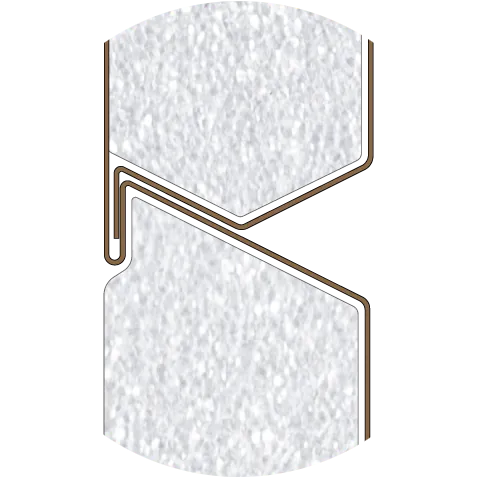
Heat leads in the desert markets. Phoenix and Tucson homeowners are dealing with the most intense sustained heat of any major American metro, and the siding implications are real. Steel's Slide-Lock panel system lets panels expand and contract with temperature changes without pulling away from fasteners or gapping at joints, and it does that reliably across decades of repeated thermal cycling in a desert climate. The EPS foam core provides an R-3.57 continuous insulation layer between the panel and the wall that helps manage the heat load coming through the exterior in a Phoenix summer.
Wildfire is the governing condition in the mountain communities, and Class A is the direct answer. A Class A fire rating means the panel won't ignite from flying embers, won't spread flame along its surface, and won't contribute to a fire the way vinyl and wood do when wind-driven embers reach a subdivision during a fire event. For homeowners in Flagstaff, Prescott, Sedona, and the White Mountains, Class A is not a premium upgrade. Local fire departments and insurance carriers across northern Arizona are actively recommending non-combustible exterior products, and in many jurisdictions they're required.
Termites are present statewide and active year-round in Arizona's warm climate. Very Heavy termite pressure in Phoenix and Tucson means subterranean colonies are in the soil beneath most structures in the state's two largest markets and working continuously without the winter slowdown that colder states get. Steel gives termite colonies nothing to work with at the wall. There's no wood in the panel, no food source, and no moisture path that termites can use near the foundation.
The 26-gauge thickness adds structural depth that matters in both climate zones. In the desert markets, the extra gauge helps it hold its shape and size through the most intense sustained heat of any American metro. Mountain communities along the Mogollon Rim and in the Flagstaff area see active hail during summer monsoon season, and the 26-gauge steel takes those impacts without the cracking or edge chipping that thinner materials show.
Product Specifications
| Spec | Value |
|---|---|
| Gauge | 26-gauge steel (~25% thicker than 29-gauge) |
| Core | EPS foam, R-3.57 continuous insulation value |
| Fire Rating | Class A (highest available) |
| Impact Rating | Class 4 (highest available) |
| Colors | 50 solid colors (Sherwin Williams WeatherXL) |
| Wood Grain | 22 patterns (Kynar 500 resin) |
| Log Profile | Hand hewn log siding with chinking — 4 chinking colors |
| Warranty | 50-year peeling/flaking | 20-year fade/chalk |
| Panel | 10-inch planks, Slide-Lock system, one-person install |
| Base Coat | AZ55 Galvalume (zinc-aluminum alloy corrosion barrier) |
| Origin | New Philadelphia, Ohio — direct ship to all 49 states |
Hand Hewn Log Siding with Chinking in Arizona
Arizona's mountain resort communities are built around log and timber architecture. Flagstaff, Prescott, Sedona, Payson, and the White Mountain resort towns all have residential markets where the log cabin and rustic timber profile is the standard exterior look. This isn't a niche preference. It's the dominant aesthetic in these communities, and homeowners here expect their siding to match the mountain setting they chose.
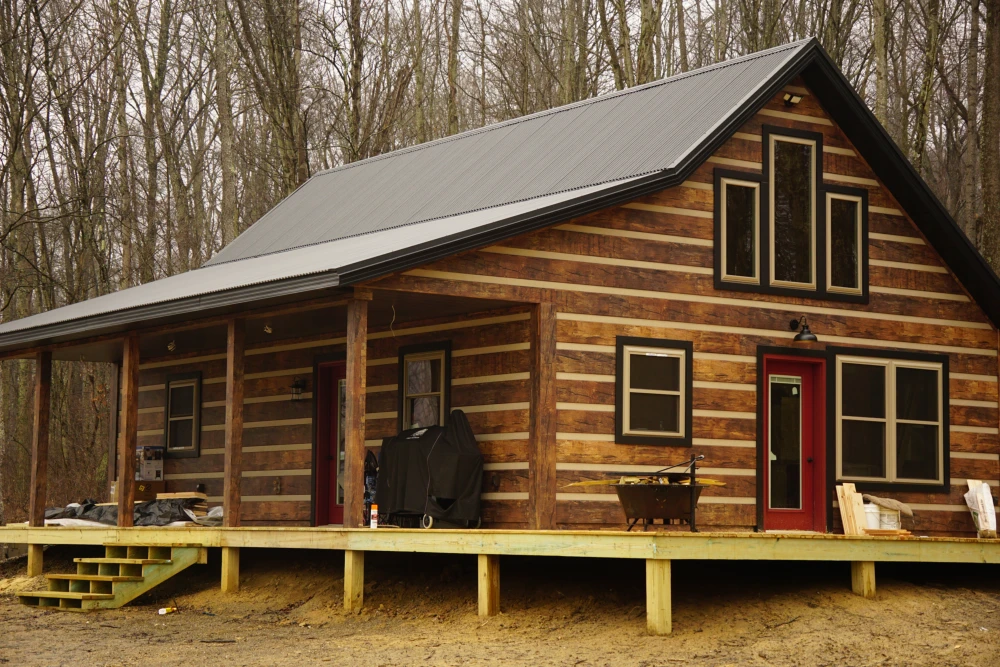
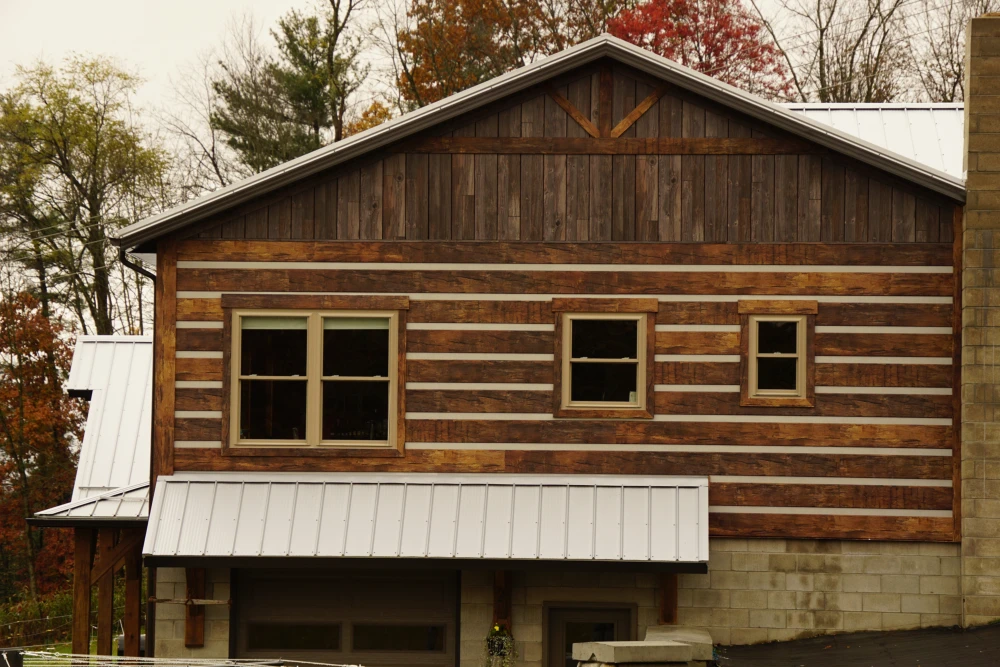
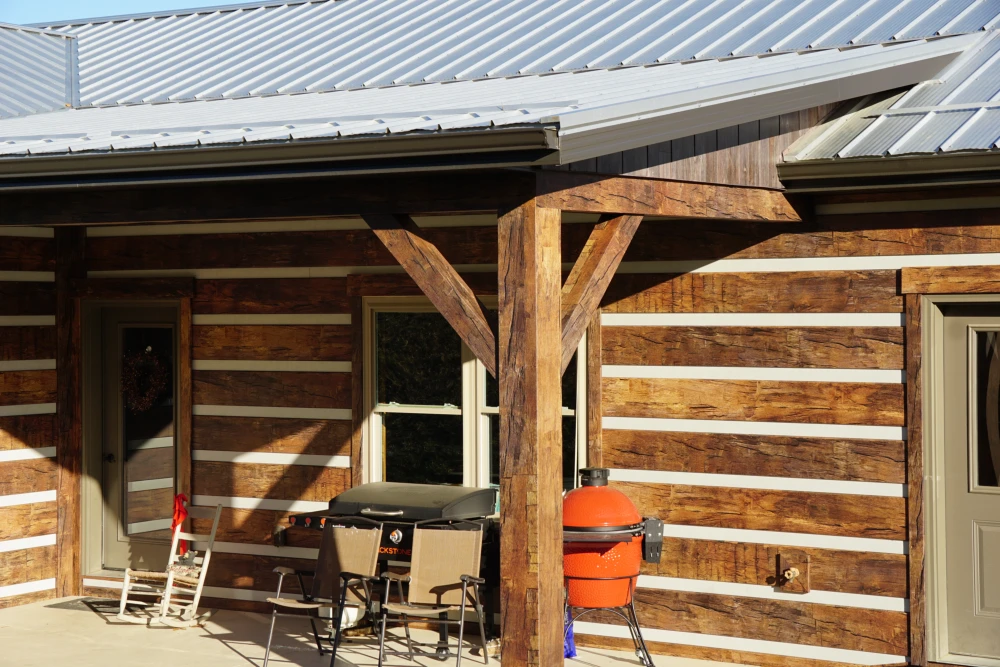
Hand hewn log siding with chinking in 26-gauge steel delivers the log profile these buyers want with a Class A fire rating, which is something real wood log siding can't provide. In wildfire interface zones across northern Arizona, where fire codes are tightening and insurance carriers are increasingly pricing combustible cladding at a premium, the combination of authentic log appearance and non-combustible steel construction is a direct answer to a real conflict that wood creates in these markets.
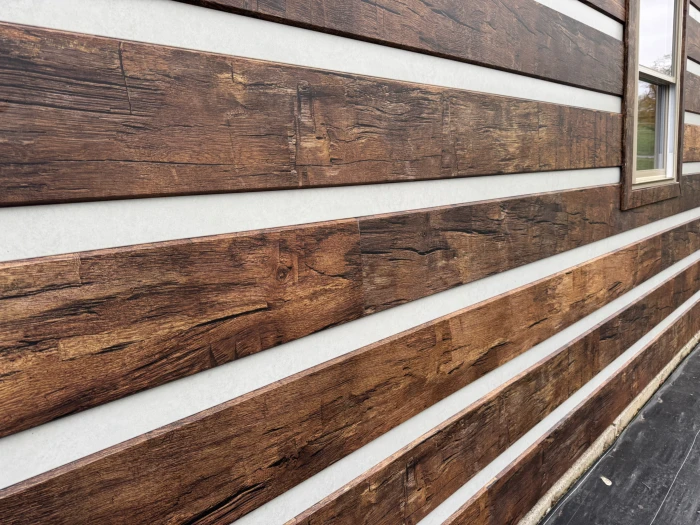
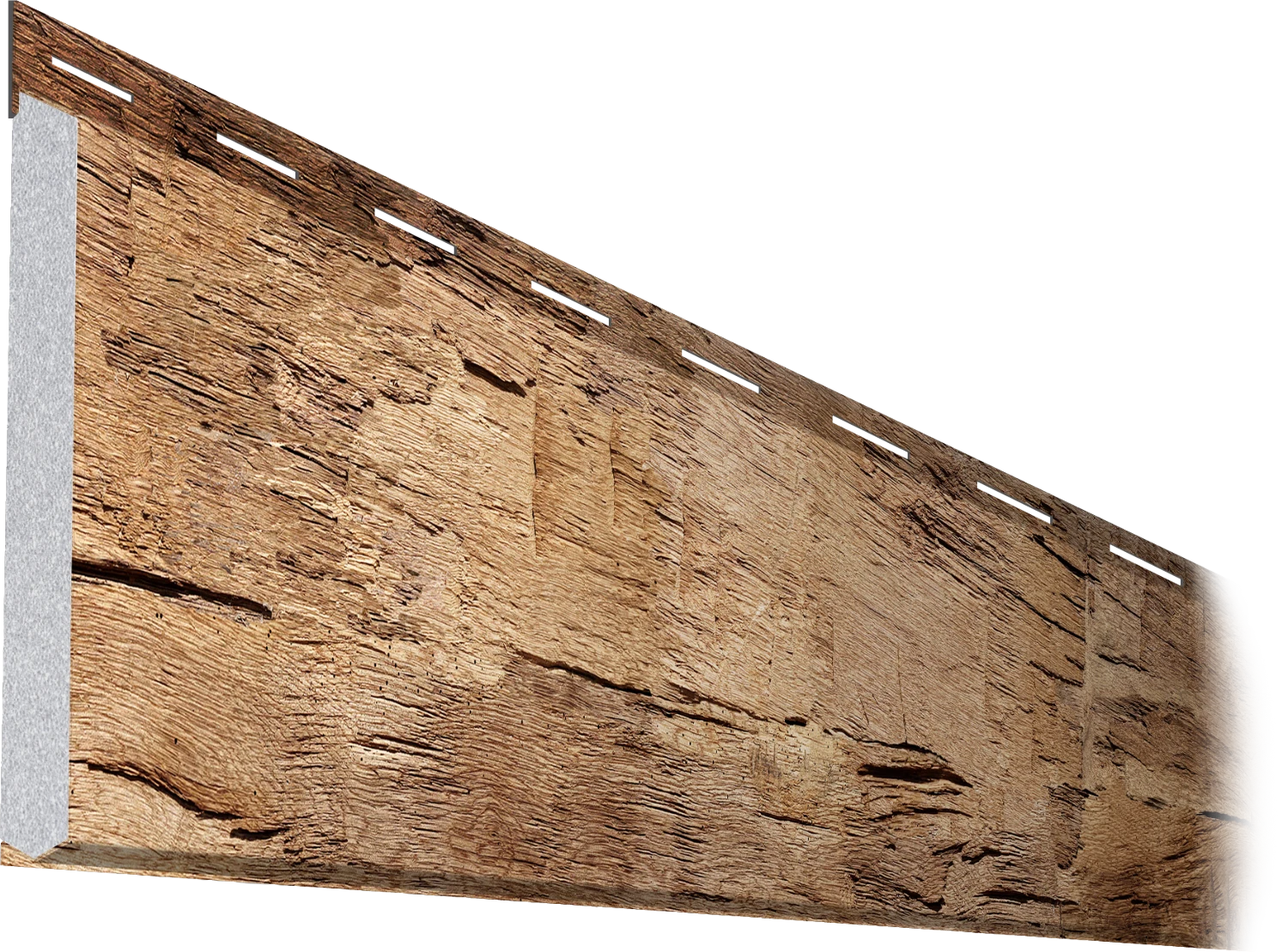
SteeLuxe is the only manufacturer making hand hewn log siding with chinking in steel. It ships direct from New Philadelphia, Ohio with short lead times to Flagstaff, Prescott, Sedona, and the White Mountain communities. All 22 wood grain patterns are available, from weathered gray to warm cedar brown, with chinking in four colors: Ash Gray, Charcoal, Clay, and Sandstone Tan.
For mountain communities in Arizona, this product resolves a conflict that has existed in the market for years. The log aesthetic and the Class A fire requirement used to point in opposite directions. Steel hand hewn log siding with chinking satisfies both at once.
Ready to Transform Your Home With Hand-Hewn Log Cabin Siding?
Get the authentic hand-hewn cabin look with the chinking detail you love, and never think about maintenance again. SteeLuxe steel siding is insulated, fire-rated, hail-resistant, and built to last a lifetime. See it and feel it for yourself.
Steel Siding vs the Alternatives in Arizona
Vinyl has two specific problems in Arizona: heat and fire. In the Phoenix metro, where summer highs regularly exceed 110 degrees, vinyl expands more than the material handles reliably over decades of repeated cycling. Panels that look tight at installation can show visible gapping at joints within a few years in the most extreme Phoenix zip codes. The second problem is fire. Vinyl carries no meaningful fire rating for wildfire interface purposes. In Flagstaff, Prescott, and the White Mountains, where Class A non-combustible exterior products are increasingly required by fire codes and insurance carriers, vinyl is not a workable option regardless of its other characteristics.
Fiber cement handles heat better than vinyl and carries a Class A fire rating, but it has two problems specific to Arizona. UV degradation is the more persistent one: Arizona's desert UV intensity is among the highest in the country, and fiber cement's painted surface breaks down and chalks faster at Arizona's elevation and sun exposure than in typical humid-climate installations, so repainting cycles that run every 10 to 12 years elsewhere run shorter in the Arizona sun. Hail compounds the problem in the mountain communities. The Flagstaff area and the Mogollon Rim corridor see active hail during summer monsoon season, and fiber cement chips and cracks at the panel edges under those impacts in ways that require full panel replacement.
Wood siding has two clear strikes in Arizona, and in the mountain communities they're more serious than anywhere else in the state. Termites eat wood, and Very Heavy pressure across the Phoenix metro and Tucson means colonies are in the soil and actively working beneath most structures in the state's two largest markets. Fire is the second problem. In Flagstaff, Prescott, Sedona, and the White Mountain communities, wood cladding in a wildfire interface zone isn't just a performance question. It's increasingly a code question with a specific legal answer in many of these jurisdictions.
Steel removes both problems in a single material choice. No wood means no food source for termites and no path for colonies to work at the wall. The Class A fire rating holds for the full 40 to 60 year life of the installation without degrading, and it applies in the wildfire interface zones where it matters most.
Frequently Asked Questions
Q:What warranty does SteeLuxe steel siding carry?
Q:Can one person install SteeLuxe steel siding?
Q:What colors does SteeLuxe come in?
Q:Where is SteeLuxe manufactured and how does shipping work?
Q:How does steel siding hold up in Phoenix's extreme heat compared to vinyl or fiber cement?
Q:Why does the Class A fire rating matter specifically for Arizona's mountain communities?
Q:Are termites a significant problem in Arizona?
Q:What Arizona cities does SteeLuxe serve?
Q:What makes Arizona's mountain siding market different from the Phoenix metro?
Arizona Cities & Regions We Serve
The Phoenix metro is the state's largest siding market. Sustained extreme heat, Very Heavy termite pressure, and intense UV exposure make steel's performance characteristics directly relevant to the largest residential construction and re-siding volume in Arizona. SteeLuxe ships direct from New Philadelphia, Ohio to the Phoenix metro with short lead times.
Tucson is the state's second-largest siding market, with Very Heavy termite pressure, surrounding sky-island mountains that add wildfire risk to the mix, and summer heat in the Sonoran Desert foothills that tests siding materials the same way Phoenix does. Full city pages with local installer contacts and current pricing are available for Tucson.
Flagstaff is the state's most distinctive siding market. At 7,000 feet with cold winters, active wildfire exposure, and a log-and-timber building vernacular, it's where the Class A fire rating and hand hewn log siding with chinking make their strongest combined case in Arizona. The mountain communities in the wildfire transition zone share the natural materials aesthetic and the fire risk.
The White Mountain communities sit in the heart of the Wallow Fire burn zone and treat Class A non-combustible exterior products as a practical standard. SteeLuxe reaches all of these markets direct from the Ohio manufacturing facility.
Full city pages with local installer contacts and current pricing are available for Phoenix, AZ. More Arizona cities are in the list below:
Don't see your city listed here. Contact SteeLuxe directly or use the site search, and someone who knows Arizona's regional conditions will help you find the nearest installer and get current pricing for your area.
Get a Quote for Steel Siding in Arizona
SteeLuxe is manufactured in New Philadelphia, Ohio and ships direct. Whether you are planning a full re-siding project or exploring options, we can get you pricing, color samples, and a list of installers in your area.