
Steel Siding & Hand Hewn Log Siding in Alaska
Steel Siding in Alaska
Steel siding in Alaska answers for conditions no other state delivers at the same duration or intensity. Fairbanks averages a January low near 17 degrees below zero. Anchorage averages a January low near 9 degrees with freeze-thaw cycling from October through April. Southeast Alaska markets including Juneau, Sitka, and Ketchikan receive 60 to 160 inches of annual rainfall with year-round marine moisture that drives paint failure faster than any other climate in the country. Wood grain siding in the 22 SteeLuxe patterns covers the full Alaska range, from the log cabin and wilderness homestead profiles of the interior to the craftsman and cottage profiles of Anchorage and the Southeast communities.
Alaska's cold is genuine and statewide. Fairbanks averages a January low near 17 degrees below zero, with temperatures reaching 40 below zero through the deep winter. Anchorage averages a January low near 9 degrees, the Mat-Su Valley near 7 degrees, and the Kenai Peninsula near 12 degrees. Freeze-thaw cycling runs from October through April across Southcentral and from September through May in the Fairbanks interior. Valdez records the heaviest snowfall totals of any community in Alaska.
Southeast Alaska's marine climate produces a different kind of failure than the interior's extreme cold. Juneau averages 60 inches of annual rainfall, Sitka above 90 inches, and Ketchikan above 150 inches, with persistent humidity through every season. Wood siding in the Southeast communities sees paint fail in 3 to 5 years from moisture alone, and fiber cement absorbs water at cut edges and trim joints through a rain season that never fully ends.
Wind reaches Alaska's coastal markets with an intensity that most lower-48 states don't see. Kodiak Island, the Prince William Sound corridor, and the Kenai Peninsula coast face consistent high-wind exposure from Gulf of Alaska weather systems through the fall and winter months. Anchorage experiences chinook wind events that bring rapid temperature swings and sustained wind speeds above 50 miles per hour through the winter and spring. In coastal and Southcentral markets, wind drives rain and snow horizontally against exterior siding, working moisture into every gap and joint that isn't locked closed at the panel connection.
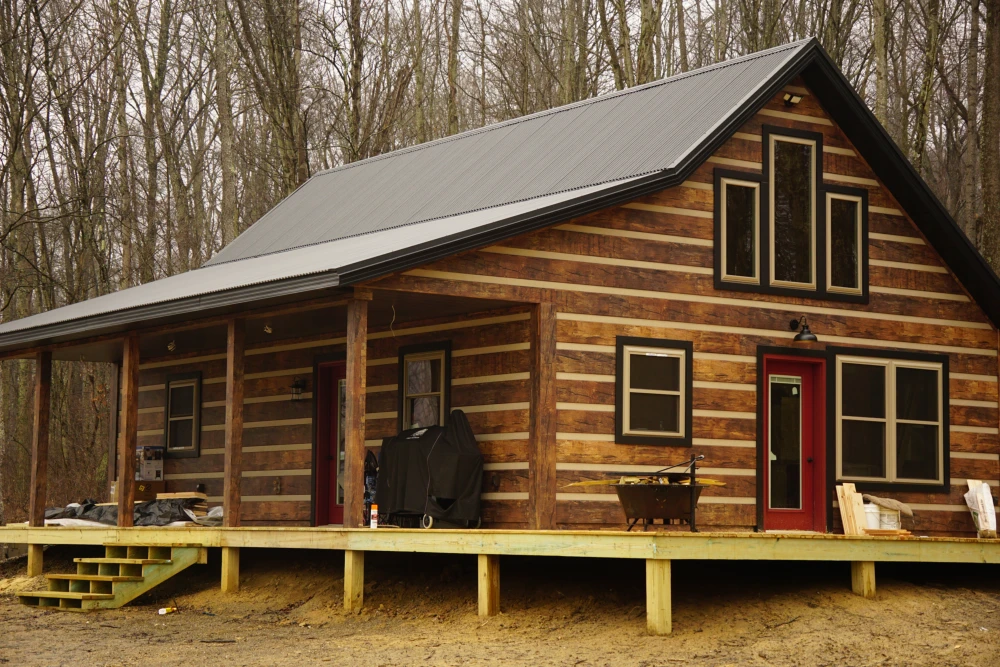
Alaska's interior and Mat-Su Valley represent a distinct cabin and homestead market where the log cabin and wilderness aesthetic defines the residential character across the state's largest geographic expanse. The Parks Highway corridor from Anchorage through Wasilla and Talkeetna to Fairbanks, the Kenai Peninsula communities along the Sterling Highway, and the Richardson Highway corridor through Valdez and Delta Junction carry the largest concentrations of log cabin and rural homestead properties in the state. Many sit unoccupied through the long interior winter without an active maintenance response.
Alaska's conditions don't fall equally across the state. Extreme cold and freeze-thaw are statewide and most severe in the Fairbanks interior. Marine moisture is concentrated in the Southeast communities from Ketchikan through Juneau. Wind is most intense in the coastal and Southcentral markets. The interior and Mat-Su Valley add a distinct cabin and homestead dimension.
The Most Advanced Steel Siding On The Market
- 20 Year Fading & Chalking Warranty
- 50 Year Flaking & Peeling Warranty
- Lasts 40-60+ Years
- One Person Installation
Climate & Conditions Across Alaska
Alaska's conditions follow geography across the interior, Southcentral, and Southeast regions. Extreme cold and freeze-thaw affect every market statewide, while marine moisture concentrates in the Southeast and coastal wind is most intense in the Prince William Sound and Kenai Peninsula markets.
The Municipality of Anchorage represents Alaska's largest residential siding market, where a January low near 9 degrees, freeze-thaw cycling from October through April, and chinook wind events that bring gusts above 50 miles per hour combine in a market of craftsman, colonial, and ranch homes alongside the newer residential stock of a fast-growing city. Anchorage sits at the transition between the continental interior cold and the maritime moisture of the Kenai and Prince William Sound coasts, and Southcentral winters bring the full range of Alaska's conditions across a single season.
The Mat-Su Valley, including Wasilla and Palmer in the Matanuska-Susitna Borough, represents Alaska's fastest-growing residential market, where January lows near 7 degrees, freeze-thaw cycling from October through April, and a large and growing inventory of rural and suburban homes built around the cabin and homestead aesthetic define the re-siding and new construction markets. Kenai Peninsula communities including Homer, Soldotna, and Kenai represent a distinct maritime-continental market where January lows near 12 degrees, freeze-thaw cycling, and consistent coastal wind and moisture drive re-siding demand through the construction season.
Fairbanks and the Fairbanks North Star Borough represent Alaska's most severe cold market, where a January low near 17 degrees below zero, subarctic temperatures that regularly reach 40 below zero through the deep winter, and freeze-thaw cycling from September through May put every exterior material through the most demanding cold-season conditions in the United States. Interior Alaska winter lasts nine months across the Fairbanks corridor and the communities north of the Alaska Range, and the extended cold season means exterior siding that depends on flexibility or paint adhesion fails at a rate that surprises buyers unfamiliar with true subarctic exposure.
Juneau, Sitka, and Ketchikan represent Alaska's Southeast market, where the marine climate delivers year-round rainfall, persistent humidity, and a moisture-driven failure environment that works on exterior siding through every season. Ketchikan averages above 150 inches of annual rainfall, Sitka above 90 inches, and Juneau above 60 inches, with no meaningful dry season in any of the three markets. Wood siding in the Southeast communities cycles through paint failure in 3 to 5 years, and fiber cement absorbs water at cut edges and windowsill joints through the continuous rain season.
Need help finding an installer?
Why Steel Siding Is Right for Alaska
Three conditions are active across Alaska's residential market, and properties in Southcentral Alaska face all three through a single year. Each produces a direct failure pattern in the materials most Alaska homes carry, and each has an answer in 26-gauge steel.
Alaska's freeze-thaw season runs from October through April in Anchorage, the Mat-Su Valley, and the Kenai Peninsula, and from September through May in the Fairbanks interior. Vinyl becomes brittle in sustained cold, losing the flexibility it needs to expand and contract through freeze-thaw cycles, and Alaska's winters push temperatures far below what any vinyl formulation can handle. Fairbanks temperatures of 40 below zero and below hold for weeks at a time, making vinyl failure a cold-season condition rather than a single event. Steel holds its shape and size through Alaska's full cold cycle without cracking, gapping, or loosening at fastener points.
Alaska's Southeast communities receive more annual rainfall than any other residential market in the country, and the marine humidity that accompanies it keeps wood siding wet at panel joints and cut edges through every season. Steel doesn't absorb moisture at the panel surface regardless of annual rainfall, and the AZ55 Galvalume base coat provides corrosion resistance at the material level rather than depending on a topcoat that moisture can work behind. The result is an exterior wall that stays out of the moisture damage equation across every Southeast market.
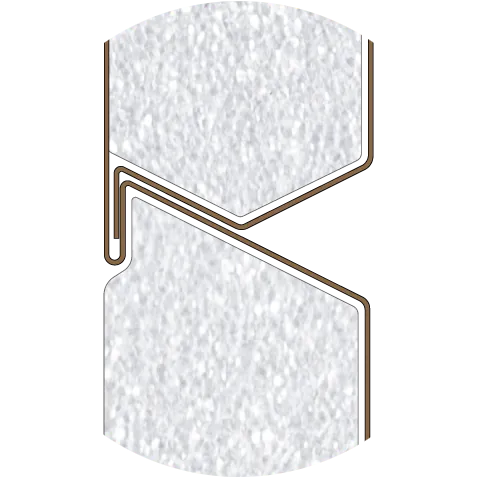
Wind in Alaska's coastal markets drives rain and snow horizontally against exterior siding at speeds that test fastener connections through every storm season. Kodiak, Valdez, and the Kenai Peninsula coast face consistent wind from Gulf of Alaska systems, and Anchorage's chinook events bring gusts that pull nail-hem mounted panels away from wall framing. The Slide-Lock panel system creates a mechanical interlock between every panel course, so wind force acts on the interlock rather than the nail hem.
Alaska's wet shoulder seasons, the periods of rain and temperature transition at freeze-up and breakup, trap moisture against every exterior surface during the windows when siding is most exposed to it. Paint on wood in Anchorage and Fairbanks fails in 5 to 7 years under the combination of freeze-thaw cycling and that recurring moisture exposure. Steel doesn't absorb moisture at the panel surface, and the seven-step coating system resists Alaska's UV exposure through the long daylight hours of the summer months.
Product Specifications
| Spec | Value |
|---|---|
| Gauge | 26-gauge steel (~25% thicker than 29-gauge) |
| Core | EPS foam, R-3.57 continuous insulation value |
| Fire Rating | Class A (highest available) |
| Impact Rating | Class 4 (highest available) |
| Colors | 50 solid colors (Sherwin Williams WeatherXL) |
| Wood Grain | 22 patterns (Kynar 500 resin) |
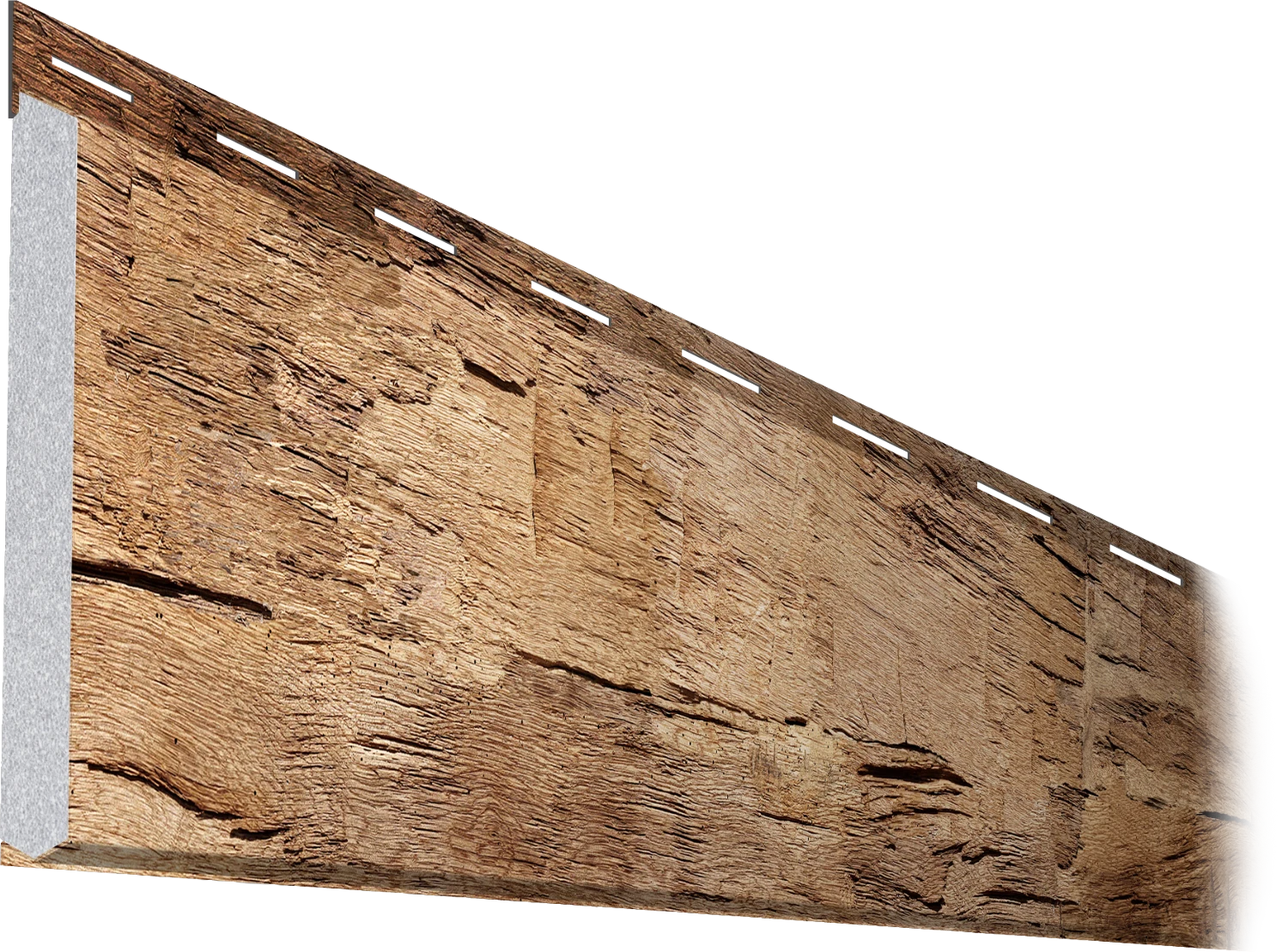
| Log Profile | Hand hewn log siding with chinking — 4 chinking colors |
| Warranty | 50-year peeling/flaking | 20-year fade/chalk |
| Panel | 10-inch planks, Slide-Lock system, one-person install |
| Base Coat | AZ55 Galvalume (zinc-aluminum alloy corrosion barrier) |
| Origin | New Philadelphia, Ohio — direct ship to all 49 states |
Hand Hewn Log Siding with Chinking
Alaska's interior, Mat-Su Valley, and highway corridor communities carry the largest concentration of log cabins and wilderness homesteads in the United States. Properties along the Parks Highway from Wasilla through Talkeetna, the Sterling Highway from Soldotna through Homer, and the Richardson Highway through Valdez and Delta Junction define the residential character of a region where the log cabin aesthetic is the prevailing form. Many sit unoccupied through the long interior winter without active maintenance.
Real wood log siding in the Alaska interior faces freeze-thaw cycling through a nine-month window in the Fairbanks corridor and a seven-month window in the Mat-Su Valley and Kenai Peninsula. Each season, moisture works into log joints and widens cracks that the prior winter started, and the extended cold season of interior Alaska means those joints face repeated freeze events before any spring maintenance can reach them.
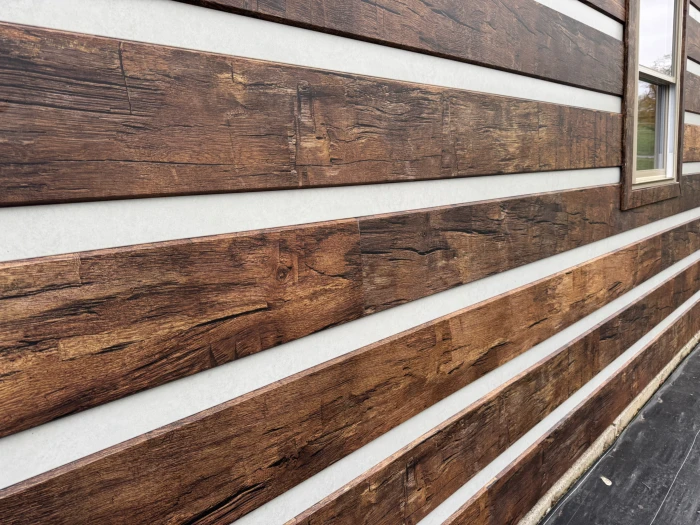
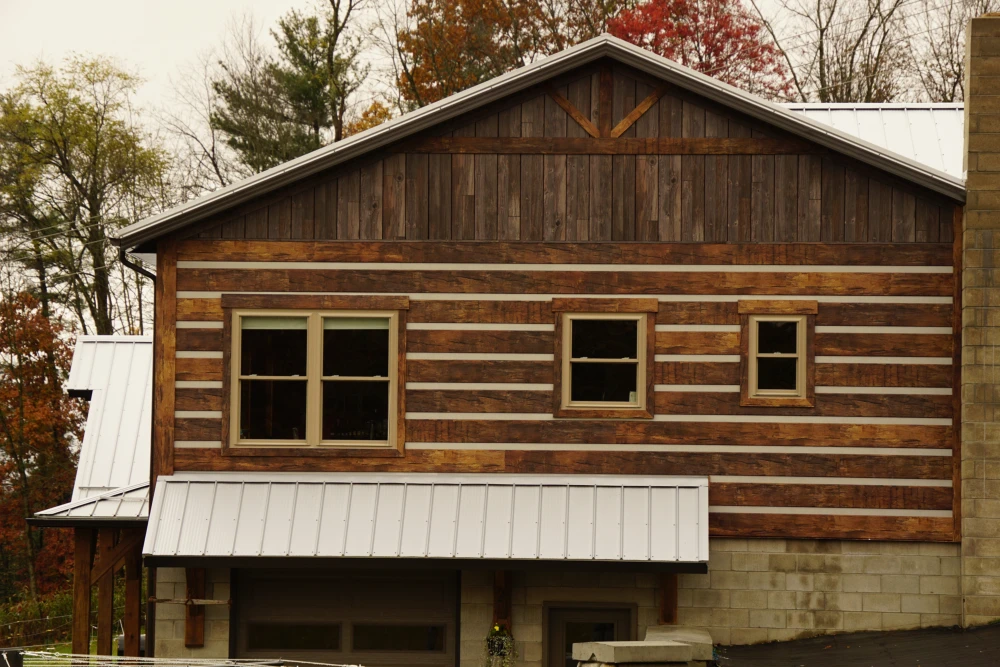
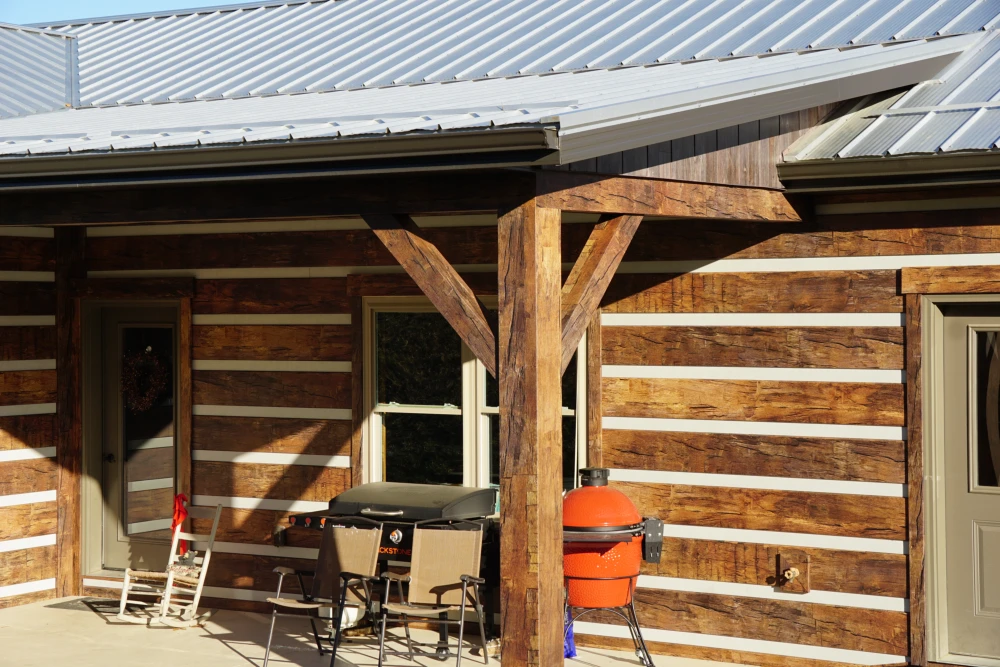
Hand hewn log siding with chinking in 26-gauge steel delivers the Alaska log cabin aesthetic without those failure modes. Steel doesn't absorb moisture, so freeze-thaw has nothing to act on at the log joints, and the panel holds its shape through Alaska's full cold cycle at temperatures that crack and gap real wood. Chinking fills the joints in four colors: Ash Gray, Charcoal, Clay, and Sandstone Tan. From the road, it reads as traditional log construction. The 50-year warranty applies through Alaska's full interior winter.
SteeLuxe is the only manufacturer making hand hewn log siding with chinking in steel. It ships to log cabins, wilderness homesteads, and rural properties throughout Alaska's interior and highway corridors, and is available in all 22 wood grain patterns in the SteeLuxe line.
Ready to Transform Your Home With Hand-Hewn Log Cabin Siding?
Get the authentic hand-hewn cabin look with the chinking detail you love, and never think about maintenance again. SteeLuxe steel siding is insulated, fire-rated, hail-resistant, and built to last a lifetime. See it and feel it for yourself.
Steel Siding vs the Alternatives
Alaska's cold, moisture, and wind conditions test the three most common siding alternatives against a climate that delivers extremes no lower-48 state matches in duration or severity. Steel answers every condition. Each alternative fails on at least two fronts.
Vinyl is common on Alaska homes, and the state's conditions expose its failure modes in every region. Sustained cold through the Anchorage, Mat-Su, and Kenai winter months pushes vinyl below the brittleness threshold where it can no longer expand and contract through freeze-thaw cycles without cracking at fastener points and panel edges. The Fairbanks interior takes that further: temperatures of 40 below zero and below are not edge events but normal winter conditions that vinyl siding is not engineered to handle. Southeast Alaska adds a third failure mode, as wind-driven rain works behind vinyl panels at nail hem gaps and trim joints, and the persistent marine humidity of Juneau, Sitka, and Ketchikan accelerates the mold growth that forms behind installed vinyl panels.
Fiber cement performs better in cold than vinyl, but Alaska's conditions expose its failure modes in both temperature ranges. Cut edges at penetrations, windowsills, and trim joints absorb moisture through Alaska's wet shoulder seasons in Southcentral and interior markets, and freeze-thaw cycling works that moisture through every crack and gap each winter. Southeast Alaska's continuous rain season keeps those same cut edges wet year-round, and paint on fiber cement in Juneau, Sitka, and Ketchikan fails in 5 to 7 years under persistent moisture. Heavy fiber cement panels also stress fastener connections in coastal markets where consistent wind is a year-round condition.
Wood siding in Alaska faces failure from cold, moisture, and wind across every region. Paint on wood in Anchorage and the Mat-Su Valley fails in 5 to 7 years under freeze-thaw cycling and moisture exposure at breakup and freeze-up. The nine-month cold season in Fairbanks shortens that interval further. Southeast Alaska's continuous rain season takes it to 3 to 5 years, and moisture works into log joints and cut edges through every season without a dry period to slow it. Steel ends the paint cycle, doesn't absorb moisture at the panel surface, and holds its panel connections under the coastal wind that wood siding cannot.
Frequently Asked Questions
Q:What makes SteeLuxe steel siding different from other steel siding products?
Q:How does the Slide-Lock installation system work?
Q:What wood grain patterns are available?
Q:Does steel siding rust?
Q:How does Alaska's extreme cold affect siding?
Q:Why is Southeast Alaska so hard on siding?
Q:How does freeze-thaw cycling affect siding on a property that sits unoccupied through the winter?
Q:Does SteeLuxe install in my city?
Q:What should I know about siding for an Alaska cabin or interior property?
Alaska Cities & Regions We Serve
SteeLuxe ships to residential and rural property projects throughout Alaska, with lead times that work for the year-round Anchorage and Mat-Su markets and the compressed construction windows of the interior communities and Southeast coastal communities.
The Municipality of Anchorage represents Alaska's largest residential siding market, where freeze-thaw cycling, chinook wind events, and the large and growing residential inventory across the municipality drive consistent re-siding and new construction demand through the spring through fall construction season.
The Mat-Su Valley, including Wasilla and Palmer, represents Alaska's fastest-growing residential market, where freeze-thaw cycling, the large inventory of cabin and homestead properties, and the steady influx of new construction across the Matanuska-Susitna Borough drive re-siding and new construction siding demand through the construction season.
Fairbanks and the Fairbanks North Star Borough represent Alaska's interior cold market, where the subarctic cold season from September through May, extreme winter temperatures, and the large inventory of older residential and cabin properties drive re-siding demand concentrated in the spring through fall construction window.
Juneau, Sitka, and Ketchikan represent Alaska's Southeast market, where year-round rainfall, persistent marine moisture, and the ongoing re-siding demand driven by rapid paint failure on wood and fiber cement drive consistent siding activity through the construction season in communities where weather allows year-round exterior work.
Full city pages with local installer contacts and current pricing are available for Anchorage, AK. More Alaska cities are listed below:
Don't see your city listed here. Contact SteeLuxe directly and someone familiar with Alaska's regional conditions will point you to the nearest installer and current pricing for your area.
Get a Quote for Steel Siding in Alaska
SteeLuxe is manufactured in New Philadelphia, Ohio and ships direct. Whether you are planning a full re-siding project or exploring options, we can get you pricing, color samples, and a list of installers in your area.